アート
美容とウェルネス
工芸
文化と歴史
エンターテインメント
環境
食品と飲料
リバースエンジニアリング
科学
スポーツ
テクノロジー
ウェアラブル
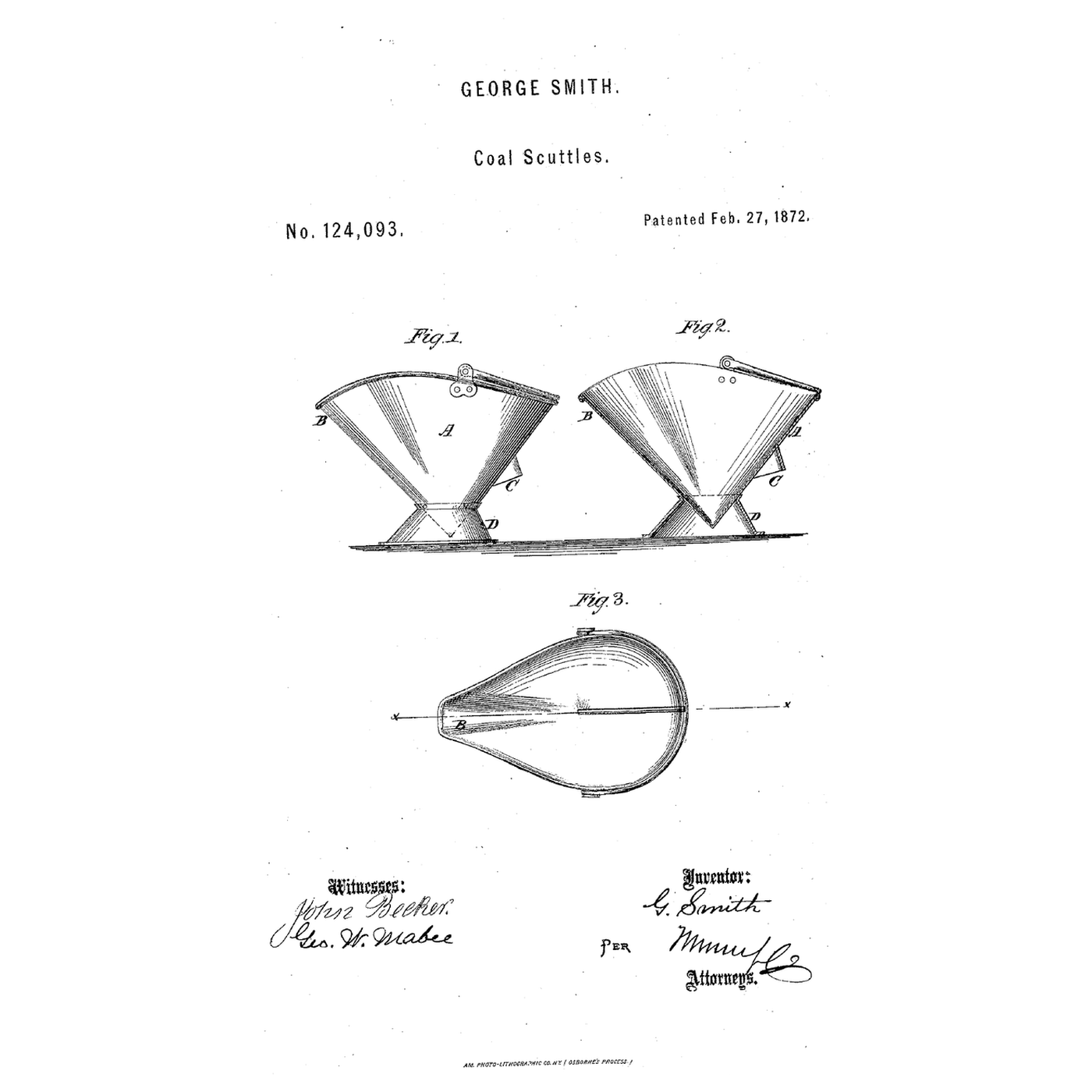


The Conical Coal Scuttle: One Sheet, No Bottom to Wear Through
A coal scuttle carries fuel from the store to the stove and pours it in. The old kind had a flat bottom, which was the first part to wear through and the hardest to mend.
George Smith of Williamsburg, New York, received US 124,093, dated 27 February 1872, for a coal-hod "made mainly of a single piece of sheet metal" that "resembles in its outline an inverted hollow cone", so "the ordinary horizontal bottom is consequently dispensed with". The delivery side "stands at an angle of about forty-five degrees with a horizontal line. This gives a free and easy delivery of the coal when the hod is slightly tilted."
This rung computes how far a container must be tipped to empty it, and the sheet a cone takes, then measures both with gravel.
初心者
About 1 hour
手順
1
1
Tipping it empty, and the sheet it takes
Tipping it empty, and the sheet it takes
Jupyter ノートブックを読み込み中…
2
2
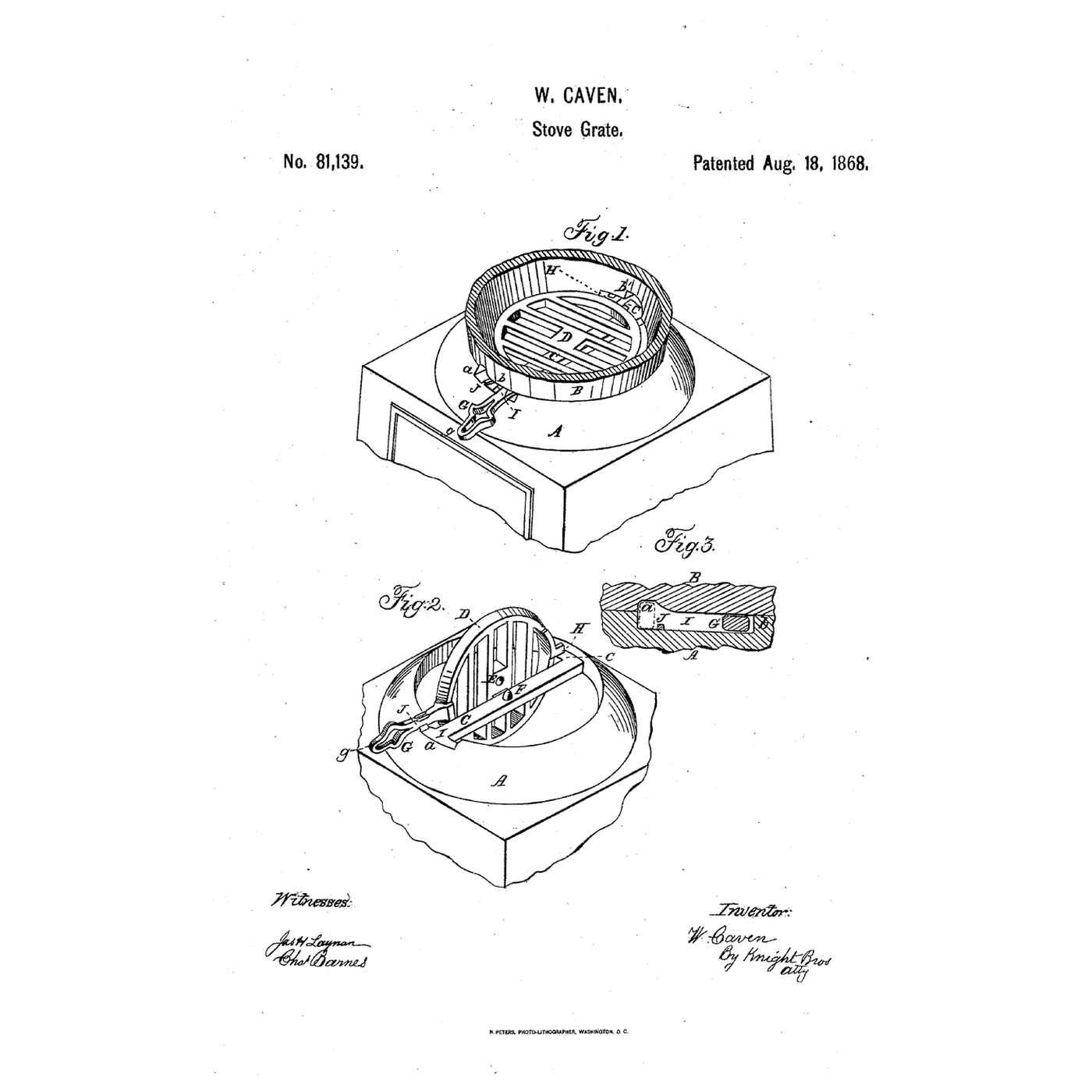
The stove the coal went into
The stove the coal went into
The embedded blueprint covers an 1868 stove grate that sifts ash and dumps the fire; the scuttle is how the coal reached it.
3
3
Read US 124,093
Read US 124,093
"The object of this invention is to simplify and cheapen coal-hods or 'scuttles,' and at the same time render them more convenient for discharging the coal therefrom, more durable, and much easier repaired when injured by wear than coal-hods of ordinary construction".
"This coal-hod is made mainly of a single piece of sheet metal, and resembles in its outline an inverted hollow cone, the apex of the cone being the bottom and center of the hod. The ordinary horizontal bottom is consequently dispensed with." A base, "a truncated cone, oval in form", is riveted on so it stands.
"In the ordinary coal-hod the bottom is the first to fail and the most difficult to repair. When, from either wear or corrosion, my coal hod fails, the process of repairing is very simple. A single piece of sheet metal is coiled, fitted, and fastened in the hod, and the work is done."
4
4
Measure the tip with gravel
Measure the tip with gravel
Find the gravel's friction angle: pour a heap slowly onto a board, measure its height and the width of its base, and take the slope angle as arctan(2 x height / base). Or tilt a board with a few stones on it and read the protractor when they start to slide.
Tape over the outlet of a kitchen funnel so it is a cone with no hole. Half-fill it with gravel and tip it slowly over a bucket, reading the angle on the protractor when the last stone leaves. Do the same with a straight-sided metal bucket. Compare both with the notebook's rule, tip = wall angle + friction angle, using your own friction angle.
このステップの材料:
 砂利2 kg
必要な工具:
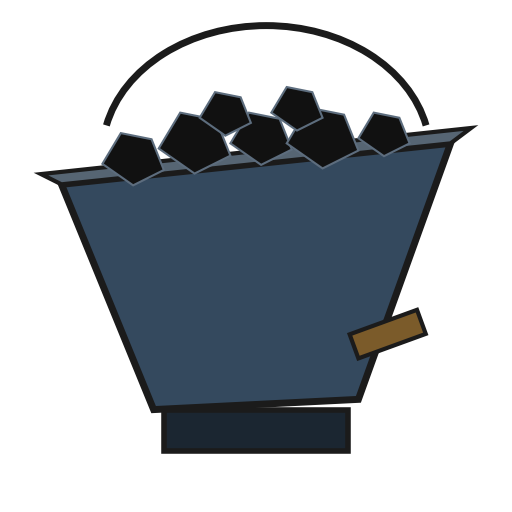 石炭入れ
石炭入れ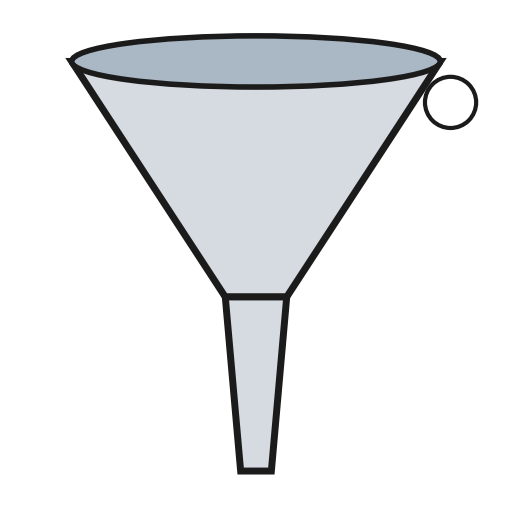 キッチン漏斗(じょうご)
 金属バケツ
金属バケツ 分度器
分度器 定規
定規 マスキングテープ
5
5
A scuttle that spills, sticks or leaks
A scuttle that spills, sticks or leaks
Coal scuttle troubleshooting.
Flow
Loading...
6
6
History and honest limits
History and honest limits
**George Smith** of Williamsburg, New York, received US 124,093, dated 27 February 1872.
**Honest limits.** The tipping rule treats the last piece as sliding on a single flat wall at its friction angle; real coal rolls, wedges and bridges. Smith's "slightly tilted" is about pouring from a full hod, where the coal runs off the top of the heap; the rule is for the last piece. The friction angle and volume in the notebook are examples. Your protractor readings are the measurement.
関連ブループリント
これらのブループリントは知識を共有しています — 技術、材料、原理


CC0 パブリックドメイン
このブループリントはCC0で公開されています。許可を求めずに、自由にコピー、修正、配布、あらゆる目的で使用できます。
メイカーを応援するには、ブループリント経由で製品を購入してください。メイカーには メイカーコミッション がベンダーにより設定されています。または、このブループリントの新しいイテレーションを作成し、自分のブループリントにコネクションとして含めて収益を共有できます。