アート
美容とウェルネス
工芸
文化と歴史
エンターテインメント
環境
食品と飲料
リバースエンジニアリング
科学
スポーツ
テクノロジー
ウェアラブル


The Shaking Grate: Turn It to Sift the Ash, Tilt It to Dump the Fire
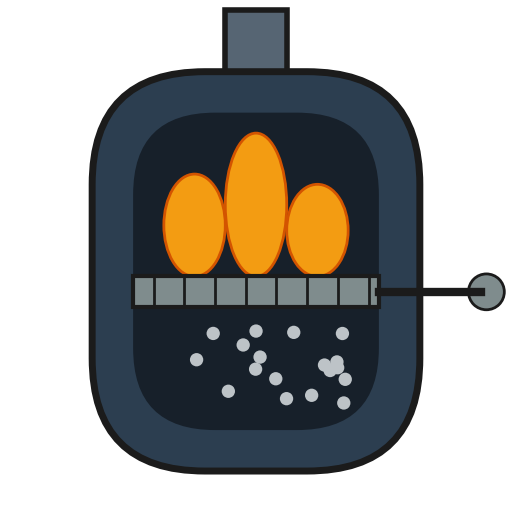
A coal stove burns on a grate: air comes up through it, ash falls down through it. As the fire burns the ash fills the openings, the air slows and the fire dies unless someone clears it.
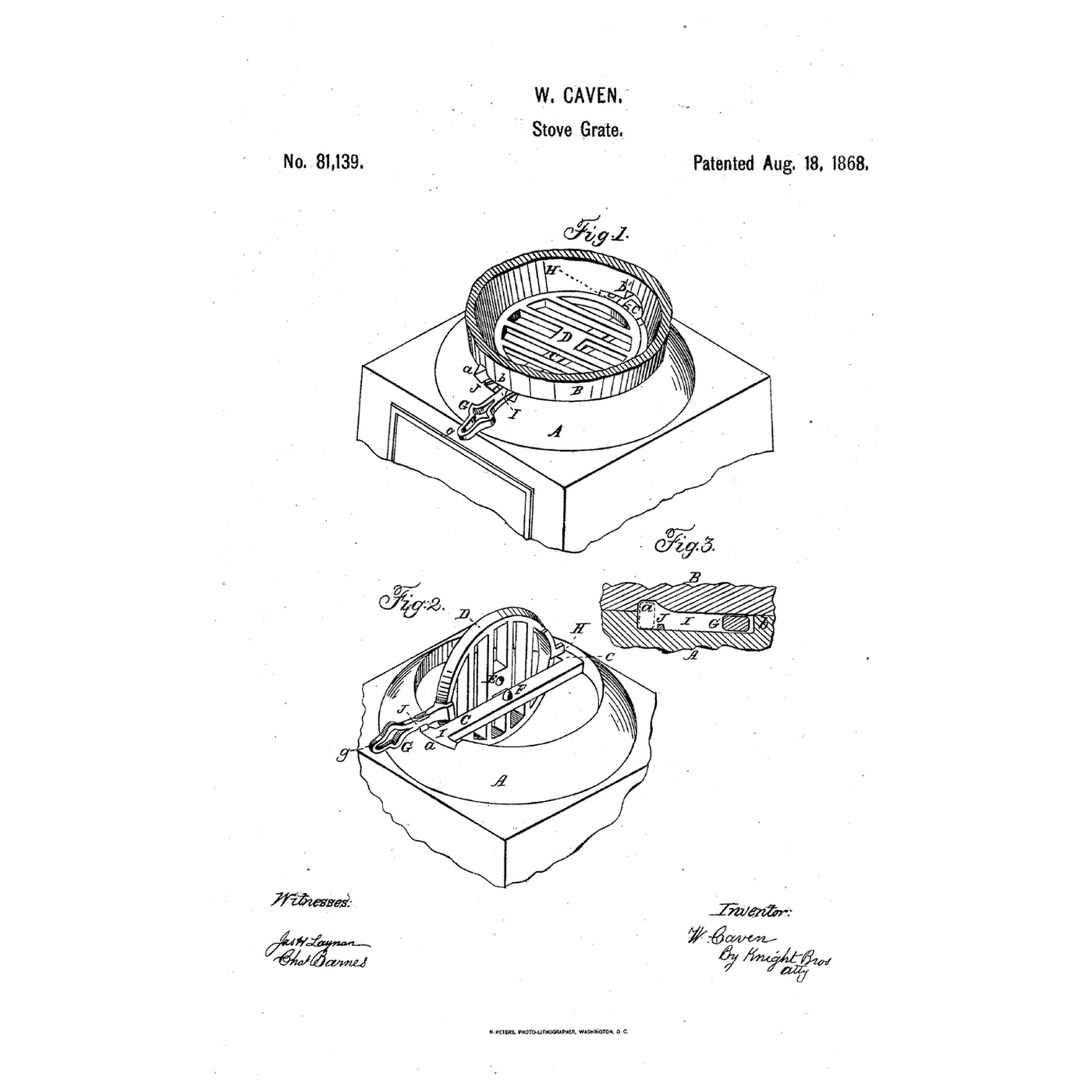
William Caven of Cincinnati received US 81,139, dated 18 August 1868, for a "Dumping and Shaking-Grate for Stoves": a round grate on a central stud that a handle can shake "about its axis for precipitation of its ashes, or, by a slight change of location, of being tilted into a vertical position for the purpose of dumping the spent fuel into the ash-pit."
This rung models how ash starves a fire and how often to shake, then measures airflow through a mesh as 'ash' builds up and is shaken off.
初心者
About 1 hour
手順
1
1
Ash, air and shaking
Ash, air and shaking
Jupyter ノートブックを読み込み中…
2
2
The iron stove before the grate
The iron stove before the grate
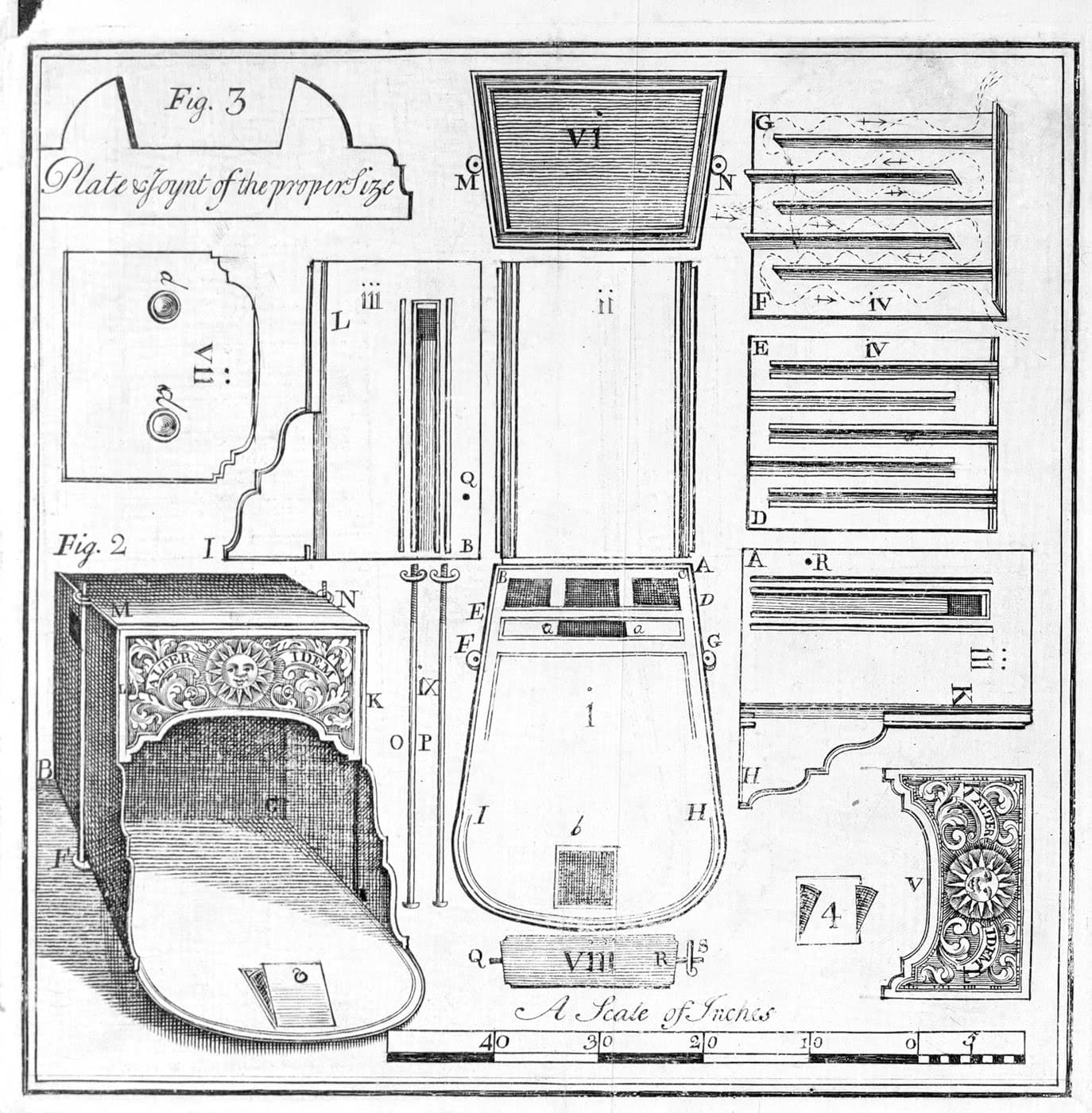
Franklin's stove brought the fire into an iron box in the room. The embedded blueprint builds one.
3
3
Read US 81,139
Read US 81,139
"My invention relates to a novel form and arrangement of circular grate for air-tight and other heating-stoves, which grate is rendered capable of being shaken horizontally about its axis for precipitation of its ashes, or, by a slight change of location, of being tilted into a vertical position for the purpose of dumping the spent fuel into the ash-pit."
"Extending transversely athwart the upper part of the ash-pit is a horizontal bar, C, which supports a circular grate, D, having, at the centre of its under side, a socket, E, for a stud or teat, F, on the top of the bar C. A handle, G, which projects from the edge of the grate, in the plane of the latter, enables the grate to be shaken or vibrated about its axis for precipitating the ashes in the common way."
"Projecting from the edge of the grate, nearly opposite to its handle, is a pivot, H, upon which, in conjunction with the handle, the grate can be tilted at one extremity of its stroke or vibration".
4
4
Airflow through a clogging grate
Airflow through a clogging grate
Stand a coarse wire mesh sieve over a box fan blowing upward, on its lowest speed. Measure the air speed just above the mesh with an anemometer.
Sprinkle a spoonful of fine sand evenly over the mesh (the 'ash') and measure again; repeat until the reading has halved. Now give the sieve a few sharp turns back and forth about its centre, as Caven's handle does, and measure again. Record how much of the flow each shake restores. Wear safety glasses against blown sand.
このステップの材料:
 細砂1 kg
必要な工具:
 粗い金網ふるい
 ボックスファン(可変速)
 手持ち風速計
 透明保護メガネ
 ストーブの火格子
5
5
A stove that burns low or will not draw
A stove that burns low or will not draw
Stove grate troubleshooting.
Flow
Loading...
6
6
History and honest limits
History and honest limits
**William Caven** of Cincinnati received US 81,139, dated 18 August 1868 (no filing date is printed on patents of that period), for grates in the "cannon" stoves of the day.
**Honest limits.** The patent gives no rates. The clogging time, restored fraction and angle of repose in the notebook are examples; the sand-and-fan test is a model, not a fire.
関連ブループリント
これらのブループリントは知識を共有しています — 技術、材料、原理


CC0 パブリックドメイン
このブループリントはCC0で公開されています。許可を求めずに、自由にコピー、修正、配布、あらゆる目的で使用できます。
メイカーを応援するには、ブループリント経由で製品を購入してください。メイカーには メイカーコミッション がベンダーにより設定されています。または、このブループリントの新しいイテレーションを作成し、自分のブループリントにコネクションとして含めて収益を共有できます。