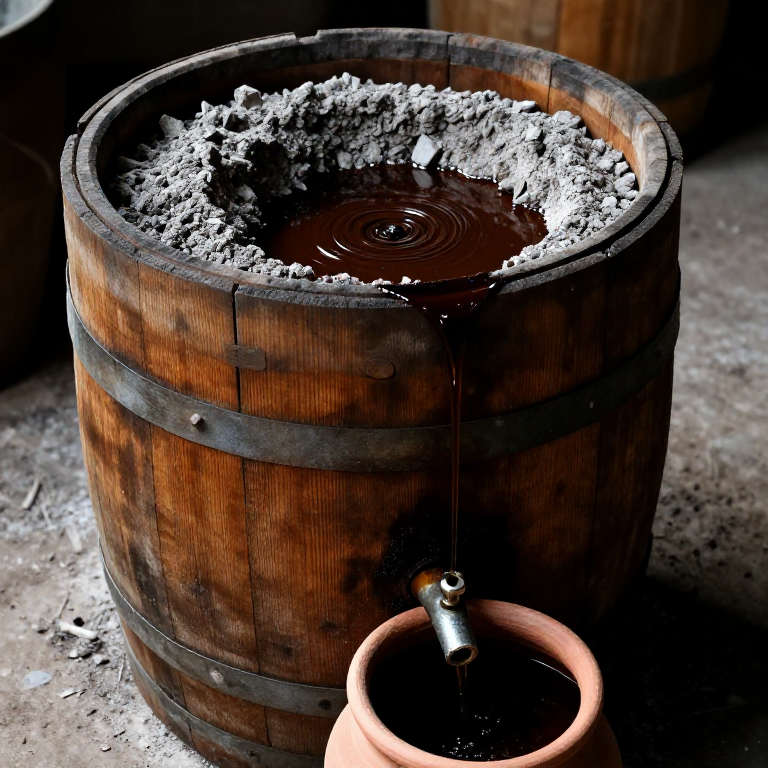


Making Lye from Wood Ash — The Alkali That Unlocked Soap, Tanning, and Dyeing
Every wood fire produces ash, and every ash pile holds a powerful chemical: potassium hydroxide, or lye. When water is poured through wood ash, it dissolves the potassium carbonate and converts it into a caustic alkaline solution. This simple process — leaching — gave pre-industrial people access to a strong base without any knowledge of chemistry.
Lye from wood ash is the essential ingredient in cold-process soap (combined with fat), in bucking cloth (bleaching linen), in nixtamalisation (treating corn to release niacin), in making hominy, in softening hides for tanning, and in dozens of traditional dyeing processes. It is arguably the most important chemical substance in pre-industrial daily life after water and salt.
The process is simple but the result is genuinely caustic — strong lye dissolves grease on contact and can burn skin. Despite its simplicity, understanding lye was a major step in humanity's chemical knowledge: the realisation that burning transforms a material into something with entirely new properties.
ការណែនាំ
Collect hardwood ash
Collect hardwood ash
សម្ភារៈសម្រាប់ជំហាននេះ៖
 ផេះឈើរឹង5 l
Build a leaching container
Build a leaching container
Pack the ash and add water
Pack the ash and add water
សម្ភារៈសម្រាប់ជំហាននេះ៖
 ទឹក10 l
Collect the lye water
Collect the lye water
Test the lye strength
Test the lye strength
Store or use immediately
Store or use immediately
សម្ភារៈប្លង់ដែលបានភ្ជាប់
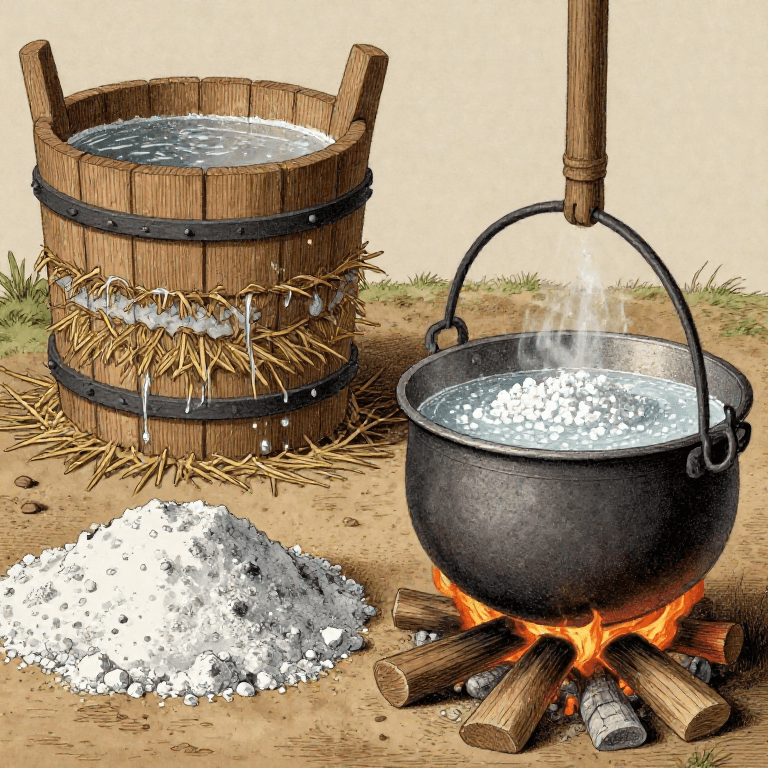

ប្លង់ពាក់ព័ន្ធ
ប្លង់ទាំងនេះចែករំលែកចំណេះដឹង — បច្ចេកទេស សម្ភារៈ ឬគោលការណ៍

CC0 សាធារណៈ
ប្លង់នេះត្រូវបានចេញផ្សាយក្រោម CC0។ អ្នកមានសិទ្ធិចម្លង កែប្រែ ចែកចាយ និងប្រើប្រាស់ដោយមិនចាំបាច់សុំអនុញ្ញាត។
គាំទ្រអ្នកបង្កើតដោយទិញផលិតផលតាមរយៈប្លង់របស់ពួកគេ ដែលពួកគេទទួលបាន កម្រៃជើងសារអ្នកបង្កើត កំណត់ដោយអ្នកលក់ ឬបង្កើតកំណែថ្មីនៃប្លង់នេះ ហើយបញ្ចូលជាការតភ្ជាប់ក្នុងប្លង់របស់អ្នកដើម្បីចែករំលែកចំណូល។