

Apple Cider Pressing
An apple is roughly 85 % water, and almost none of it will come out if you simply squeeze the fruit. Whole apples under a press just bruise and slide. The juice is locked inside intact cells, and the press cannot reach it.
Milling comes first, pressing second. Reduce the fruit to a coarse pulp — the pomace — and only then apply slow, sustained pressure. Done properly a tabletop press returns roughly two thirds of the fruit's weight as juice; done impatiently it returns half that and a great deal of mess.
This is the autumn job that everything else depends on. The same juice becomes sweet cider on the day, hard cider in a month, and vinegar by spring — and all three start with the same press and the same afternoon's work.
안내
Never press windfalls that have sat on wet ground
Never press windfalls that have sat on wet ground
Discard any fruit that is rotten, mouldy or has lain in mud. Patulin, a mould toxin, survives pressing and is the one real risk in this whole process.
Pick a mix of varieties, not one
Pick a mix of varieties, not one
Blend sharp, sweet and aromatic apples. A single dessert variety gives flat, one-note juice; the traditional blends exist for good reason.
이 단계의 재료:
 사과20 kg
Let the fruit sweat for a few days
Let the fruit sweat for a few days
Store the apples somewhere cool until they give slightly under a thumb. Softer fruit mills more easily and yields more juice.
Wash everything in clean cold water
Wash everything in clean cold water
Tip the fruit into a tub of water, agitate, and lift it out rather than draining — grit sinks and you leave it behind.
Cut out bruises and any brown flesh
Cut out bruises and any brown flesh
Quarter the apples and cut away damage. Stalks, cores and pips can all go in; only rot has to come out.
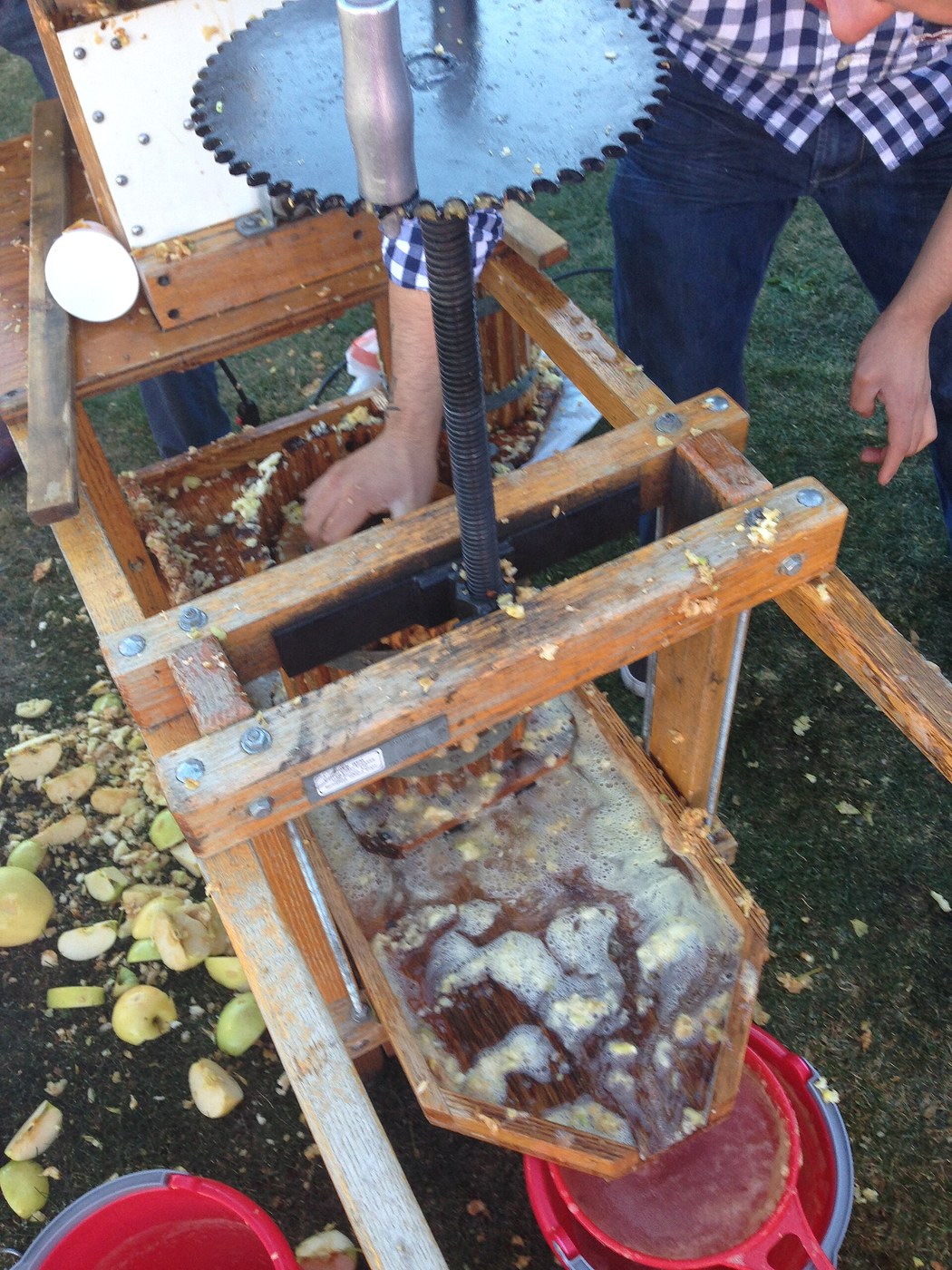
Mill the fruit to a coarse pulp
Mill the fruit to a coarse pulp
Reduce it to pieces the size of a fingernail. Whole apples in a press yield almost nothing — the milling is what breaks the cells open.
필요한 도구:
 사과즙 압착기(탁상용)
Do not mill it to purée
Do not mill it to purée
Too fine and the pomace turns to a slurry that blocks its own drainage channels. Coarse pulp presses far better than mush.
Wrap the pomace in cloth to make a cheese
Wrap the pomace in cloth to make a cheese
Spread pomace on a square of press cloth, fold the corners over, and build a stack of these parcels with a board between each. This is the cheese, and it is what stops pulp squirting out sideways.
이 단계의 재료:
 치즈용 고운 무명천2 미터
Apply pressure slowly and then stop
Apply pressure slowly and then stop
Take up the slack, get a steady flow, and then wait. Cranking hard immediately collapses the outer layer into a seal and traps the juice behind it.
Tighten again every ten minutes
Tighten again every ten minutes
As the flow slows, take up another turn. An hour of patient re-tightening beats five minutes of brute force by a wide margin.
Break up the cheese and press a second time
Break up the cheese and press a second time
Release, crumble the compressed cake, re-wrap and press again. The second pressing often adds another tenth of the total yield.
Strain the juice and weigh your yield
Strain the juice and weigh your yield
Pass it through muslin into a clean vessel and record the ratio. Expect 60-70 % of fruit weight as juice — below 50 % means the mill was too coarse or the press too fast.
Decide within the hour what it is going to be
Decide within the hour what it is going to be
Fresh juice starts fermenting on its own from wild yeast on the skins. Chill it, freeze it, or pitch yeast — but do not leave it standing warm and undecided.
이 단계의 재료:
 유리병4 개
Spread the spent pomace on the compost
Spread the spent pomace on the compost
The cake is still most of the fruit's fibre and it rots fast. Livestock will eat it too, but only fresh — it sours within a day or two.
History & Context — the autumn that everything else depends on
History & Context — the autumn that everything else depends on
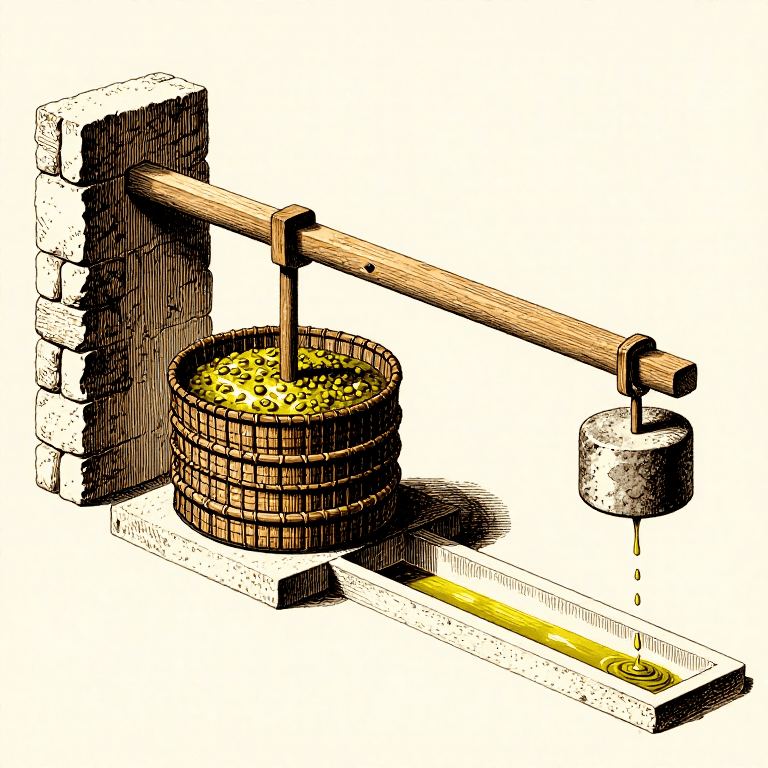
Mill then press, everywhere and always. The two-stage method is not a modern refinement. Roman writers describe it for olives, and medieval European cider making used a circular stone trough with an edge-runner stone drawn round by a horse — the pound house — to crush the fruit before it ever reached the press. The English word pomace and the French marc both name the same thing: the crushed cake that goes under pressure. The screw press itself descends directly from the Roman wine and olive presses, and the mechanism changed remarkably little between the first century and the nineteenth.
What the cloth is for. Building a stack of wrapped parcels with racks between them does two things at once. It keeps the pulp contained so it cannot extrude past the boards, and it multiplies the drainage area — juice only has to travel a couple of centimetres to reach a free surface instead of the full height of the pack. Traditional presses used straw instead of cloth, laid in alternating directions, which is where the phrase “building a cheese” comes from. The straw did the same job and left its own faint flavour.
The one genuine hazard. Penicillium expansum, the blue mould that rots stored apples, produces patulin, a mycotoxin that passes straight through the press into the juice and is not destroyed by pasteurisation. This is why commercial producers reject rotten fruit and why the advice about windfalls is not fussiness. Sound fruit, cut damage away, and the risk is gone. Clarifying the juice and fermenting it both reduce patulin substantially, but starting clean is far more reliable than trying to fix it afterwards.
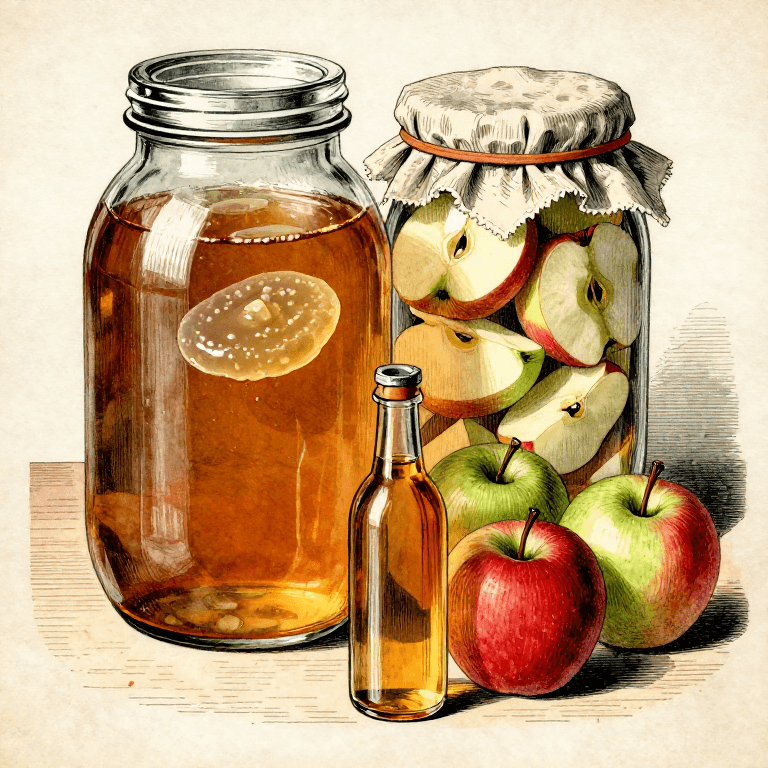
Sweet, hard and sour are the same liquid at three ages. In British usage cider means the fermented drink and the fresh juice is apple juice; in North American usage cider means the fresh unclarified juice and the fermented version is hard cider. The confusion is entirely a matter of dialect. Left alone, wild yeasts on the apple skins ferment the sugar to alcohol over weeks, and Acetobacter then oxidises that alcohol to acetic acid over months, giving cider vinegar. One pressing, three products, decided almost entirely by how long you wait and how much air you allow.
연결된 블루프린트 재료
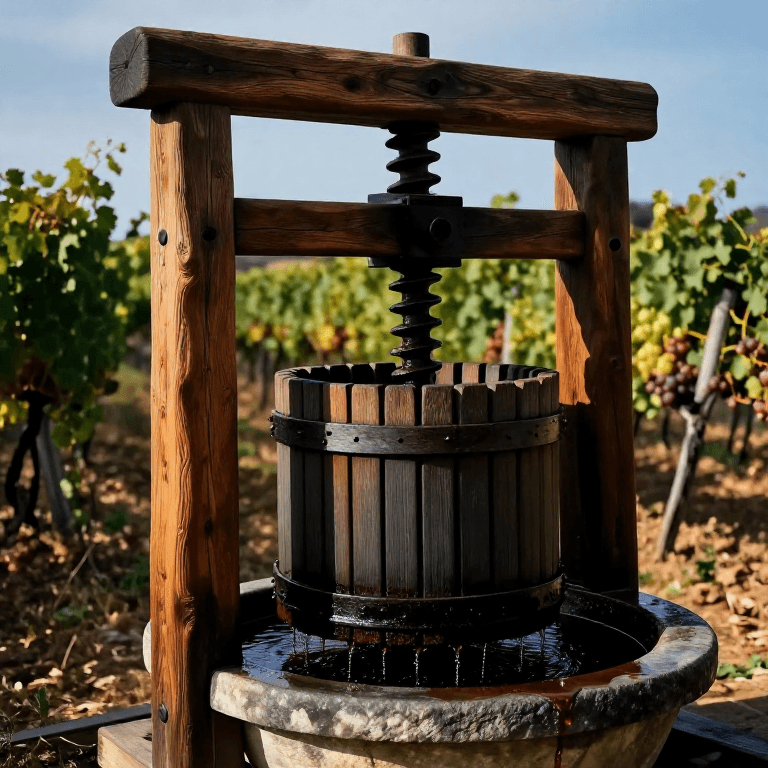

이 블루프린트로 만드는 것

관련 블루프린트
이 블루프린트들은 지식을 공유합니다 — 기술, 재료 또는 원리

CC0 퍼블릭 도메인
이 블루프린트는 CC0로 공개되었습니다. 어떤 목적으로든 자유롭게 복사, 수정, 배포 및 사용할 수 있습니다.
제품 구매를 통해 메이커를 지원하세요. 판매자가 설정한 메이커 커미션 을 받거나, 이 블루프린트의 새로운 반복을 만들어 연결로 포함시킬 수 있습니다.