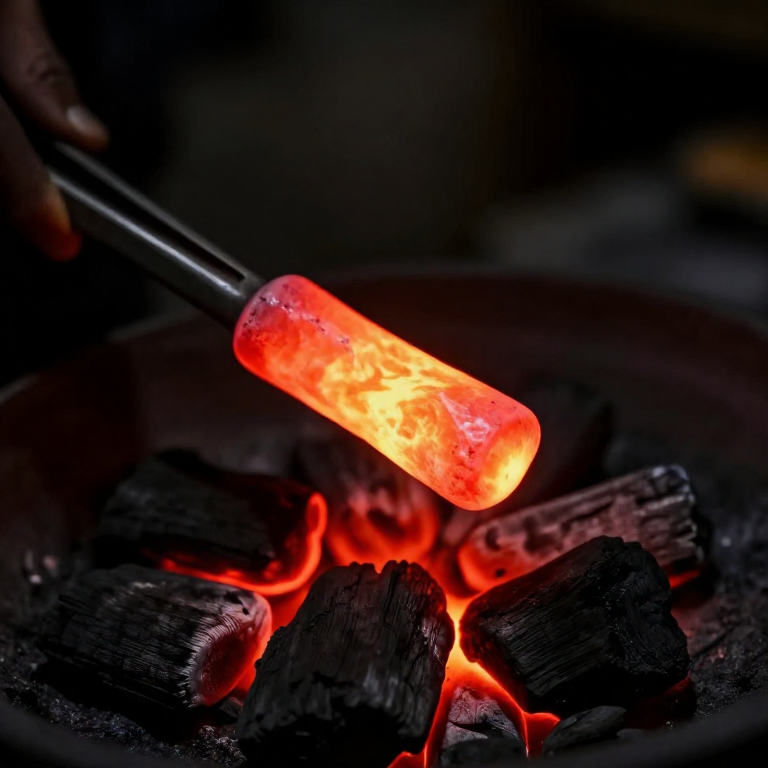


Annealing and Cold-Working Bronze — Hardening Without a Forge
Annealing and cold-working are the two inseparable halves of Bronze Age metallurgy. Every bronze tool, weapon, and ornament was shaped and strengthened by this cycle — hammer to harden, heat to soften, hammer again. Understanding these two processes is the foundation of all pre-industrial metalwork.
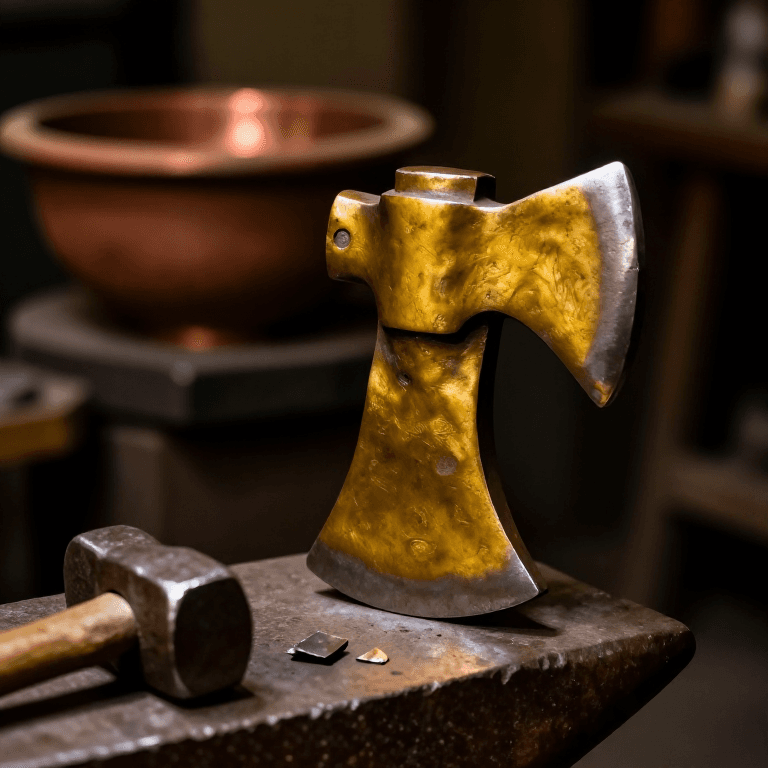
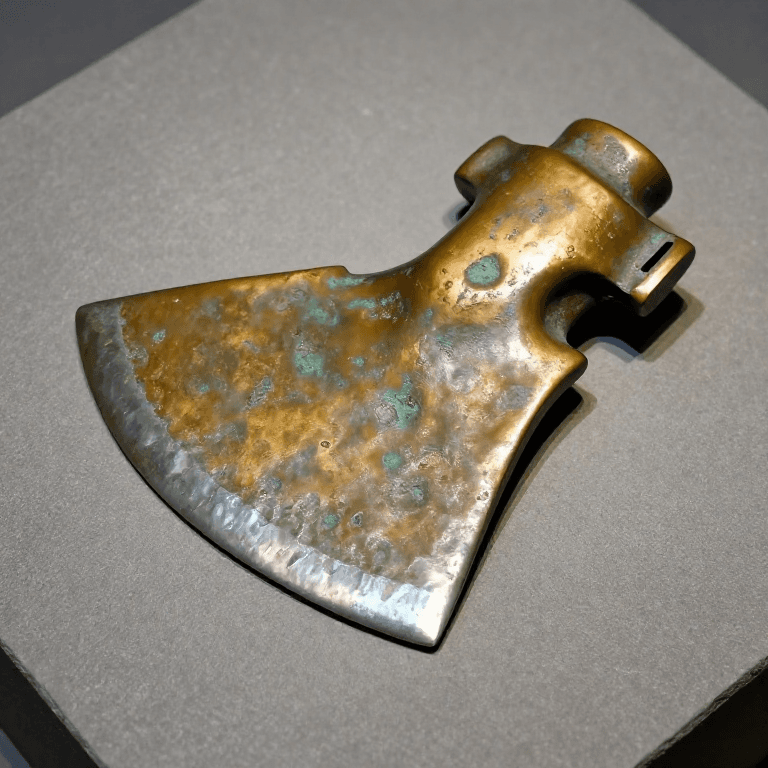
Cold-working means deforming metal at room temperature. Each hammer blow compresses the crystal grains, creating dislocations that resist further movement — the metal becomes harder and stiffer. This is called work-hardening. A freshly cast bronze axe at 80 HV (Vickers hardness) can be cold-worked to 200+ HV, rivalling mild steel.
But work-hardening has a limit. Continue hammering past it and the bronze cracks. Annealing resets the process: heating to 500-600 °C causes the distorted grains to recrystallise into new, strain-free grains. The metal is soft again and ready for the next cycle. A Bronze Age smith might anneal the same piece 15 times during a single project.
안내
Prepare a test piece
Prepare a test piece
이 단계의 재료:
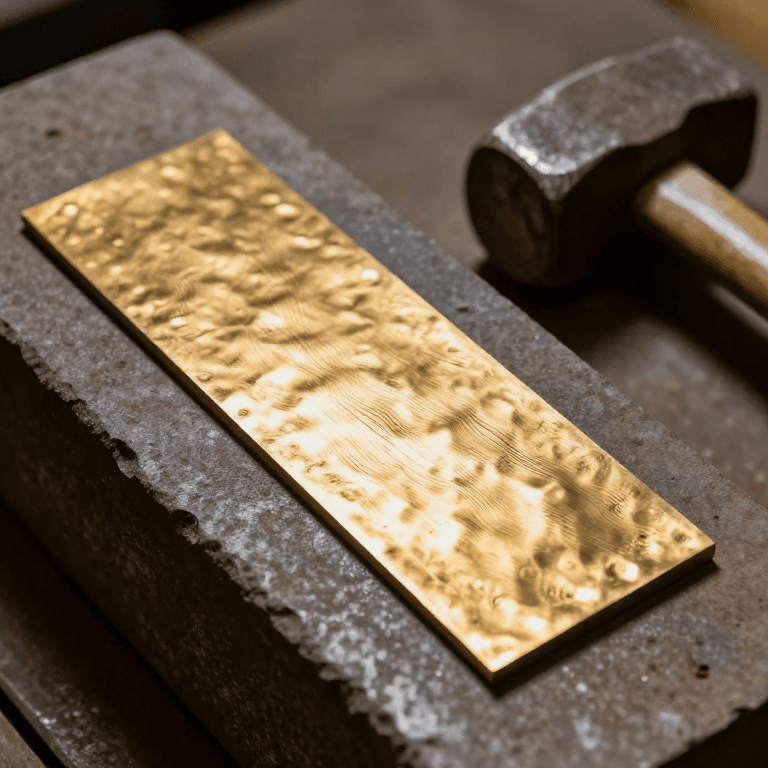
 구리판100 g
Test as-cast hardness
Test as-cast hardness
Cold-work one half
Cold-work one half
필요한 도구:
 망치돌
망치돌 평평한 돌판
Compare hardness
Compare hardness
Anneal the cold-worked section
Anneal the cold-worked section
이 단계의 재료:
 숯500 g
필요한 도구:
 자루가 긴 집게
Test annealed hardness
Test annealed hardness
Demonstrate the full cycle on a cutting edge
Demonstrate the full cycle on a cutting edge
Understand the critical differences from steel
Understand the critical differences from steel
관련 블루프린트
이 블루프린트들은 지식을 공유합니다 — 기술, 재료 또는 원리
CC0 퍼블릭 도메인
이 블루프린트는 CC0로 공개되었습니다. 어떤 목적으로든 자유롭게 복사, 수정, 배포 및 사용할 수 있습니다.
제품 구매를 통해 메이커를 지원하세요. 판매자가 설정한 메이커 커미션 을 받거나, 이 블루프린트의 새로운 반복을 만들어 연결로 포함시킬 수 있습니다.