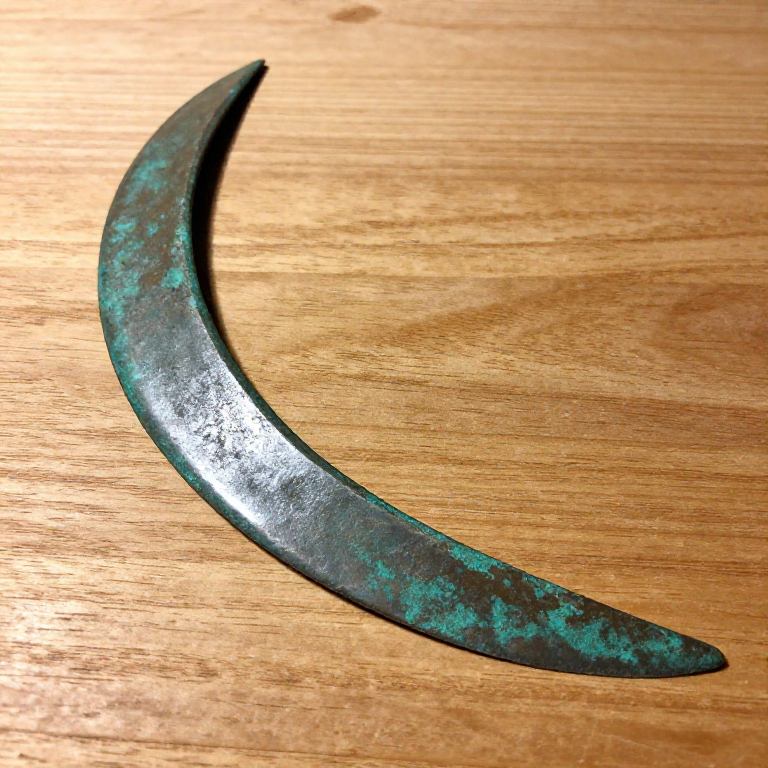


Casting a Bronze Sickle — The Harvesting Tool That Fed Civilisation
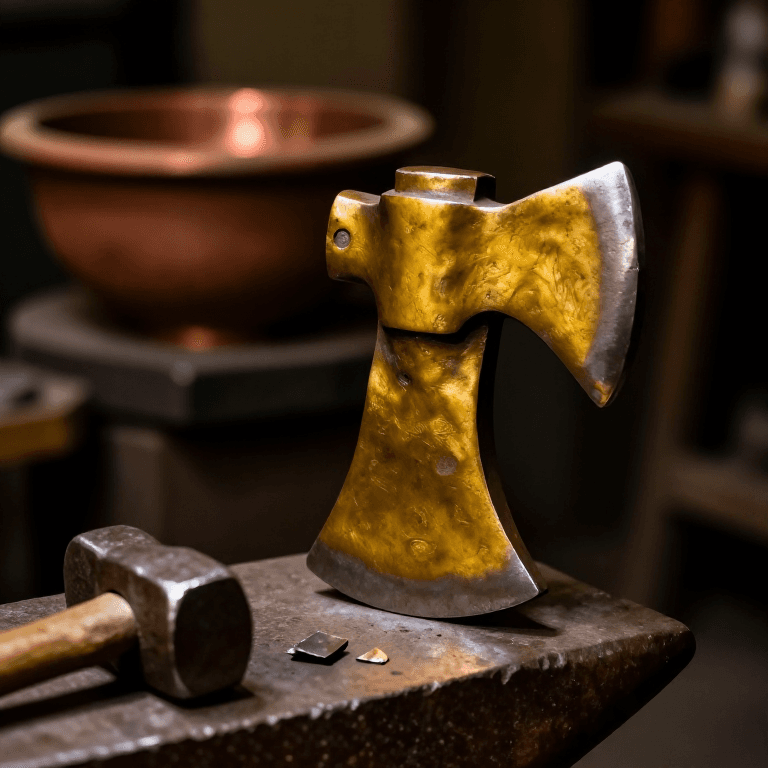
The bronze sickle was the tool that made large-scale grain agriculture possible. Its curved blade could cut a handful of wheat or barley stalks in a single sweeping motion — ten times faster than plucking individual seed heads by hand. When bronze sickles replaced flint-toothed sickles around 2000 BCE, a single farmer's harvest yield increased enough to feed several non-farming specialists, enabling the growth of cities, armies, and craft guilds.
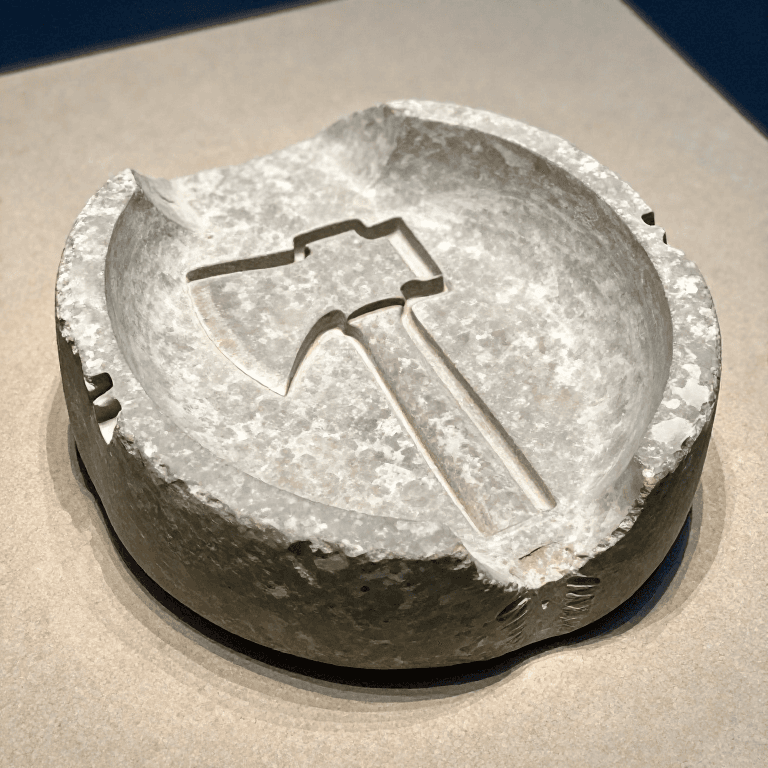
The sickle is cast in a bivalve stone mould as a flat crescent blade with a tang for hafting. The inner (cutting) edge is cold-hammered and ground sharp while the outer edge remains thick for rigidity. The curved form naturally guides the stalks into the blade as the farmer sweeps through a stand of grain.
Archaeological examples show distinctive wear polish (sickle sheen) on the cutting edge from contact with silica-rich grass stems — a telltale sign that identifies even fragmentary bronze sickles in the archaeological record.
안내
Prepare the bivalve mould
Prepare the bivalve mould
이 단계의 재료:
 동석 블록2 개
Assemble and bind the mould
Assemble and bind the mould
이 단계의 재료:
 생가죽 끈1 m
Melt and pour the bronze
Melt and pour the bronze
이 단계의 재료:
 숯3 kg
숯3 kg필요한 도구:
 도가니 집게
Cool, demould, and remove sprue
Cool, demould, and remove sprue
이 단계의 재료:
 사암(연마재)1 개
Cold-hammer the cutting edge
Cold-hammer the cutting edge
필요한 도구:
 망치돌
망치돌 평평한 돌판
Grind and sharpen
Grind and sharpen
이 단계의 재료:
 숫돌1 개
숫돌1 개Shape the wooden handle
Shape the wooden handle
Haft the sickle and secure
Haft the sickle and secure
연결된 블루프린트 재료
이 블루프린트로 만드는 것

관련 블루프린트
이 블루프린트들은 지식을 공유합니다 — 기술, 재료 또는 원리
CC0 퍼블릭 도메인
이 블루프린트는 CC0로 공개되었습니다. 어떤 목적으로든 자유롭게 복사, 수정, 배포 및 사용할 수 있습니다.
제품 구매를 통해 메이커를 지원하세요. 판매자가 설정한 메이커 커미션 을 받거나, 이 블루프린트의 새로운 반복을 만들어 연결로 포함시킬 수 있습니다.