


Forging an Iron Chisel — The Cutting Tool That Shapes Stone, Wood, and Metal
The chisel is perhaps the most versatile tool ever forged. A blacksmith's cold chisel cuts iron on the anvil. A mason's point chisel dresses stone blocks. A carpenter's firmer chisel shapes timber joints. In every case, the principle is the same: a hardened steel or iron edge driven by a hammer blow concentrates force onto a line, splitting the material along that line.
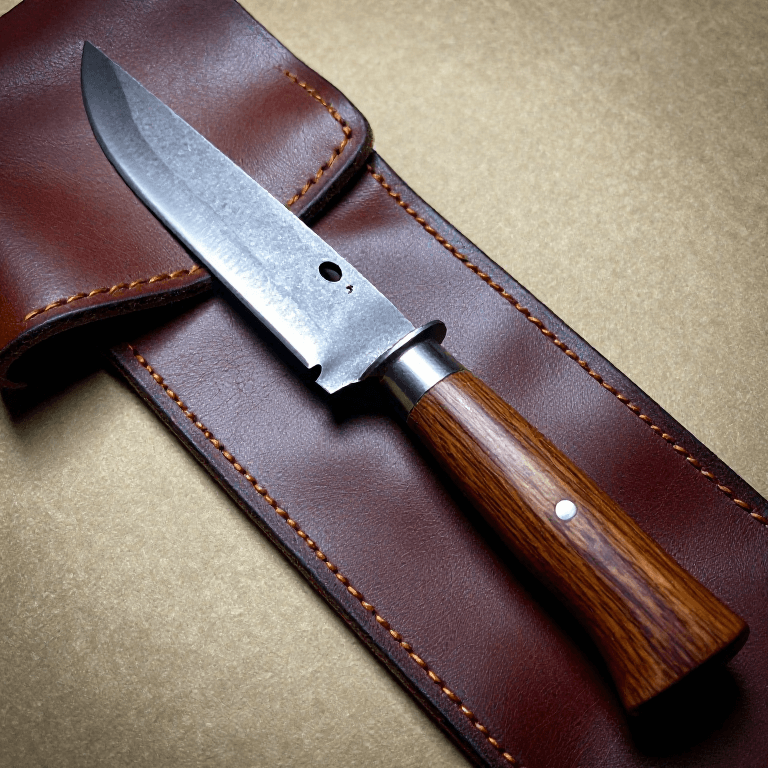
An iron chisel is forged from a single bar of wrought iron: one end is drawn to a flat wedge for the cutting edge, the other end is left square as the striking head. The critical technique is case-carburising the cutting end — packing it in charcoal and heating it to absorb carbon, converting the surface layer from soft wrought iron into hardenable steel. This steel edge is then quench-hardened and tempered, giving the chisel a hard cutting face backed by a tough, shock-absorbing body.
안내
Select and cut the bar stock
Select and cut the bar stock
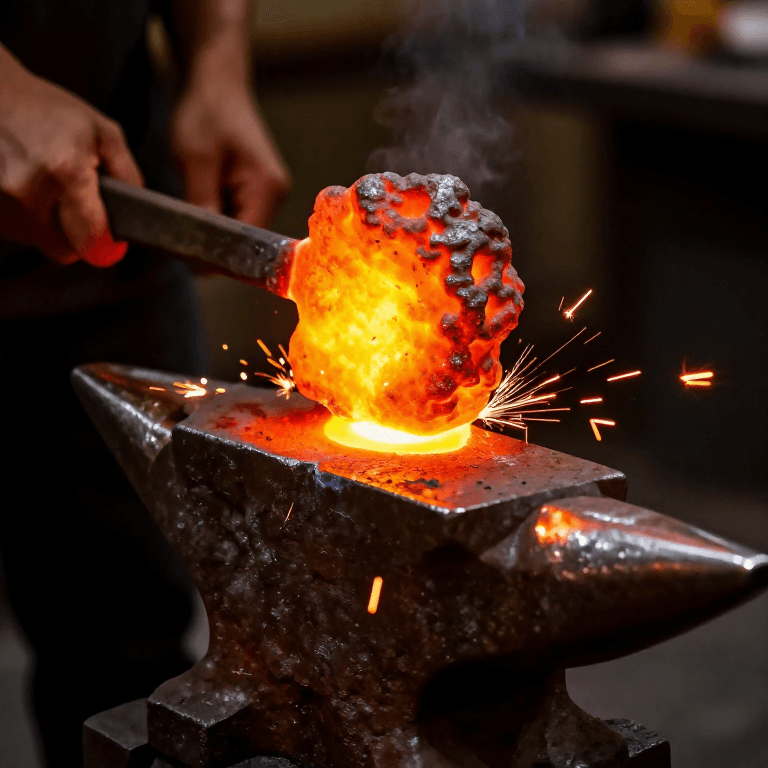
Forge the cutting end to a wedge
Forge the cutting end to a wedge
이 단계의 재료:
 숯3 kg
숯3 kg필요한 도구:
 단조 망치
단조 망치 대장간 집게
 화덕 (대장간 불)
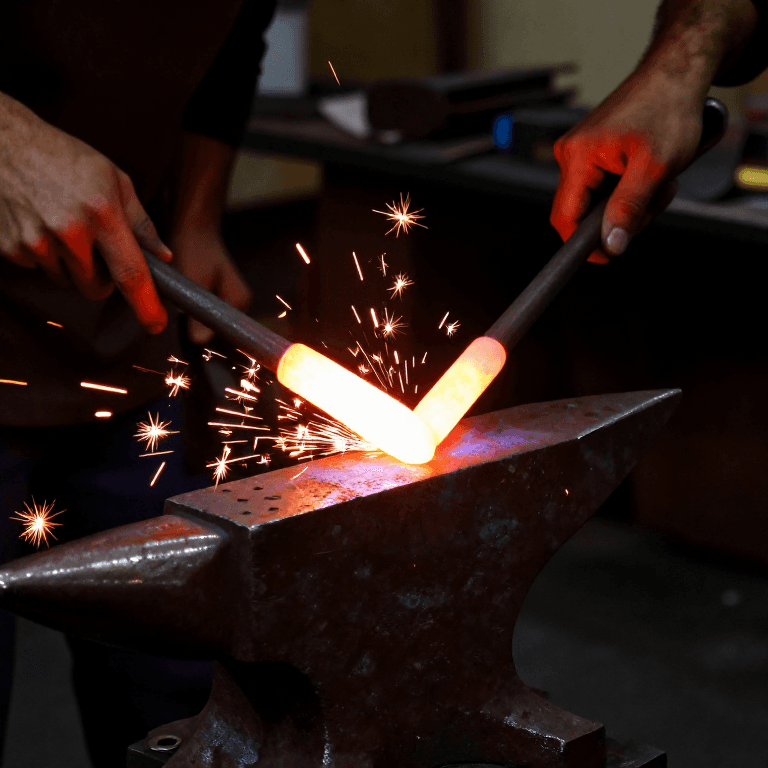
Form the striking head
Form the striking head
Straighten and true
Straighten and true
Case-carburise the cutting end
Case-carburise the cutting end
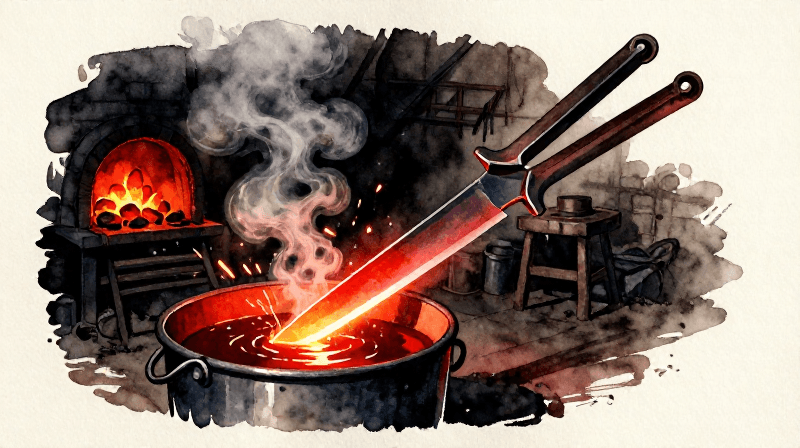
Quench-harden the edge
Quench-harden the edge
이 단계의 재료:
 물5 l
물5 lTemper the hardened edge
Temper the hardened edge
필요한 도구:
 사암(연마재)
Grind the final edge
Grind the final edge
필요한 도구:
 숫돌
숫돌연결된 블루프린트 재료
이 블루프린트로 만드는 것

관련 블루프린트
이 블루프린트들은 지식을 공유합니다 — 기술, 재료 또는 원리
CC0 퍼블릭 도메인
이 블루프린트는 CC0로 공개되었습니다. 어떤 목적으로든 자유롭게 복사, 수정, 배포 및 사용할 수 있습니다.
제품 구매를 통해 메이커를 지원하세요. 판매자가 설정한 메이커 커미션 을 받거나, 이 블루프린트의 새로운 반복을 만들어 연결로 포함시킬 수 있습니다.