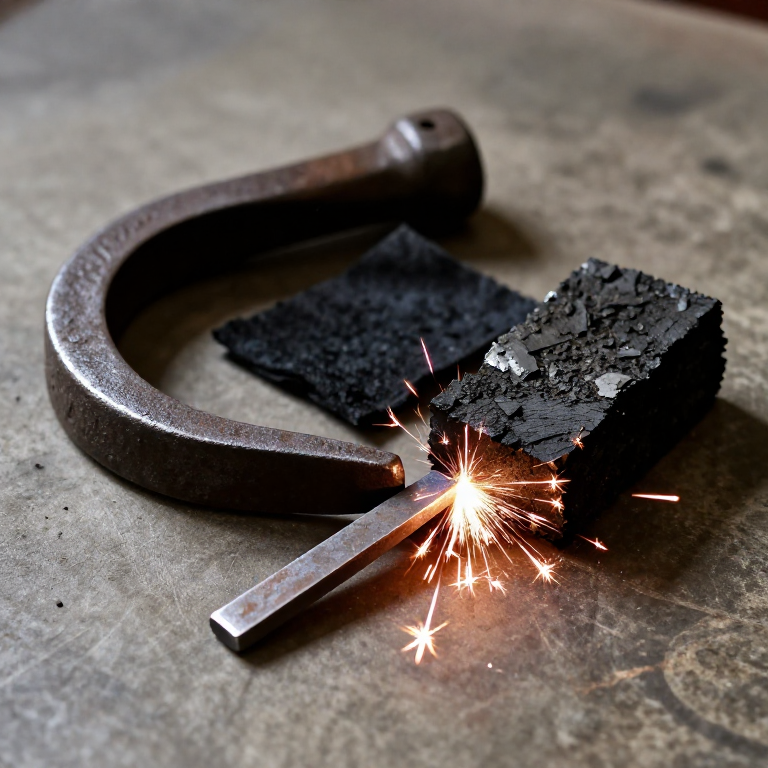


Striking Fire with Flint and Steel — The Iron Age Upgrade to Fire Starting
The moment iron became available, someone struck it against flint and noticed the sparks were hotter and more reliable than the old flint-on-pyrite method. Flint and steel replaced friction fire-starting and flint-on-pyrite across the entire Old World and remained the primary fire-starting technology for over two thousand years — from the Iron Age through the invention of friction matches in the 1830s.
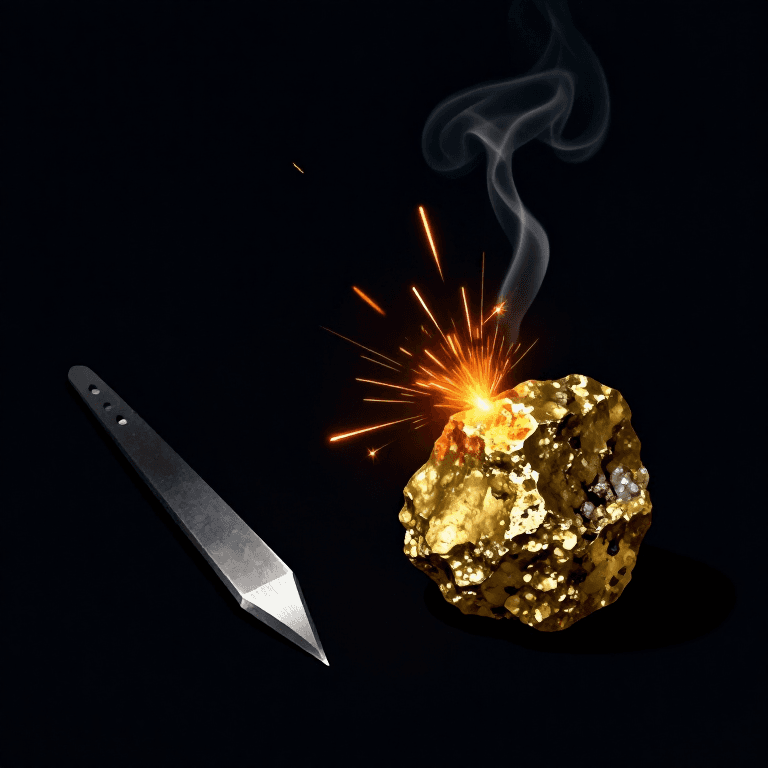
The principle is simple: striking a hardened steel edge sharply against the sharp edge of flint shears off tiny curls of steel. The impact heats these curls to their ignition temperature (about 1,500 °C) and they burn in air as bright white sparks. These sparks are caught in a prepared tinder — charcloth, dried fungus, or charred plant pith — which smoulders and is blown into flame.
The steel used must be high-carbon steel (case-carburised wrought iron or proper spring steel). Soft wrought iron does not produce good sparks — the flint simply scrapes off cold shavings. A properly made fire steel is one of the most important personal tools in pre-match society.
안내
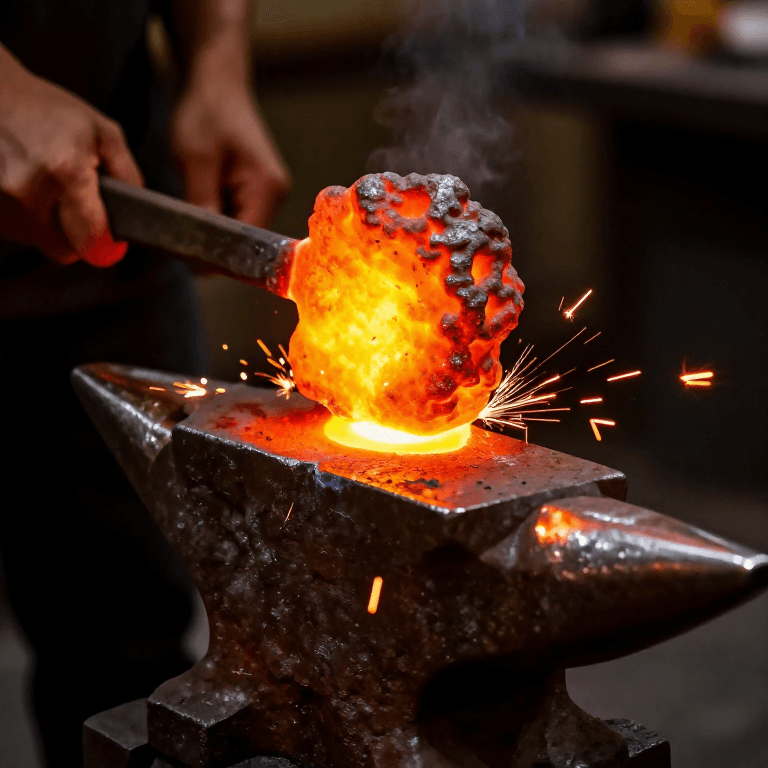
Forge the fire steel blank
Forge the fire steel blank
이 단계의 재료:
 숯2 kg
숯2 kg필요한 도구:
 단조 망치
단조 망치 대장간 집게
 화덕 (대장간 불)
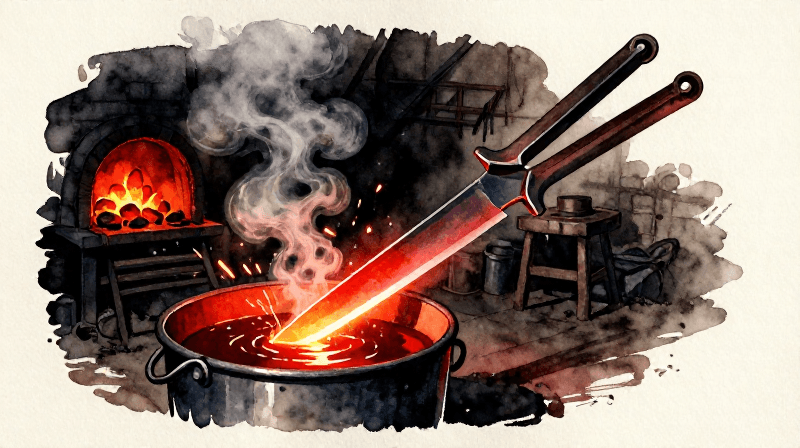
Harden the striking edge
Harden the striking edge
Select and prepare flint
Select and prepare flint
Make charcloth tinder
Make charcloth tinder
Strike sparks onto the tinder
Strike sparks onto the tinder
Blow the ember into flame
Blow the ember into flame
연결된 블루프린트 재료
이 블루프린트로 만드는 것
관련 블루프린트
이 블루프린트들은 지식을 공유합니다 — 기술, 재료 또는 원리

CC0 퍼블릭 도메인
이 블루프린트는 CC0로 공개되었습니다. 어떤 목적으로든 자유롭게 복사, 수정, 배포 및 사용할 수 있습니다.
제품 구매를 통해 메이커를 지원하세요. 판매자가 설정한 메이커 커미션 을 받거나, 이 블루프린트의 새로운 반복을 만들어 연결로 포함시킬 수 있습니다.