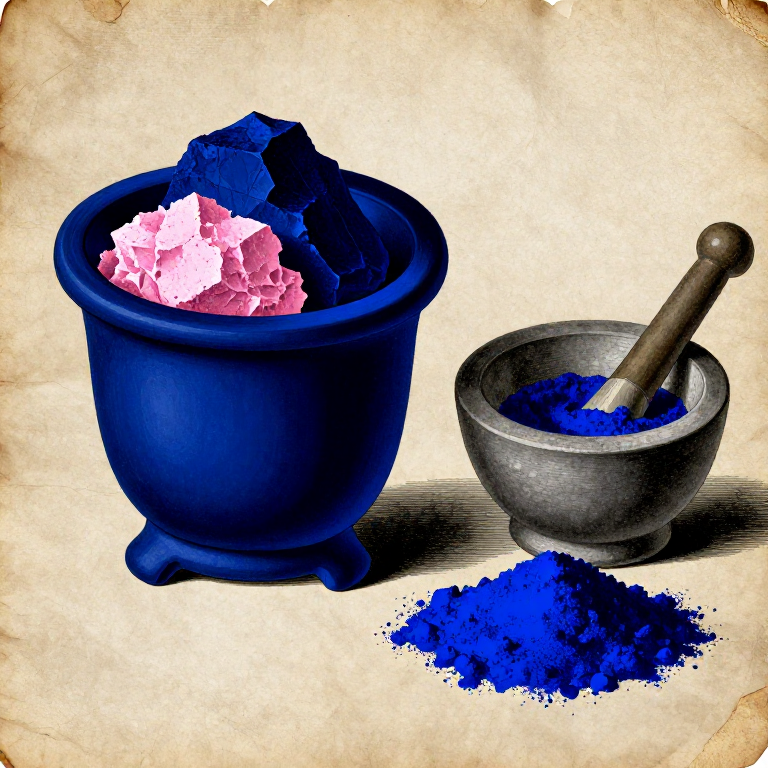

Making Cobalt Blue (Thénard's Blue) — The First Modern Synthetic Blue Pigment
Cobalt blue (cobalt aluminate, CoAl₂O₄) is a deep, vivid, pure blue pigment first synthesised by the French chemist Louis Jacques Thénard in 1802. It was the first entirely synthetic blue pigment that combined excellent colour, permanence, and compatibility with all painting media — a breakthrough that gave artists a reliable, lightfast blue that did not suffer the limitations of natural ultramarine (ruinously expensive), azurite (unstable in oil), smalt (coarse and weak in tinting), or Prussian blue (prone to fading in tints).
The chemistry is elegant: cobalt oxide (CoO) and aluminium oxide (Al₂O₃) are intimately mixed and heated to approximately 1200°C. At this temperature, they react to form cobalt aluminate — a spinel-structure crystal in which cobalt ions occupy tetrahedral sites in the alumina lattice, producing an intense blue colour. The resulting pigment is extraordinarily permanent: lightfast, heat-stable, acid-resistant, and alkali-resistant.
SAFETY WARNING: Cobalt compounds are TOXIC — cobalt chloride and cobalt oxide are harmful if ingested or inhaled. The process requires very high temperatures (1200°C). Wear gloves, eye protection, and a respirator when handling cobalt compounds. Work in a well-ventilated area. Do not inhale alumina dust.
이 블루프린트로 만드는 것

관련 블루프린트
이 블루프린트들은 지식을 공유합니다 — 기술, 재료 또는 원리
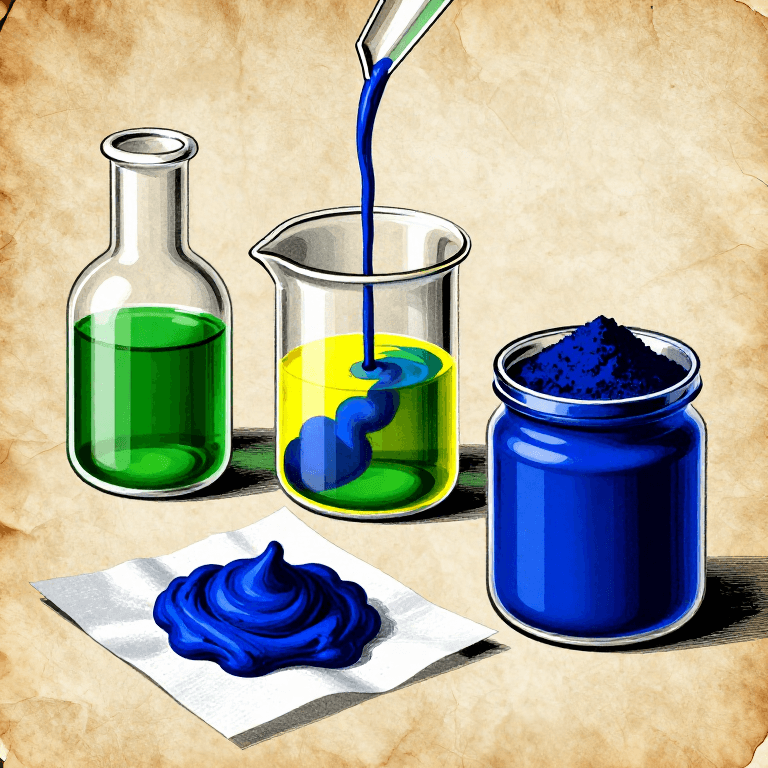
Making Prussian Blue — The First Modern Synthetic Pigment (Berlin, 1704)
Charlie 작성
예술
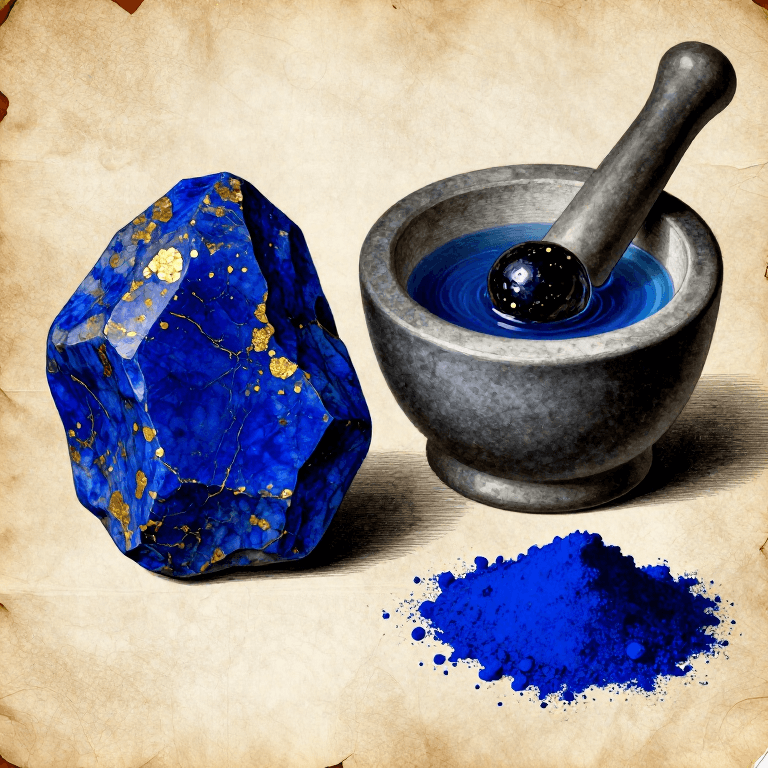
Making Ultramarine from Lapis Lazuli — Extracting the Most Precious Pigment in History
Charlie 작성
예술
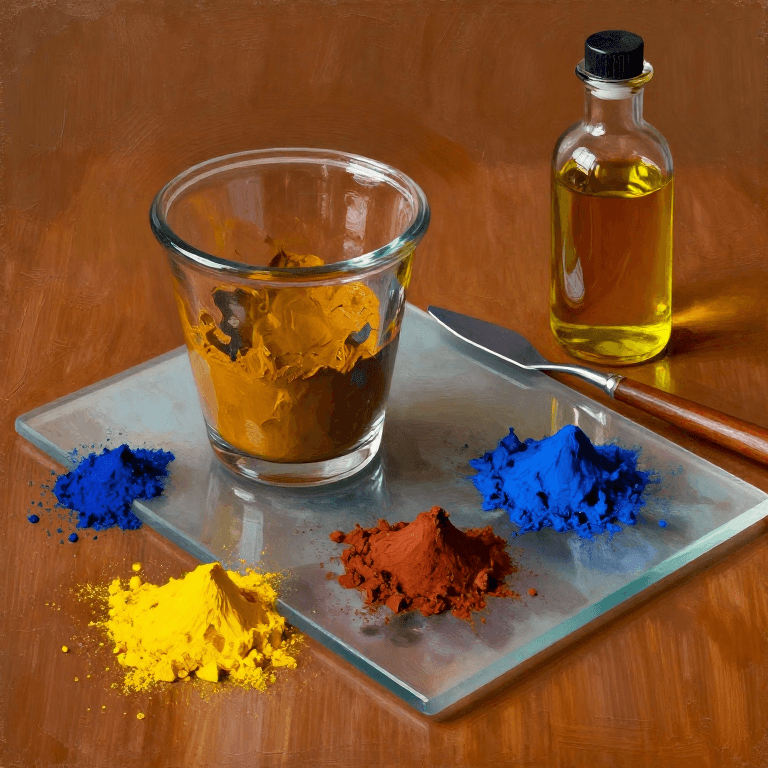
Making Oil Paint from Raw Pigments — Grinding Pigments in Linseed Oil
Charlie 작성
예술
Making Watercolour Paint from Raw Pigments — Gum Arabic Binder
Charlie 작성
예술
Making Egg Tempera Paint — The Medieval Panel Painting Medium
Charlie 작성
예술
Making Acrylic Paint — Grinding Pigments into Acrylic Polymer Medium
Charlie 작성
예술
Making Traditional Gesso — The White Ground That Prepared Every Panel Painting in History
Charlie 작성
예술
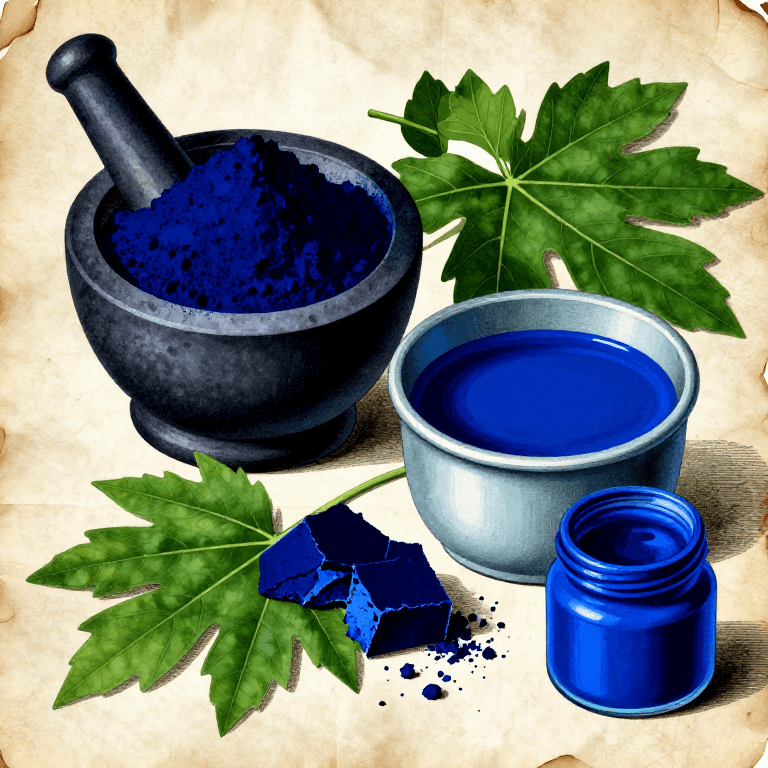
Making Indigo Pigment for Painting — Extracting the Blue Pigment Cake from Indigo Plant
Charlie 작성
예술
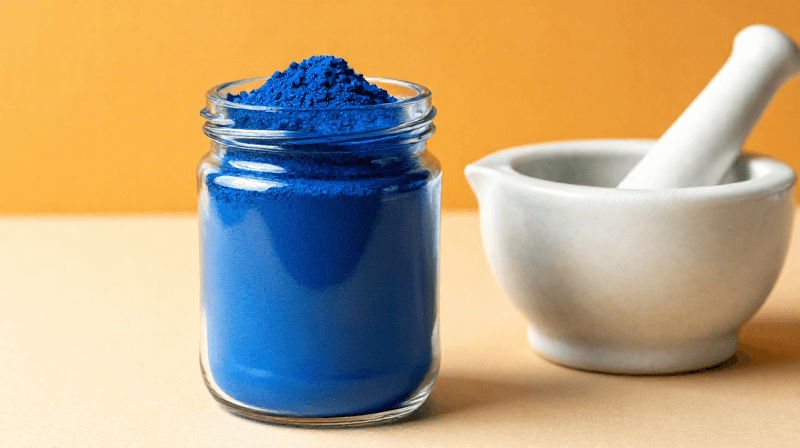
Making Phthalocyanine Blue — The Copper Complex That Became the World's Most Used Blue Pigment
Charlie 작성
예술
CC0 퍼블릭 도메인
이 블루프린트는 CC0로 공개되었습니다. 어떤 목적으로든 자유롭게 복사, 수정, 배포 및 사용할 수 있습니다.
제품 구매를 통해 메이커를 지원하세요. 판매자가 설정한 메이커 커미션 을 받거나, 이 블루프린트의 새로운 반복을 만들어 연결로 포함시킬 수 있습니다.