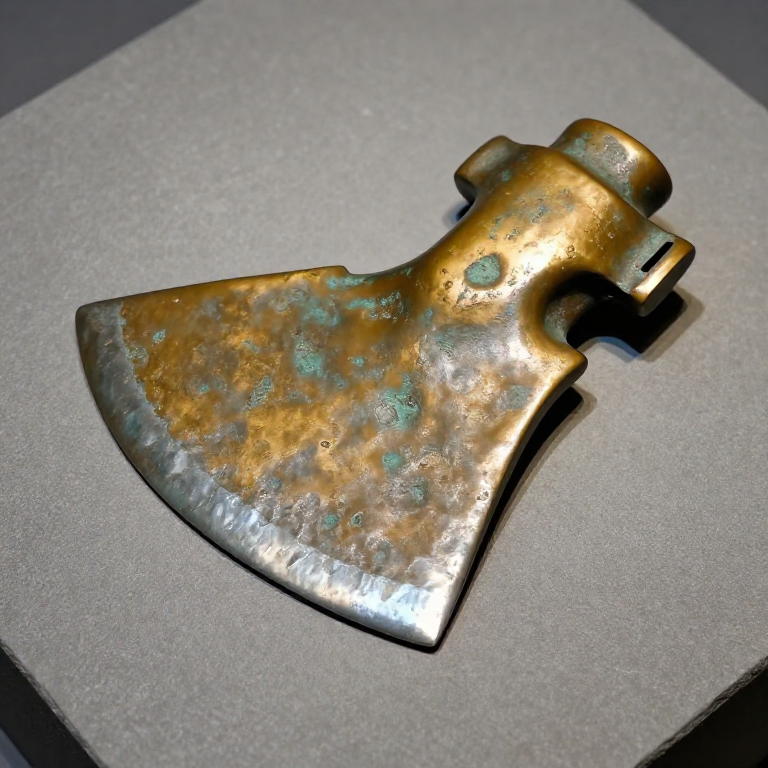


Casting a Bronze Flat Axe — The First Metal Cutting Tool
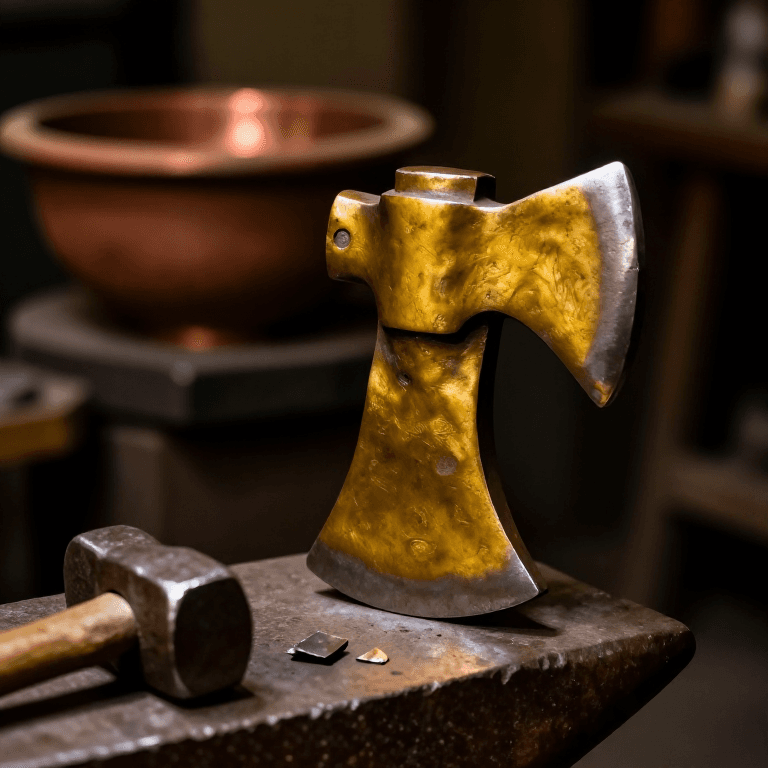
The flat axe was the first metal tool to surpass its stone predecessor in every way — sharper, more durable, and resharpened by simple hammering rather than knapping a new edge. Cast from bronze (roughly 90% copper, 10% tin), these axes appeared across Europe, the Near East, and East Asia from around 3300 BCE.
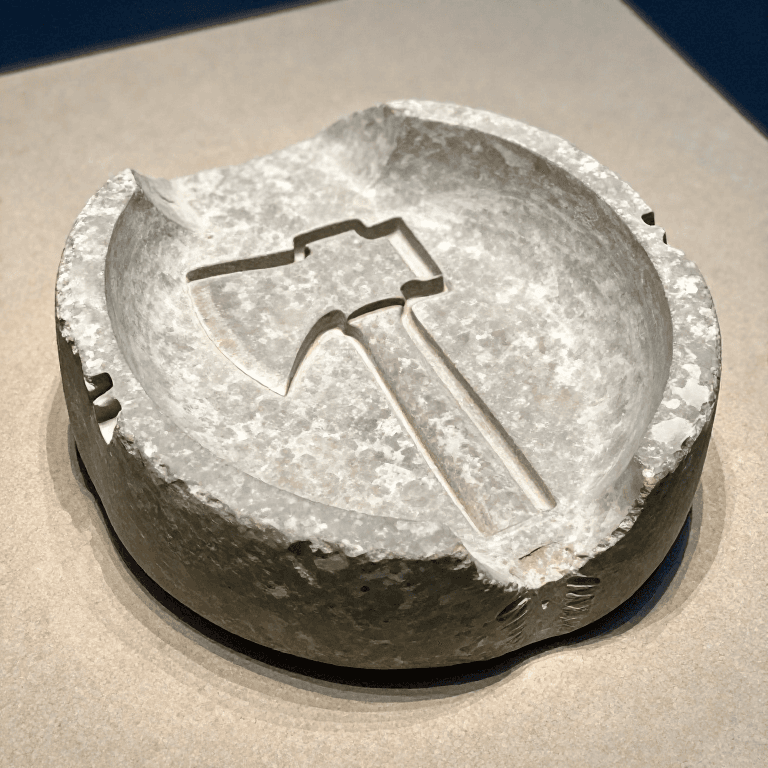
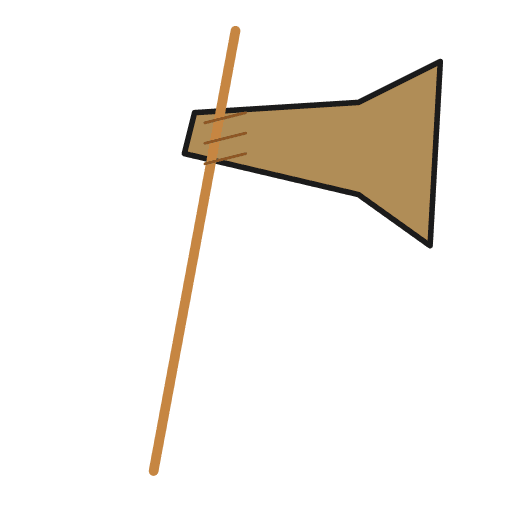
This blueprint uses an open-face stone mould — the simplest casting method. Molten bronze is poured into a carved soapstone cavity and allowed to cool. The resulting casting has one flat face (from the mould floor) and one slightly convex face (from the open top where the metal surface tensions). After demoulding, the axe is cold-hammered to harden the cutting edge, ground to shape, and hafted onto a wooden handle with rawhide lashing.
A single flat axe required the combined knowledge of mining, smelting, alloying, crucible-making, mould-carving, and woodworking — making it one of the most knowledge-intensive objects of its era.
คำแนะนำ
Prepare the mould
Prepare the mould
วัสดุสำหรับขั้นตอนนี้:
 ไขมันสัตว์ (ไขวัว)30 ก.
Charge the crucible with bronze
Charge the crucible with bronze
วัสดุสำหรับขั้นตอนนี้:
 แผ่นทองแดง270 ก.
Melt and alloy the bronze
Melt and alloy the bronze
วัสดุสำหรับขั้นตอนนี้:
 ถ่านไม้3 กก.
Pour the bronze into the mould
Pour the bronze into the mould
เครื่องมือที่ต้องใช้:
 คีมคีบเบ้าหลอม
Cool and demould
Cool and demould
Remove the pour channel and flash
Remove the pour channel and flash
เครื่องมือที่ต้องใช้:
 หินทุบ
Cold-hammer the cutting edge
Cold-hammer the cutting edge
เครื่องมือที่ต้องใช้:
 แผ่นหินเรียบ
Grind and sharpen
Grind and sharpen
เครื่องมือที่ต้องใช้:
 หินลับมีด
 หินทราย (วัสดุขัด)
Shape the haft
Shape the haft
Bind the axe head to the haft
Bind the axe head to the haft
วัสดุสำหรับขั้นตอนนี้:
 แถบหนังดิบ2 m
วัสดุ
4- 30 ก.ตัวยึดตำแหน่ง
- 270 ก.ตัวยึดตำแหน่ง
- 3 กก.ตัวยึดตำแหน่ง
- 2 mตัวยึดตำแหน่ง
เครื่องมือที่จำเป็น
5- ตัวยึดตำแหน่ง
- ตัวยึดตำแหน่ง
- ตัวยึดตำแหน่ง
- ตัวยึดตำแหน่ง
- ตัวยึดตำแหน่ง
วัสดุจากพิมพ์เขียวที่เชื่อมต่อ
พิมพ์เขียวนี้สร้าง
บลูพริ้นท์ที่เกี่ยวข้อง
บลูพริ้นท์เหล่านี้แบ่งปันความรู้ — เทคนิค วัสดุ หรือหลักการ
CC0 สาธารณสมบัติ
พิมพ์เขียวนี้เผยแพร่ภายใต้ CC0 คุณสามารถคัดลอก แก้ไข แจกจ่าย และใช้งานผลงานนี้เพื่อวัตถุประสงค์ใดก็ได้ โดยไม่ต้องขออนุญาต
สนับสนุนเมกเกอร์โดยซื้อสินค้าผ่านพิมพ์เขียวของพวกเขา ซึ่งพวกเขาจะได้รับ ค่าคอมมิชชันเมกเกอร์ ที่ผู้ขายกำหนด หรือสร้างเวอร์ชันใหม่ของพิมพ์เขียวนี้และรวมเป็นการเชื่อมต่อในพิมพ์เขียวของคุณเพื่อแบ่งรายได้