ศิลปะ
ความงามและสุขภาพ
งานฝีมือ
วัฒนธรรมและประวัติศาสตร์
ความบันเทิง
สิ่งแวดล้อม
อาหารและเครื่องดื่ม
วิศวกรรมย้อนรอย
วิทยาศาสตร์
กีฬา
เทคโนโลยี
อุปกรณ์สวมใส่


HDPE Pellets: Ethylene Polymerised in a Fluidised Bed
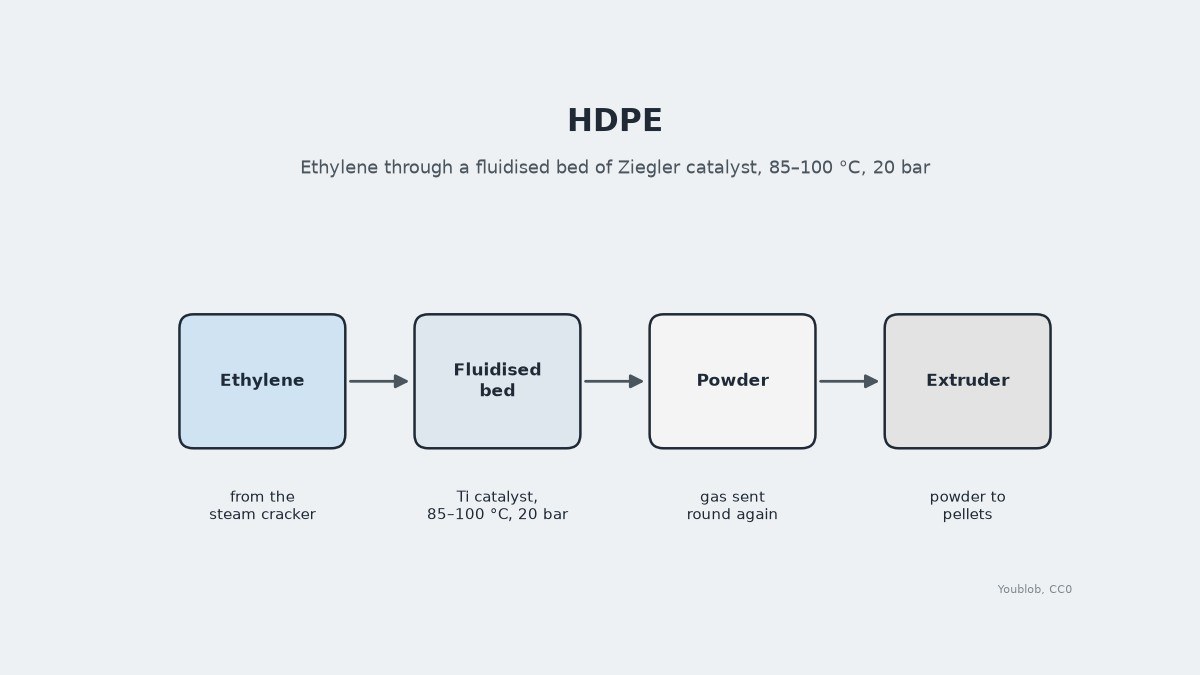
High-density polyethylene is made at low pressure on a Ziegler catalyst (a titanium halide with an aluminium compound). In the gas-phase process, ethylene flows up through a fluidised bed of fine catalyst at 85–100 °C and 20 bar and grows into polymer powder, which is melted and cut into pellets.
The picture: our diagram of the bed reactor and extruder.
ขั้นสูง
Continuous
คำแนะนำ
1
1
Polymerise in a fluidised bed
Polymerise in a fluidised bed
Feed fine catalyst into the bed reactor and blow ethylene up through it at 85–100 °C and 20 bar. The polymer grows on the catalyst grains.
วัสดุสำหรับขั้นตอนนี้:
 เอทิลีน1 t
เครื่องมือที่ต้องใช้:
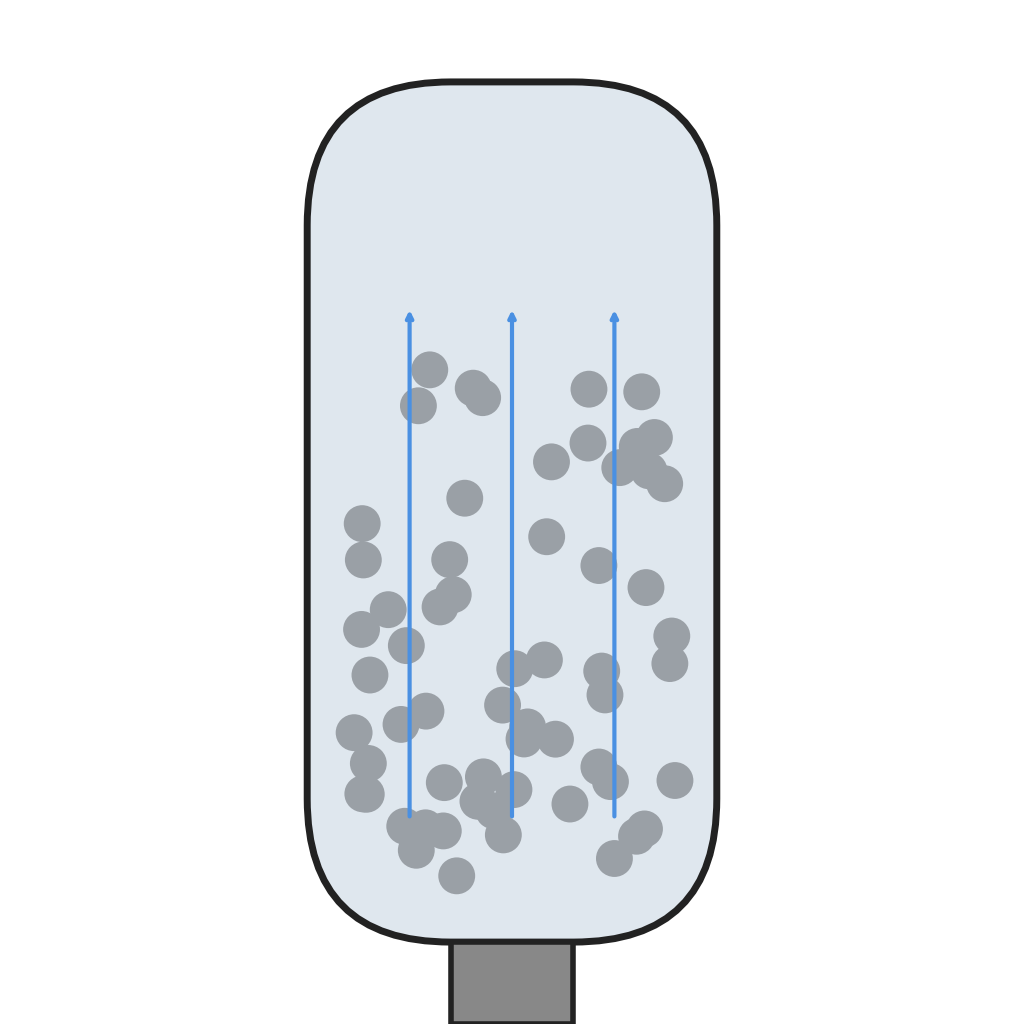 เครื่องปฏิกรณ์เบดฟลูอิไดซ์
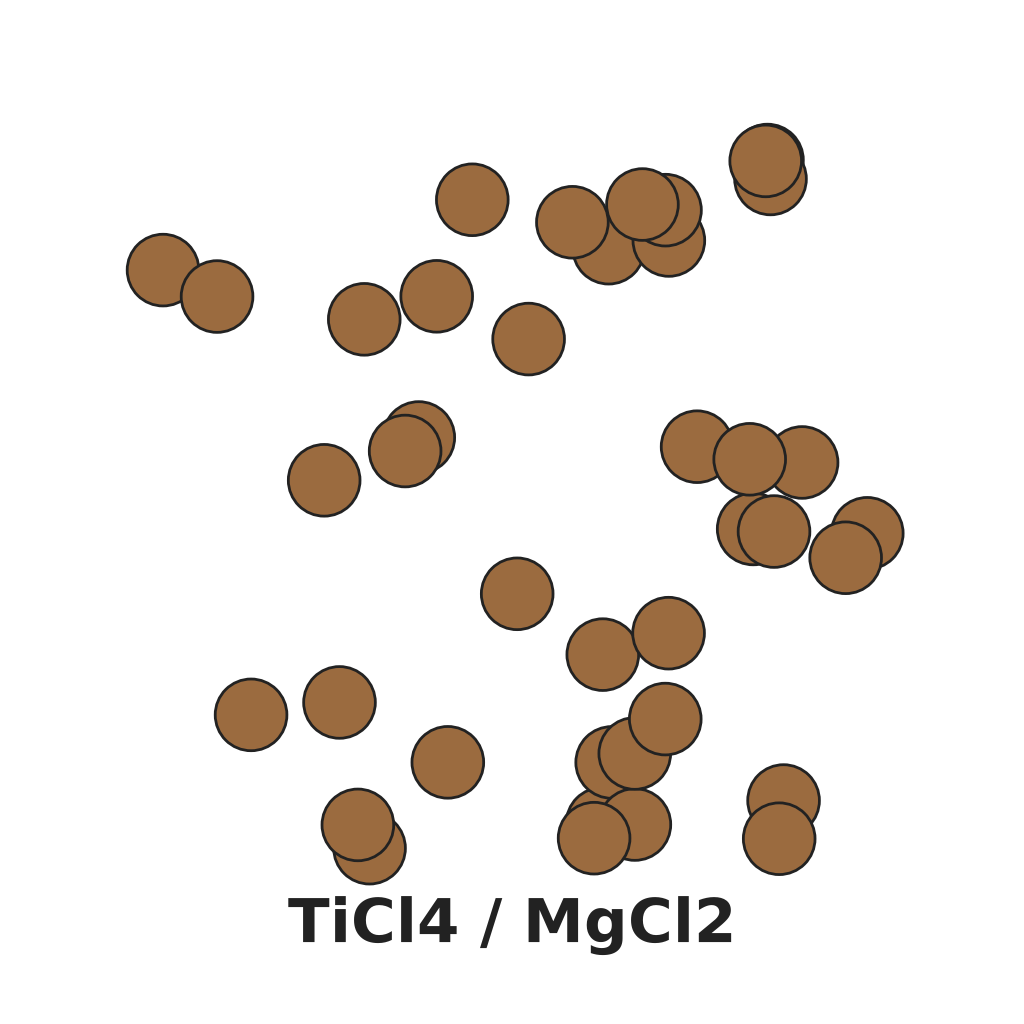 ตัวเร่งปฏิกิริยาซีเกลอร์–นัตตา (TiCl4 บน MgCl2)
 เครื่องอัดก๊าซ
2
2
Take off the powder
Take off the powder
Draw the polyethylene powder off the bed; compress the unreacted ethylene and send it round again.
เครื่องมือที่ต้องใช้:
เครื่องปฏิกรณ์เบดฟลูอิไดซ์เครื่องอัดก๊าซ3
3
Pelletise
Pelletise
Melt the powder in the extruder and cut the strand into pellets.
เครื่องมือที่ต้องใช้:
 เครื่องอัดรีดพลาสติก
4
4
Ethylene gas per kilogram of polymer
Ethylene gas per kilogram of polymer
กำลังโหลดสมุด Jupyter…
เครื่องมือที่จำเป็น
4- ตัวยึดตำแหน่ง
- ตัวยึดตำแหน่ง
- ตัวยึดตำแหน่ง
- ตัวยึดตำแหน่ง
พิมพ์เขียวนี้สร้าง

บลูพริ้นท์ที่เกี่ยวข้อง
บลูพริ้นท์เหล่านี้แบ่งปันความรู้ — เทคนิค วัสดุ หรือหลักการ
CC0 สาธารณสมบัติ
พิมพ์เขียวนี้เผยแพร่ภายใต้ CC0 คุณสามารถคัดลอก แก้ไข แจกจ่าย และใช้งานผลงานนี้เพื่อวัตถุประสงค์ใดก็ได้ โดยไม่ต้องขออนุญาต
สนับสนุนเมกเกอร์โดยซื้อสินค้าผ่านพิมพ์เขียวของพวกเขา ซึ่งพวกเขาจะได้รับ ค่าคอมมิชชันเมกเกอร์ ที่ผู้ขายกำหนด หรือสร้างเวอร์ชันใหม่ของพิมพ์เขียวนี้และรวมเป็นการเชื่อมต่อในพิมพ์เขียวของคุณเพื่อแบ่งรายได้