
ศิลปะ
ความงามและสุขภาพ
งานฝีมือ
วัฒนธรรมและประวัติศาสตร์
ความบันเทิง
สิ่งแวดล้อม
อาหารและเครื่องดื่ม
อนาคตสีเขียว
วิศวกรรมย้อนรอย
วิทยาศาสตร์
กีฬา
เทคโนโลยี
อุปกรณ์สวมใส่
Making a Wooden Bucket — Basic Cooperage with Staves and Hoops
Woody

สร้างโดย

Woody

26. พฤษภาคม 2026NO
1
0
0
0
0

Making a Wooden Bucket — Basic Cooperage with Staves and Hoops

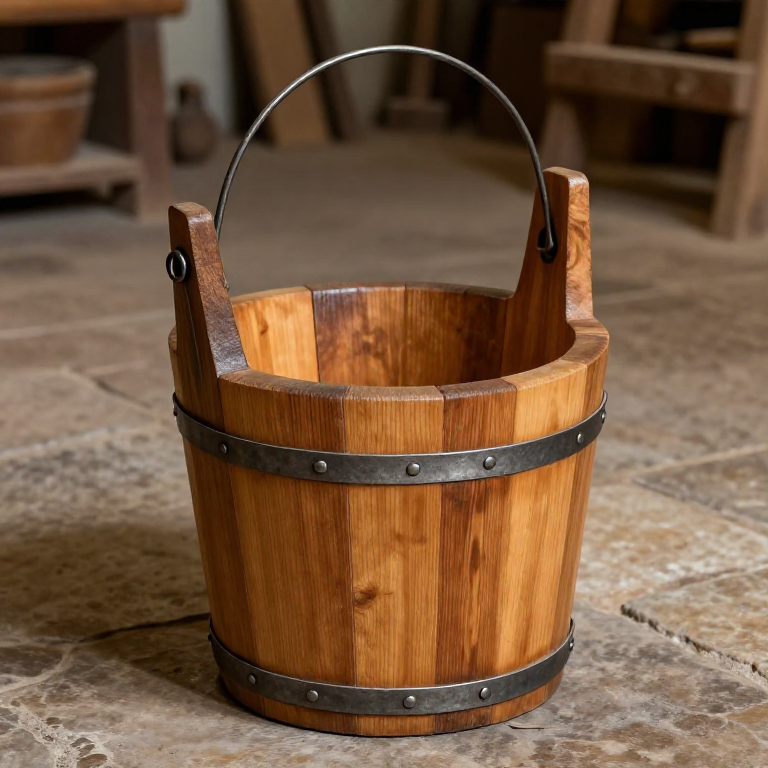
A wooden bucket is one of the earliest watertight vessels made entirely from wood and metal — a set of shaped staves held together by hoops that compress the joints into a seal. The cooper's trade (barrel and bucket making) was one of the most important crafts from antiquity through the Industrial Revolution. Every liquid — water, wine, beer, oil, vinegar — was stored and transported in cooperage.

A bucket is the simplest form of cooperage: straight staves arranged in a circle, wider at the top than the bottom, bound by two or three iron hoops. The staves taper in width so that when assembled they form a truncated cone. Each stave edge is bevelled at a precise angle — when the hoops are driven down, the bevel faces press together and the vessel becomes watertight without any sealant.

The skill is in the stave preparation. Each stave must be riven from straight-grained oak or similar hardwood, shaped with a drawknife, and bevelled with a jointer plane or drawknife to the exact angle. If even one stave is wrong, the bucket leaks. A good cooper could produce a watertight bucket in two to three hours from prepared staves.

ขั้นสูง
6-8 hours

คำแนะนำ

1

Rive and prepare the staves

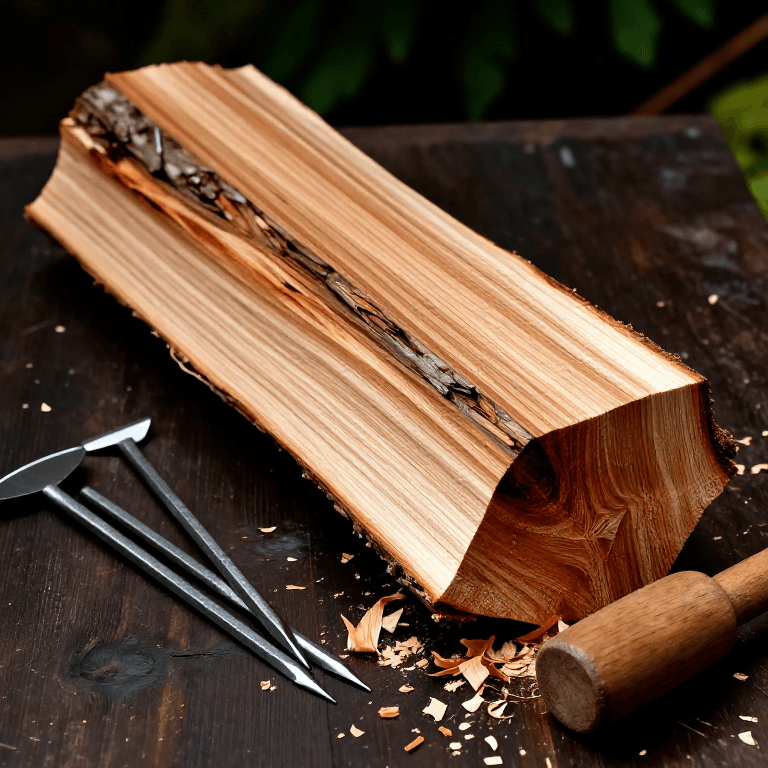
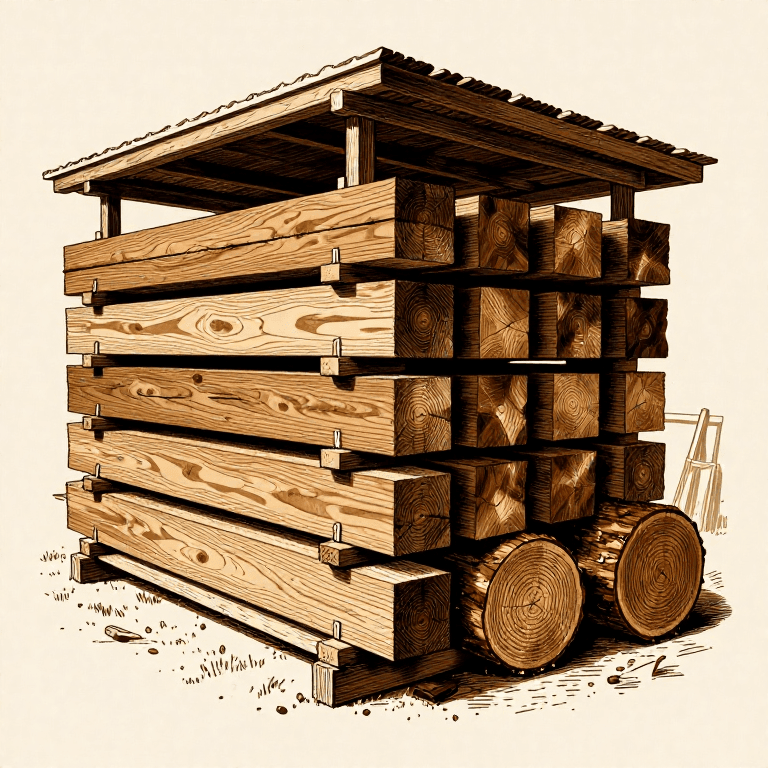
Rive 10-14 staves from a straight-grained oak bolt using a froe. Each stave should be about 30-40 cm long (the height of the bucket), 5-7 cm wide, and 1.5-2 cm thick. The grain must run the full length without runout — a stave with cross-grain splits when the hoops compress it. Rough each stave to a slight taper: wider at the top (the mouth of the bucket) and narrower at the bottom. The taper creates the outward slope of the bucket wall.

เครื่องมือที่ต้องใช้:

FroeFroe
2

Shape and bevel the stave edges

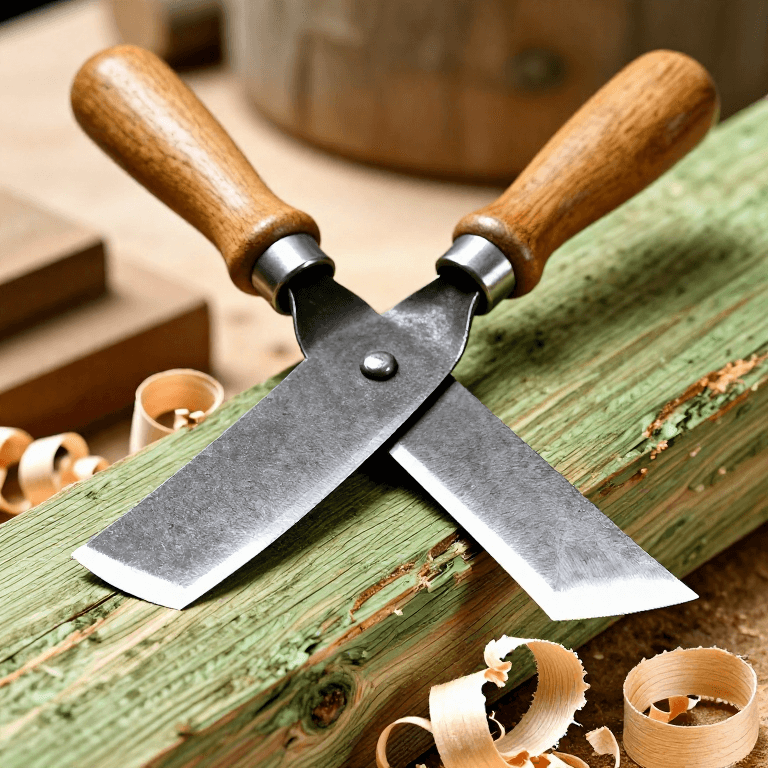
Clamp each stave in a shave horse and use a drawknife to smooth the outer face (slightly convex) and inner face (slightly concave). The critical step is bevelling the edges. Each stave edge must be cut at an angle so that when all staves are arranged in a circle, the bevelled faces press tight against each other. For a 12-stave bucket, each edge is bevelled at about 15 degrees (360 divided by 24 edges = 15 degrees). Use a drawknife or a jointer plane to cut this bevel consistently along the full length of each edge.

เครื่องมือที่ต้องใช้:

DrawknifeDrawknife
3

Cut the croze groove for the bottom

The bottom board sits in a groove cut around the inside of the staves, about 2-3 cm up from the base. This groove is called the croze. Cut it with a narrow chisel or a purpose-made croze tool — a groove about 5 mm wide and 5 mm deep, at a consistent height on every stave. The bottom board will slide into this groove during assembly. The groove must be cut before the staves are assembled, while each stave is still accessible individually.
4

Assemble the staves and drive the hoops

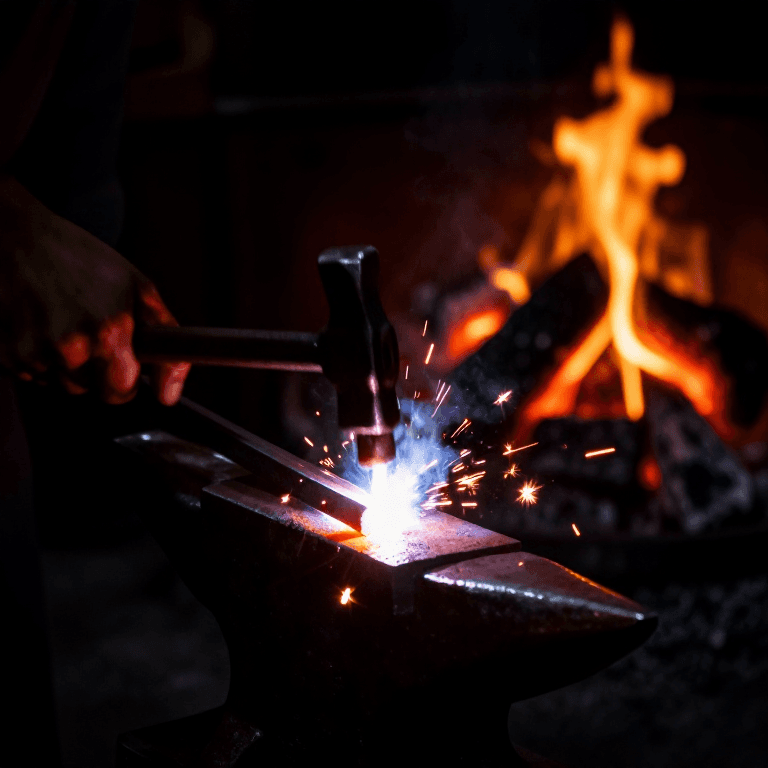
Arrange the staves in a circle with the tapered ends (bottom) together. Place a temporary cord or a loose iron hoop around the top to hold them upright. Start with the top hoop — slide it down over the staves and tap it with a hammer, working evenly around the circumference. As the hoop descends, it compresses the staves together and the bevelled edges press into tight joints. Drive a second hoop near the bottom. The staves should now hold together by friction alone. Adjust any stave that sits proud by tapping it inward with a mallet.

วัสดุสำหรับขั้นตอนนี้:

Iron HoopIron Hoop2 ชิ้น

เครื่องมือที่ต้องใช้:

Forge Hammer (Cross-Peen)Forge Hammer (Cross-Peen)
5

Fit the bottom board

Remove the bottom hoop temporarily. Cut a circular board from a piece of riven oak — slightly larger than the inside diameter of the bucket at the croze level. Bevel the edge of the board so it slides into the croze groove. Push the staves apart slightly at the bottom, slide the board into the groove, and re-drive the bottom hoop. The hoop compresses the staves against the board, and the board is held firmly in the groove. If the fit is tight and the staves well-jointed, the bucket is watertight immediately.
6

Attach a handle and test for leaks

Select two opposite staves and leave them slightly longer than the others (or drill holes through them near the top). Thread a bent iron rod or a stiff wooden withe through the holes as a bail handle. Fill the bucket with water and let it stand for several hours. A new oak bucket often weeps at the joints until the wood swells — this is normal and stops within a day as the staves absorb water and expand tight against each other. Any persistent leak points to a poorly bevelled stave that must be re-fitted.

วัสดุ

1
  • 2 ชิ้น
    ตัวยึดตำแหน่ง

เครื่องมือที่จำเป็น

3

วัสดุจากพิมพ์เขียวที่เชื่อมต่อ

บลูพริ้นท์ที่เกี่ยวข้อง

บลูพริ้นท์เหล่านี้แบ่งปันความรู้ — เทคนิค วัสดุ หรือหลักการ
CC0 สาธารณสมบัติ

พิมพ์เขียวนี้เผยแพร่ภายใต้ CC0 คุณสามารถคัดลอก แก้ไข แจกจ่าย และใช้งานผลงานนี้เพื่อวัตถุประสงค์ใดก็ได้ โดยไม่ต้องขออนุญาต

สนับสนุนเมกเกอร์โดยซื้อสินค้าผ่านพิมพ์เขียวของพวกเขา ซึ่งพวกเขาจะได้รับ ค่าคอมมิชชันเมกเกอร์ ที่ผู้ขายกำหนด หรือสร้างเวอร์ชันใหม่ของพิมพ์เขียวนี้และรวมเป็นการเชื่อมต่อในพิมพ์เขียวของคุณเพื่อแบ่งรายได้

การสนทนา

(0)

เข้าสู่ระบบ เพื่อร่วมการสนทนา

กำลังโหลดความคิดเห็น...