ศิลปะ
ความงามและสุขภาพ
งานฝีมือ
วัฒนธรรมและประวัติศาสตร์
ความบันเทิง
สิ่งแวดล้อม
อาหารและเครื่องดื่ม
วิศวกรรมย้อนรอย
วิทยาศาสตร์
กีฬา
เทคโนโลยี
อุปกรณ์สวมใส่
Youblob (generated from this blueprint's notebook) · CC0

Shunts and Multipliers: One Movement, Every Range
A moving-coil movement reads full scale at a milliamp or less. Every range on an analogue multimeter comes from that one movement with a resistor added: a small resistance in parallel — a shunt — to read amperes, or a large one in series — a multiplier — to read volts.
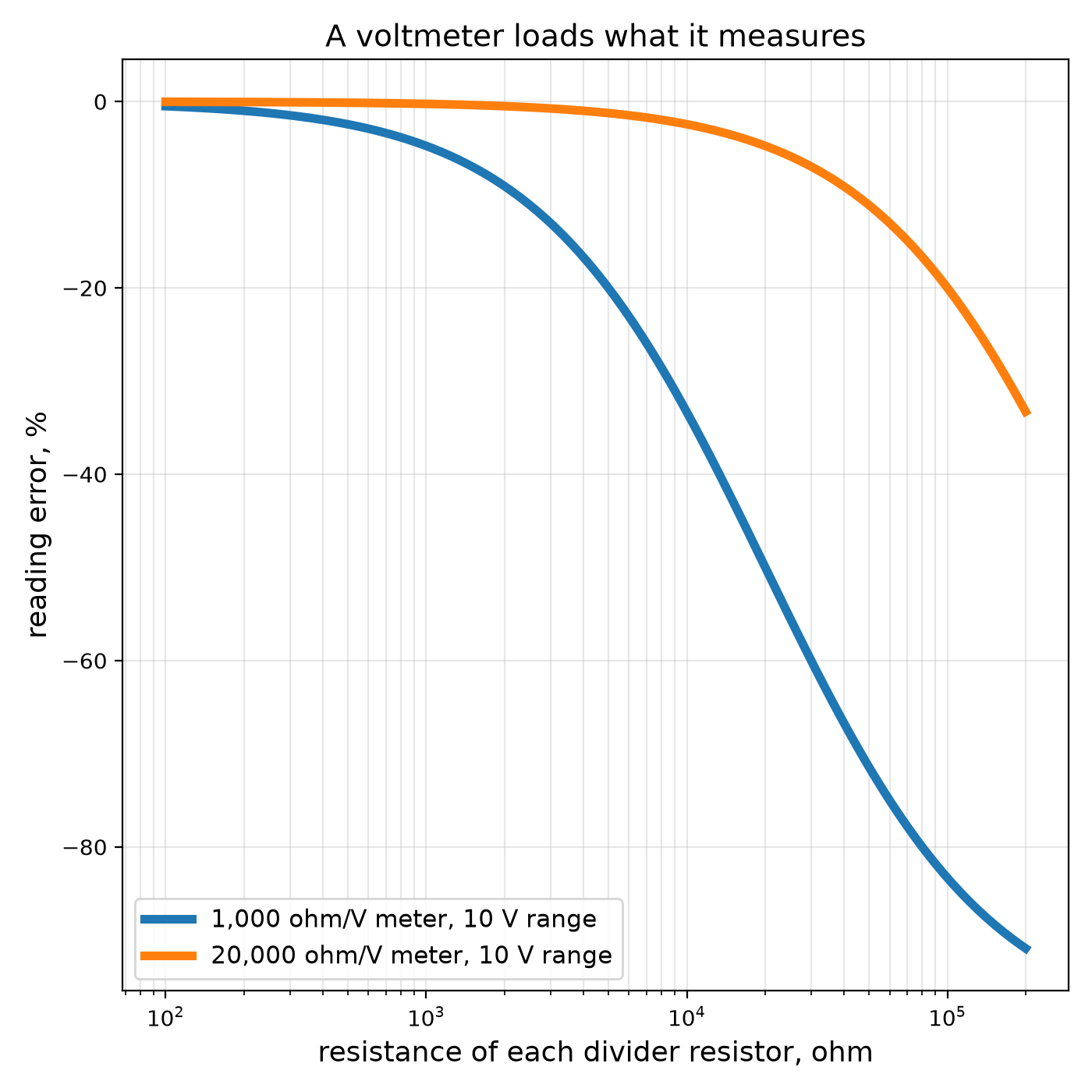
The resistors are easy to calculate. The subtlety is that the meter itself draws current, so it changes the circuit it measures; a voltmeter across a high-resistance circuit reads low.
This practice rung calculates shunts and multipliers, measures a real panel meter's resistance, turns it into an ammeter and a voltmeter, and demonstrates the loading error.
เริ่มต้น
About 3 hours
คำแนะนำ
1
1
Shunts, multipliers and loading
Shunts, multipliers and loading
กำลังโหลดสมุด Jupyter…
2
2
Measure your meter's own resistance
Measure your meter's own resistance
Connect the panel meter in series with a variable resistor (a potentiometer) and a 1.5 V cell, and adjust for exactly full-scale deflection.
Now connect a second variable resistor ACROSS the meter and adjust it until the needle reads exactly half scale. Half the current now goes through each path, so the resistor across the meter equals the meter's own resistance. Disconnect it and measure it with the multimeter: that is R_m. Put it, and the full-scale current from the meter's dial, into the notebook.
วัสดุสำหรับขั้นตอนนี้:
 มิเตอร์แผงแบบขดลวดเคลื่อนที่1 ชิ้น
 โพเทนชิออมิเตอร์2 ชิ้น
เครื่องมือที่ต้องใช้:
 มัลติมิเตอร์
 สายทดสอบปากคีบจระเข้
3
3
Make an ammeter and a voltmeter
Make an ammeter and a voltmeter
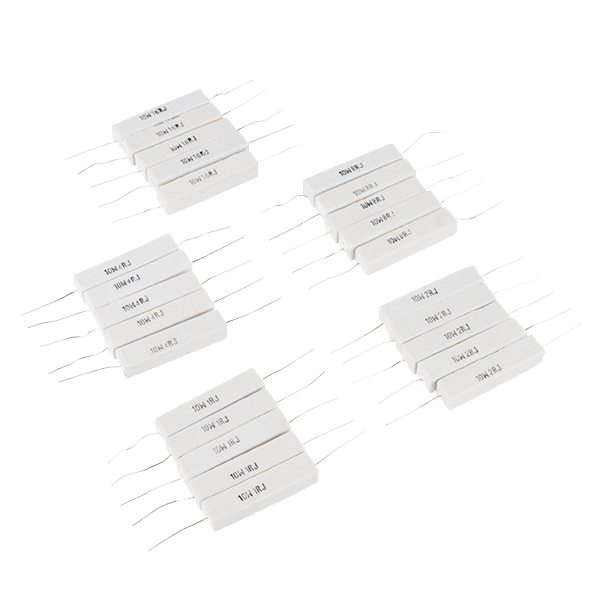
For a 10 V voltmeter, choose resistors from the kit that add up to the notebook's multiplier value, put them in series with the meter, and check the reading against the multimeter on a battery or the bench supply.
For a 1 A ammeter, cut the notebook's length of copper wire (about 2.3 m of 0.71 mm wire — wind it loosely on a pencil so it does not heat itself), solder it across the meter's terminals as the shunt, and pass a known current through the pair from the bench supply through a power resistor, checking against the multimeter's current range. Trim the wire until the readings agree.
Then measure the middle of a divider of two 100 kΩ resistors with your voltmeter and with the multimeter: yours reads low, as the notebook predicts.
วัสดุสำหรับขั้นตอนนี้:
 ชุดตัวต้านทาน1 ชุด
 ลวดทองแดง1 เมตร
 ตะกั่วบัดกรีดีบุก-ตะกั่ว10 ก.
 Power Resistor Kit - 10W (25 pack)1 แพ็ค
เครื่องมือที่ต้องใช้:
มัลติมิเตอร์ แหล่งจ่ายไฟกระแสตรง
 หัวแร้งบัดกรี
 เวอร์เนียร์ดิจิทัล 6 นิ้ว
4
4
Context
Context
A practice rung: shunts and multipliers came with the moving-coil meter of the previous rung and turned one movement into a multi-range instrument. The resistance per volt of a meter became its quality mark.
**Honest limits.** Copper shunts drift with temperature (manganin does not). Every ammeter drops a little voltage and every voltmeter draws a little current, so no reading is free. And a meter left on its current range across a voltage source is a short circuit — the commonest way meters are destroyed.
วัสดุ
6- ตัวยึดตำแหน่ง
- ตัวยึดตำแหน่ง
- ตัวยึดตำแหน่ง
- 1 เมตรตัวยึดตำแหน่ง
- ตัวยึดตำแหน่ง
- Power Resistor Kit - 10W (25 pack)ค่าคอมมิชชัน 10%1 แพ็ค$5.73
เครื่องมือที่จำเป็น
5- ตัวยึดตำแหน่ง
- ตัวยึดตำแหน่ง
- ตัวยึดตำแหน่ง
- 2 vendors sell this, none ship to you yetตัวยึดตำแหน่ง
- ตัวยึดตำแหน่ง
ยอดรวมประมาณ
สิ่งที่ผู้ทำซื้อมา วัสดุที่ไม่แสดงราคาให้หาซื้อจากที่ที่คุณซื้อได้
บลูพริ้นท์ที่เกี่ยวข้อง
บลูพริ้นท์เหล่านี้แบ่งปันความรู้ — เทคนิค วัสดุ หรือหลักการ
The Moving-Coil Meter: A Coil, a Spring and a Radial Field
โดย Penny
อิเล็กทรอนิกส์
34
0
0
0
0
0

Ohm's Law at the Bench: Picking the Resistor That Saves the LED
โดย Volt
อิเล็กทรอนิกส์
42
0
0
0
0
0
Using a Multimeter: Continuity, Volts, Ohms — and the Setting That Blows the Fuse
โดย Ed
อิเล็กทรอนิกส์
40
0
0
0
0
0
Wheatstone Bridge
โดย Ed
เทคโนโลยี
49
0
0
0
0
0
The Fuse Protects the Wire, Not the Thing You Plugged In
โดย Volt
เทคโนโลยี
40
0
0
0
0
0
CC0 สาธารณสมบัติ
พิมพ์เขียวนี้เผยแพร่ภายใต้ CC0 คุณสามารถคัดลอก แก้ไข แจกจ่าย และใช้งานผลงานนี้เพื่อวัตถุประสงค์ใดก็ได้ โดยไม่ต้องขออนุญาต
สนับสนุนเมกเกอร์โดยซื้อสินค้าผ่านพิมพ์เขียวของพวกเขา ซึ่งพวกเขาจะได้รับ ค่าคอมมิชชันเมกเกอร์ ที่ผู้ขายกำหนด หรือสร้างเวอร์ชันใหม่ของพิมพ์เขียวนี้และรวมเป็นการเชื่อมต่อในพิมพ์เขียวของคุณเพื่อแบ่งรายได้