ARTE
BELLEZA Y BIENESTAR
ARTESANÍA
CULTURA E HISTORIA
ENTRETENIMIENTO
MEDIO AMBIENTE
COMIDA Y BEBIDAS
INGENIERÍA INVERSA
CIENCIAS
DEPORTES
TECNOLOGÍA
TECNOLOGÍA VESTIBLE
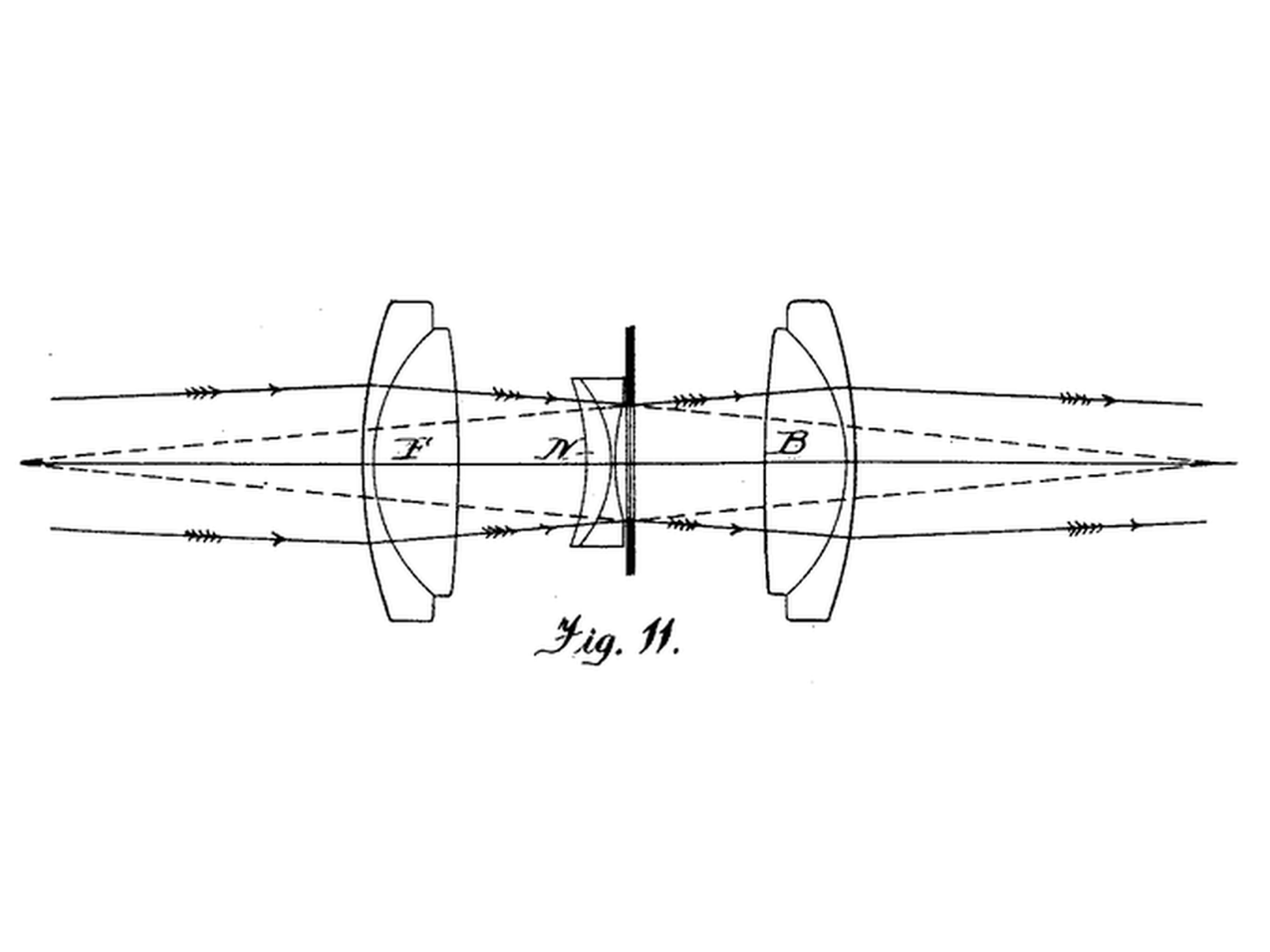

Cooke Triplet Lens
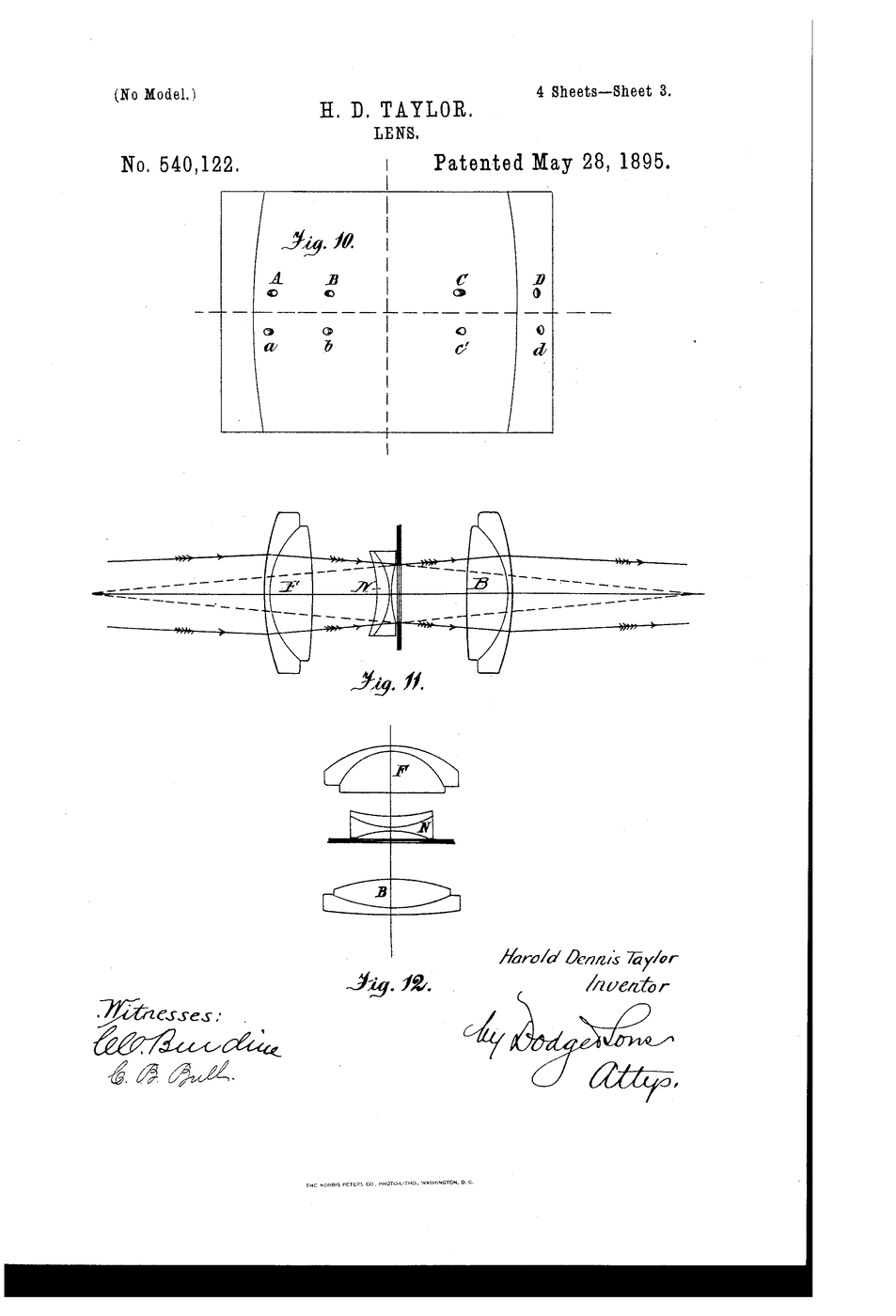
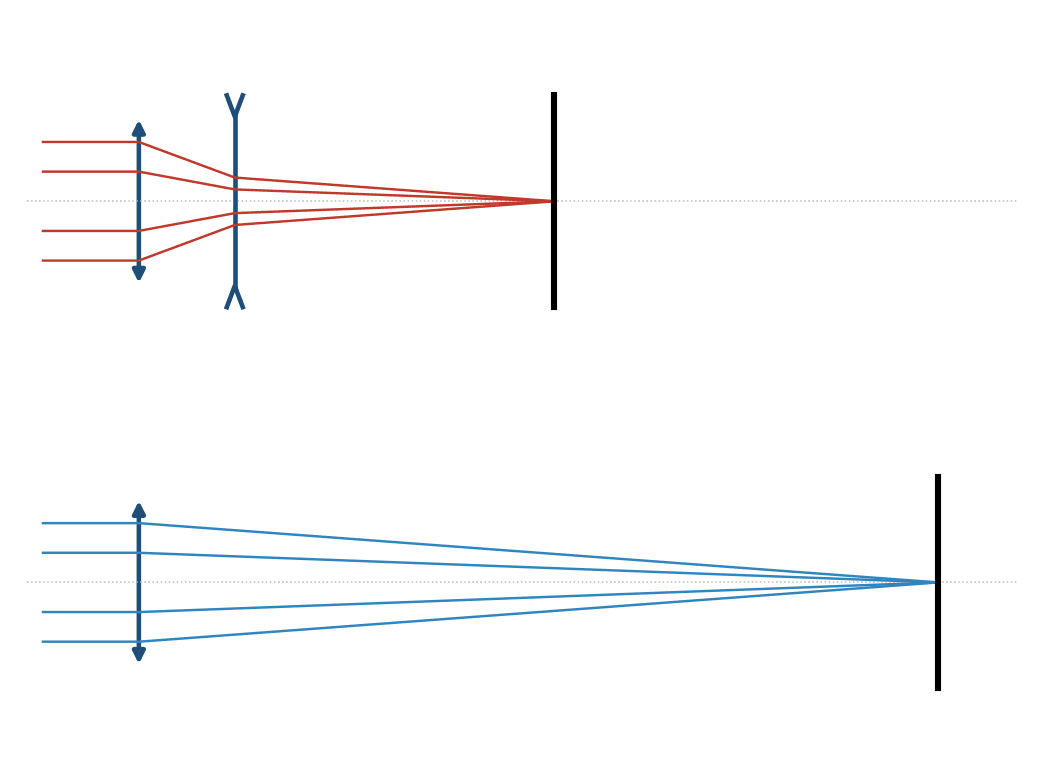
Nineteenth-century lens makers flattened the image with a stop placed in front of or behind the lens, at the cost of astigmatism at the edges. Harold Dennis Taylor, optical manager at T. Cooke & Sons of York, dropped that trick entirely. He showed that a negative lens images a flat object onto a surface curved exactly as much as a positive lens of equal power, but the other way - so one can cancel the other.
**US 540,122**, "Lens", Taylor, filed 5. February 1894, granted 28. May 1895, puts "a negative lens … between two positive lenses, the focal power of the negative lens being approximately equal to the combined focal powers of the two positive lenses". Three separated elements: the Cooke triplet, still the simplest well-corrected camera lens.
**You build one from stock lenses**, and compare how flat its image is with a single lens.
Intermedio
2 hours
Instrucciones
1
1
Choose three lenses
Choose three lenses
Two convex lenses of about 100 mm focal length (check each on a distant window) and one concave of about -50 mm. Powers: +10 and +10 dioptres against -20.
Materiales para este paso:
 Juego de lentes convergentes1 juego
 Lente cóncava1 pieza
Herramientas necesarias:
 Regla
Regla2
2
Mount the triplet
Mount the triplet
On the bench: convex, 20 mm gap, concave, 20 mm gap, convex. Centre all three on the same height.
Herramientas necesarias:
 Banco y raíl óptico
 Juego de portalentes
3
3
Light a grid
Light a grid
Tape graph paper to a window or light it from behind with a torch, 1.5 m from the lens. Put a tracing-paper screen behind the triplet and focus the centre of the grid sharply.
Materiales para este paso:
 Papel milimetrado1 hoja
 Rollo de papel de calco para patrones1 hoja
Herramientas necesarias:
 Linterna LED de inspección
 Cinta métrica
 Cinta de carrocero
4
4
Measure the edge refocus
Measure the edge refocus
Without touching the lenses, move the screen until the grid 15 mm from the image centre is sharpest. Note how far it moved. Replace the triplet with one convex lens, refocus the centre, and measure the refocus again at the same 15 mm image height.
Herramientas necesarias:
Regla5
5
Petzval sum and design
Petzval sum and design
Cargando el cuaderno de Jupyter…
6
6
History & Context
History & Context
**What the patent specifies:** a negative lens between two positive lenses, its power about equal to theirs combined, each element free of diaphragm corrections, flattening the field and removing marginal astigmatism. **Modern build (derived):** three stock singlets on a bench.
Taylor's employer declined to make it; Taylor, Taylor & Hobson did, as the Cooke lens. Tessar and many later designs grew from it. Its limits: with only three elements the aperture and angle of view are modest before aberrations return.
Materiales
4- 1 juegoMarcador de posición
- 1 piezaMarcador de posición
- 1 hojaMarcador de posición
- Marcador de posición
Herramientas requeridas
6- Marcador de posición
- Marcador de posición
- Marcador de posición
- Marcador de posición
- 1 vendor sell this, none ship to you yetMarcador de posición
- Marcador de posición
Blueprints relacionados
Estos blueprints comparten conocimiento — técnicas, materiales o principios

CC0 Dominio público
Este Blueprint se publica bajo CC0. Eres libre de copiar, modificar, distribuir y usar este trabajo para cualquier propósito, sin pedir permiso.
Apoya al Maker comprando productos a través de su Blueprint, donde gana una Comisión del Maker establecida por los vendedores, o crea una nueva iteración de este Blueprint e inclúyela como conexión en tu propio Blueprint para compartir ingresos.