ARTE
BELLEZA Y BIENESTAR
ARTESANÍA
CULTURA E HISTORIA
ENTRETENIMIENTO
MEDIO AMBIENTE
COMIDA Y BEBIDAS
INGENIERÍA INVERSA
CIENCIAS
DEPORTES
TECNOLOGÍA
TECNOLOGÍA VESTIBLE
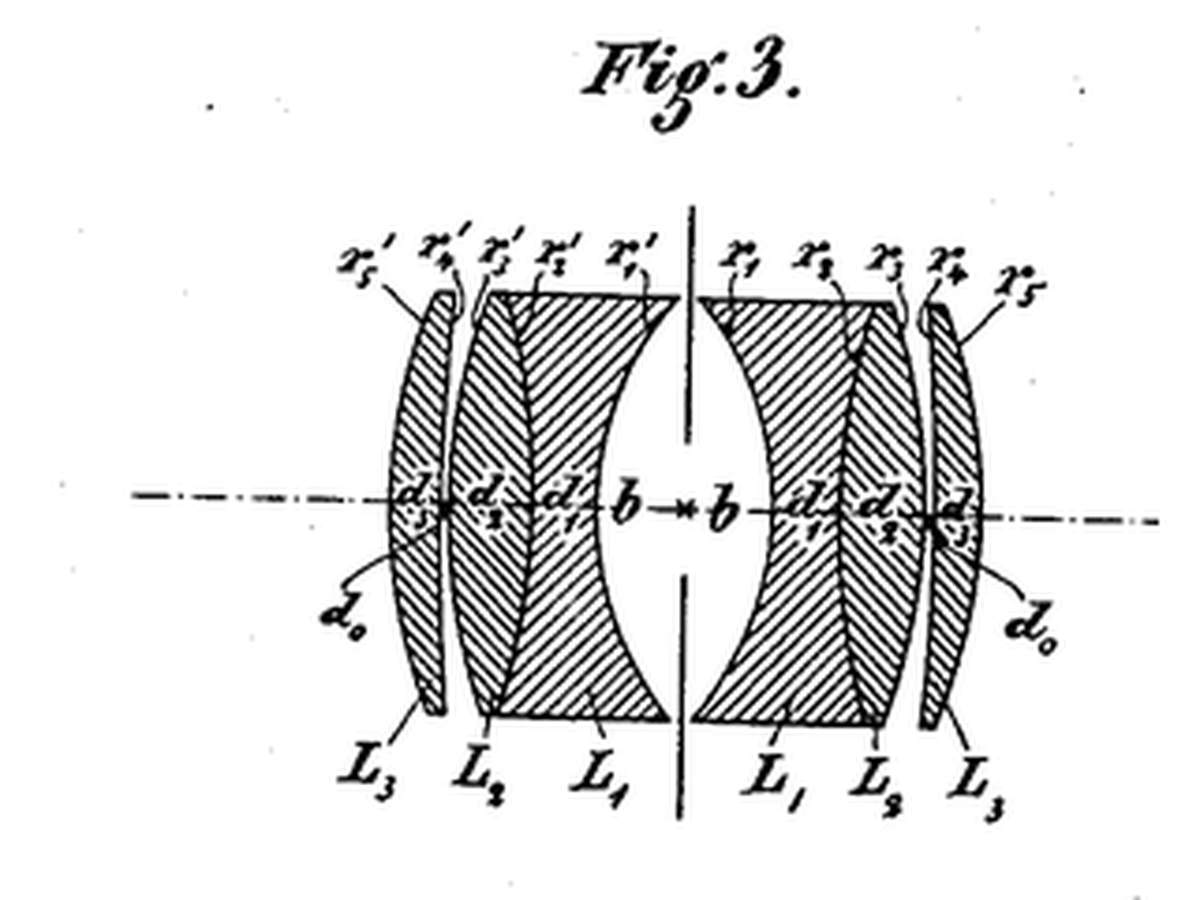


Planar (Double-Gauss) Lens
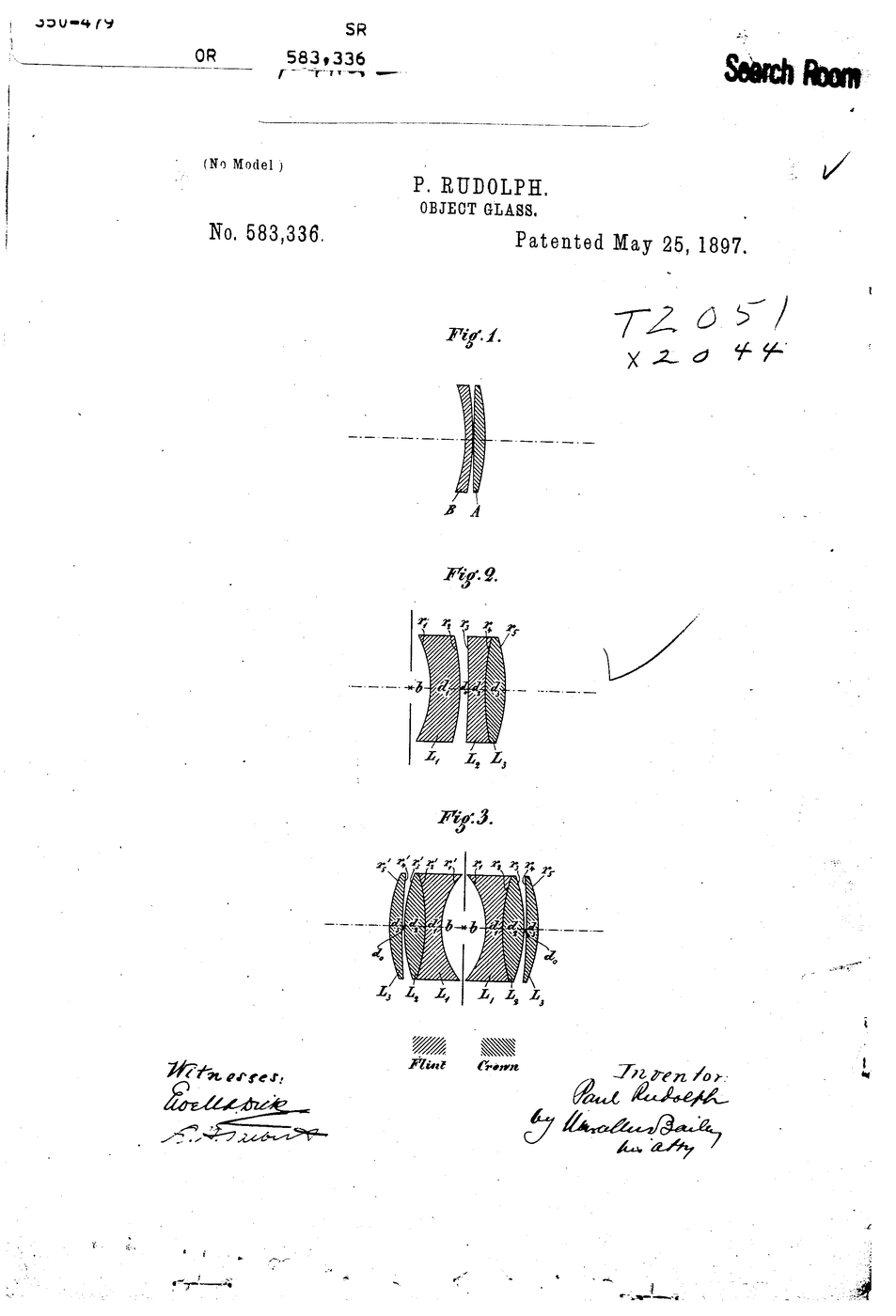
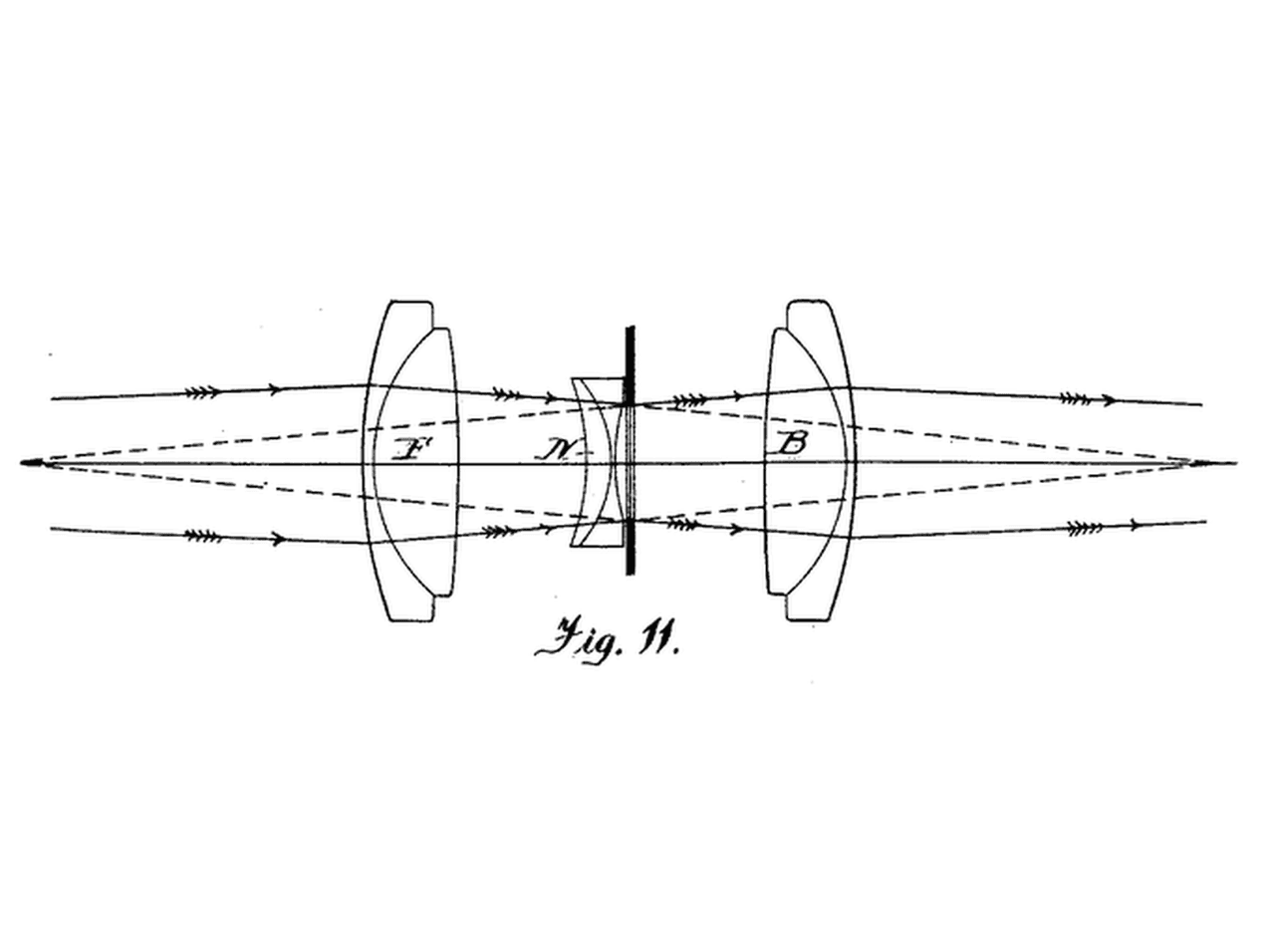
Carl Friedrich Gauss had designed a telescope objective of two air-spaced lenses - a crown meniscus and a flint lens with differently curved facing surfaces - that corrected spherical aberration for two colours at once. Paul Rudolph at Zeiss turned it into a camera lens: two such groups placed symmetrically either side of the stop, each group achromatised with a cemented pair of glasses of nearly the same refractive index but different dispersion.
**US 583,336**, "Object-glass", Rudolph, assigned to Carl Zeiss, filed 1. February 1897, granted 25. May 1897. Descendants of this double-Gauss layout became the standard fast normal lens for most of the twentieth century.
**You test what the symmetry buys**: a grid imaged through a single lens with the stop in front, with it behind, and through a symmetric pair with the stop in the middle.
Intermedio
2 hours
Instrucciones
1
1
Make a stop
Make a stop
Cut a 60 mm disc of black card with a 6 mm round hole in its centre. Mount it in a lens holder.
Materiales para este paso:
 Cartulina negra1 hoja
Herramientas necesarias:
 Cúter de precisión
 Juego de portalentes
2
2
Light a grid
Light a grid
Tape graph paper over a torch or a bright window 1 m from the bench. Tracing paper on a holder is the screen.
Materiales para este paso:
 Papel milimetrado1 hoja
 Rollo de papel de calco para patrones1 hoja
Herramientas necesarias:
 Linterna LED de inspección
 Banco y raíl óptico
 Cinta de carrocero
3
3
Stop in front, then behind
Stop in front, then behind
One 100 mm convex lens with the stop 25 mm in front of it: focus the grid and measure the width of the middle row and the top row across the same squares. Move the stop 25 mm behind the lens and measure again.
Materiales para este paso:
 Juego de lentes convergentes1 juego
Herramientas necesarias:
 Regla
Regla4
4
Make it symmetric
Make it symmetric
Add a second identical lens so the stop sits exactly midway between them, 25 mm each side. Refocus and measure the same two widths.
Herramientas necesarias:
Regla Cinta métrica
5
5
Distortion from your widths
Distortion from your widths
Cargando el cuaderno de Jupyter…
6
6
History & Context
History & Context
**What the patent specifies:** Gauss-type objectives made anastigmatic and achromatised by cemented components of nearly equal refractive index but different dispersion, used as a doublet about a central stop. **Modern build (derived):** two identical stock lenses about a card stop.
The Planar was too prone to flare with uncoated glass; once anti-reflection coatings arrived, double-Gauss lenses became the classic 50 mm f/2 and faster. Its limits: many air-glass surfaces, and a design that needs careful glass choice to go wide.
Materiales
4- 1 hojaMarcador de posición
- 1 hojaMarcador de posición
- Marcador de posición
- 1 juegoMarcador de posición
Herramientas requeridas
7- Marcador de posición
- Marcador de posición
- Marcador de posición
- Marcador de posición
- Marcador de posición
- Marcador de posición
- 1 vendor sell this, none ship to you yetMarcador de posición
Blueprints relacionados
Estos blueprints comparten conocimiento — técnicas, materiales o principios

CC0 Dominio público
Este Blueprint se publica bajo CC0. Eres libre de copiar, modificar, distribuir y usar este trabajo para cualquier propósito, sin pedir permiso.
Apoya al Maker comprando productos a través de su Blueprint, donde gana una Comisión del Maker establecida por los vendedores, o crea una nueva iteración de este Blueprint e inclúyela como conexión en tu propio Blueprint para compartir ingresos.