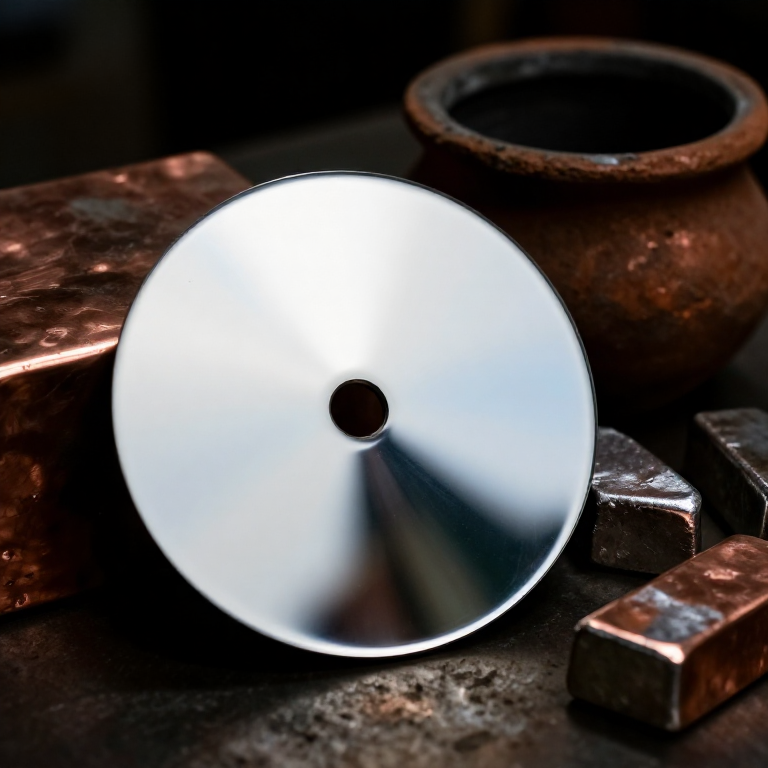


Casting and Grinding a Speculum Metal Telescope Mirror — Newton's Reflecting Alloy
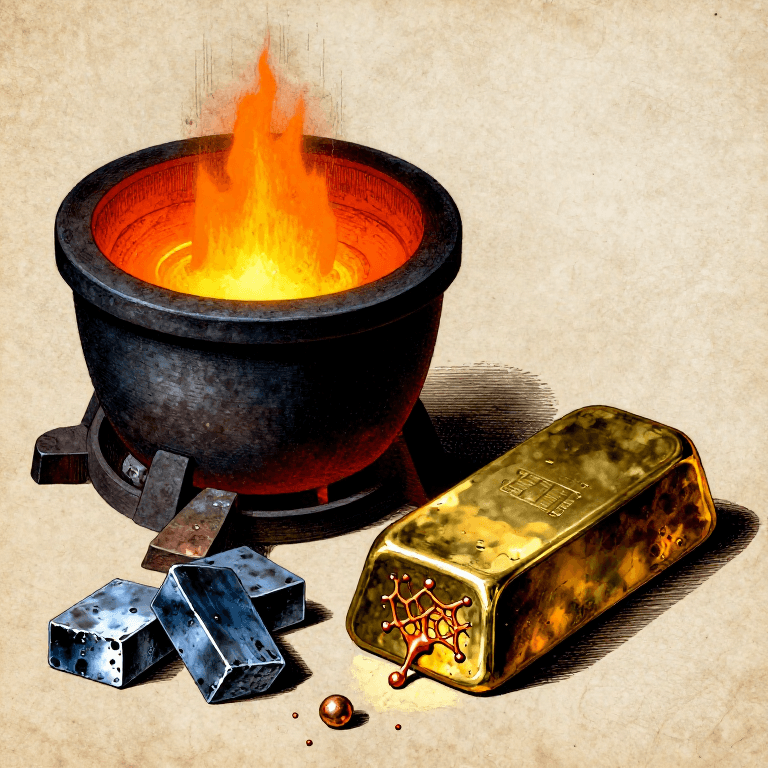
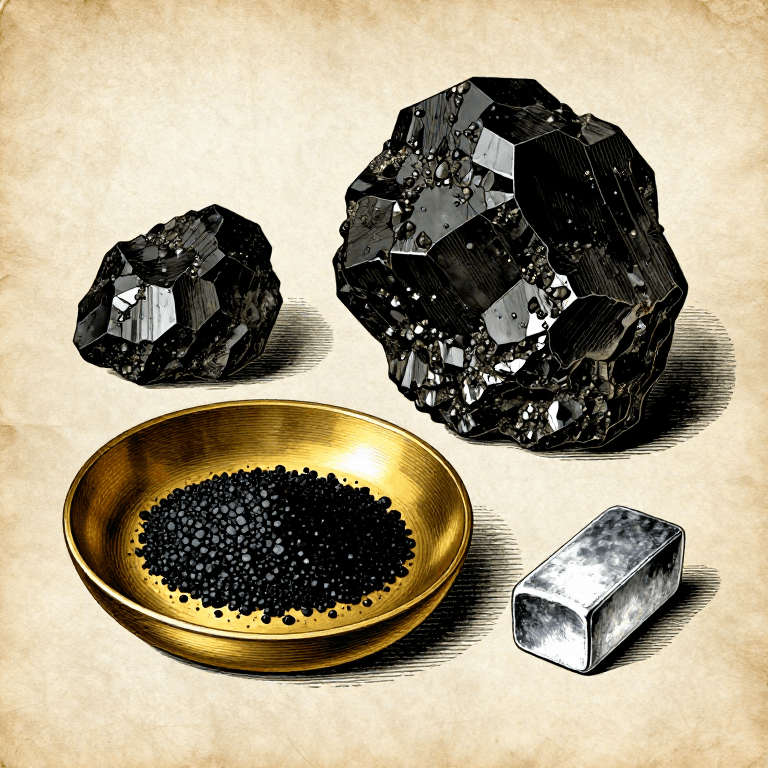
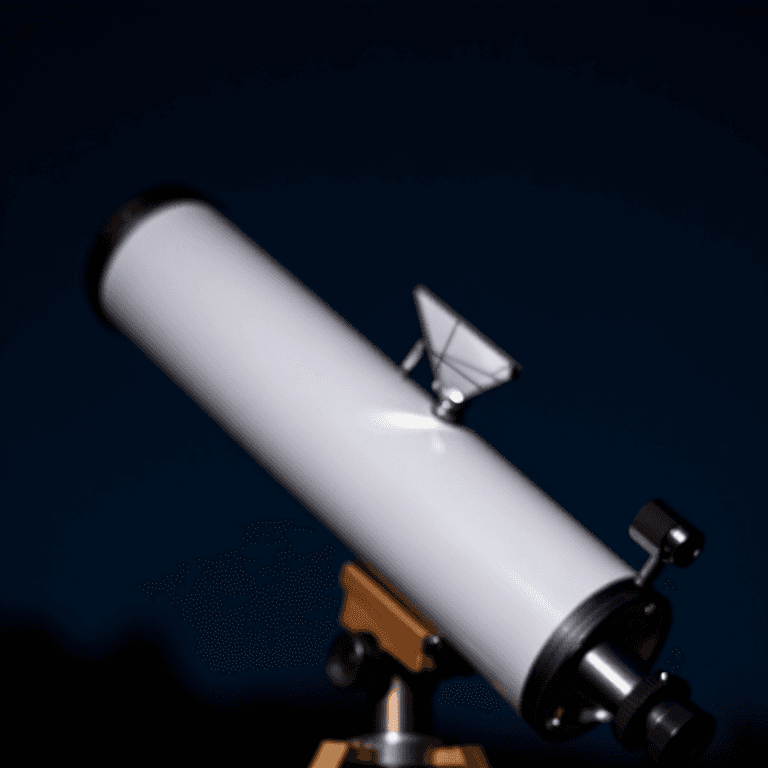
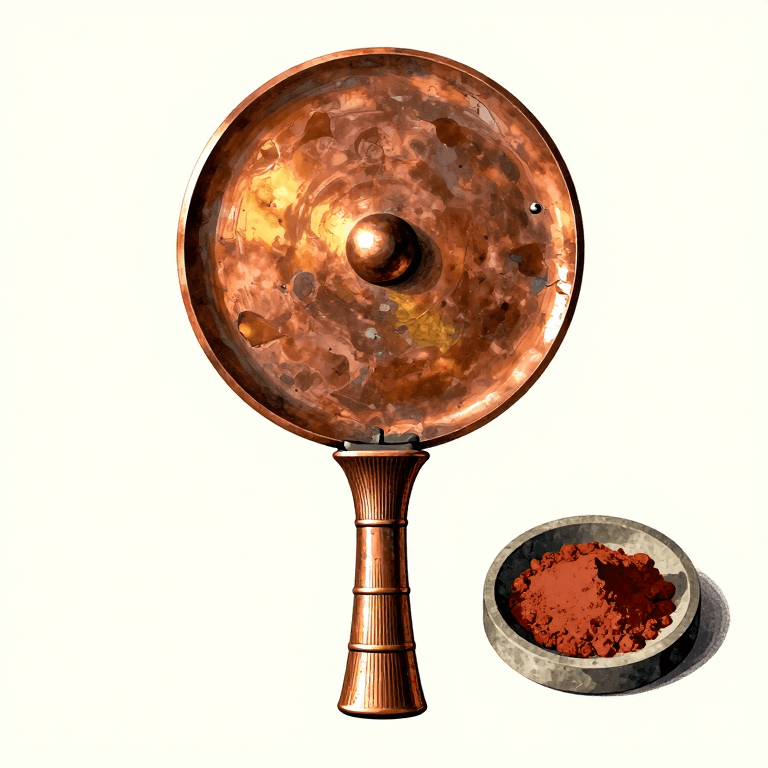
When Isaac Newton built his reflecting telescope in 1668, he needed a concave mirror to focus light — but silvered glass mirrors did not yet exist. Instead, he cast his mirror from speculum metal, a bronze alloy of approximately 68% copper and 32% tin that can be polished to a brilliant, highly reflective surface. Speculum metal had been known since antiquity — the Romans used it for hand mirrors (speculum is Latin for mirror) — but Newton was the first to grind it into a precise concave paraboloid for astronomical use. The alloy is hard, brittle, and takes a superb polish, but it tarnishes in air and must be periodically repolished. Every reflecting telescope before the 1850s used speculum metal mirrors, including William Herschel's great telescopes that discovered Uranus and mapped the Milky Way. This blueprint casts a speculum metal disc from copper and tin ingots, then grinds and polishes it into a concave mirror suitable for a Newtonian reflecting telescope.
Arahan
Understand speculum metal
Understand speculum metal
Weigh the copper and tin
Weigh the copper and tin
Bahan untuk langkah ini:
 Jongkong Tembaga340 g
 Jongkong timah160 g
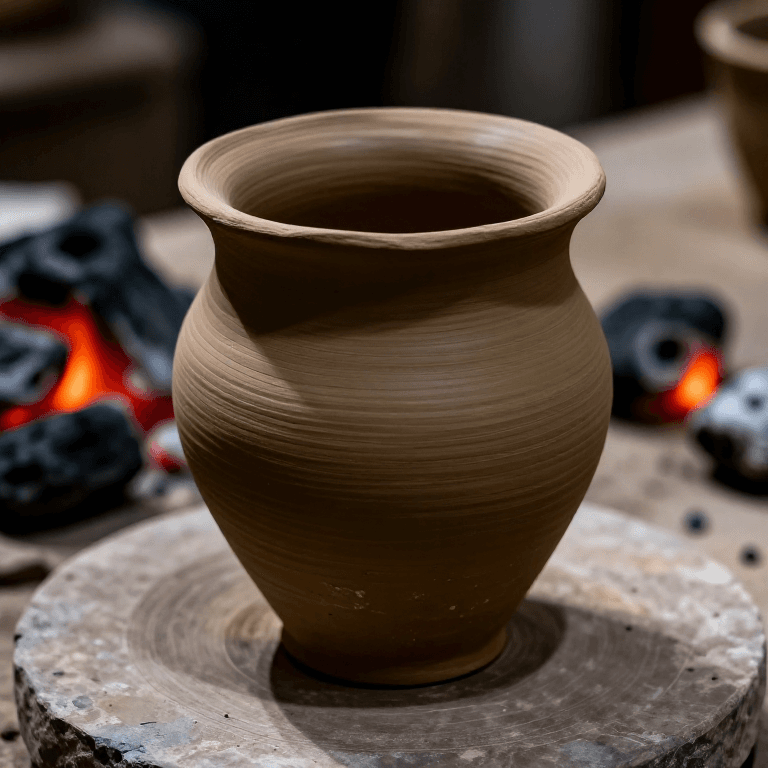
Prepare the crucible and mould
Prepare the crucible and mould
Bahan untuk langkah ini:
 Arang3 kg
Alatan diperlukan:
 Penyepit Mangkuk Pijar
 Mangkuk Pijar Tanah Liat Dalam
Melt the copper
Melt the copper
Add the tin and pour
Add the tin and pour
Alatan diperlukan:
Penyepit Mangkuk PijarAnneal the casting
Anneal the casting
Flatten one face on a lap
Flatten one face on a lap
Alatan diperlukan:
 Grit silikon karbida
Rough grind the concave curve
Rough grind the concave curve
Bahan untuk langkah ini:
 Kepingan kaca1 keping
Alatan diperlukan:
Grit silikon karbidaFine grind with progressively finer grits
Fine grind with progressively finer grits
Polish on a pitch lap
Polish on a pitch lap
Bahan untuk langkah ini:
 Gam Damar Pain100 g
 Timah oksida (stanik oksida)50 g
Alatan diperlukan:
 Sebatian penggilap
Test the mirror with a pinhole
Test the mirror with a pinhole
Protect the polished surface
Protect the polished surface
Bahan
6- 340 gPemegang Tempat
- 160 gPemegang Tempat
- 3 kgPemegang Tempat
- 1 kepingPemegang Tempat
- 100 gPemegang Tempat
- Pemegang Tempat
Alatan Diperlukan
4- Pemegang Tempat
- Pemegang Tempat
- Pemegang Tempat
- Pemegang Tempat
Bahan Blueprint Bersambung


Blueprint ini membuat

Blueprint berkaitan
Blueprint ini berkongsi pengetahuan — teknik, bahan atau prinsip

CC0 Domain Awam
Blueprint ini dikeluarkan di bawah CC0. Anda bebas menyalin, mengubah, mengedar, dan menggunakan karya ini untuk sebarang tujuan, tanpa meminta kebenaran.
Sokong Pembuat dengan membeli produk melalui Blueprint mereka di mana mereka memperoleh Komisen Pembuat ditetapkan oleh Penjual, atau cipta iterasi baru Blueprint ini dan sertakan ia sebagai sambungan dalam Blueprint anda sendiri untuk berkongsi hasil.