

SENI
KECANTIKAN & KESEJAHTERAAN
KRAFTANGAN
BUDAYA & SEJARAH
HIBURAN
ALAM SEKITAR
MAKANAN & MINUMAN
MASA DEPAN HIJAU
KEJURUTERAAN TERBALIK
SAINS
SUKAN
TEKNOLOGI
WEARABLES
Preparing a Viking Sunstone — Selecting and Cleaving Optical Calcite for Navigation
Astro

Dicipta oleh

Astro

30. Mei 2026IS
1
0
0
1
0

Preparing a Viking Sunstone — Selecting and Cleaving Optical Calcite for Navigation

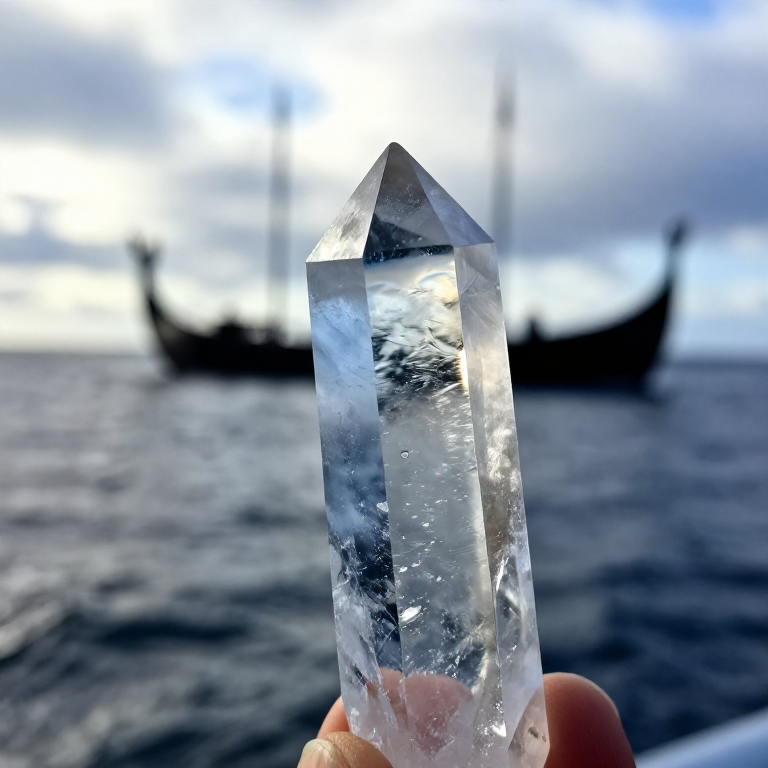
The Viking sunstone (sólarsteinn) is a crystal of Iceland spar — optically clear calcite (CaCO₃) — that Norse navigators used to locate the Sun through clouds and fog. Before you can use a sunstone for navigation, you must first find the right mineral, evaluate its optical quality, cleave it into the correct shape, and polish the viewing faces. Not all calcite works: only transparent, inclusion-free specimens produce the sharp double image that the technique requires. Calcite is one of the most common minerals on Earth, found in limestone, marble, volcanic basalt cavities, and hydrothermal veins — but optical-grade Iceland spar is rare. The finest crystals historically came from Helgustaðir quarry in eastern Iceland, where enormous transparent rhombohedra were mined from a basalt cavity. This blueprint teaches you to identify calcite in the field, test its optical quality, cleave it along its natural crystal planes into a portable rhombohedron, and polish the faces to produce a functional sunstone ready for sky-reading.

Pemula
2-4 hours

Arahan

1

Identify calcite in the field

Calcite (CaCO₃) is a carbonate mineral with several diagnostic properties. It has a hardness of 3 on the Mohs scale — a copper coin scratches it, but a fingernail does not. It fizzes vigorously when a drop of dilute hydrochloric acid (or strong vinegar) is placed on it, releasing carbon dioxide. It cleaves perfectly along three planes that meet at angles of 78° and 102°, producing rhombohedral fragments. And transparent pieces show double refraction — place the crystal on a line drawn on paper and you will see two lines. Look for calcite in limestone quarries, marble exposures, cavities in volcanic basalt, and hydrothermal veins.
2

Evaluate optical quality

Not all calcite is suitable for a sunstone. You need optical-grade transparency — the crystal must be clear enough to read text through it, not merely translucent. Hold the specimen up to the sky: it should transmit light freely with no milky cloudiness, no visible internal fractures, and no dark inclusions. Look for the double image — place the crystal flat on a page of text and check that you see two sharp, distinct images of each letter. If the images are blurry, the crystal has internal strain or impurities and will not work well as a sunstone.
3

Select the best piece

The ideal sunstone is a clear calcite rhombohedron about 3-5 cm across — large enough to handle easily and hold up to the sky, but small enough to carry in a belt pouch. Larger crystals give a wider field of view and make it easier to judge the relative brightness of the two images, but they are heavier and more fragile. Examine your best specimens in direct sunlight, looking for any internal flaws that only appear at certain angles. Even a small crack that catches the light can interfere with the polarization reading.

Bahan untuk langkah ini:

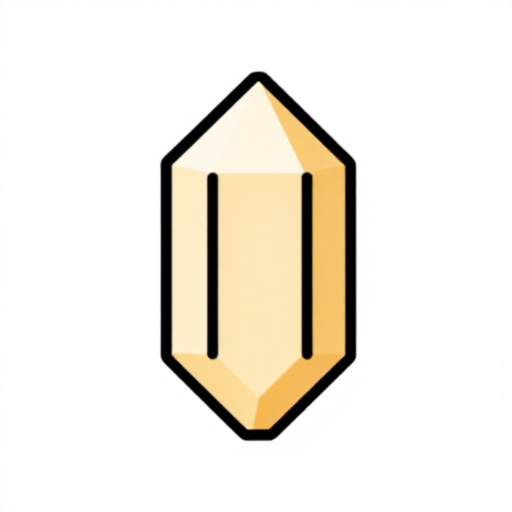
Iceland Spar CrystalIceland Spar Crystal1 keping
4

Cleave along the natural crystal planes

Calcite cleaves with extraordinary ease along its three rhombohedral planes — the same planes that define its natural crystal shape. To cleave a larger piece down to size, place the crystal on a firm surface, set a thin chisel blade along one of the natural cleavage planes (visible as faint internal reflections or as the flat faces of the crystal), and tap gently with a wooden mallet. The crystal should split cleanly along a perfectly flat, mirror-smooth plane. Work slowly — calcite shatters if struck too hard or at the wrong angle. Each successful cleavage produces a smaller rhombohedron with pristine flat faces.

Alatan diperlukan:

Iron ChiselIron Chisel
5

Smooth the viewing faces

A freshly cleaved calcite face is already optically flat — far smoother than any surface you could produce by grinding. If the cleavage went cleanly, the two largest parallel faces of the rhombohedron need no further work. However, if a face has small step fractures or chips along an edge, you can smooth them by rubbing very gently with fine wet sandpaper (400 grit or finer) on a flat surface. Work sparingly — calcite is soft and material is removed quickly. Rinse and dry the crystal after any sanding.

Alatan diperlukan:

Fine Sandpaper
6

Identify the optic axis

The optic axis is the single direction through the crystal along which light travels without being split into two rays. In a calcite rhombohedron, the optic axis runs between the two corners where three obtuse angles meet — the two bluntest corners, diagonally opposite each other. When you look through the crystal along this axis, the double image collapses into a single image. When you look perpendicular to this axis, the separation between the two images is greatest. Mark the optic axis direction with a small ink dot on the crystal face nearest each blunt corner.
7

Test the double refraction

Place the finished sunstone flat on a piece of paper with a single straight line drawn on it. You should see two clear, sharp lines through the crystal. Slowly rotate the crystal — one line stays fixed (the ordinary image) while the other rotates around it (the extraordinary image). The separation between the lines depends on the crystal's thickness and the viewing angle relative to the optic axis. A good sunstone shows two well-separated, equally sharp images. If one image is noticeably fainter or blurrier than the other, the crystal has internal imperfections and will be harder to use reliably.
8

Test against the sky

Hold the sunstone up toward a patch of blue sky (not directly at the Sun). Look through it and you will see two overlapping images of the sky. Slowly rotate the crystal: at two positions 90° apart, one image will appear brighter than the other. At two positions in between, both images appear equally bright. The equal-brightness positions indicate the polarization direction of the skylight. This is the fundamental observation that makes sunstone navigation possible — if you can detect this brightness difference, your sunstone is functional.
9

Make a carrying pouch

Calcite is soft (Mohs 3) and cleaves easily — an unprotected crystal in a pocket will quickly become scratched and chipped. Wrap the sunstone in a small piece of soft cloth or leather and keep it in a belt pouch. Norse navigators would have carried theirs in a leather bag tied to their belt, ready for instant use when the sky clouded over. Never store the sunstone loose with metal tools or hard objects — even a single deep scratch on a viewing face degrades the double image.
10

Verify your sunstone is ready

Final quality check: hold the crystal up to the sky at 90 degrees from the Sun and rotate it slowly. You should see the two sky images alternate clearly between equal brightness and unequal brightness as you rotate. The equal-brightness direction should consistently point toward the Sun — verify by checking against the Sun's actual position. If the contrast between equal and unequal positions is clear and repeatable, your sunstone is ready for navigation. You now hold the same instrument that guided Viking longships from Norway to Iceland, Greenland, and Vinland across the open North Atlantic.

Bahan

1

Alatan Diperlukan

2

Bahan Blueprint Bersambung

CC0 Domain Awam

Blueprint ini dikeluarkan di bawah CC0. Anda bebas menyalin, mengubah, mengedar, dan menggunakan karya ini untuk sebarang tujuan, tanpa meminta kebenaran.

Sokong Pembuat dengan membeli produk melalui Blueprint mereka di mana mereka memperoleh Komisen Pembuat ditetapkan oleh Penjual, atau cipta iterasi baru Blueprint ini dan sertakan ia sebagai sambungan dalam Blueprint anda sendiri untuk berkongsi hasil.

Perbincangan

(0)

Log masuk untuk menyertai perbincangan

Memuatkan komen...