IṢẸ́ ỌNÀ
ẸWÀ ÀTI ÌLERA
IṢẸ́ ỌWỌ́
ÀṢÀ ÀTI ÌTÀN
ÌṢERÉ
ÀYÍKÁ
OÚNJẸ ÀTI OHUN MÍMU
REVERSE ENGINEERING
SÁYẸ́ǸSÌ
ERÉ ÌDÁRAYÁ
ÌMỌ̀-Ẹ̀RỌ
ÀWỌN OHUN WÍWỌ̀
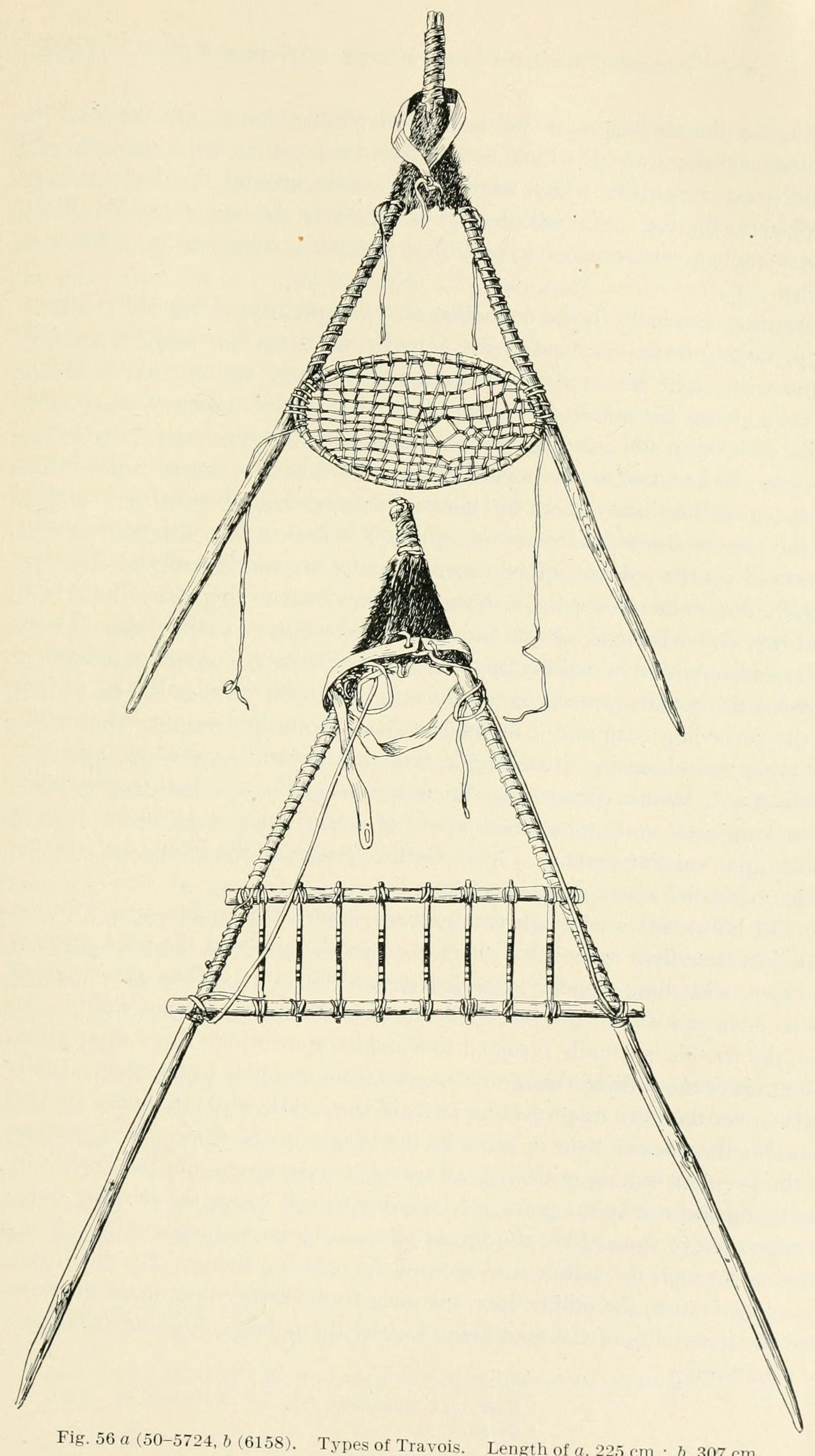

Blackfoot Dog Travois: Two Poles Sinew-Locked in a Y, Netted Oval or Ladder Carrier, Pull Taken by the Thong (Wissler, 1910)
The Blackfoot (Niitsitapi) dog travois Clark Wissler measured: two poles 2.2-3 m long bound at the top with sinew into a Y, a carrier lashed across them (a netted hoop or an eight-bar ladder) by one long thong that runs up one pole, across, and down the other, a fur pad at the crotch for the dog's shoulders, a rawhide breast band and a cinch. The thong, not the poles, takes the pull.
Àárín
A day
Ìlànà
1
1
Read Wissler
Read Wissler
"The purpose of the peculiar lashing noticed in all travois is now apparent; the draft is by the thong and not by the poles."
2
2
Make the Y
Make the Y
Take two poles (2.2 m for his netted one, 3 m for the usual size, more or less for the dog). Lock them together at the top with many turns of sinew and spread the butts so they converge like the arms of a Y.
Àwọn ohun èlò fún ìgbésẹ̀ yìí:
 Òpó igi1 ẹyọ
 Òwú Iṣan Ẹranko1 ẹyọ
Àwọn irinṣẹ́ tí a nílò:
 Àáké
 Ọ̀bẹ Ìfàsẹ́yìn
3
3
Make the carrier
Make the carrier
Either: bend a stick into an oval hoop and net it with thongs, warp running lengthwise and the weft wrapped round it (Fig. 56 a); or: make a long rectangle with eight cross bars lashed with sinew about 10 cm apart, like a ladder (Fig. 56 b).
Àwọn ohun èlò fún ìgbésẹ̀ yìí:
 Ọ̀pá willow1 ẹyọ
 Èèkàn igi1 ẹyọ
 Ege awọ àìṣe1 ẹyọÒwú Iṣan Ẹranko1 ẹyọ
Àwọn irinṣẹ́ tí a nílò:
 Ọ̀bẹ
4
4
Lash it on with one thong
Lash it on with one thong
Lash the carrier across the poles about midway with one long thong: up one pole in a spiral almost to the crotch, across, and down the other pole in the same way, lashing each end of the carrier (for the ladder, bar by bar from the bottom). Tie soft thongs at the carrier's ends to hold the load.
Àwọn ohun èlò fún ìgbésẹ̀ yìí:
 Okùn awọ tútù1 ẹyọ
Àwọn irinṣẹ́ tí a nílò:
Ọ̀bẹ5
5
Saddle and harness
Saddle and harness
Wrap the crotch with a piece of skin with the hair on as a pad for the dog's shoulders. Fix a broad rawhide band to the top of the pad to go round the dog's neck, and a narrow thong on each pole just behind the pad as a cinch. Fasten the breast strap with a thong through the pad round the crossing thong, so the pull goes to the carrier and not the poles.
Àwọn ohun èlò fún ìgbésẹ̀ yìí:
 Awọ tútù1 ẹyọEge awọ àìṣe1 ẹyọOkùn awọ tútù1 ẹyọ
Àwọn irinṣẹ́ tí a nílò:
Ọ̀bẹ6
6
Troubleshooting
Troubleshooting
Travois troubleshooting.
Flow
Loading...
7
7
History and honest limits
History and honest limits
From Clark Wissler, *Material Culture of the Blackfoot Indians*, **Anthropological Papers of the American Museum of Natural History** vol. V (1910), pp. 88-90 and Fig. 56 (checked on the archive.org scan materialcultureo00wiss; the figure caption gives 225 and 307 cm). Dog travois were no longer used in 1910, but older women still used the larger horse travois, the same build without the pad, its poles crossing high above the horse's head. Hoop size, thong widths and pole thickness are ours.
Àwọn ohun-èlò
7- 1 ẹyọÀyè
- 2 ẹyọÀyè
- 1 ẹyọÀyè
- 1 ẹyọÀyè
- 1 ẹyọÀyè
- 1 ẹyọÀyè
- 1 ẹyọÀyè
Ìtọ́nisọ́nà yìí ń ṣe
Blueprint tó jọra
Àwọn blueprint wọ̀nyí pín ìmọ̀ — ọ̀nà, ohun-èlò tàbí ìlànà
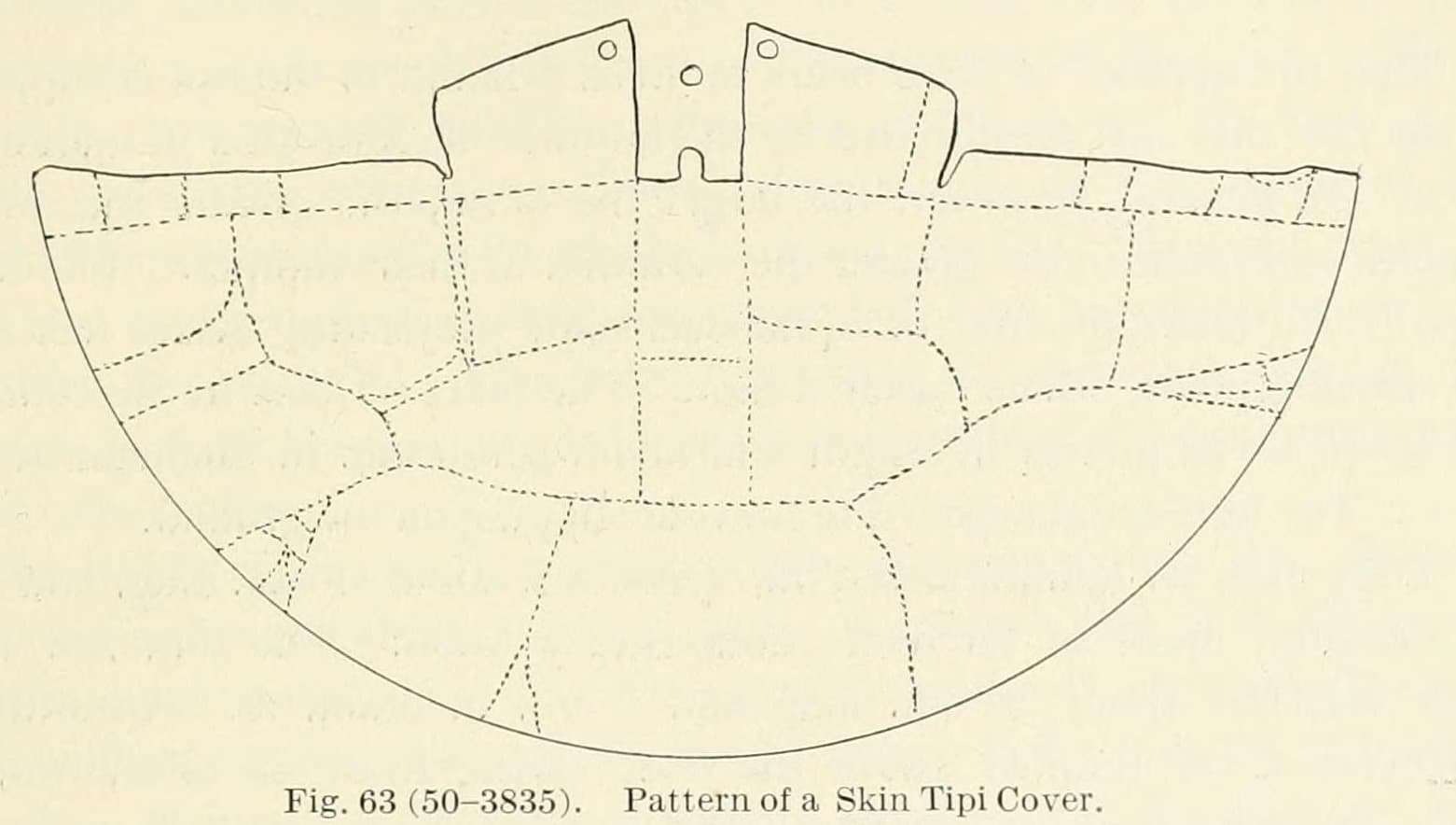
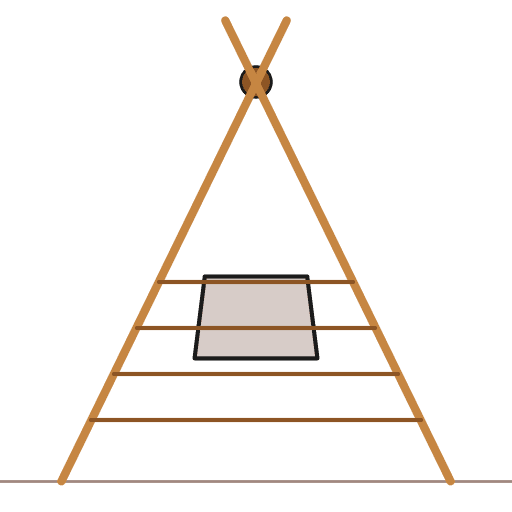
Blackfoot Tipi: Four Poles Locked in a Tie, Cover Raised on the Back Pole, Pinned over an East Door, Ears on Poles (Wissler, 1910)
láti ọwọ́ Woody
Iṣẹ́ Igi
9
0
0
0
0
0
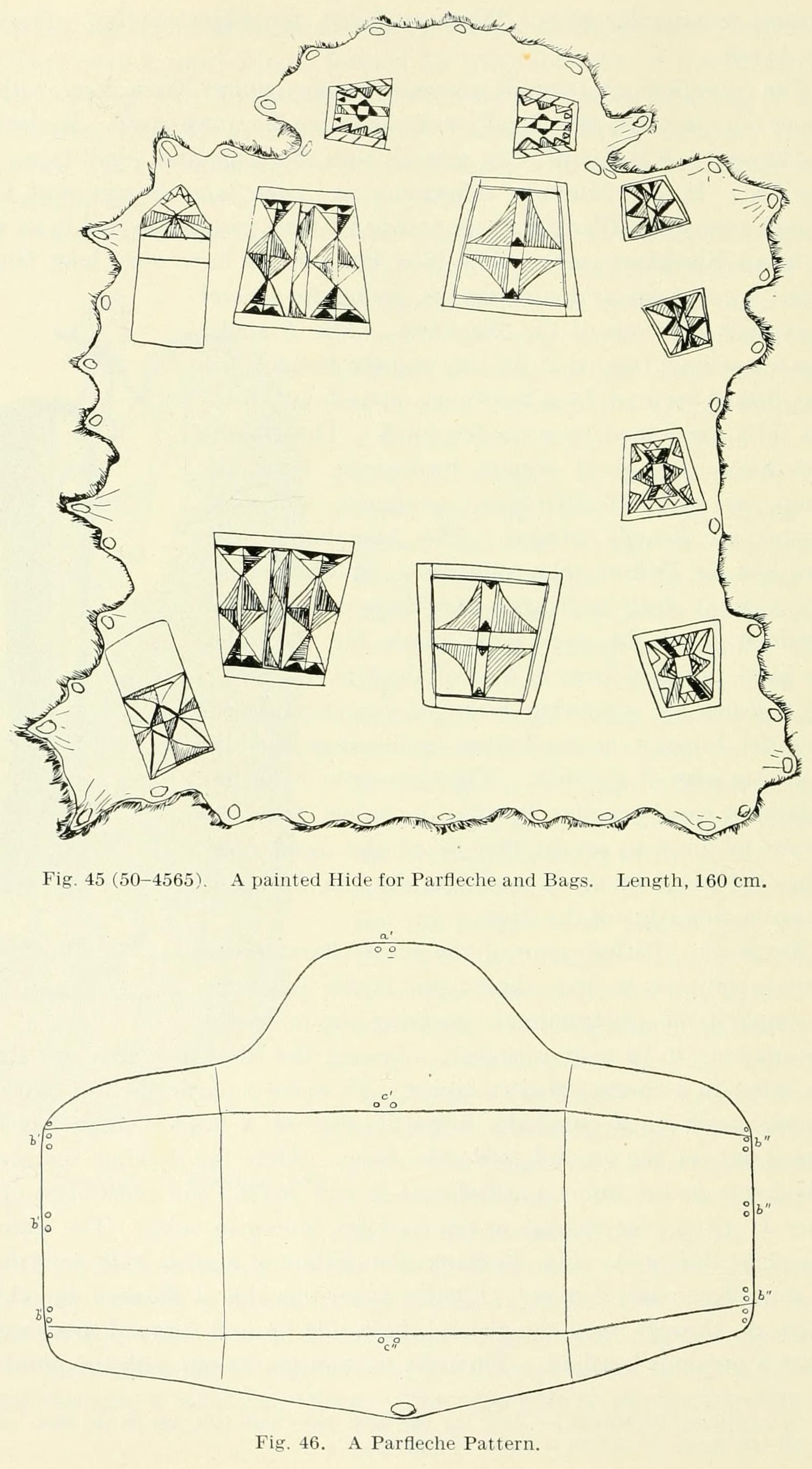
Blackfoot Parfleche: Rawhide Pegged Out, Fleshed, Painted While Staked, Scraped Even, Cut and Folded Like an Envelope (Wissler, 1910)
láti ọwọ́ Tex
Aṣọ àti Awọ
7
0
0
0
0
0
CC0 Àgbègbè Gbogbogbò
Blueprint yìí ti jáde lábẹ́ CC0. O lè ṣe àdàkọ, yí padà, pín, àti lò láìsí ìyọ̀ǹda.
Ṣàtìlẹ́yìn Olùṣẹ́dá nípa rírà àwọn ọjà nipasẹ̀ Blueprint wọn Ẹ̀san Olùṣẹ́dá tí àwọn Olùtajà gbé kalẹ̀, tàbí ṣẹ̀dá àtúnṣe tuntun ti Blueprint yìí kí o sì fi sínú Blueprint rẹ gẹ́gẹ́ bí ìsopọ̀ láti pín owó-wíwọlé.