IṢẸ́ ỌNÀ
ẸWÀ ÀTI ÌLERA
IṢẸ́ ỌWỌ́
ÀṢÀ ÀTI ÌTÀN
ÌṢERÉ
ÀYÍKÁ
OÚNJẸ ÀTI OHUN MÍMU
REVERSE ENGINEERING
SÁYẸ́ǸSÌ
ERÉ ÌDÁRAYÁ
ÌMỌ̀-Ẹ̀RỌ
ÀWỌN OHUN WÍWỌ̀
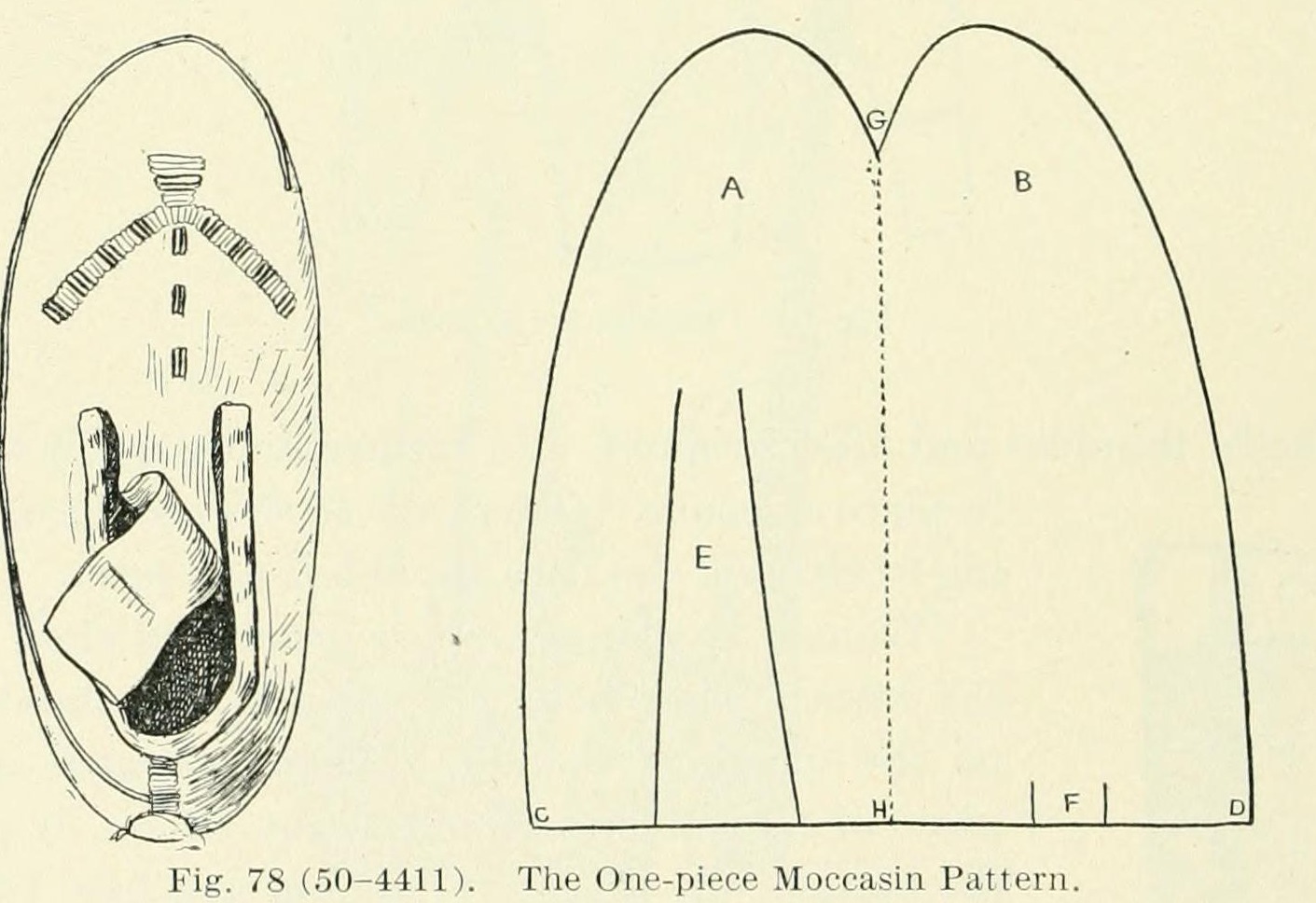

Blackfoot One-Piece Moccasin: One Skin Folded Lengthwise, Seamed Round the Toes, Heel Seam with Trailer, Ankle Flap (Wissler, 1910)
The older Blackfoot (Niitsitapi) moccasin from Clark Wissler's study: a single piece of soft-tanned skin folded lengthwise and seamed along the foot and round the toes, a heel seam with a small trailer left sticking out, and an ankle flap two to six inches wide tied round with a draw string. Winter ones were buffalo skin with the hair inside.
Àárín
An afternoon a pair
Ìlànà
1
1
Read Wissler
Read Wissler
"The one, which is the older by tradition, is made from a single piece cut as shown in Fig. 78."
2
2
Cut the piece
Cut the piece
Cut one piece of soft-tanned skin to the Fig. 78 shape: two long halves joined at the toe (one becomes the upper with the tongue cut in it, the other the sole), with the heel edge split into two strips c and d, each half the width of the middle tab h, and a small trailer f. Ours: size it by drawing round the foot with a margin for the seams.
Àwọn ohun èlò fún ìgbésẹ̀ yìí:
 Awọ àgbọ̀nrín rírọ̀1 ẹyọ
Àwọn irinṣẹ́ tí a nílò:
 Ọ̀bẹ
3
3
Sew the foot seam
Sew the foot seam
Fold the skin lengthwise along the centre, bring points c and d together and sew the edges from there round the toes to point g: one seam the whole length of the foot. Ours: sinew thread through awl holes.
Àwọn ohun èlò fún ìgbésẹ̀ yìí:
 Òwú Iṣan Ẹranko1 ẹyọ
Àwọn irinṣẹ́ tí a nílò:
 Ọ̀kọ̀ Ìlùhò
4
4
Sew the heel
Sew the heel
Sew c and d, now joined, to the tab h to make the upright heel seam, leaving the trailer f sticking out behind. Because c and d are half the width of h, the side seam sits half way up at the heel and comes down to sole level at the toes.
Àwọn ohun èlò fún ìgbésẹ̀ yìí:
Òwú Iṣan Ẹranko1 ẹyọÀwọn irinṣẹ́ tí a nílò:
Ọ̀kọ̀ Ìlùhò5
5
Add the ankle flap
Add the ankle flap
Sew on an ankle flap two to six inches (5-15 cm) wide, long enough to overlap in front, and tie it round the ankle with a draw string. Do any painting, quill or bead work before sewing up.
Àwọn ohun èlò fún ìgbésẹ̀ yìí:
Awọ àgbọ̀nrín rírọ̀1 ẹyọ Okùn awọ tútù1 ẹyọ
Àwọn irinṣẹ́ tí a nílò:
Ọ̀kọ̀ ÌlùhòỌ̀bẹ6
6
Troubleshooting
Troubleshooting
Moccasin troubleshooting.
Flow
Loading...
7
7
History and honest limits
History and honest limits
From Clark Wissler, *Material Culture of the Blackfoot Indians*, **Anthropological Papers of the American Museum of Natural History** vol. V (1910), pp. 128-130 and Fig. 78, with W. C. Orchard's note on the pattern (checked on the archive.org scan materialcultureo00wiss). Of thirteen pairs Wissler examined, four had no trailer, three one, three two, and three a fringed heel seam. Sizing, thread and stitch are ours.
Àwọn ohun-èlò
3- 1 ẹyọÀyè
- 2 ẹyọÀyè
- 1 ẹyọÀyè
Ìtọ́nisọ́nà yìí ń ṣe
Blueprint tó jọra
Àwọn blueprint wọ̀nyí pín ìmọ̀ — ọ̀nà, ohun-èlò tàbí ìlànà
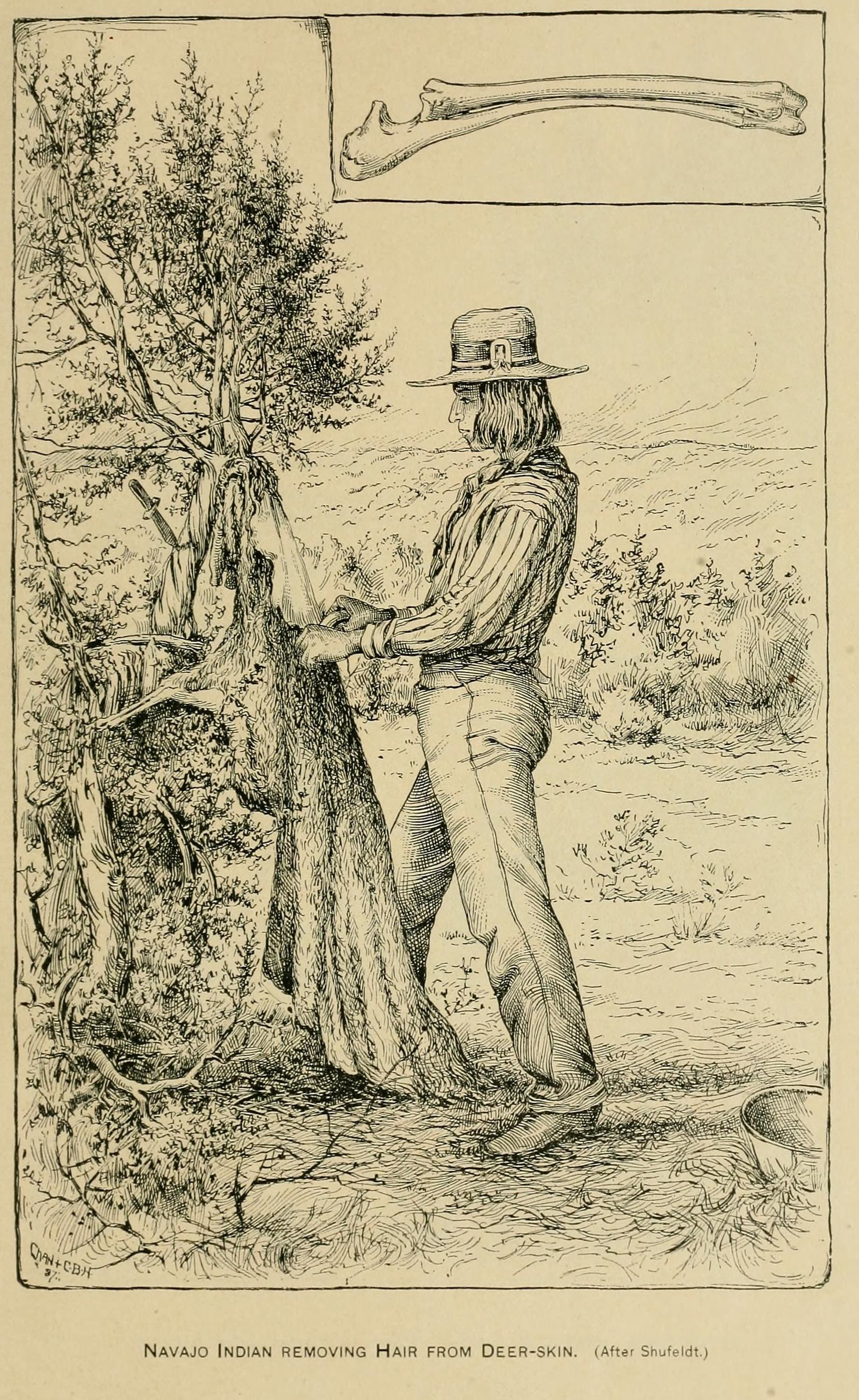
Navajo Buckskin: Hair Shaved with the Deer's Own Foreleg Bone, Brains Rubbed In, Wrung on a Tree, Worked Dry over the Feet (Shufeldt, 1888)
láti ọwọ́ Tex
Aṣọ àti Awọ
6
0
0
0
0
0
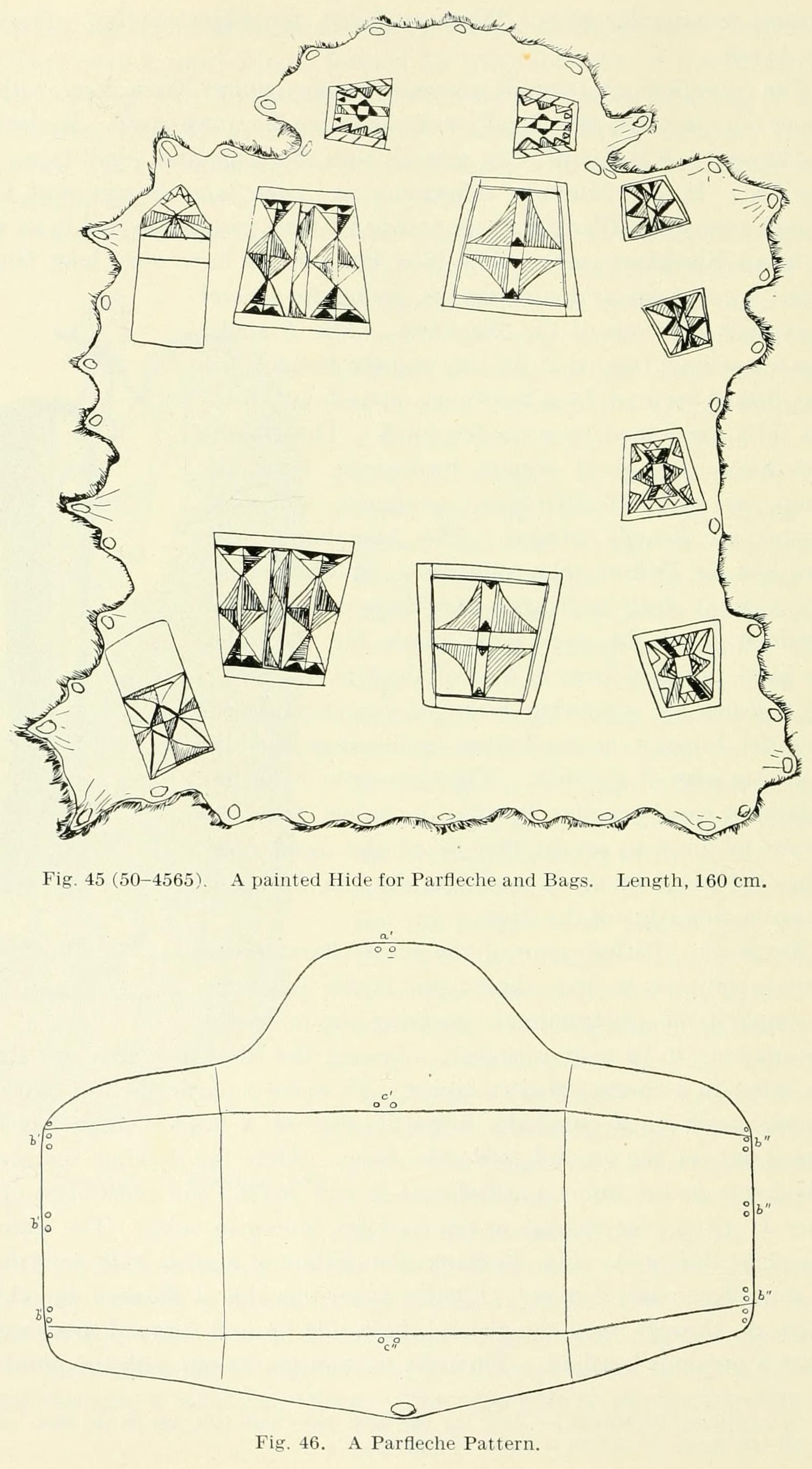
Blackfoot Parfleche: Rawhide Pegged Out, Fleshed, Painted While Staked, Scraped Even, Cut and Folded Like an Envelope (Wissler, 1910)
láti ọwọ́ Tex
Aṣọ àti Awọ
7
0
0
0
0
0
CC0 Àgbègbè Gbogbogbò
Blueprint yìí ti jáde lábẹ́ CC0. O lè ṣe àdàkọ, yí padà, pín, àti lò láìsí ìyọ̀ǹda.
Ṣàtìlẹ́yìn Olùṣẹ́dá nípa rírà àwọn ọjà nipasẹ̀ Blueprint wọn Ẹ̀san Olùṣẹ́dá tí àwọn Olùtajà gbé kalẹ̀, tàbí ṣẹ̀dá àtúnṣe tuntun ti Blueprint yìí kí o sì fi sínú Blueprint rẹ gẹ́gẹ́ bí ìsopọ̀ láti pín owó-wíwọlé.