IṢẸ́ ỌNÀ
ẸWÀ ÀTI ÌLERA
IṢẸ́ ỌWỌ́
ÀṢÀ ÀTI ÌTÀN
ÌṢERÉ
ÀYÍKÁ
OÚNJẸ ÀTI OHUN MÍMU
REVERSE ENGINEERING
SÁYẸ́ǸSÌ
ERÉ ÌDÁRAYÁ
ÌMỌ̀-Ẹ̀RỌ
ÀWỌN OHUN WÍWỌ̀
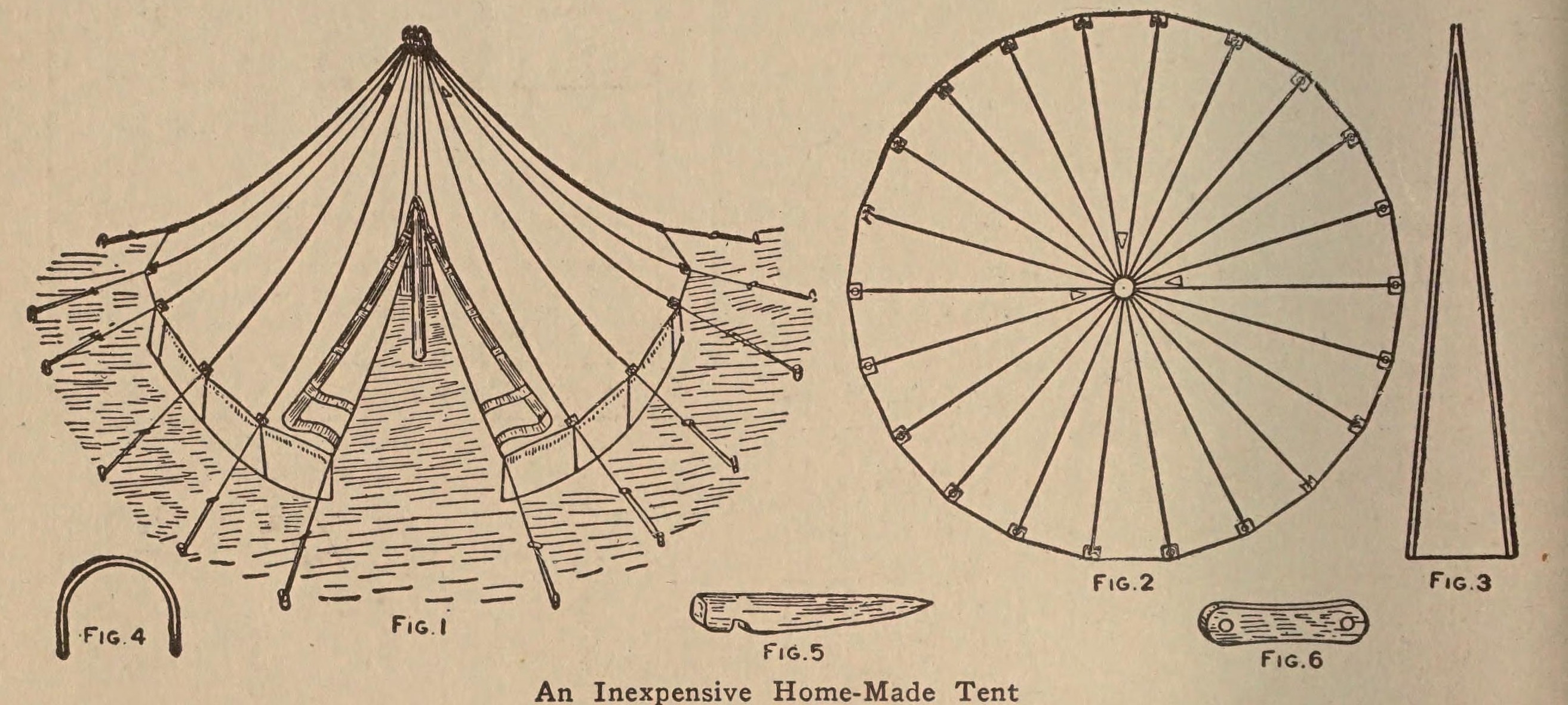


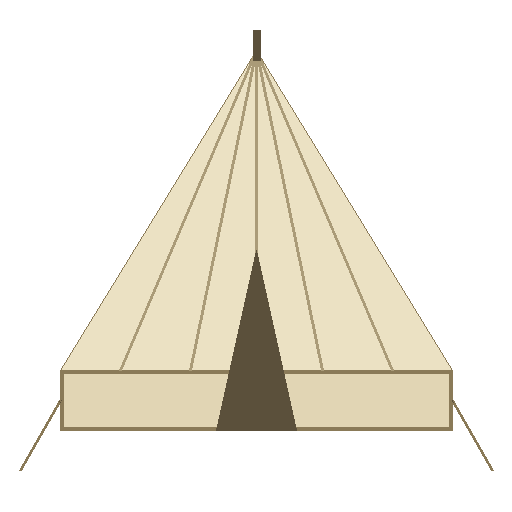
Bell Tent, 14 ft: Twenty-Two Duck Sections, a Galvanized Hoop at the Apex and a Two-Piece Pole (Boy Mechanic, 1913)
A round bell tent 14 ft across "for lawns, as well as for a boy's camping outfit", from The Boy Mechanic (1913): twenty-two tapered sections of unbleached tent duck sewn into a cone on a small iron hoop, a 2 ft 2 in wall, three ventilators, webbing-bound edges with eyelets for the stay ropes, and one centre pole.
Sizes are his; the pole length is worked out from them.
Àárín
About 3 days
Ìlànà
1
1
The cover, checked
The cover, checked
Ń ṣí ìwé Jupyter…
2
2
Read The Boy Mechanic
Read The Boy Mechanic
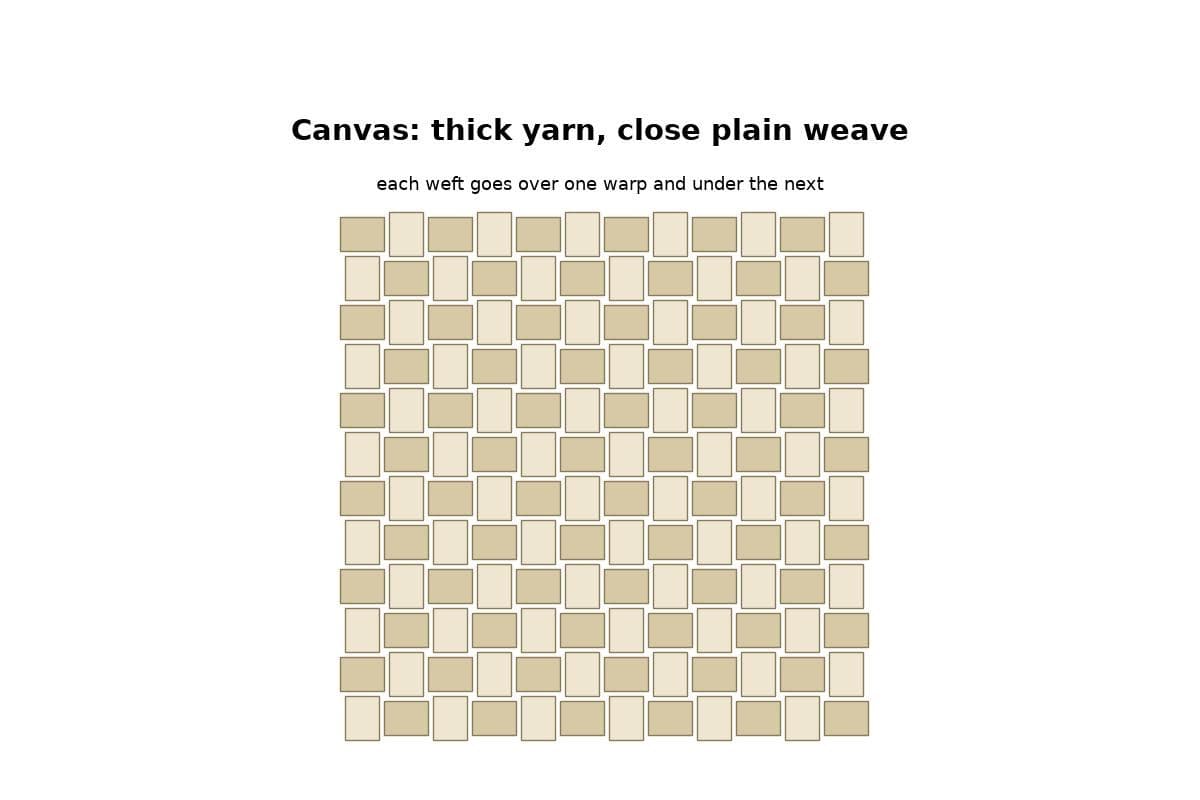
"To make such a tent, procure unbleached tent duck, which is the very best material for the purpose."
3
3
Cut and sew the cover
Cut and sew the cover
Cut 22 sections of unbleached tent duck, each 10 ft 6 in long and 2 ft 2 in wide at the bottom, tapering in a straight line to a point; these sizes allow for lapped seams. Double-stitch the seams on a machine. Sew the last seam only 4 ft down from the top, leaving the rest as the door, and stitch an extra gusset at the end of it so it will not rip.
Àwọn ohun èlò fún ìgbésẹ̀ yìí:
 Aṣọ kánfásì1 ẹyọ
 Òwú ìránṣọ1 ẹyọ
Àwọn irinṣẹ́ tí a nílò:
 Ẹ̀rọ ìránṣọ
 Ìṣẹ́ná
 Okùn Ìdíwọ̀n
 Gègé
4
4
Bind the edges and cut the ventilators
Bind the edges and cut the ventilators
Fold back the edges of the opening and the bottom edge of the cover and bind them with wide webbing, 3 in across, with eyelets at the seams for the stay ropes. Near the apex cut three triangular ventilators 8 in long and 4 in wide at the bottom, and hem their edges.
Àwọn ohun èlò fún ìgbésẹ̀ yìí:
 Okùn híhun òwú1 ẹyọ
 Ihò rívẹ́ẹ̀tì22 ẹyọÒwú ìránṣọ1 ẹyọ
Àwọn irinṣẹ́ tí a nílò:
Ẹ̀rọ ìránṣọÌṣẹ́ná Òòlù
5
5
Make the wall
Make the wall
Make the wall of the same cloth, 2 ft 2 in high. Bind its upper edge with webbing and its bottom with canvas, and stitch coarse canvas 6 in wide along the bottom to fill the space between ground and wall. Stitch the top of the wall firmly to the cover along the dotted line of his Fig. 2.
Àwọn ohun èlò fún ìgbésẹ̀ yìí:
Aṣọ kánfásì1 ẹyọOkùn híhun òwú1 ẹyọÒwú ìránṣọ1 ẹyọÀwọn irinṣẹ́ tí a nílò:
Ẹ̀rọ ìránṣọÌṣẹ́ná6
6
Fit the apex hoop and hood
Fit the apex hoop and hood
Have a blacksmith make a hoop of 1/4 in round galvanized iron, 6 in in diameter. Stitch the canvas at the apex round the hoop and along the sides, and make the apex into a hood lined with stiff canvas.
Àwọn ohun èlò fún ìgbésẹ̀ yìí:
 Ọ̀pá irin róbótó1 ẹyọAṣọ kánfásì1 ẹyọÒwú ìránṣọ1 ẹyọ
Àwọn irinṣẹ́ tí a nílò:
 Abẹ́rẹ́ ìránṣọÌṣẹ́ná
7
7
Make the pole, pegs and blocks
Make the pole, pegs and blocks
Make the tent pole 3 in in diameter in two sections with a socket joint, rounded at the top to fit the apex; its length is about 10 ft (our figure from step 1). Cut small pegs for the wall loops, stakes for the stay ropes, and a wooden block for each stay rope to hold its end and adjust its length (his Fig. 6).
Àwọn ohun èlò fún ìgbésẹ̀ yìí:
 Òpó igi1 ẹyọ
 Èèkàn igi1 ẹyọ
 Tẹ́ẹ́rẹ́ igi líle1 ẹyọ
Àwọn irinṣẹ́ tí a nílò:
 Ayùn Ọwọ́
 Ìlù ọwọ́ pẹ̀lú orí
8
8
Pitch it
Pitch it
Raise the cover on the pole. Fasten the wall down with loops of stout line on its lower edge and small pegs driven through them into the ground. Run the stay ropes from the eyelets in the cover to stakes in the ground, through the blocks, and adjust them until the cover is tight.
Àwọn ohun èlò fún ìgbésẹ̀ yìí:
 Okùn òwú ńlá1 ẹyọ
Àwọn irinṣẹ́ tí a nílò:
Òòlù9
9
Troubleshooting
Troubleshooting
Bell tent troubleshooting.
Flow
Loading...
10
10
History and honest limits
History and honest limits
From **The Boy Mechanic**, edited by H. H. Windsor, Popular Mechanics, Chicago, 1913, p. 190, "How to Make a Bell Tent", credited to the Cleveland Plain Dealer; text checked on the 1913 scan. He gives no pole length, number of stay ropes or peg sizes: the pole length is our geometry. Thread, tools and metric figures are ours.
Àwọn ohun-èlò
9- 3 ẹyọÀyè
- 4 ẹyọÀyè
- 2 ẹyọÀyè
- 22 ẹyọÀyè
- 1 ẹyọÀyè
- 1 ẹyọÀyè
- 1 ẹyọÀyè
- 1 ẹyọÀyè
- 1 ẹyọÀyè
Ìtọ́nisọ́nà yìí ń ṣe
Blueprint tó jọra
Àwọn blueprint wọ̀nyí pín ìmọ̀ — ọ̀nà, ohun-èlò tàbí ìlànà
CC0 Àgbègbè Gbogbogbò
Blueprint yìí ti jáde lábẹ́ CC0. O lè ṣe àdàkọ, yí padà, pín, àti lò láìsí ìyọ̀ǹda.
Ṣàtìlẹ́yìn Olùṣẹ́dá nípa rírà àwọn ọjà nipasẹ̀ Blueprint wọn Ẹ̀san Olùṣẹ́dá tí àwọn Olùtajà gbé kalẹ̀, tàbí ṣẹ̀dá àtúnṣe tuntun ti Blueprint yìí kí o sì fi sínú Blueprint rẹ gẹ́gẹ́ bí ìsopọ̀ láti pín owó-wíwọlé.