IṢẸ́ ỌNÀ
ẸWÀ ÀTI ÌLERA
IṢẸ́ ỌWỌ́
ÀṢÀ ÀTI ÌTÀN
ÌṢERÉ
ÀYÍKÁ
OÚNJẸ ÀTI OHUN MÍMU
REVERSE ENGINEERING
SÁYẸ́ǸSÌ
ERÉ ÌDÁRAYÁ
ÌMỌ̀-Ẹ̀RỌ
ÀWỌN OHUN WÍWỌ̀
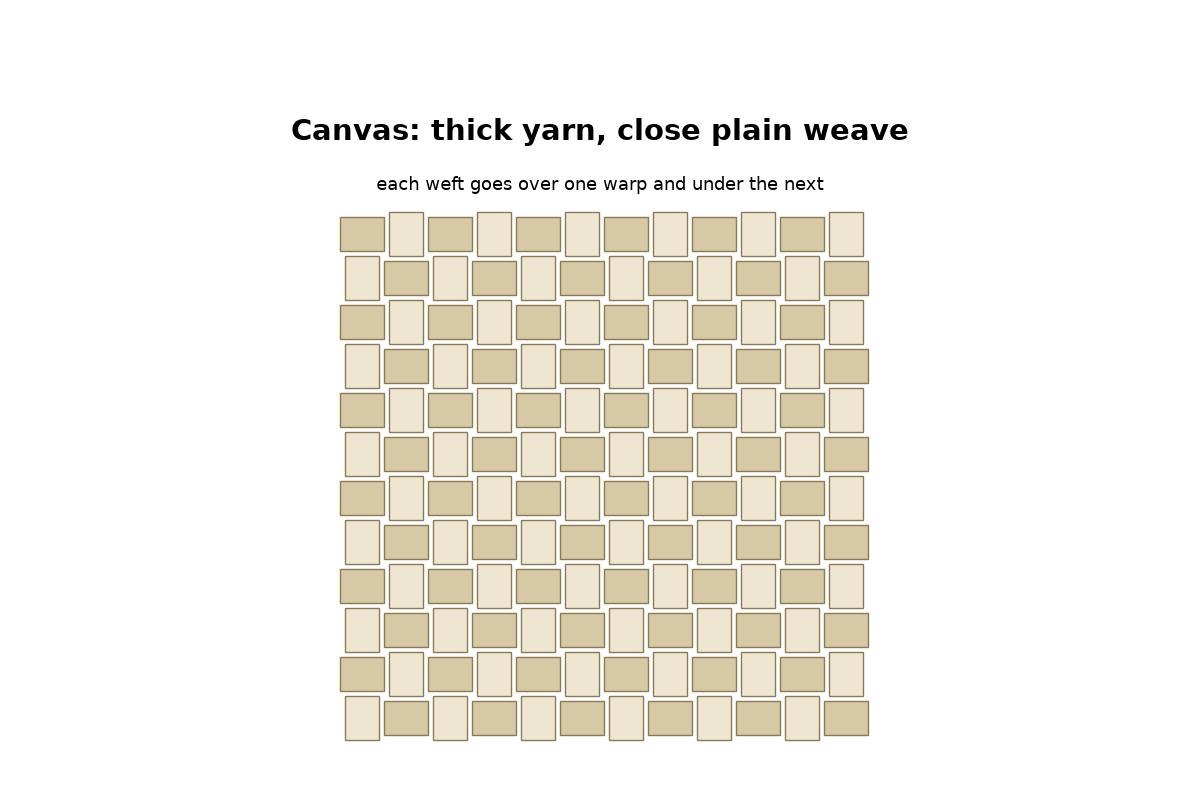


Cotton Canvas: Plied Thread in a Close Plain Weave
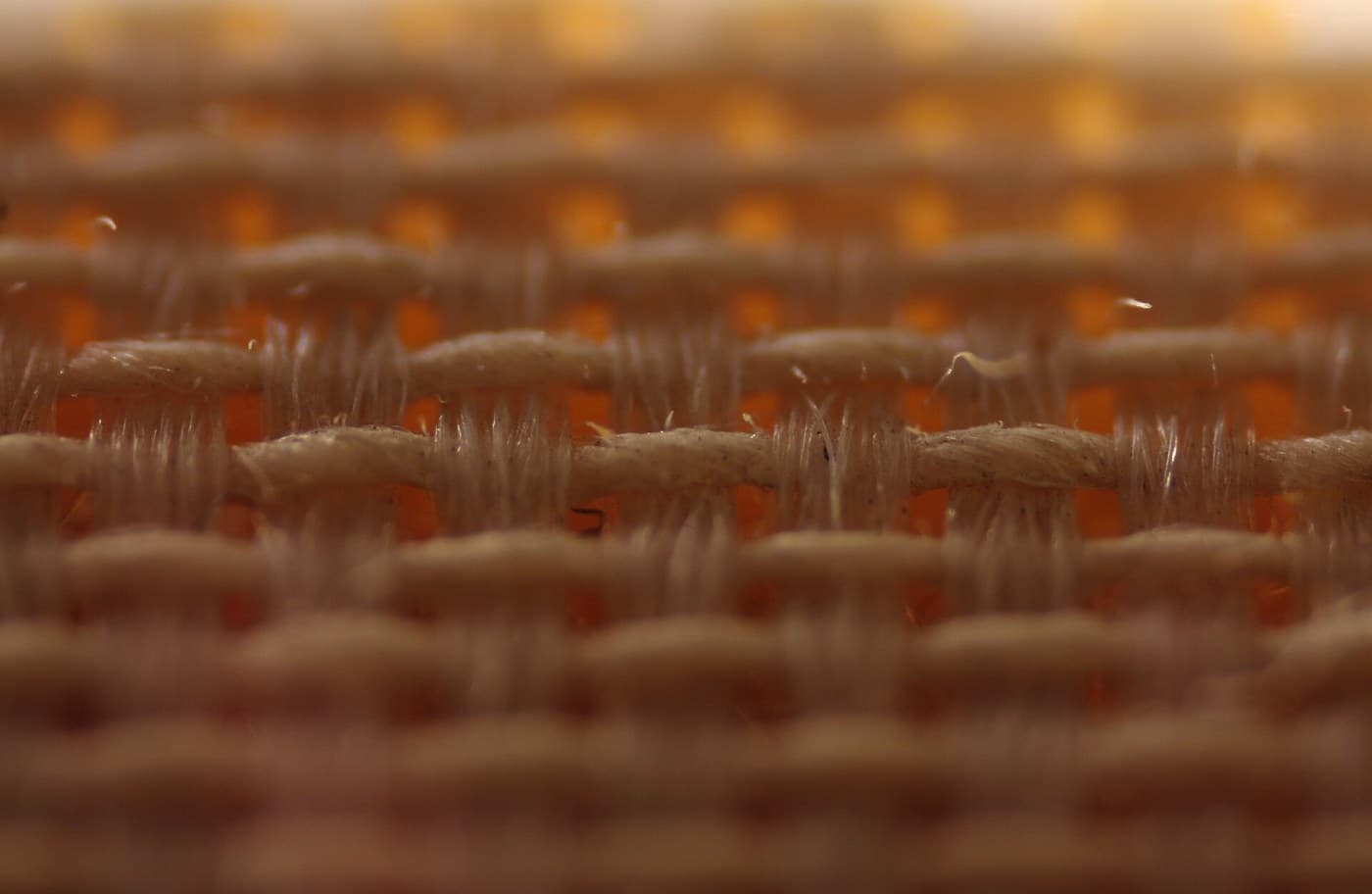
Canvas is a durable plain-woven cloth, once of hemp and now usually of cotton or linen, for sails, tents, covers, bags and painting. Ply cotton thread into a thick yarn, warp it close, and weave it over-one-under-one with a hard, even beat so the cloth is dense.
The picture: our diagram of plain weave.
Àárín
A week
Ìlànà
1
1
Ply the yarn
Ply the yarn
Ply three cotton threads together on the drop spindle, twisting the opposite way to their spin, into a thick, firm yarn.
Àwọn ohun èlò fún ìgbésẹ̀ yìí:
 Òwú Ìrán4500 m
Àwọn irinṣẹ́ tí a nílò:
 Kẹ̀kẹ́ ìhunṣọ ọwọ́
2
2
Warp close
Warp close
Warp the loom with the canvas yarn, two ends per slot and hole if the heddle is coarse, so the warp lies close.
Àwọn irinṣẹ́ tí a nílò:
 Ohun ìhun oníhéédù líle
 Ìdíwọ̀n
 Ìdìmú onídàbí C
 Ìṣẹ́ná
3
3
Weave hard
Weave hard
Weave plain weave, beating each pick in firmly and evenly with the heddle so the weft packs as close as the warp.
Àwọn irinṣẹ́ tí a nílò:
Ohun ìhun oníhéédù líle Ọkọ̀ ìhunÌdíwọ̀n
4
4
Finish
Finish
Cut the cloth off, knot or hem the ends, and wash it once in hot water so it shrinks tight.
Àwọn irinṣẹ́ tí a nílò:
Ìṣẹ́ná5
5
Thread needed
Thread needed
Ń ṣí ìwé Jupyter…
Ìtọ́nisọ́nà yìí ń ṣe

Blueprint tó jọra
Àwọn blueprint wọ̀nyí pín ìmọ̀ — ọ̀nà, ohun-èlò tàbí ìlànà
CC0 Àgbègbè Gbogbogbò
Blueprint yìí ti jáde lábẹ́ CC0. O lè ṣe àdàkọ, yí padà, pín, àti lò láìsí ìyọ̀ǹda.
Ṣàtìlẹ́yìn Olùṣẹ́dá nípa rírà àwọn ọjà nipasẹ̀ Blueprint wọn Ẹ̀san Olùṣẹ́dá tí àwọn Olùtajà gbé kalẹ̀, tàbí ṣẹ̀dá àtúnṣe tuntun ti Blueprint yìí kí o sì fi sínú Blueprint rẹ gẹ́gẹ́ bí ìsopọ̀ láti pín owó-wíwọlé.