IṢẸ́ ỌNÀ
ẸWÀ ÀTI ÌLERA
IṢẸ́ ỌWỌ́
ÀṢÀ ÀTI ÌTÀN
ÌṢERÉ
ÀYÍKÁ
OÚNJẸ ÀTI OHUN MÍMU
REVERSE ENGINEERING
SÁYẸ́ǸSÌ
ERÉ ÌDÁRAYÁ
ÌMỌ̀-Ẹ̀RỌ
ÀWỌN OHUN WÍWỌ̀
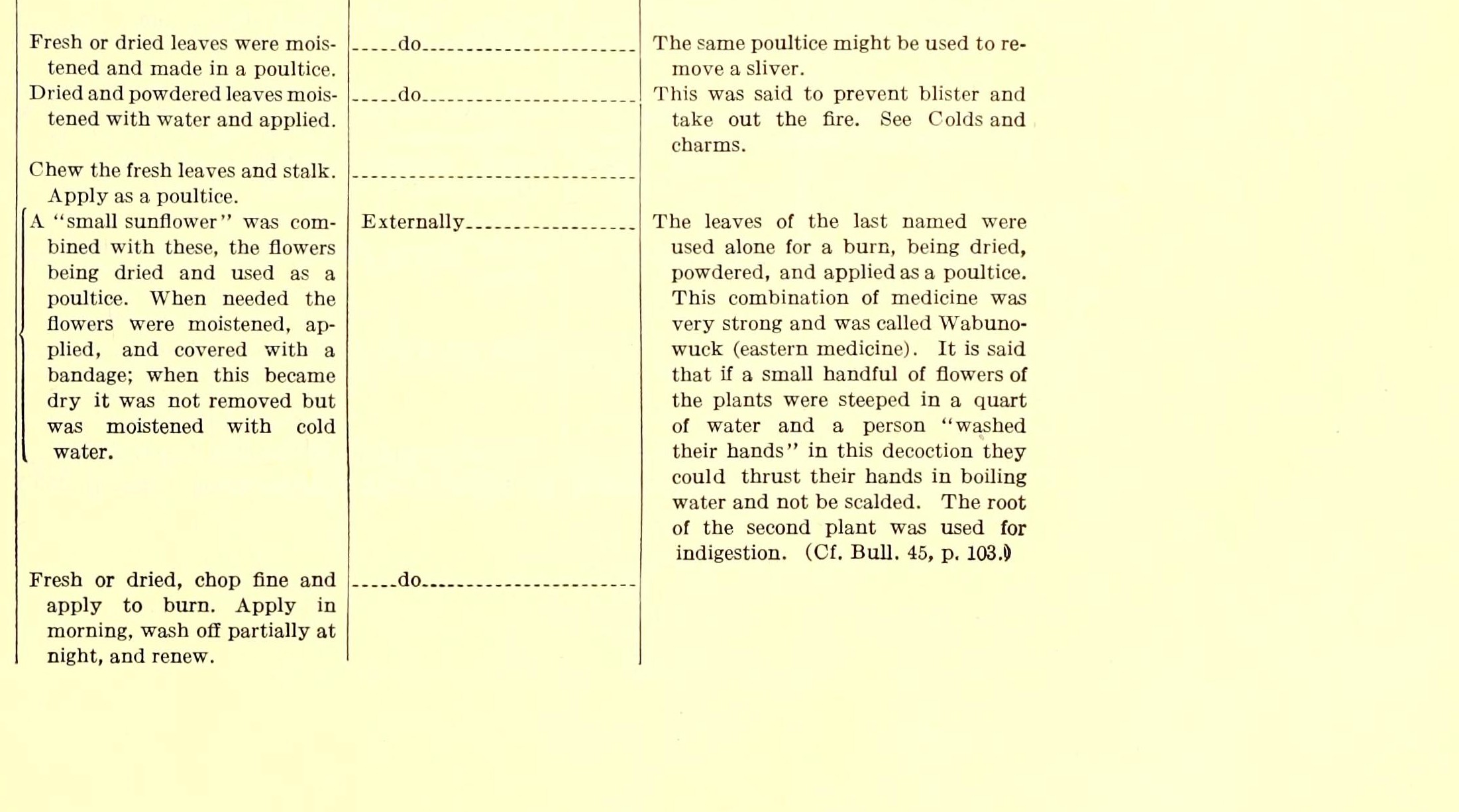


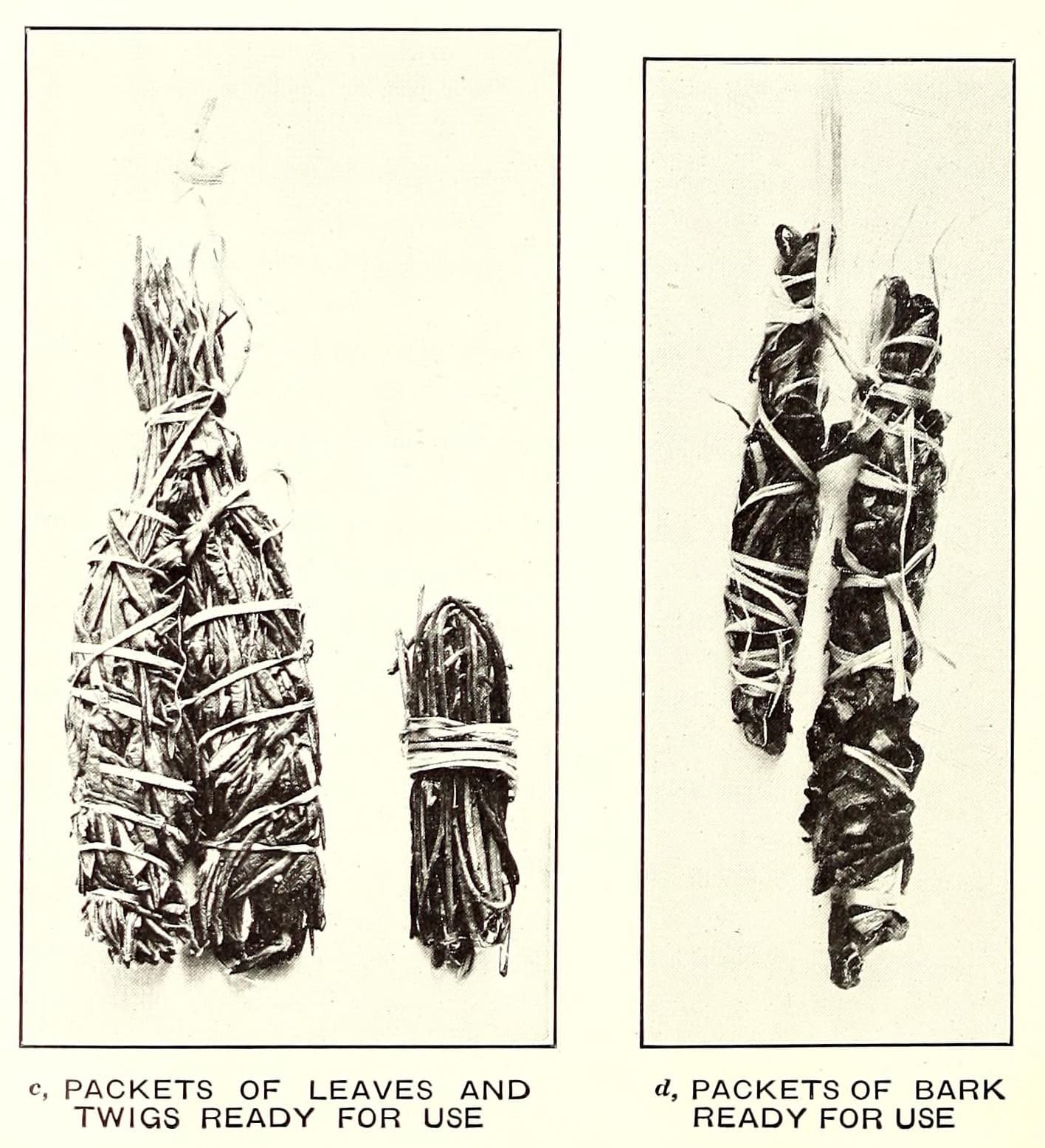
Chippewa Burn Poultices: Giant Hyssop Leaves, the Four-Flower Wabunowuck and Tamarack Inner Bark (Densmore, 1928)
The burn poultices of the Chippewa (Ojibwe) recorded by Frances Densmore: powdered giant hyssop leaves moistened with water, "said to prevent blister and take out the fire"; Wabunowuck, dried flowers of goldenrod, coneflower, giant hyssop and a small sunflower kept moist under a bandage; and chopped tamarack inner bark renewed each morning. Recorded use, not medical advice.
Olùbẹ̀rẹ̀
An hour, plus drying
Ìlànà
1
1
Read Densmore
Read Densmore
Three burn remedies from her medicine table. She gives no amounts. Recorded use, not medical advice: a deep, large or blistered burn needs a doctor (ours).
2
2
Giant hyssop leaf poultice
Giant hyssop leaf poultice
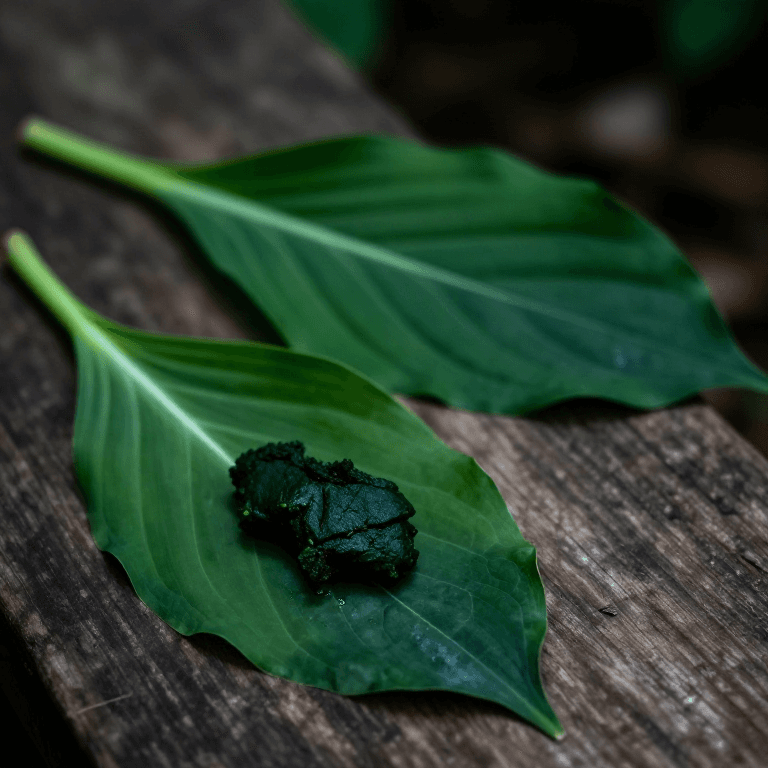
Dry the leaves, powder them, moisten with water and apply. It "was said to prevent blister and take out the fire." Second way: chew the fresh leaves and stalk and apply as a poultice.
Àwọn ohun èlò fún ìgbésẹ̀ yìí:
 Giant Hyssop Leaves1 ẹyọ
 Omi1 ẹyọ
Àwọn irinṣẹ́ tí a nílò:
 Àká Ìgbẹ
 Odó àti Ọmọ Odó Òkúta
3
3
Wabunowuck, the eastern medicine
Wabunowuck, the eastern medicine
Dry the flowers of goldenrod, coneflower and giant hyssop together with a "small sunflower" (species not given). When needed, moisten the flowers, apply, and cover with a bandage. When it dries, do not take it off: wet it again with cold water. Densmore was told this combination was "very strong".
Àwọn ohun èlò fún ìgbésẹ̀ yìí:
 Òdòdó solidago (tí ó gbẹ)1 ẹyọ
 Coneflower Flowers (Dried)1 ẹyọ
 Giant Hyssop Flowers (Dried)1 ẹyọ
 Sunflower Flowers (Dried)1 ẹyọOmi1 ẹyọ
 Gáàsì òwú1 ẹyọ
Àwọn irinṣẹ́ tí a nílò:
Àká Ìgbẹ4
4
Tamarack inner bark
Tamarack inner bark
Fresh or dried, chop the inner bark fine and lay it on the burn. Apply in the morning, wash off partly at night, and renew.
Àwọn ohun èlò fún ìgbésẹ̀ yìí:
 Tamarack Inner Bark1 ẹyọOmi1 ẹyọ
Àwọn irinṣẹ́ tí a nílò:
 Ọ̀bẹ
5
5
Troubleshooting
Troubleshooting
Burn poultice troubleshooting.
Flow
Loading...
6
6
History and honest limits
History and honest limits
From Frances Densmore, *Uses of Plants by the Chippewa Indians*, **44th Annual Report of the Bureau of American Ethnology** (1928), pp. 352-353 (checked on the archive.org scan usesofplantsbych00dens). Chippewa remedies were mostly knowledge of the Midewiwin, shared with her so a record would survive. A claim in her remarks about hands in boiling water is left out on purpose. Amounts and safety advice are ours. Recorded use, not medical advice.
Àwọn ohun-èlò
8- 1 ẹyọÀyè
- 3 ẹyọÀyè
- Àyè
- Àyè
- Àyè
- Àyè
- 1 ẹyọÀyè
- 1 ẹyọÀyè
Ìtọ́nisọ́nà yìí ń ṣe
Blueprint tó jọra
Àwọn blueprint wọ̀nyí pín ìmọ̀ — ọ̀nà, ohun-èlò tàbí ìlànà
CC0 Àgbègbè Gbogbogbò
Blueprint yìí ti jáde lábẹ́ CC0. O lè ṣe àdàkọ, yí padà, pín, àti lò láìsí ìyọ̀ǹda.
Ṣàtìlẹ́yìn Olùṣẹ́dá nípa rírà àwọn ọjà nipasẹ̀ Blueprint wọn Ẹ̀san Olùṣẹ́dá tí àwọn Olùtajà gbé kalẹ̀, tàbí ṣẹ̀dá àtúnṣe tuntun ti Blueprint yìí kí o sì fi sínú Blueprint rẹ gẹ́gẹ́ bí ìsopọ̀ láti pín owó-wíwọlé.