IṢẸ́ ỌNÀ
ẸWÀ ÀTI ÌLERA
IṢẸ́ ỌWỌ́
ÀṢÀ ÀTI ÌTÀN
ÌṢERÉ
ÀYÍKÁ
OÚNJẸ ÀTI OHUN MÍMU
REVERSE ENGINEERING
SÁYẸ́ǸSÌ
ERÉ ÌDÁRAYÁ
ÌMỌ̀-Ẹ̀RỌ
ÀWỌN OHUN WÍWỌ̀
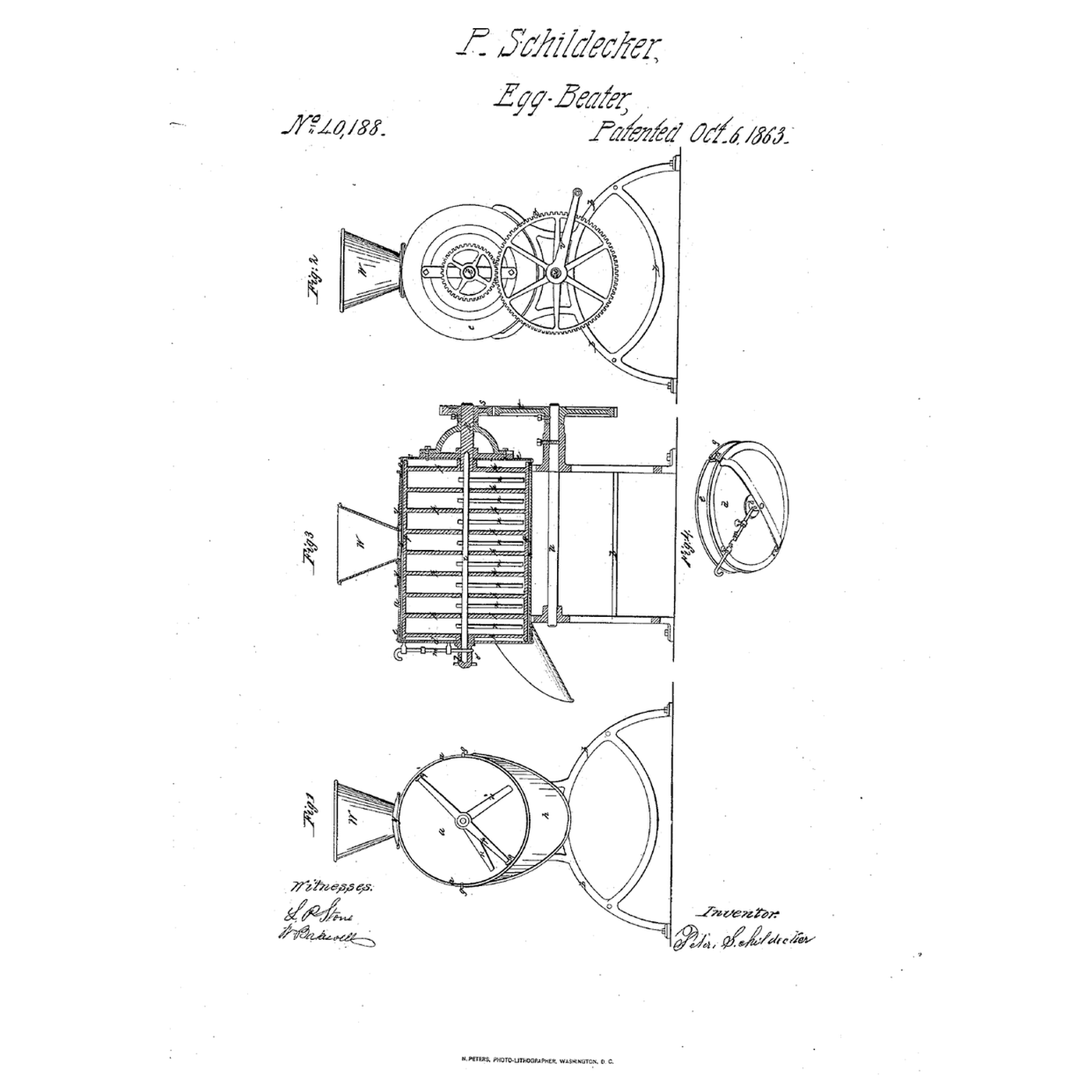

Comb-Cylinder Egg Beater: Bars Turn Between Fixed Arms
Every beater so far turned through a liquid that nothing held still.
Peter Schildecker of Pittsburgh received US 40,188, dated 6 October 1863, for an egg beater: a horizontal cylinder on a light frame, with a still shaft along its axis carrying arms set in pairs at right angles, and a frame of parallel bars that turns round the shaft so that "each bar p will come between a pair of arms"; a funnel on a slide fills it, and a cap held by slots over pins opens it to pour out through a spout.
This rung works out the passes per second, then prints the bar frame and arm comb, builds the cylinder and gearing, and times a beating.
Ilọsíwájú
About 6 hours, plus printing
Ìlànà
1
1
Passes per second
Passes per second
Ń ṣí ìwé Jupyter…
2
2
Breaking the swirl before it
Breaking the swirl before it
The embedded blueprint breaks a propeller's swirl with rocking arms. Schildecker holds his arms still and turns the bars past them.
3
3
Read US 40,188
Read US 40,188
"The beater consists of a frame composed of a number of parallel bars, p, placed at uniform distances apart, so that each bar p will come between a pair of arms, n n', when in place in the cylinder a."
"My improved egg-beater is designed to beat up the white of eggs or eggs mixed with sugar, and by the use of it I am enabled to accomplish the result more effectually and in a much shorter space of time than by hand or by the use of any contrivances for a similar purpose with which I am acquainted."
4
4
Print the bars and arms
Print the bars and arms
Print the bar frame (/uploads/blueprints/comb-cylinder-egg-beater-bar-frame.stl) and the arm comb on its shaft (/uploads/blueprints/comb-cylinder-egg-beater-arms.stl). Print in PETG at 0.2 mm layers, 30 % infill, 4 walls.
Àwọn ohun èlò fún ìgbésẹ̀ yìí:
 Okùn PETG1 ẹyọ
Àwọn irinṣẹ́ tí a nílò:
 Ẹ̀rọ ìtẹ̀ 3D oníwàyà (FDM)
5
5
Make the cylinder
Make the cylinder
Cut 160 mm of 100 mm PVC pipe. Close one end with a plywood disk and silicone; make a plywood cap for the other end that twists onto two screws. Saw a 30 mm filling hole on top and fit a funnel over it.
Àwọn ohun èlò fún ìgbésẹ̀ yìí:
 Páìpù PVC1 ẹyọ
 Àwo igi tí a lẹ̀ pọ̀1 ẹyọ
 Ìdílẹ̀ Silikoni1 ẹyọ
 Ìsúrù igi #8 x 1"1 ẹyọ
Àwọn irinṣẹ́ tí a nílò:
 Ayùn Irin
 Ayùn Kópìngì
 Ìṣètò ayùn ihò
 Ẹ̀rọ Ìlùkòkò Aláìlókùn
6
6
Shaft, frame and gearing
Shaft, frame and gearing
Fix the arm comb's shaft through the cap so it cannot turn. Slide the bar frame onto it so its bars fall between the arms, and couple its end ring to a 5 mm crank shaft through the closed end, with a 12-tooth pinion and a 36-tooth wheel and crank on a plywood stand.
Àwọn ohun èlò fún ìgbésẹ̀ yìí:
 Ọ̀pá Róbótó Irin Rírọ̀1 ẹyọ
 Ẹpọ́ksì Ẹ̀yà Méjì1 ẹyọ
 Ìṣù Igi Líle1 ẹyọ
 Skurú ẹ̀rọ1 ẹyọ
 Nọ́ọ̀tì Onígun Mẹ́fà1 ẹyọ
 Wáṣà Pẹrẹsẹ1 ẹyọ
Àwọn irinṣẹ́ tí a nílò:
Ẹ̀rọ Ìlùkòkò Aláìlókùn Àkójọ Orí Ìlùkòkò
 Kọ́kọ́rọ́ tí a lè ṣàtúnṣe
 Ìṣù àwọn ohun ìyí skurú
7
7
The patent drawing
The patent drawing
US 40,188 drawing sheet, public domain (expired patent).
8
8
Beat egg whites with sugar
Beat egg whites with sugar
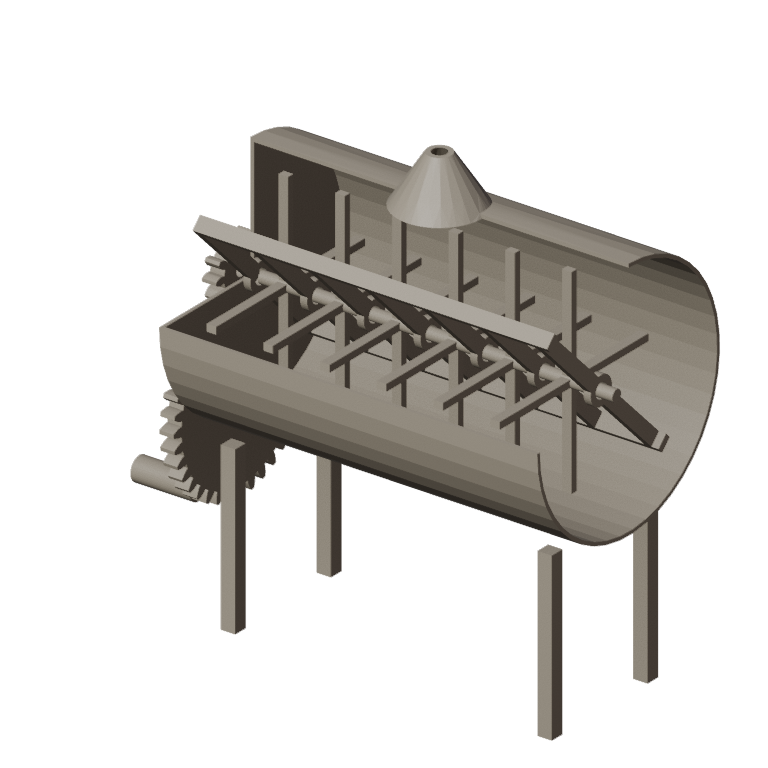
Fill through the funnel with two egg whites and a spoon of sugar. Crank about once a second; time to stiff peaks, then twist the cap off and pour.
Àwọn ohun èlò fún ìgbésẹ̀ yìí:
 Ẹyin2 ẹyọ
 Ṣúgà oníwẹ́wẹ́1 ẹyọ
Àwọn irinṣẹ́ tí a nílò:
 Àwo ìdàpọ̀ ńlá ti irin tí kò ń yá
 Aago Ìdúró
9
9
Bars that hit the arms, a shaft that turns
Bars that hit the arms, a shaft that turns
Comb-cylinder egg beater troubleshooting.
Flow
Loading...
10
10
History and honest limits
History and honest limits
**Peter Schildecker** of Pittsburgh received US 40,188, dated 6 October 1863. His cylinder is tin on a light framework; the cap's rim has two L-shaped slots over pins on the cylinder; a pin through the cap holds the arm shaft still; the bar frame's end bar has a square box flange that takes the crank shaft's square end; a pinion on the crank shaft is driven by a larger cog wheel with a crank; the funnel slide opens or closes the filling hole.
**Honest limits.** FDM prints hold food in their layer lines, so wash well and replace when worn. PVC pipe and plywood stand in for tin, and printed parts for his bars and arms. Your times are the result.
Àwọn ohun-èlò
13- 1 ẹyọÀyè
- 1 ẹyọÀyè
- 1 ẹyọÀyè
- 1 ẹyọÀyè
- 1 ẹyọÀyè
- Àyè
- 1 ẹyọÀyè
- 1 ẹyọÀyè
- 1 ẹyọÀyè
- 1 ẹyọÀyè
- 1 ẹyọÀyè
- 2 ẹyọÀyè
- 1 ẹyọÀyè
Àwọn irinṣẹ́ tó nílò
10- Àyè
- Àyè
- 1 vendor sell this, none ship to you yetÀyè
- Àyè
Ìtọ́nisọ́nà yìí ń ṣe
Blueprint tó jọra
Àwọn blueprint wọ̀nyí pín ìmọ̀ — ọ̀nà, ohun-èlò tàbí ìlànà
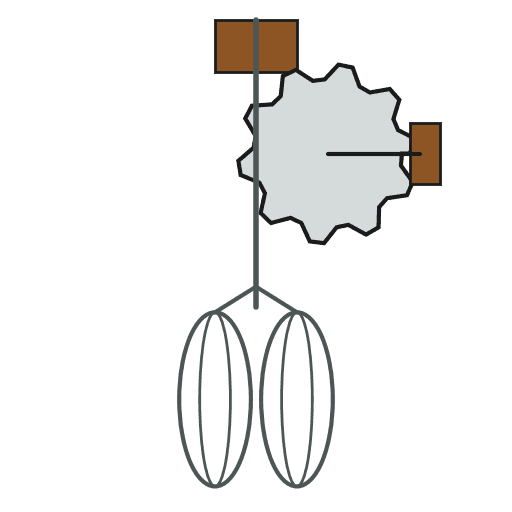
Propeller-and-Spoon Egg Beater: Spoon Arms Break the Swirl
láti ọwọ́ Emma
OÚNJẸ ÀTI OHUN MÍMU
28
0
0
0
0
0
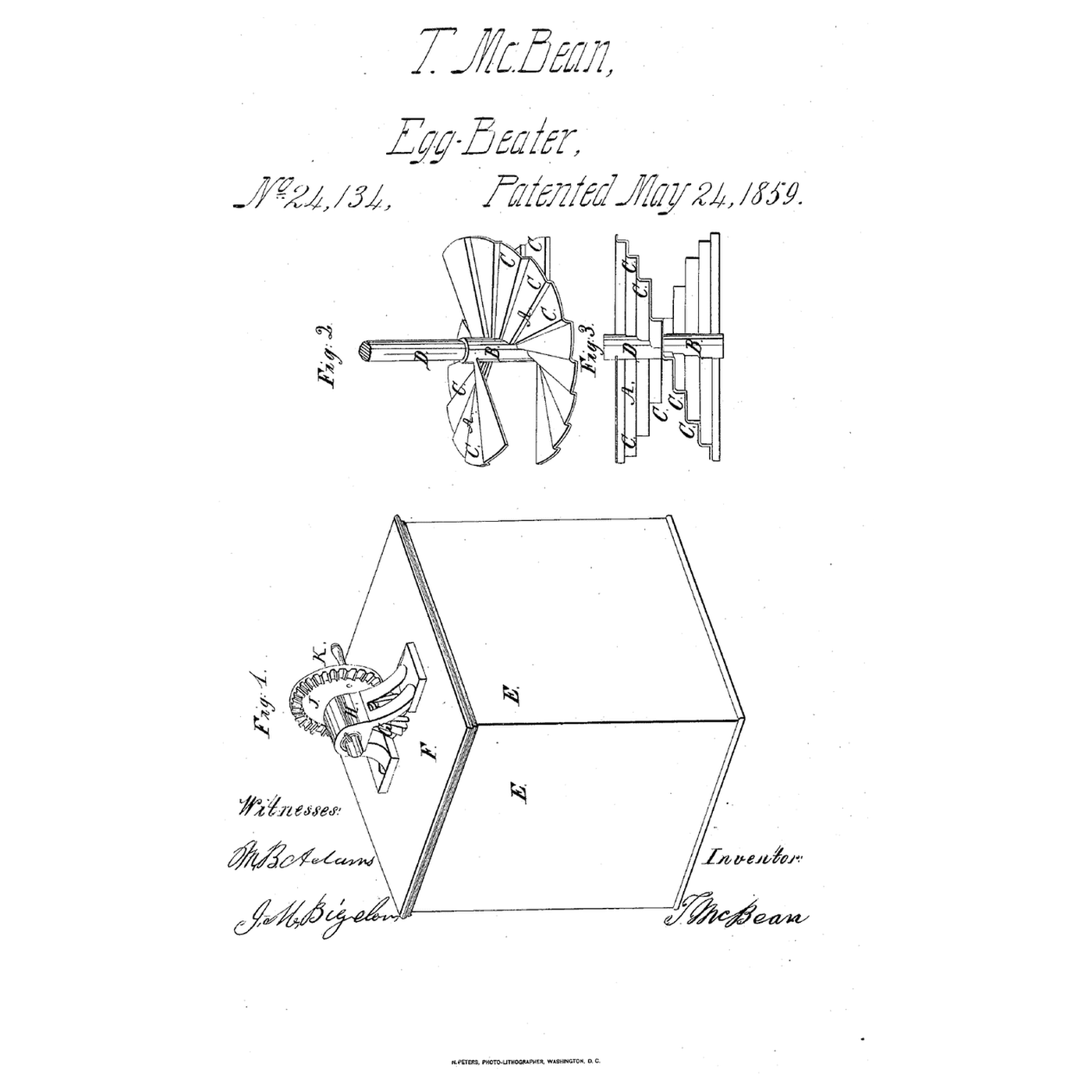
Stepped Spiral Egg Beater: A Stepped Dasher Spun in a Square Box
láti ọwọ́ Martin
OÚNJẸ ÀTI OHUN MÍMU
22
0
0
0
0
0
Closed-Globe Egg Beater: Concentric Rings in a Shut Sphere
láti ọwọ́ Martin
OÚNJẸ ÀTI OHUN MÍMU
18
0
0
0
0
0
CC0 Àgbègbè Gbogbogbò
Blueprint yìí ti jáde lábẹ́ CC0. O lè ṣe àdàkọ, yí padà, pín, àti lò láìsí ìyọ̀ǹda.
Ṣàtìlẹ́yìn Olùṣẹ́dá nípa rírà àwọn ọjà nipasẹ̀ Blueprint wọn Ẹ̀san Olùṣẹ́dá tí àwọn Olùtajà gbé kalẹ̀, tàbí ṣẹ̀dá àtúnṣe tuntun ti Blueprint yìí kí o sì fi sínú Blueprint rẹ gẹ́gẹ́ bí ìsopọ̀ láti pín owó-wíwọlé.