IṢẸ́ ỌNÀ
ẸWÀ ÀTI ÌLERA
IṢẸ́ ỌWỌ́
ÀṢÀ ÀTI ÌTÀN
ÌṢERÉ
ÀYÍKÁ
OÚNJẸ ÀTI OHUN MÍMU
REVERSE ENGINEERING
SÁYẸ́ǸSÌ
ERÉ ÌDÁRAYÁ
ÌMỌ̀-Ẹ̀RỌ
ÀWỌN OHUN WÍWỌ̀
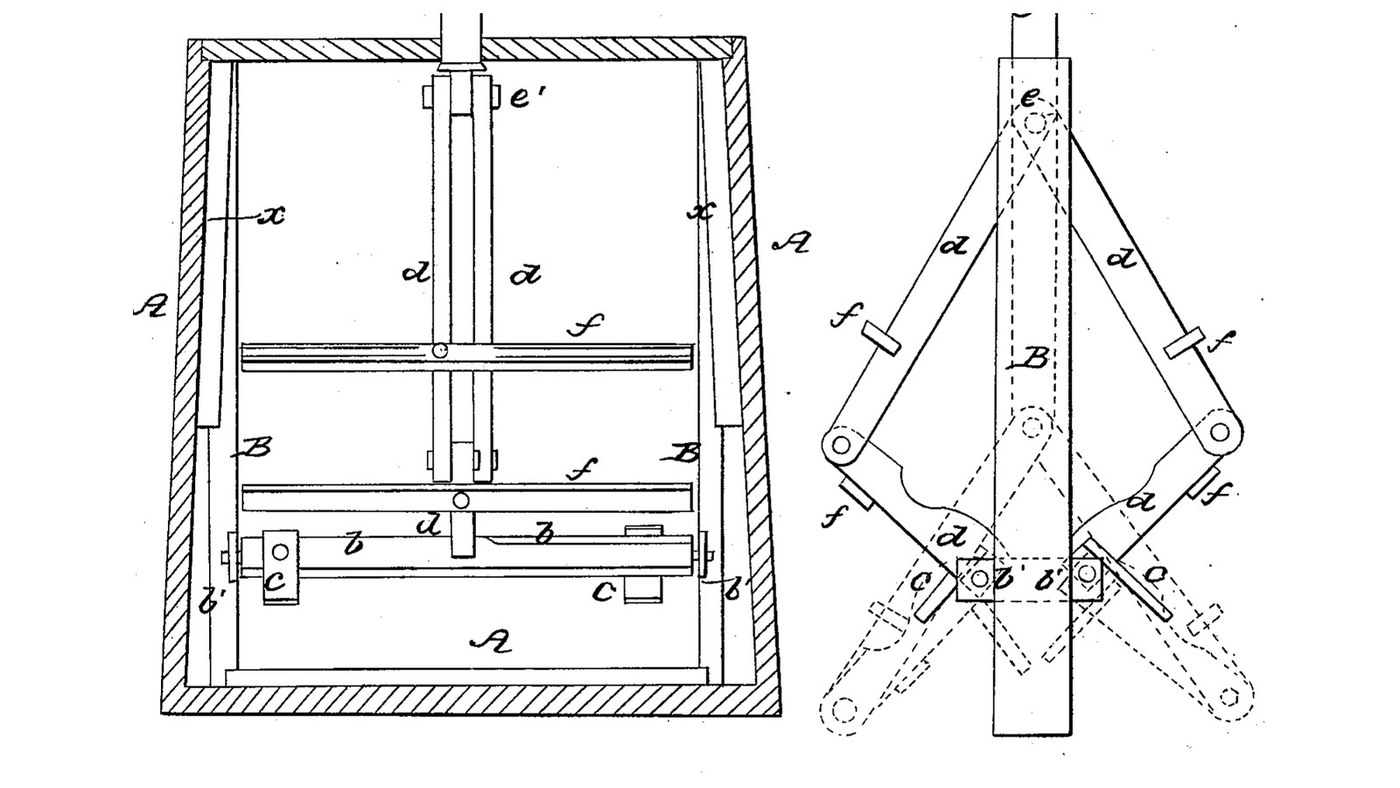

Folding-Lever Dasher Churn: The Dash Rod Folds Two Levers and Swings the Agitators Side to Side
N. B. Cooper of Gratis, Ohio, received US 26,020, dated 8 November 1859, for a churn-dasher. A frame slides into ways on the churn's ends and lifts out whole. Two bars run along its foot on pivots, one each side of the middle, each with blades and the lower half of a folding lever; the levers' upper halves meet at the dash rod. Working the rod up and down folds the levers and swings the bars and their agitators, driving the cream from side to side.
The patent gives no sizes; every size here is ours.
Àárín
About 2 days
Ìlànà
1
1
The folding levers
The folding levers
Ń ṣí ìwé Jupyter…
2
2
Dashers that swing sideways, six weeks before
Dashers that swing sideways, six weeks before
Austin swung his side dashers from cranks. Cooper swings his agitators from the dash rod itself, by folding levers.
3
3
Read US 26,020
Read US 26,020
"It will be readily seen by reference to Fig. 2 that the operation of the levers and agitators is of such a character as to force the cream rapidly from one side of the churn to the other, and that such currents must be forcibly interrupted by the agitators upon either side"
4
4
Shell A and ways x
Shell A and ways x
From 20 mm hardwood make a box 400 x 320 mm and 420 mm deep inside. Glue two strips 15 x 15 mm up the inside of each end, 90 mm apart, as the ways x. Fill the box with water overnight so it swells tight, then empty it.
Àwọn ohun èlò fún ìgbésẹ̀ yìí:
 Pátákó Igi Líle3 ẹyọ
 Ìdìpọ̀ Igi1 ẹyọ
 Ìṣó igi24 ẹyọ
Àwọn irinṣẹ́ tí a nílò:
 Ayùn tábìlì
 Ayùn Ọwọ́
 Ẹ̀rọ Ìlùkòkò Aláìlókùn
 Àkójọ Orí Ìlùkòkò
 Ìdìmú oní-ọ̀pá
 Igun-òsùwọ̀n tí ó dúró
 Okùn Ìdíwọ̀n
 Omi
5
5
Frame B
Frame B
Cut two end posts 89 x 14 mm, 460 mm long, to slide between the ways, and a top bar 400 x 40 x 30 mm with a 31 mm square hole in its middle for the dash rod; screw the bar across the posts' tops. Screw a block 16 x 24 x 24 mm to each post's inside 25 mm each side of the middle and 110 mm up, and bore them 10.4 mm for the pivot rods b'.
Àwọn ohun èlò fún ìgbésẹ̀ yìí:
Pátákó Igi Líle1 ẹyọÌdìpọ̀ Igi1 ẹyọÌṣó igi12 ẹyọÀwọn irinṣẹ́ tí a nílò:
Ayùn tábìlì Ìṣó ihò ìdì
 Òòlù IgiẸ̀rọ Ìlùkòkò AláìlókùnÀkójọ Orí ÌlùkòkòIgun-òsùwọ̀n tí ó dúró
6
6
Bars b, blades c and folding levers d
Bars b, blades c and folding levers d
Bore two hardwood bars 20 mm square and 336 mm long through their length, 10.4 mm, and pin each on a 10 mm stainless rod 396 mm long that turns in the blocks. In the middle of each bar fix a lower arm, 110 mm between its pin holes, pointing up and out, and fix two blades 54 x 50 x 8 mm at right angles to it, pointing down and out, staggered so the two bars' blades pass each other. Join each arm's end to an upper lever, 180 mm between pins, and both upper levers to the foot of a dash rod 30 mm square and 550 mm long, with 10 mm stainless pins, washers and split pins. Glue two agitator bars f, 16 mm square and 340 mm long, across each upper lever.
Àwọn ohun èlò fún ìgbésẹ̀ yìí:
Pátákó Igi Líle2 ẹyọ Ọ̀pá irin tí kò ń yá2 ẹyọ
 Àwọn dowel igi líle1 ẹyọÌdìpọ̀ Igi1 ẹyọ
 Wáṣà Pẹrẹsẹ8 ẹyọ
 Ìṣó ẹlẹ́sẹ̀ méjì8 ẹyọ
Àwọn irinṣẹ́ tí a nílò:
Ayùn tábìlì Ayùn Irin
 Àwọn Ìfá (Ìfá Ọwọ́)Ẹ̀rọ Ìlùkòkò AláìlókùnÀkójọ Orí Ìlùkòkò
 Bébà ÌfáOkùn Ìdíwọ̀n
7
7
The build in 3D
The build in 3D
FreeCAD model of this build, one side and one end left off: the shell with its ways, the frame with the pivot rods and the dash rod, the two bars with their arms and blades, the upper levers with the agitator bars. The bars were turned from 40 degrees up to 40 degrees down.
8
8
Churn
Churn
Pour about 25 litres of heavy cream at about 15 °C into the shell, checked with the thermometer. Slide the frame down the ways and work the dash rod up and down steadily, timing it. When the butter comes, lift the frame out whole, gather the butter, drain the buttermilk, wash the butter in cold water until it runs clear, salt and weigh it.
Àwọn ohun èlò fún ìgbésẹ̀ yìí:
 Ọ̀rá wàrà tó nípọn25 l
 Iyọ̀ Òkun Rúkèrúdò1 ẹyọOmi1 ẹyọ
Àwọn irinṣẹ́ tí a nílò:
 Ẹ̀rọ ìwọ̀n ooru oníhun tí ó dúró sí inú
 Aago Ìdúró
 Òṣùwọ̀n Díjítà Ilé Ìdáná
 Àwo ìdàpọ̀ ńlá ti irin tí kò ń yá
9
9
Troubleshooting
Troubleshooting
Folding-lever churn troubleshooting.
Flow
Loading...
10
10
History and honest limits
History and honest limits
**N. B. Cooper** of Gratis, Preble County, Ohio, US 26,020, 8 November 1859, "Churn-Dasher". He did not claim jointed levers or agitators on them, "as these devices are well known", but "the arrangement of the arms d, d, on the two pivots b', b', one on each side of the upright B, when the upright B is made removable, by means of the ways x, x". The patent gives no sizes; every size here is ours. His central upright is here the top bar's guide, and the rod is worked by hand rather than by gearing and a crank.
Àwọn ohun-èlò
10- 3 ẹyọÀyè
- 3 ẹyọÀyè
- 36 ẹyọÀyè
- 2 ẹyọÀyè
- 1 ẹyọÀyè
- 8 ẹyọÀyè
- 8 ẹyọÀyè
- Àyè
- 1 ẹyọÀyè
- 1 ẹyọÀyè
Àwọn irinṣẹ́ tó nílò
17- 1 vendor sell this, none ship to you yetÀyè
- Àyè
- 1 vendor sell this, none ship to you yetÀyè
- 1 vendor sell this, none ship to you yetÀyè
- Àyè
- Àyè
- Àyè
- Àyè
- Àyè
- Àyè
Àwọn fáìlì àpẹrẹ
1Ìtọ́nisọ́nà yìí ń ṣe

Blueprint tó jọra
Àwọn blueprint wọ̀nyí pín ìmọ̀ — ọ̀nà, ohun-èlò tàbí ìlànà
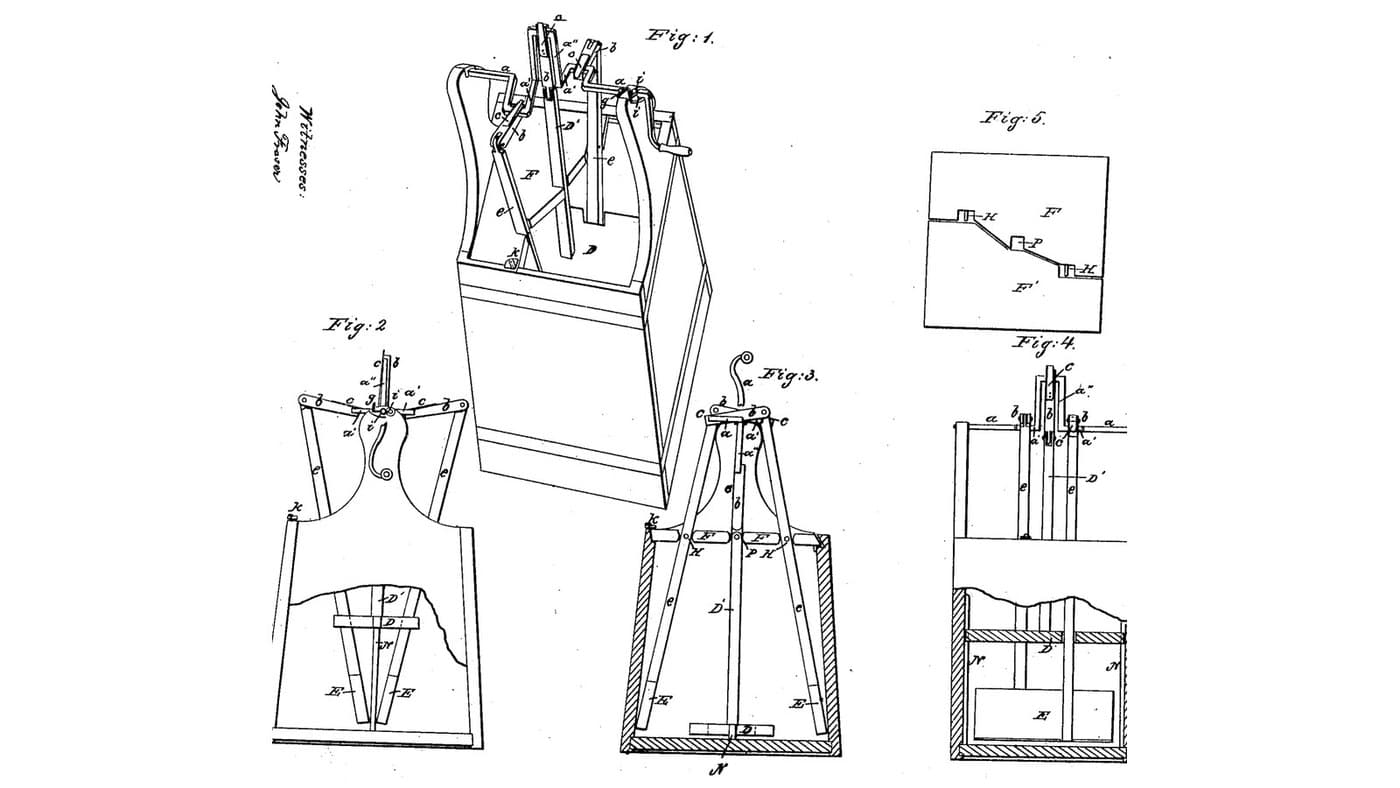
Three-Crank Churn: One Dasher Strokes Up and Down While Two Side Dashers Swing In and Out
láti ọwọ́ Buttercup
Iṣẹ́ Igi
14
0
0
0
0
0
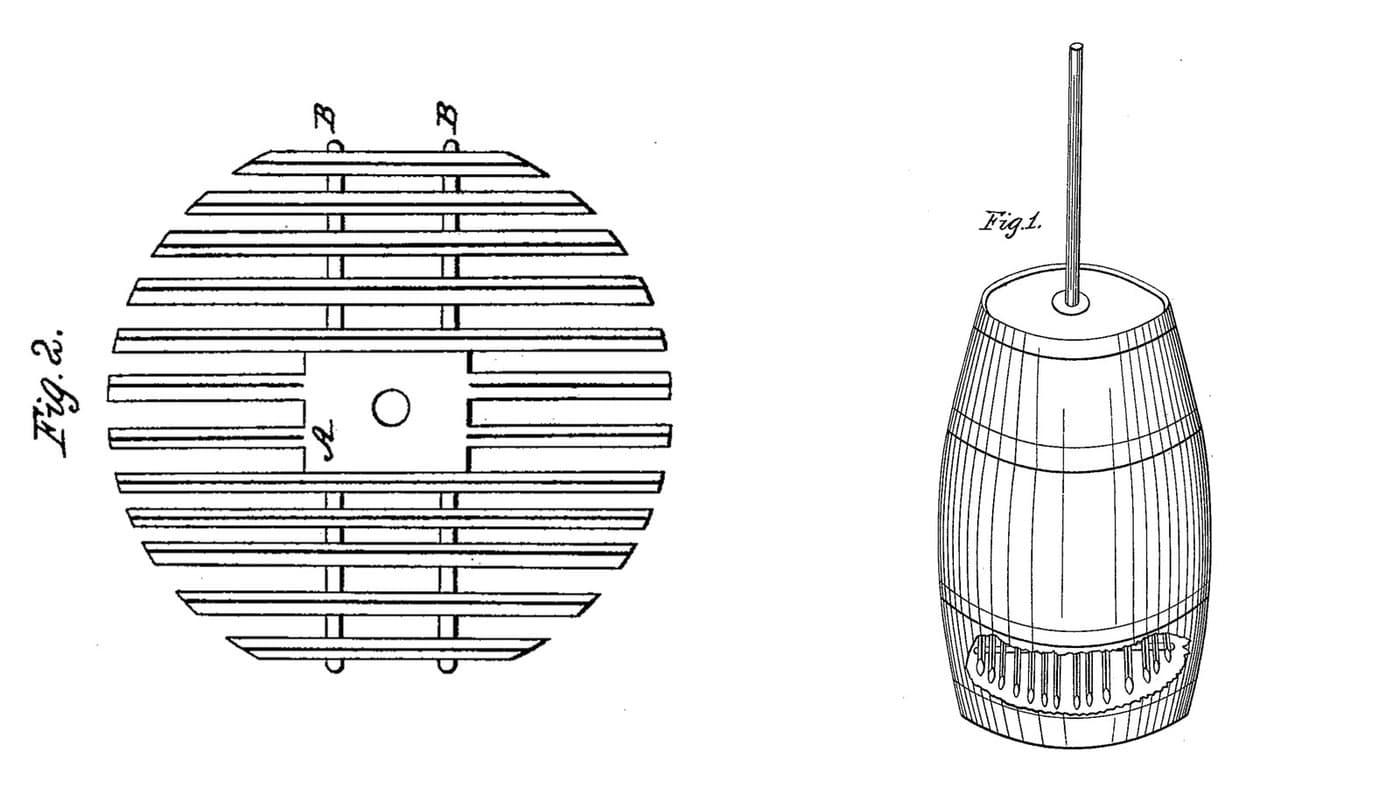
Oval-Breaker Rod Dasher: Breakers Strung on Two Rods, Add More for More Agitation
láti ọwọ́ Buttercup
Iṣẹ́ Igi
7
0
0
0
0
0
Churning Butter from Cream — The 5,000-Year-Old Fat Separation
láti ọwọ́ TheChef
IṢẸ́ ỌWỌ́
63
0
0
0
0
0
CC0 Àgbègbè Gbogbogbò
Blueprint yìí ti jáde lábẹ́ CC0. O lè ṣe àdàkọ, yí padà, pín, àti lò láìsí ìyọ̀ǹda.
Ṣàtìlẹ́yìn Olùṣẹ́dá nípa rírà àwọn ọjà nipasẹ̀ Blueprint wọn Ẹ̀san Olùṣẹ́dá tí àwọn Olùtajà gbé kalẹ̀, tàbí ṣẹ̀dá àtúnṣe tuntun ti Blueprint yìí kí o sì fi sínú Blueprint rẹ gẹ́gẹ́ bí ìsopọ̀ láti pín owó-wíwọlé.