IṢẸ́ ỌNÀ
ẸWÀ ÀTI ÌLERA
IṢẸ́ ỌWỌ́
ÀṢÀ ÀTI ÌTÀN
ÌṢERÉ
ÀYÍKÁ
OÚNJẸ ÀTI OHUN MÍMU
REVERSE ENGINEERING
SÁYẸ́ǸSÌ
ERÉ ÌDÁRAYÁ
ÌMỌ̀-Ẹ̀RỌ
ÀWỌN OHUN WÍWỌ̀
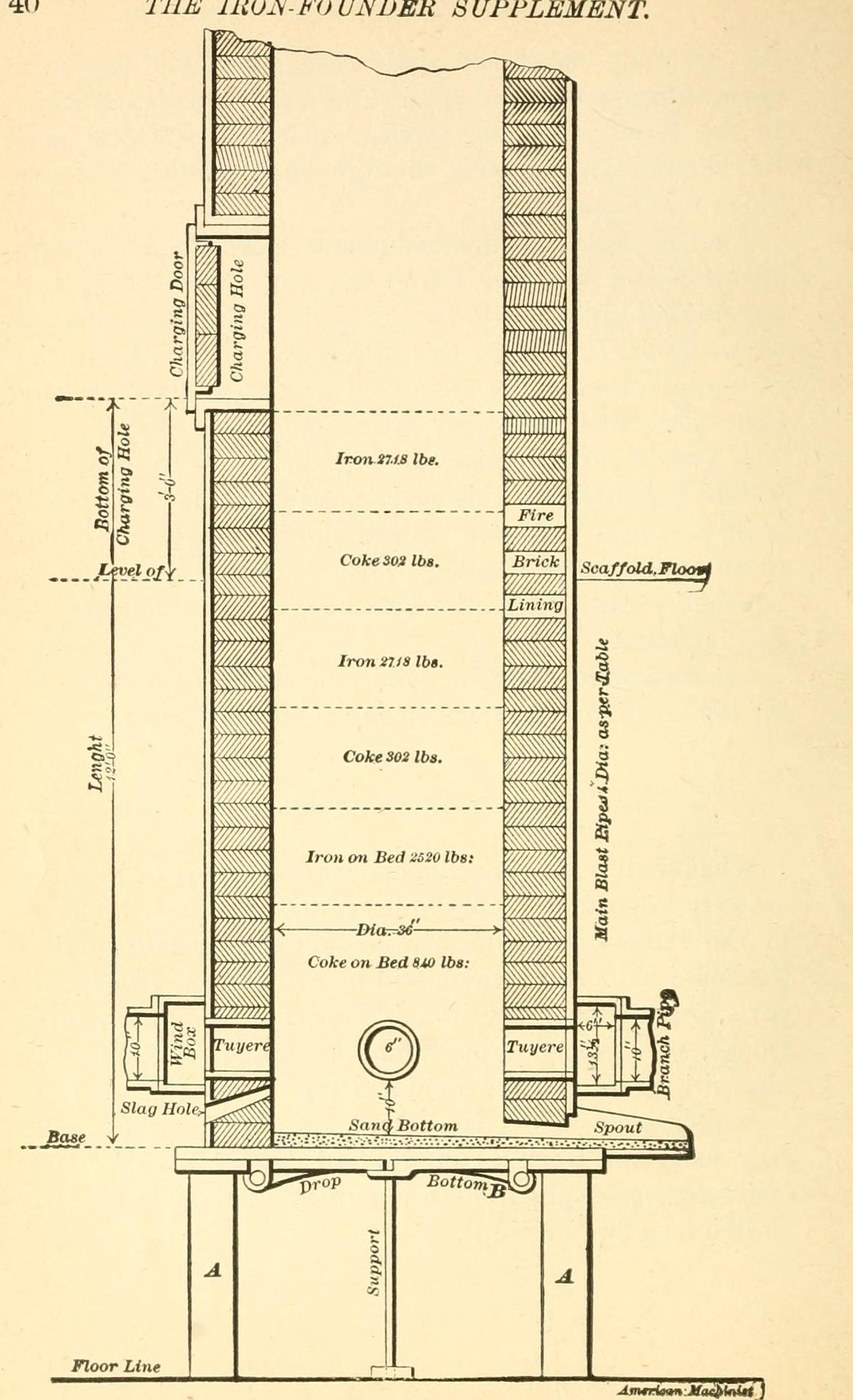

Cupola Furnace: the Common Foundry Cupola with a Drop Bottom (Bolland, 1893)
The founder's 'common cupola': an upright steel shell lined with firebrick, standing on four columns over a drop bottom, with a wind-box round it feeding the tuyeres and a charging door high up. Coke and pig iron go in at the top in layers; blast at the tuyeres melts the iron, which runs out at the spout.
Variable: the inside diameter, 24 to 84 in, which sets height, tuyeres, blower and charges. Fig. 9's 36 in cupola is 12 ft to the charging hole and takes 840 lb coke and 2520 lb iron on the bed, then 302 lb coke and 2718 lb iron per charge.
Source: S. Bolland, The Iron Founder Supplement (1893), pp. 34-54. Unknown: shell plate and brick sizes. Picture: Fig. 9 of the book.
Ògbóǹtarìgì
Unknown
Ìlànà
1
1
Size the cupola
Size the cupola
Choose the inside diameter from the iron needed per hour: 10 tons in two hours (about 10,760 lb an hour) needs 48 in; 6 tons, 40 in. Make it tall enough that the gas burns before it escapes: a 50 in cupola is 14 ft from the base to the bottom of the charging hole, Fig. 9's 36 in one 12 ft. Above 60 in, keep 60 in at the tuyeres and widen above them, since the blast cannot reach the middle of a wider stock.
Àwọn irinṣẹ́ tí a nílò:
 Ìwọ̀n tí a kò mọ̀
2
2
Build the shell, columns and drop bottom
Build the shell, columns and drop bottom
Build a steel shell with a charging hole and door, standing on four columns. Close the bottom with swing doors on a central prop, so the whole contents can be dropped at the end of a heat. Put a slag hole a little below the tuyeres and a spout at the bottom. Ours: mild steel plate, iron castings for the bottom doors. Not given: plate thickness.
Àwọn ohun èlò fún ìgbésẹ̀ yìí:
 Pẹpẹ irin rírọ̀1 shell, charging door
 Àwọn ohun irin dídà1 drop-bottom doors
 Irin tí a kò mọ̀1 columns, prop, spout
Àwọn irinṣẹ́ tí a nílò:
 Ẹ̀rọ ìtanná-ìdàpọ̀ (arc welder)Ìwọ̀n tí a kò mọ̀
3
3
Fit the tuyeres and wind-box
Fit the tuyeres and wind-box
Ring the cupola with a wind-box feeding the tuyeres, with a main blast pipe sized from the table (good for runs up to 100 ft). Tuyere area grows with the diameter: a 24 in cupola needs the area of 1 1/2 round 6 in tuyeres (or two flat ones 10 1/2 x 2 in), a 60 in about 13 1/2 (or eight flat 16 1/2 x 3 in), an 84 in 31 (or sixteen flat 16 x 3 1/2 in). Never reduce the tuyere area. A 42 in cupola takes a No. 3 Root blower and a 6 h.p. engine.
Àwọn ohun èlò fún ìgbésẹ̀ yìí:
Pẹpẹ irin rírọ̀1 wind-boxIrin tí a kò mọ̀1 tuyeres, blast pipeÀwọn irinṣẹ́ tí a nílò:
Ẹ̀rọ ìtanná-ìdàpọ̀ (arc welder) Ẹ̀rọ afẹ́fẹ́
4
4
Line it with firebrick
Line it with firebrick
Line the shell with firebrick, every brick rubbed well down on the next and fitting the shell closely, set in mortar of the same nature as the bricks. A good lining lasts one to two years if the melter mends it each morning with thin coats of daubing, keeping its first shape. Ours: fireclay bricks and refractory clay mortar.
Àwọn ohun èlò fún ìgbésẹ̀ yìí:
 Bíríkì amọ̀-iná1 lining
 Amọ̀ ìkọ́lé tí ń fara da iná1 setting and daubing
Àwọn irinṣẹ́ tí a nílò:
 Ohun èlò amọ̀-bíríkì (tùróòlù)
5
5
Make the bed and melt
Make the bed and melt
Ram a sand bottom so it lies about 10 in below the tuyeres. Lay the fuel bed, about 22 in of coke above the tuyeres (840 lb in Fig. 9's 36 in cupola), and the first iron (2520 lb), then alternate charges of coke and iron (302 lb and 2718 lb). Blow: about 30,000 cubic feet of air melts a ton of iron. On long heats flux with white marble chips and draw the slag off at the slag hole. At the end, drop the bottom.
Àwọn irinṣẹ́ tí a nílò:
 Iyanrìn
 Èédú metalurgi
 Àwọn ìdì irin aláìwẹ̀mọ́Ẹ̀rọ afẹ́fẹ́
Àwọn ohun-èlò
5- 1 wind-boxÀyè
- 1 drop-bottom doorsÀyè
- 1 tuyeres, blast pipeÀyè
- 1 liningÀyè
- 1 setting and daubingÀyè
Àwọn irinṣẹ́ tó nílò
7- Àyè
- Àyè
Àwọn Ohun Èlò Ìtọ́nisọ́nà Tí A So Pọ̀
10% Ìpín
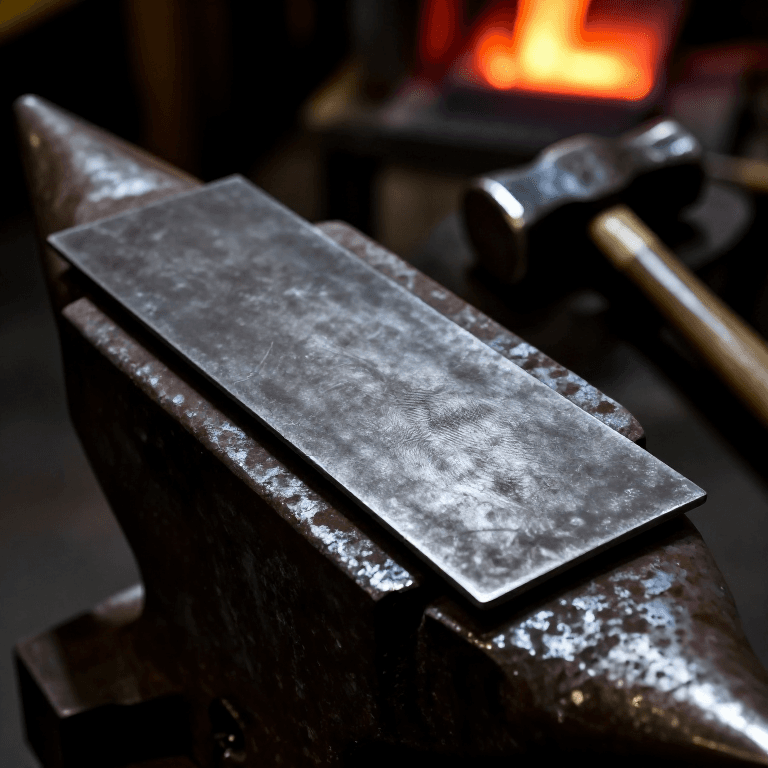
Mild Steel Plate and Sheet Hammered from a Billet
láti ọwọ́ Forge
Òde Òní
42
0
0
0
5
0
10% Ìpín
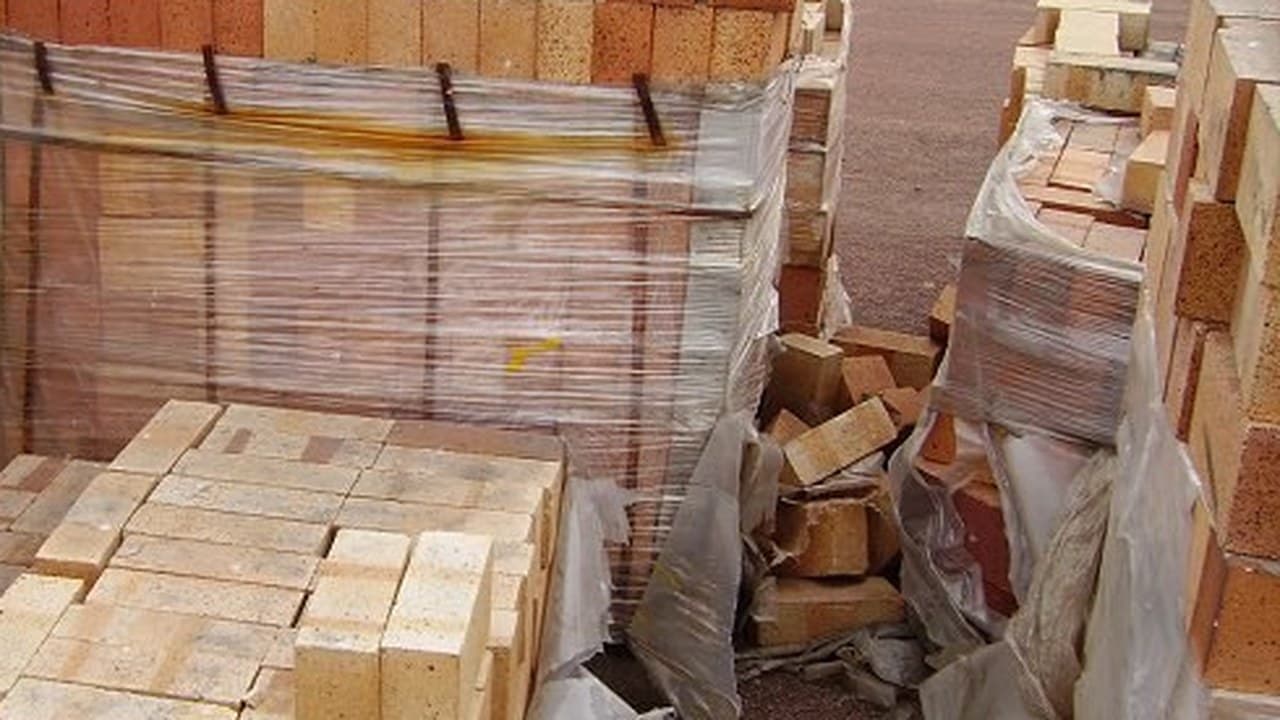
Fireclay Firebricks
láti ọwọ́ Clay
Amọ̀ àti Ohun Amọ̀
40
0
0
0
4
0

10% Ìpín
Casting Iron in a Cupola Furnace — Re-Melting Pig Iron into Finished Castings
láti ọwọ́ Piett
Iṣẹ́ Irin
56
0
0
0
6
0
10% Ìpín
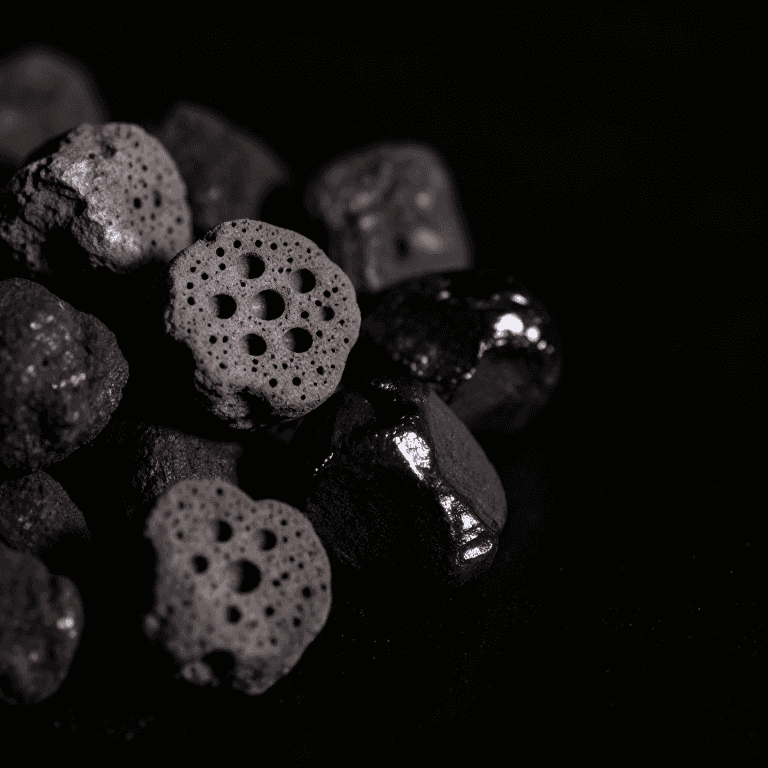
Making Coke from Coal — The Smokeless Fuel That Forged the Industrial Revolution
láti ọwọ́ Gimli
Iṣẹ́ Irin
75
0
0
0
4
0
Ìtọ́nisọ́nà yìí ń ṣe
CC0 Àgbègbè Gbogbogbò
Blueprint yìí ti jáde lábẹ́ CC0. O lè ṣe àdàkọ, yí padà, pín, àti lò láìsí ìyọ̀ǹda.
Ṣàtìlẹ́yìn Olùṣẹ́dá nípa rírà àwọn ọjà nipasẹ̀ Blueprint wọn Ẹ̀san Olùṣẹ́dá tí àwọn Olùtajà gbé kalẹ̀, tàbí ṣẹ̀dá àtúnṣe tuntun ti Blueprint yìí kí o sì fi sínú Blueprint rẹ gẹ́gẹ́ bí ìsopọ̀ láti pín owó-wíwọlé.