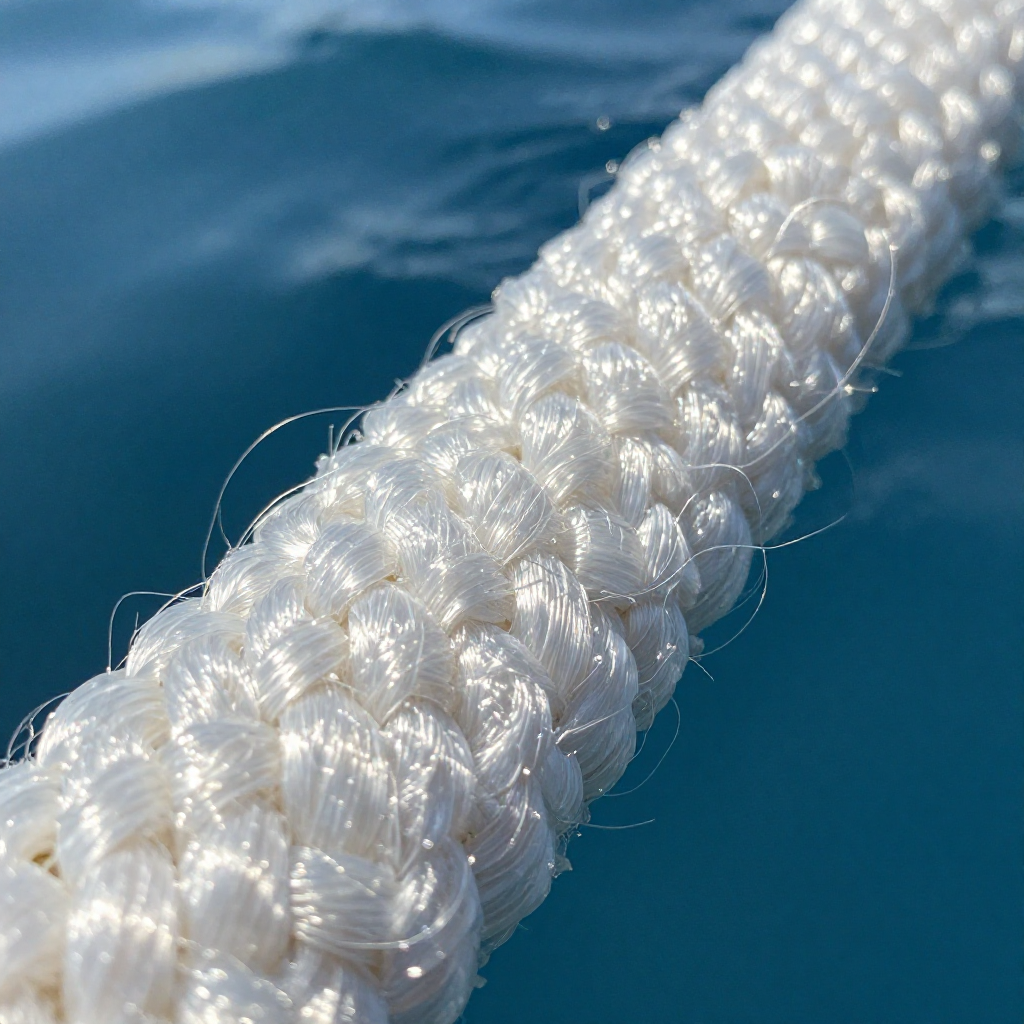


Dyneema (UHMWPE) — The Lightest Fiber Stronger Than Steel
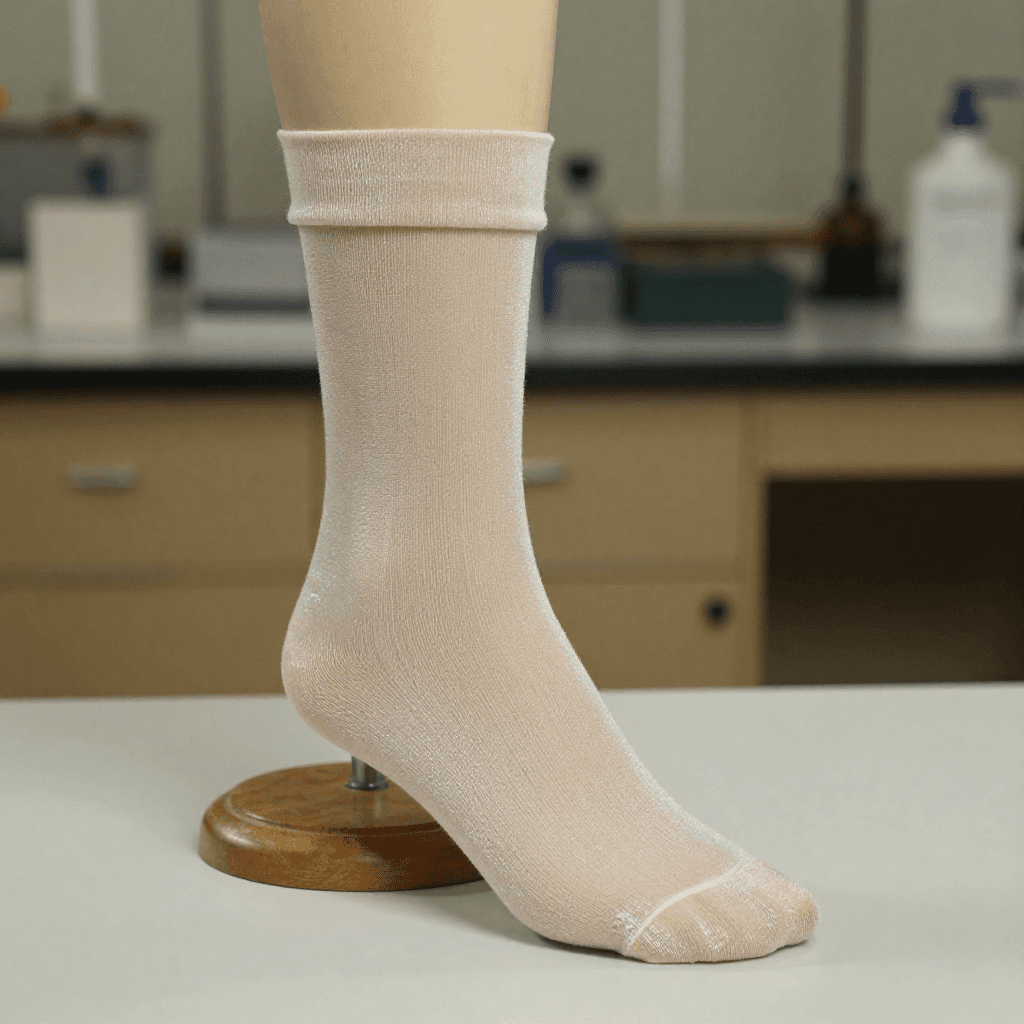
In 1979, Albert Pennings and Pieter Lemstra at DSM Research in Geleen, the Netherlands, developed the gel-spinning process for ultra-high molecular weight polyethylene (UHMWPE) — a method that transformed an ordinary commodity plastic into the strongest fiber per unit weight ever produced. DSM commercialized the fiber as Dyneema in 1990; Allied Signal (later Honeywell) independently developed the same technology as Spectra. The fiber is 15 times stronger than steel on an equal-weight basis and floats on water.
The chemistry is deceptively simple. UHMWPE is just polyethylene — the same polymer used in milk bottles and plastic bags — but with extraordinarily long chains: molecular weights of 3–6 million Daltons, compared to 100,000–500,000 for standard high-density polyethylene. These ultra-long chains can, in principle, achieve near-theoretical strength — but only if they are aligned perfectly parallel to the fiber axis. In conventional melt-processed polyethylene, the long chains are hopelessly entangled, like a bowl of spaghetti. Gel spinning disentangles them.
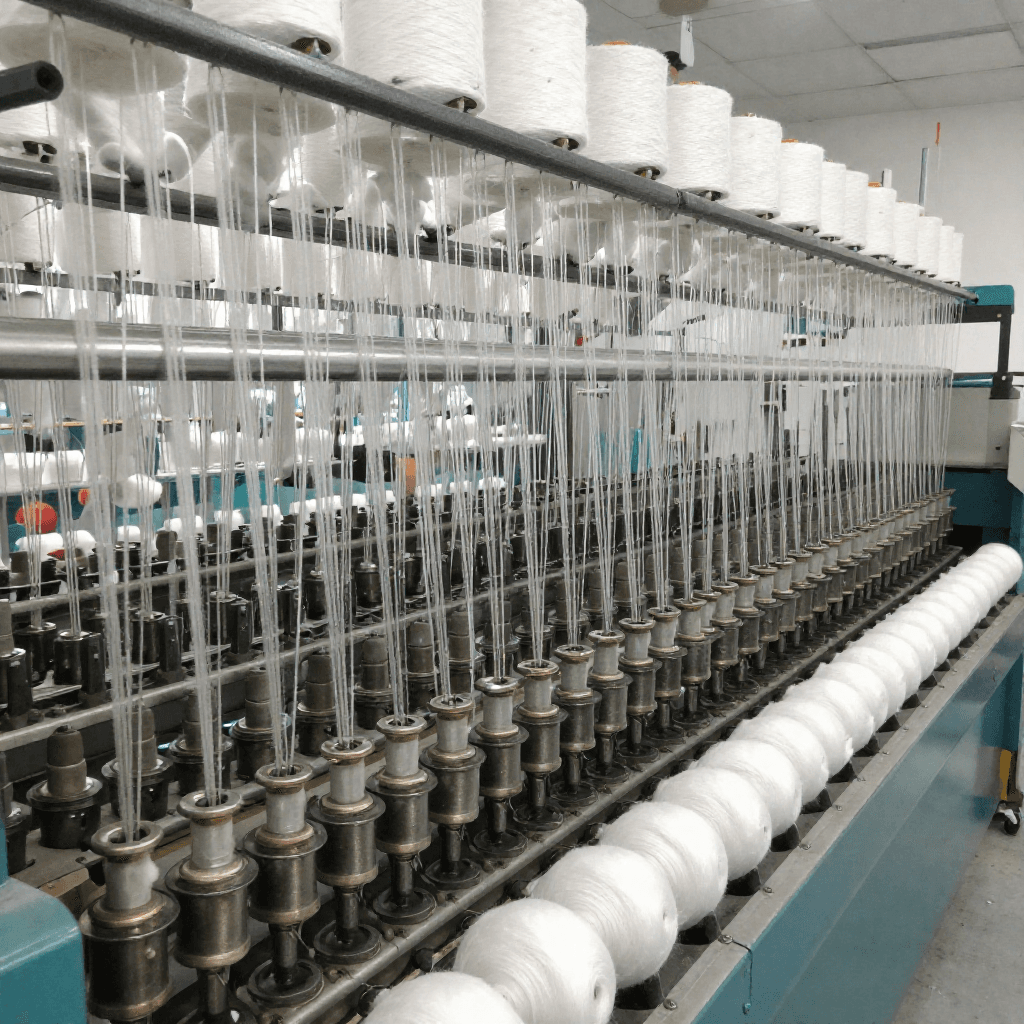
The process dissolves UHMWPE in a solvent (typically decalin) at high temperature, creating a dilute gel in which the chains are partially disentangled. This gel is extruded through a spinneret, cooled to form a solid gel fiber, and then drawn (stretched) to extreme ratios — 30 to 100 times its original length. This super-drawing aligns the molecular chains with near-perfect parallel orientation and crystallinity exceeding 95%. The result: a fiber with tensile strength of 3.5 GPa, modulus of 100–170 GPa, and a density of only 0.97 g/cm³ — it is literally lighter than water. Dyneema is used in body armor, mooring ropes, surgical sutures, cut-resistant gloves, and high-performance sailing lines.
Ìlànà
Understand ultra-high molecular weight polyethylene
Understand ultra-high molecular weight polyethylene
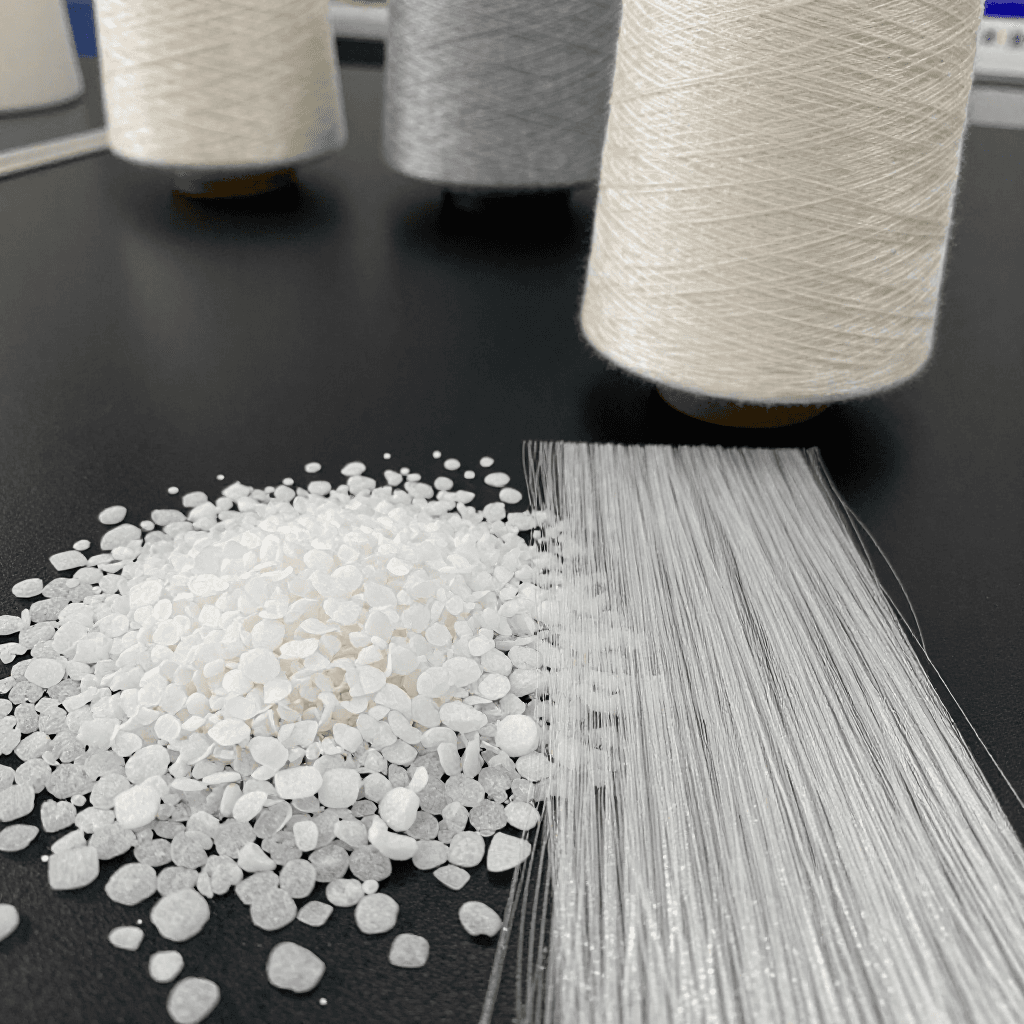
UHMWPE is polyethylene with molecular weight above 3 million Daltons — chains containing over 200,000 carbon atoms each. Standard polyethylene chains are 1,000–10,000 carbons long. The ultra-long chains mean more inter-chain entanglements and more crystallizable length per molecule, which translates to higher potential strength — if the chains can be aligned. UHMWPE is produced by Ziegler-Natta or metallocene catalysis of ethylene gas at low pressures, yielding a white powder that cannot be melt-processed conventionally because its melt viscosity is too high for the chains to flow.
Dissolve the UHMWPE powder in a solvent
Dissolve the UHMWPE powder in a solvent
Dissolve UHMWPE powder in a hydrocarbon solvent — typically decalin (decahydronaphthalene) — at 150–180°C with vigorous stirring. The concentration is low: only 2–10% polymer by weight. At these dilute concentrations, the ultra-long chains partially disentangle as they dissolve. This disentanglement is the critical enabler of gel spinning: in the solid state, UHMWPE chains are hopelessly knotted together; in dilute solution, they gain enough freedom to be straightened later by drawing. The dissolution takes 1–4 hours because the long chains diffuse slowly.
Àwọn ohun èlò fún ìgbésẹ̀ yìí:
 Ìyẹ̀fun rẹsíìnì UHMWPE100 g
Àwọn irinṣẹ́ tí a nílò:
 Ìgò Gíláàsì Ìsàn
Extrude the solution through a spinneret
Extrude the solution through a spinneret
Pump the hot UHMWPE solution through a spinneret — a metal plate with precision-drilled holes, each 0.5–1.0 mm in diameter. The solution emerges as thin streams. The flow through the spinneret partially aligns the chains in the flow direction — a pre-orientation that facilitates the extreme drawing in later steps. The spinneret holes are larger than those used for nylon or polyester because the UHMWPE solution, even at low concentration, has high viscosity due to the extreme chain length.
Cool the extrudate to form a gel fiber
Cool the extrudate to form a gel fiber
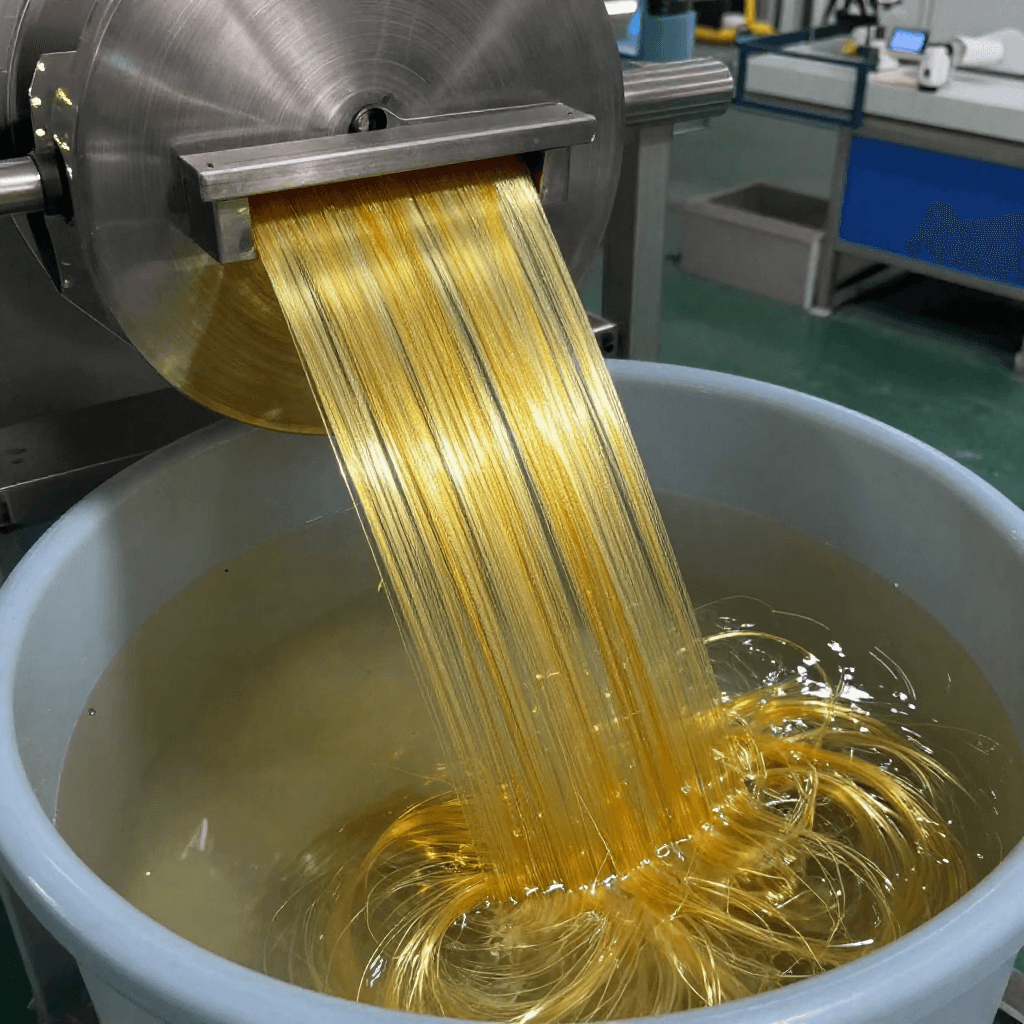
Cool the extruded filaments rapidly — either by passing them through a water bath or by air quenching. As the solution cools below approximately 100°C, the UHMWPE crystallizes into a gel structure: tiny crystalline regions (lamellae) connected by amorphous tie chains that are still swollen with solvent. This gel fiber is weak and opaque — it looks and feels like a wet noodle. But its internal structure is critical: the partially disentangled chains from the dilute solution are now locked into a gel network with just enough mobility for subsequent super-drawing.
Extract the solvent
Extract the solvent
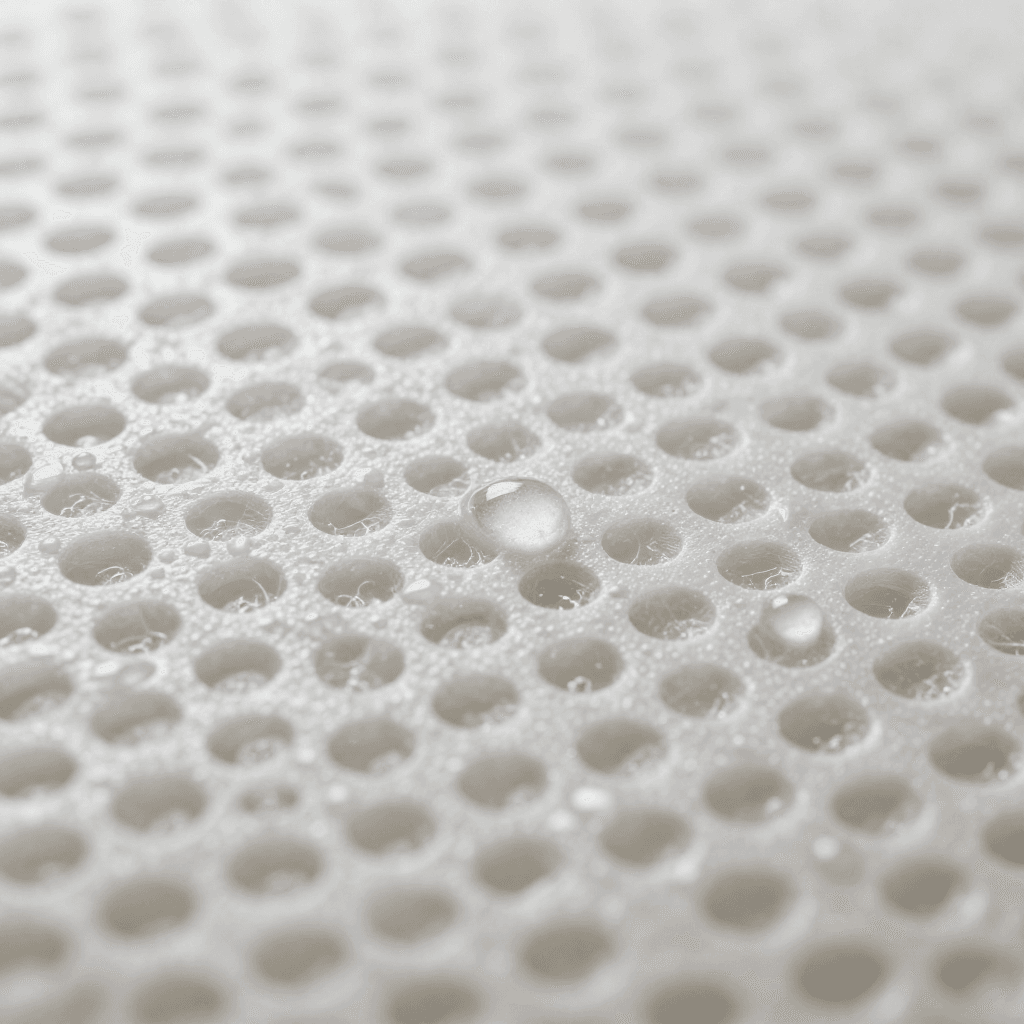
Remove the decalin solvent from the gel fiber, either by evaporation (heating in an oven or passing through a heated zone) or by extraction with a volatile solvent such as toluene or hexane, followed by drying. The solvent removal must be gradual and controlled — too-rapid drying creates voids and surface defects. After solvent removal, the fiber is a dry, porous, semi-crystalline UHMWPE filament with roughly 50–60% crystallinity. It is still weak — its strength comes entirely from the next step.
Super-draw the fiber to extreme ratios
Super-draw the fiber to extreme ratios
This is the transformative step. Pass the dried gel-spun fiber over heated rollers or through an oven at 130–150°C (just below polyethylene's melting point of 135°C) while stretching it to 30–100 times its original length. This super-drawing unfolds the crystalline lamellae and straightens the polymer chains into near-perfect parallel alignment along the fiber axis. Crystallinity rises from 50% to over 95%. The fiber transforms from opaque and weak to translucent, lustrous, and extraordinarily strong. The draw ratio is the single most important process parameter — higher ratios produce stronger, stiffer fiber.
Measure the fiber's mechanical properties
Measure the fiber's mechanical properties
Test the drawn fiber on a tensile testing machine. Commercial Dyneema SK75 achieves a tensile strength of 3.5 GPa (approximately 35 grams per denier) — 15 times stronger than steel wire of equal weight. Its modulus (stiffness) is 100–120 GPa, comparable to aluminum. Its elongation at break is only 3.5% — the chains are so well aligned that there is virtually no uncoiling left to do. Most remarkably, Dyneema's density is 0.97 g/cm³ — less than water. It is the only high-performance fiber that floats.
Understand why gel spinning works
Understand why gel spinning works
Conventional melt-spun polyethylene fibers achieve draw ratios of only 5–10x because the densely entangled chains cannot straighten further without breaking. Gel spinning circumvents this limitation in two ways: the dilute solution reduces entanglement density, and the gel structure preserves just enough chain mobility for super-drawing. The result is a fiber approaching the theoretical strength of a perfect polyethylene crystal — estimated at 30 GPa. Commercial Dyneema achieves 10–12% of this theoretical maximum, which is remarkable given that most engineering materials achieve less than 1% of their theoretical strength.
Apply Dyneema in body armor
Apply Dyneema in body armor
For ballistic protection, Dyneema fibers are laid in parallel sheets (unidirectional plies) at alternating 0° and 90° angles and bonded with a thin polyurethane or polyethylene matrix to form Dyneema HB (Hard Ballistics) composite panels. These panels are lighter than Kevlar fabric panels of equivalent protection level — a Dyneema vest weighing 1.5 kg can stop 9 mm handgun rounds. The fiber's low density gives it the highest specific energy absorption of any ballistic fiber: it can absorb more kinetic energy per gram than Kevlar, aramid, or steel.
Recognize the limitations
Recognize the limitations
Dyneema has two significant limitations. First, its melting point is only 135–145°C — far lower than Kevlar (decomposes above 450°C) or steel. Above 80–100°C, the fiber begins to creep (slowly stretch permanently under load), making it unsuitable for applications involving sustained high temperature. Second, polyethylene is chemically inert and non-polar — it cannot be dyed by conventional methods, and it bonds poorly to resins, making composite manufacturing more difficult. Surface treatments (plasma, corona discharge) improve adhesion but add cost.
Recognize the safety considerations
Recognize the safety considerations
The gel-spinning process uses hydrocarbon solvents — decalin, toluene, or hexane — which are flammable, volatile, and in the case of toluene and hexane, toxic with chronic exposure. The dissolution step at 150–180°C with these solvents requires explosion-proof equipment and solvent vapor recovery systems. Decalin is a moderate health hazard (skin and respiratory irritant). The super-drawing step at temperatures near polyethylene's melting point produces trace fumes. Industrial Dyneema production requires full chemical engineering safety controls, vapor recovery, and fire protection systems.
Understand Dyneema's place in high-performance fibers
Understand Dyneema's place in high-performance fibers
Dyneema demonstrated that even the simplest polymer — polyethylene, the most common plastic on earth — could become a high-performance material through process innovation rather than chemical complexity. Kevlar achieves its strength through rigid aromatic chemistry; Dyneema achieves comparable strength through extreme molecular orientation of flexible chains. This insight — that processing can matter more than chemistry — has influenced the entire field of polymer science. Today, DSM's Dyneema and Honeywell's Spectra together account for the majority of UHMWPE fiber production, with applications spanning marine ropes, cut-resistant gloves, medical sutures, kite lines, and the lightest body armor available to soldiers and law enforcement worldwide.
Àwọn ohun-èlò
1- Àyè
Àwọn irinṣẹ́ tó nílò
1Àwọn Ohun Èlò Ìtọ́nisọ́nà Tí A So Pọ̀
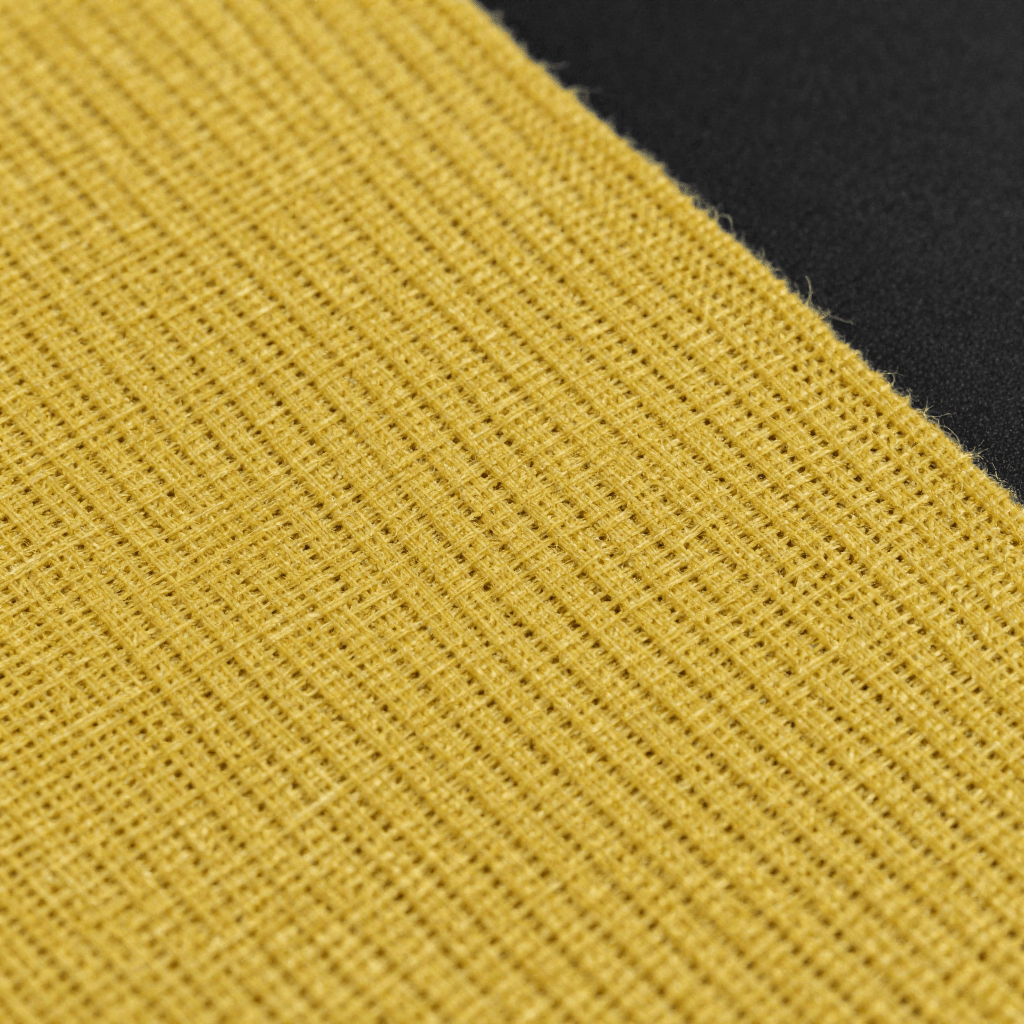
Ìtọ́nisọ́nà yìí ń ṣe

Blueprint tó jọra
Àwọn blueprint wọ̀nyí pín ìmọ̀ — ọ̀nà, ohun-èlò tàbí ìlànà
CC0 Àgbègbè Gbogbogbò
Blueprint yìí ti jáde lábẹ́ CC0. O lè ṣe àdàkọ, yí padà, pín, àti lò láìsí ìyọ̀ǹda.
Ṣàtìlẹ́yìn Olùṣẹ́dá nípa rírà àwọn ọjà nipasẹ̀ Blueprint wọn Ẹ̀san Olùṣẹ́dá tí àwọn Olùtajà gbé kalẹ̀, tàbí ṣẹ̀dá àtúnṣe tuntun ti Blueprint yìí kí o sì fi sínú Blueprint rẹ gẹ́gẹ́ bí ìsopọ̀ láti pín owó-wíwọlé.