IṢẸ́ ỌNÀ
ẸWÀ ÀTI ÌLERA
IṢẸ́ ỌWỌ́
ÀṢÀ ÀTI ÌTÀN
ÌṢERÉ
ÀYÍKÁ
OÚNJẸ ÀTI OHUN MÍMU
REVERSE ENGINEERING
SÁYẸ́ǸSÌ
ERÉ ÌDÁRAYÁ
ÌMỌ̀-Ẹ̀RỌ
ÀWỌN OHUN WÍWỌ̀
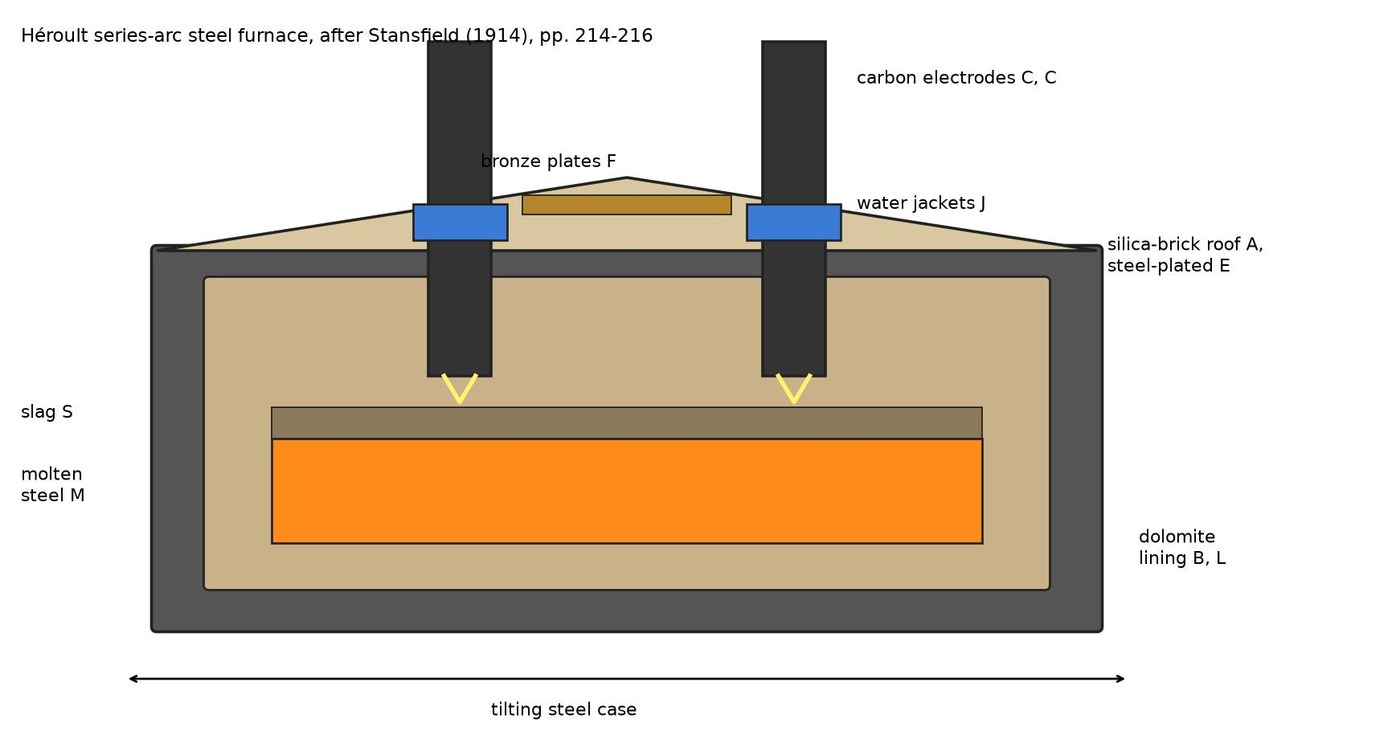

Electric Arc Furnace: the Héroult Series-Arc Steel Furnace (Stansfield, 1914)
Héroult's steel furnace: a tilting hearth like an open-hearth furnace, lined with dolomite, with two carbon electrodes coming down through the roof. The current goes down one electrode, arcs into the slag, passes through the molten steel and arcs back up the other, so the heat goes straight into the metal.
Result: an electric steel furnace about 7 x 4 ft inside for a 3 ton charge, run at about 350 kW and 110 V.
Source: A. Stansfield, The Electric Furnace, 2nd ed. (1914), pp. 115-116, 214-216. Unknown: case and tilting gear details, electrode size. Picture: a drawn diagram (Fig. 93 is blank in the scan).
Ògbóǹtarìgì
Unknown
Ìlànà
1
1
Build the case and lining
Build the case and lining
Build the furnace in a steel case on a tilting mounting, about 7 x 4 ft inside, with charging doors at the ends. Line it with dolomite bricks and crushed dolomite; dolomite or magnesite on the hearth, which allows strongly basic slags. Ours: mild steel plate. Not given: the case and tilting gear, the bricks' making.
Àwọn ohun èlò fún ìgbésẹ̀ yìí:
 Pẹpẹ irin rírọ̀1 case
 Dolomite (òkúta ẹfun tí ó ní magnesia)1 lining and crushed dolomite
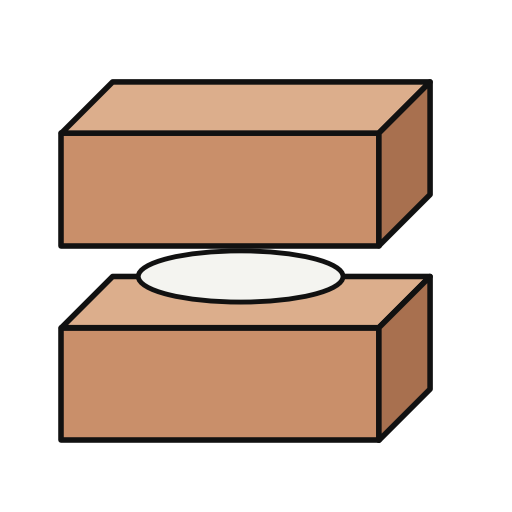 Búlọ́ọ̀kù magnesite1 hearth, if magnesite
Àwọn irinṣẹ́ tí a nílò:
 Ẹ̀rọ ìtanná-ìdàpọ̀ (arc welder)
 Ohun èlò amọ̀-bíríkì (tùróòlù)
 Ìwọ̀n tí a kò mọ̀
2
2
Make the removable roof
Make the removable roof
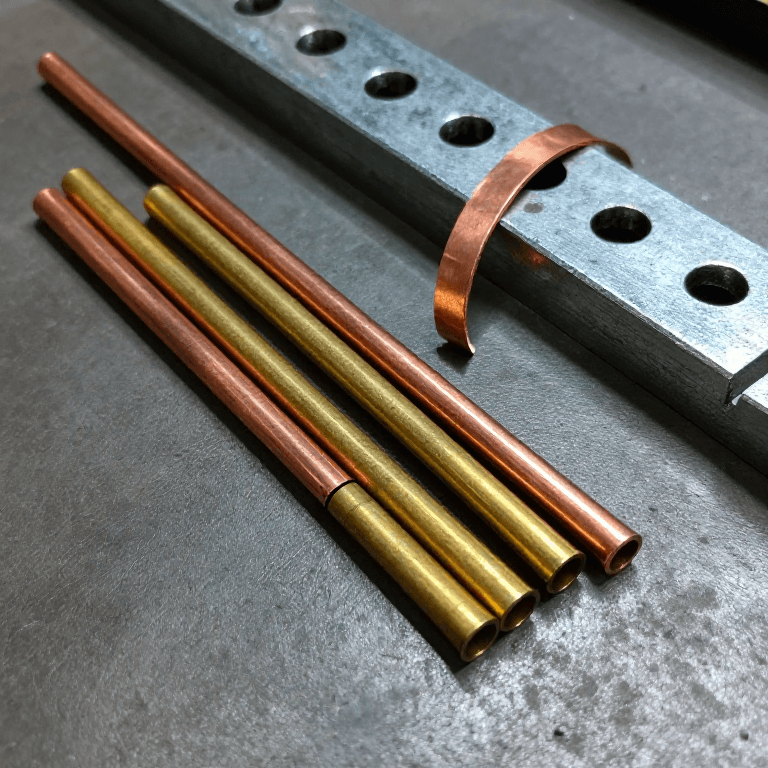
Make the roof of silica brick, covered with steel plates and given eyes so it can be lifted off. Between the two electrode holes use bronze plates instead of steel, because steel there would raise the inductance of the AC circuit. Fit water jackets round each electrode hole for a close fit, so less heat escapes and the electrodes do not burn in the air. Ours: copper tube for the water jackets. Silica brick has no head here.
Àwọn ohun èlò fún ìgbésẹ̀ yìí:
 Ohun èlò tí a kò mọ̀1 silica brickPẹpẹ irin rírọ̀1 roof plates
 Pẹlẹbẹ bronze1 plates between electrodes
 Ọ̀pá bàbà1 water jackets
Àwọn irinṣẹ́ tí a nílò:
Ẹ̀rọ ìtanná-ìdàpọ̀ (arc welder) Ẹ̀rọ Ìlùkòkò Onídúró
 Omi
3
3
Hang the electrodes
Hang the electrodes
Use two vertical carbon electrodes, square in section. Carry each in a holder on an arm supported by the furnace itself, so its height does not change when the furnace tilts: four contact pieces round the electrode, drawn tight by a steel strap and a screw in the arm, with the cable bolted to them. Raise and lower each electrode separately, by a regulator controlled by the voltage between it and the metal. Not given: electrode size, the regulator's build.
Àwọn ohun èlò fún ìgbésẹ̀ yìí:
 Ẹ̀rọ amúnáwá kábọ́ọ̀nù2 electrodes
 Irin tí a kò mọ̀1 holders, arms, contact pieces
Àwọn irinṣẹ́ tí a nílò:
Ẹ̀rọ Ìlùkòkò Onídúró4
4
Melt and refine a charge
Melt and refine a charge
Charge steel scrap with some iron ore and lime. Keep each electrode a little above the slag, leaving room for its arc. Regulate the current by hand while the scrap melts, then switch to automatic; full power only after about an hour. Pour off the slag and make a second, then a third, with lime and a little sand and fluorspar, before the final additions. At La Praz this took about 350 kW at 110 V: 5 hours for 1.25 tons of low-carbon steel, 8 hours for 2.33 tons of high-carbon steel. Not given: the electric supply.
Àwọn irinṣẹ́ tí a nílò:
OmiÀwọn ohun-èlò
8- 1 roof platesÀyè
- 1 lining and crushed dolomiteÀyè
- 1 hearth, if magnesiteÀyè
- 1 silica brickÀyè
- 1 plates between electrodesÀyè
- 1 water jacketsÀyè
- 2 electrodesÀyè
- 1 holders, arms, contact piecesÀyè
Àwọn Ohun Èlò Ìtọ́nisọ́nà Tí A So Pọ̀

Ìtọ́nisọ́nà yìí ń ṣe
CC0 Àgbègbè Gbogbogbò
Blueprint yìí ti jáde lábẹ́ CC0. O lè ṣe àdàkọ, yí padà, pín, àti lò láìsí ìyọ̀ǹda.
Ṣàtìlẹ́yìn Olùṣẹ́dá nípa rírà àwọn ọjà nipasẹ̀ Blueprint wọn Ẹ̀san Olùṣẹ́dá tí àwọn Olùtajà gbé kalẹ̀, tàbí ṣẹ̀dá àtúnṣe tuntun ti Blueprint yìí kí o sì fi sínú Blueprint rẹ gẹ́gẹ́ bí ìsopọ̀ láti pín owó-wíwọlé.