IṢẸ́ ỌNÀ
ẸWÀ ÀTI ÌLERA
IṢẸ́ ỌWỌ́
ÀṢÀ ÀTI ÌTÀN
ÌṢERÉ
ÀYÍKÁ
OÚNJẸ ÀTI OHUN MÍMU
REVERSE ENGINEERING
SÁYẸ́ǸSÌ
ERÉ ÌDÁRAYÁ
ÌMỌ̀-Ẹ̀RỌ
ÀWỌN OHUN WÍWỌ̀

Electricity From the Wind: The Cube Law and a Rotor on a Dynamo
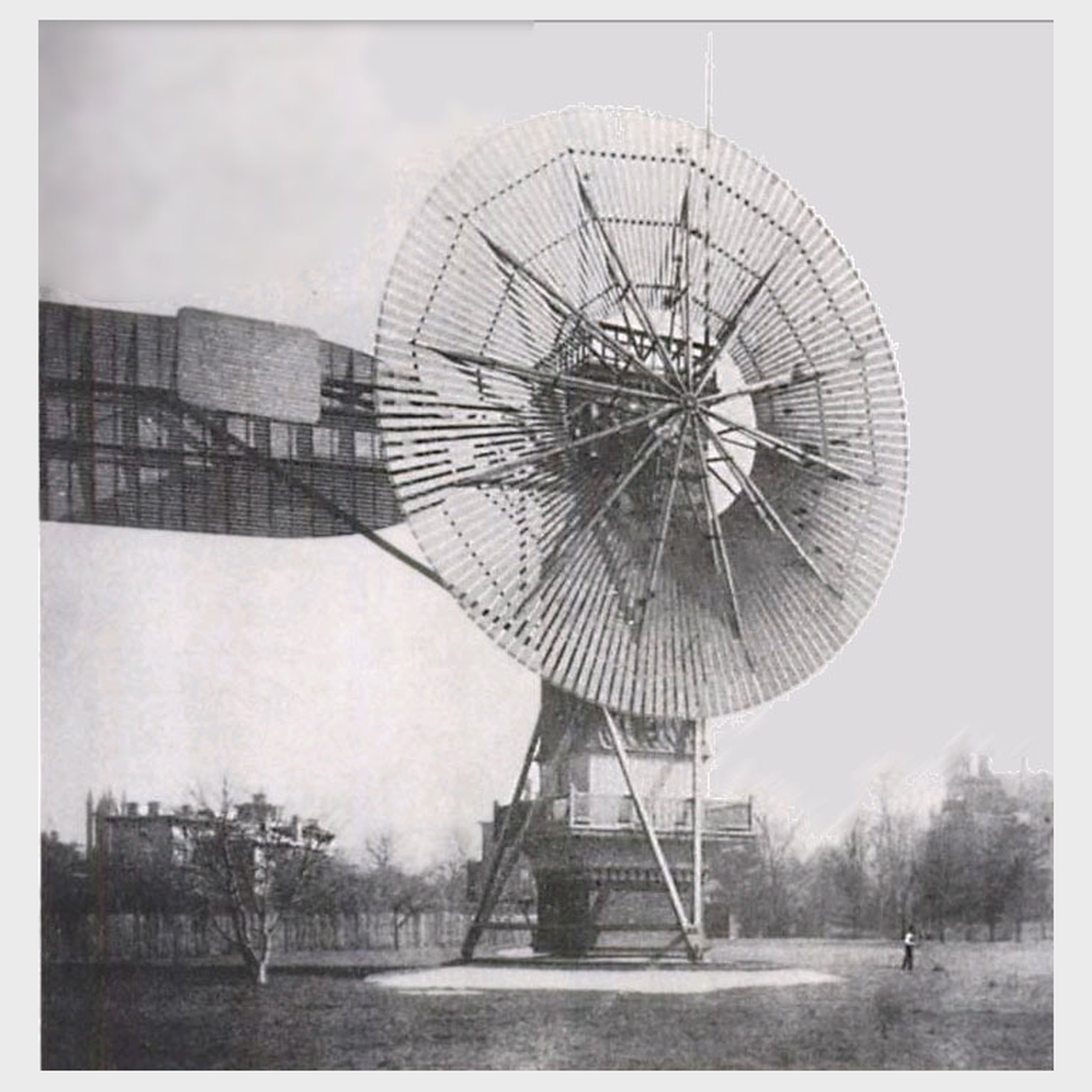
For a thousand years windmills ground grain and pumped water. In the winter of 1887–88 Charles F. Brush put one to a new job in the back garden of his house in Cleveland, Ohio: a 17-metre rotor of 144 cedar blades turning a dynamo that charged a cellar full of batteries — electricity from the wind.
Everything about a wind generator follows from one relation: the power in the wind goes with the cube of its speed and the square of the rotor's diameter. That is why turbines grew huge and why their sites are chosen with such care.
This rung builds a small wind generator from a hobby motor and a printed rotor, measures its power in front of a fan at several wind speeds, and checks the cube law.
Olùbẹ̀rẹ̀
About 4 hours
Ìlànà
1
1
The cube law
The cube law
Ń ṣí ìwé Jupyter…
2
2
Build a small wind generator
Build a small wind generator
A small permanent-magnet DC motor is also a generator: turn its shaft and it makes a voltage proportional to speed.
Print a three-bladed rotor 300 mm across in PETG, with a hub that presses onto the motor shaft, each blade twisted — steep near the hub, flatter towards the tip — because the tip moves faster through the air than the root. Mount the motor on a dowel mast clamped to a plywood base, with the rotor facing the fan.
Wire the motor's terminals to a 330 Ω resistor as a load, with the multimeter across it. Add an LED in series if you want to see it light.
Àwọn ohun èlò fún ìgbésẹ̀ yìí:
 Mọ́tò oníhámọ̀1 ẹyọ
 Okùn PETG60 g
 Àwọn dowel igi líle1 ìtò
 Àwo igi tí a lẹ̀ pọ̀1 ewé
 Rẹ́sístà 330 ohm1 ẹyọ
 LED 5 mm1 ẹyọ
 Okùn Ìsopọ̀1 ìtò
Àwọn irinṣẹ́ tí a nílò:
 Ẹ̀rọ ìtẹ̀ 3D oníwàyà (FDM)
 Ẹ̀rọ Ìlùkòkò Aláìlókùn
 Àkójọ Orí Ìlùkòkò
 Ìdìpọ̀ kọ́kọ́rọ́ igun mẹ́fà
3
3
Measure its power at three wind speeds
Measure its power at three wind speeds
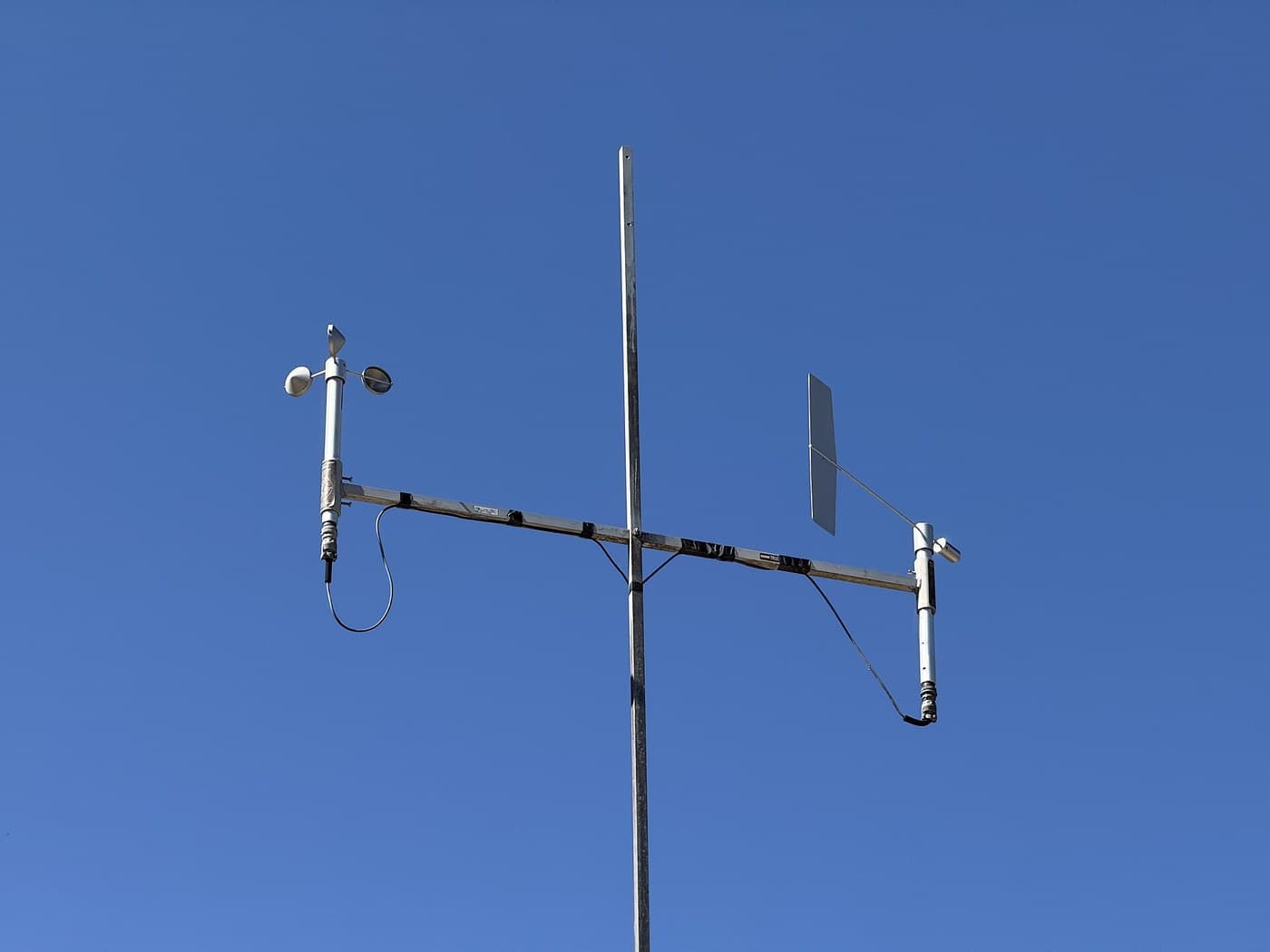
Stand the box fan 1.5 m away, facing the rotor. Measure the wind speed at the rotor with the anemometer before fitting the rotor, at each fan setting.
Fit the rotor, run the fan, and read the voltage across the resistor once it is steady. The electrical power is **V² ÷ R**. Record wind speed and power for each fan setting.
Plot power against wind speed cubed. It should be roughly a straight line — not exactly, because a small motor's own losses take a bigger share at low speed. Then divide your power by the notebook's power passing through a 0.3 m disc at the same wind speed. That ratio is your rotor's power coefficient, and the Betz rung shows the most it could ever be.
Àwọn irinṣẹ́ tí a nílò:
 Àbẹ̀bẹ̀ àpótí (ìwọ̀n tí ó ń yípadà)
 Òǹwọ̀n atẹ́gùn olówọ́
 Òǹwọ̀n iná mànàmáná onírúurú
 Okùn Ìdíwọ̀n
 Ìwọ̀n Ìyípo Dígítà
4
4
History and context
History and context
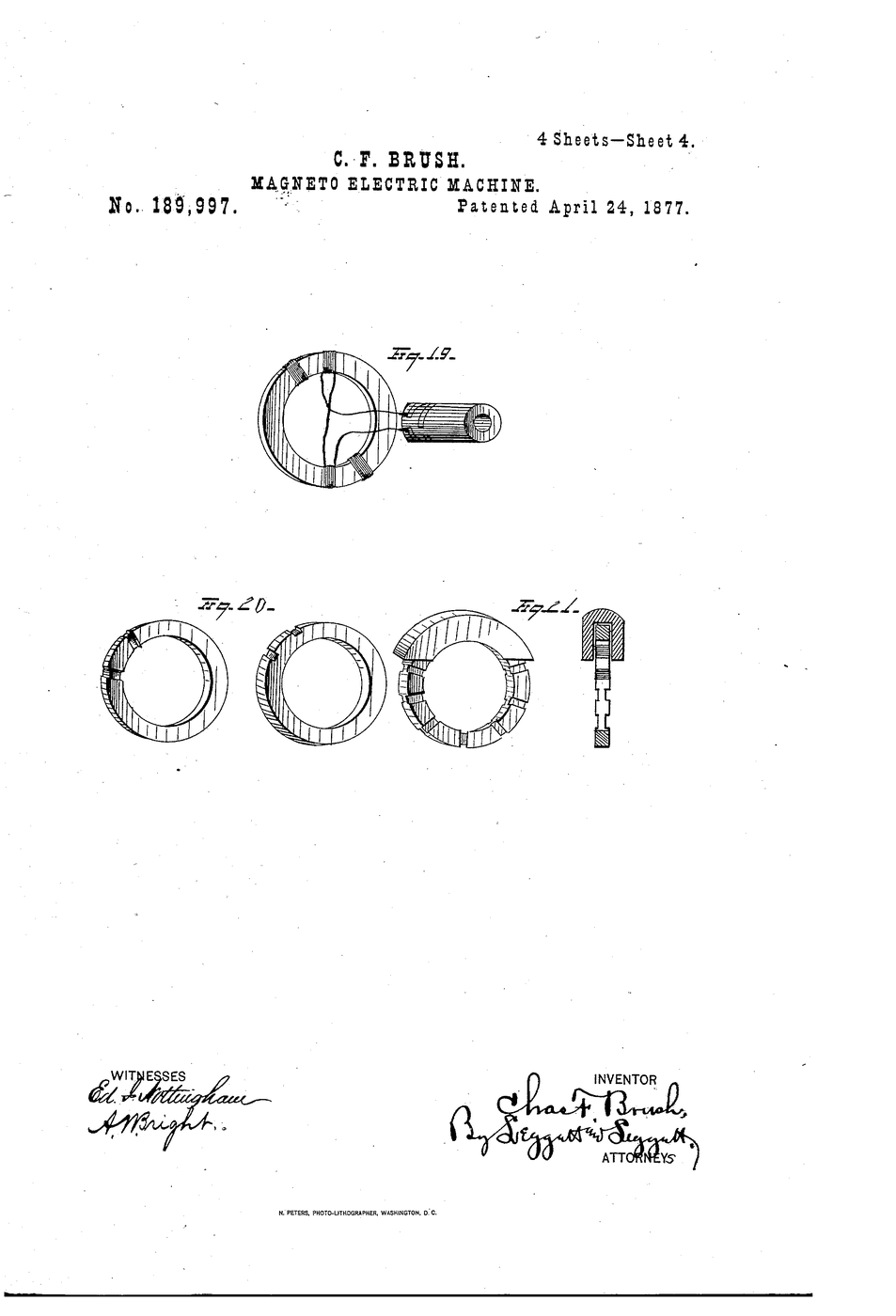
**Charles F. Brush, Cleveland, Ohio, 1887–88** — a 17 m, 144-bladed rotor on a tower about 18 m (60 ft) high driving a 12 kW dynamo through step-up gearing, charging batteries that lit his house; it ran for some twenty years. Brush had already built the arc-lighting dynamo in this catalogue. No patent number is asserted here.
In Denmark from 1891, **Poul la Cour** tested rotors in a wind tunnel of his own and found that fewer blades turning faster made better use of the wind than many slow ones — the direction every modern turbine took.
**Honest limits.** The wind stops; a wind generator needs storage or another source behind it. Its output swings with the cube of a quantity that changes by the minute. And a large rotor is a serious hazard: it must be able to stop itself in a storm, as the Halladay windmill's governor in this catalogue already could.
Àwọn ohun-èlò
7- Àyè
- 60 gÀyè
- 1 ìtòÀyè
- 1 ewéÀyè
- 1 ẹyọÀyè
- Àyè
- Àyè
Àwọn irinṣẹ́ tó nílò
9- 1 vendor sell this, none ship to you yetÀyè
- 1 vendor sell this, none ship to you yetÀyè
Blueprint tó jọra
Àwọn blueprint wọ̀nyí pín ìmọ̀ — ọ̀nà, ohun-èlò tàbí ìlànà
CC0 Àgbègbè Gbogbogbò
Blueprint yìí ti jáde lábẹ́ CC0. O lè ṣe àdàkọ, yí padà, pín, àti lò láìsí ìyọ̀ǹda.
Ṣàtìlẹ́yìn Olùṣẹ́dá nípa rírà àwọn ọjà nipasẹ̀ Blueprint wọn Ẹ̀san Olùṣẹ́dá tí àwọn Olùtajà gbé kalẹ̀, tàbí ṣẹ̀dá àtúnṣe tuntun ti Blueprint yìí kí o sì fi sínú Blueprint rẹ gẹ́gẹ́ bí ìsopọ̀ láti pín owó-wíwọlé.