IṢẸ́ ỌNÀ
ẸWÀ ÀTI ÌLERA
IṢẸ́ ỌWỌ́
ÀṢÀ ÀTI ÌTÀN
ÌṢERÉ
ÀYÍKÁ
OÚNJẸ ÀTI OHUN MÍMU
REVERSE ENGINEERING
SÁYẸ́ǸSÌ
ERÉ ÌDÁRAYÁ
ÌMỌ̀-Ẹ̀RỌ
ÀWỌN OHUN WÍWỌ̀
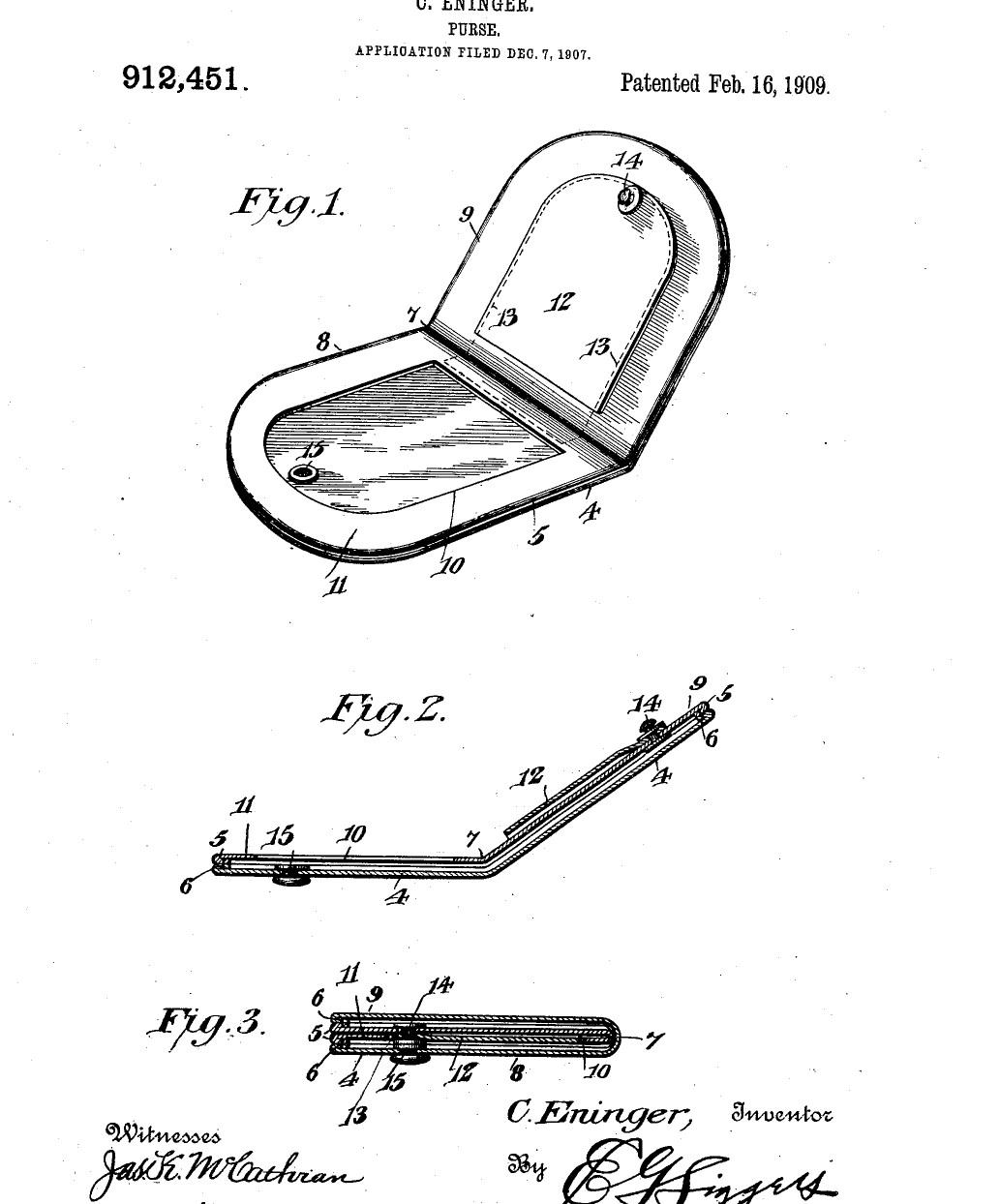


Folding Leather Coin Purse With a Tray Leaf and a Pocket Leaf (Eninger, 1909)
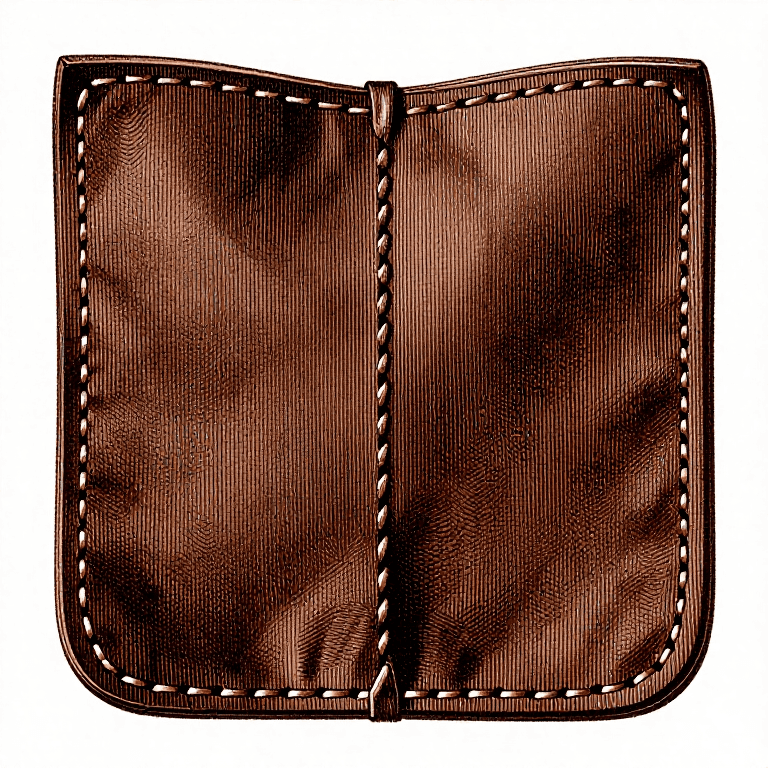
Charles Eninger of New York received US 912,451, dated 16 February 1909, for a coin purse made of two oval pieces of leather sewn together, turned and folded in half. Between the two walls of one half is a closed pocket for the coins; the inner wall of the other half has an opening, so that half is a tray the coins slide onto when it is opened. The piece cut out for the opening is sewn on the pocket half and fills the opening when it is folded. A snap fastener holds it shut, and "there is practically no waste of material".
All sizes are ours.
Olùbẹ̀rẹ̀
About 2 hours
Ìlànà
1
1
Pattern sizes
Pattern sizes
Ń ṣí ìwé Jupyter…
2
2
Read US 912,451
Read US 912,451
"The leaf 9 constitutes a pocket or receptacle for the coins, while the leaf 8 is in effect a tray on to which the coins from the pocket will slide when the purse is opened."
3
3
Cut the two walls
Cut the two walls
Draw an ellipse 150 x 90 mm (ours) on paper, cut it out and mark round it twice on thin leather: the outer wall and the inner wall, each in one piece.
Àwọn ohun èlò fún ìgbésẹ̀ yìí:
 Awọ ọmọ màlúù1 ẹyọ
 Ewé bébà onígun mẹ́rin1 ẹyọ
Àwọn irinṣẹ́ tí a nílò:
 Gègé
 Ọ̀bẹ awọ
4
4
Cut the opening
Cut the opening
Mark the transverse centre line (the fold). In one half of the inner wall (the tray half) cut an oval opening that stops short of the outer edge and short of the fold, leaving a margin all round: his retaining flange 11. Keep the piece you cut out: it becomes the third wall 12.
Àwọn irinṣẹ́ tí a nílò:
Ọ̀bẹ awọ5
5
Sew the walls and turn them
Sew the walls and turn them
Lay the two walls face to face and sew them together all round the edge (his line 6). Turn the purse inside out (through the opening, ours) so the seam is hidden, and rub the edge flat.
Àwọn ohun èlò fún ìgbésẹ̀ yìí:
 Òwú ìránṣọ1 ẹyọ
Àwọn irinṣẹ́ tí a nílò:
 Ọ̀kọ̀ Ìlùhò
 Abẹ́rẹ́ ìránṣọ ọwọ́
 Egungun ìká bébà
6
6
Sew on the third wall
Sew on the third wall
Fold the purse along the centre line. On the other leaf (the pocket half), where the opening lands, sew the cut-out piece to the inner wall (his stitching 13), so that when the purse is folded it fits into the opening and lets the leaves lie flat.
Àwọn ohun èlò fún ìgbésẹ̀ yìí:
Òwú ìránṣọ1 ẹyọÀwọn irinṣẹ́ tí a nílò:
Ọ̀kọ̀ ÌlùhòAbẹ́rẹ́ ìránṣọ ọwọ́7
7
Fit the snap
Fit the snap
Fix the stud on the inner side of the pocket leaf, on the third wall's side, and the socket on the outer wall of the other leaf in line with the opening, so the stud passes into the opening and snaps into the socket when closed, as he describes.
Àwọn ohun èlò fún ìgbésẹ̀ yìí:
 Bọ́tìnnì ìtẹ̀1 ẹyọ
Àwọn irinṣẹ́ tí a nílò:
 Ohun èlò ìlu ihò awọ
 Òòlù oníkànnì
8
8
Use it
Use it
Coins go into the space between the walls through the opening. Opened flat, they slide from the pocket onto the tray leaf, where they can be seen and picked out through the opening; the flange stops them falling unless the purse is held upside down. Folded, the third wall closes the opening.
9
9
Troubleshooting
Troubleshooting
Coin purse troubleshooting.
Flow
Loading...
10
10
History and honest limits
History and honest limits
**Charles Eninger** of New York, assignor to H. B. Hardenburg & Co., US 912,451, dated 16 February 1909, filed 7 December 1907. He claimed "a purse comprising an outer flexible wall of one piece, and an inner flexible wall of one piece and of equal extent with the outer wall, said walls being secured together at their edges". He says leather is the material preferably employed but gives no sizes; the sizes, calf and thread are ours.
Àwọn ohun-èlò
4- 1 ẹyọÀyè
- Àyè
- 2 ẹyọÀyè
- 1 ẹyọÀyè
Ìtọ́nisọ́nà yìí ń ṣe
Blueprint tó jọra
Àwọn blueprint wọ̀nyí pín ìmọ̀ — ọ̀nà, ohun-èlò tàbí ìlànà
CC0 Àgbègbè Gbogbogbò
Blueprint yìí ti jáde lábẹ́ CC0. O lè ṣe àdàkọ, yí padà, pín, àti lò láìsí ìyọ̀ǹda.
Ṣàtìlẹ́yìn Olùṣẹ́dá nípa rírà àwọn ọjà nipasẹ̀ Blueprint wọn Ẹ̀san Olùṣẹ́dá tí àwọn Olùtajà gbé kalẹ̀, tàbí ṣẹ̀dá àtúnṣe tuntun ti Blueprint yìí kí o sì fi sínú Blueprint rẹ gẹ́gẹ́ bí ìsopọ̀ láti pín owó-wíwọlé.