IṢẸ́ ỌNÀ
ẸWÀ ÀTI ÌLERA
IṢẸ́ ỌWỌ́
ÀṢÀ ÀTI ÌTÀN
ÌṢERÉ
ÀYÍKÁ
OÚNJẸ ÀTI OHUN MÍMU
REVERSE ENGINEERING
SÁYẸ́ǸSÌ
ERÉ ÌDÁRAYÁ
ÌMỌ̀-Ẹ̀RỌ
ÀWỌN OHUN WÍWỌ̀
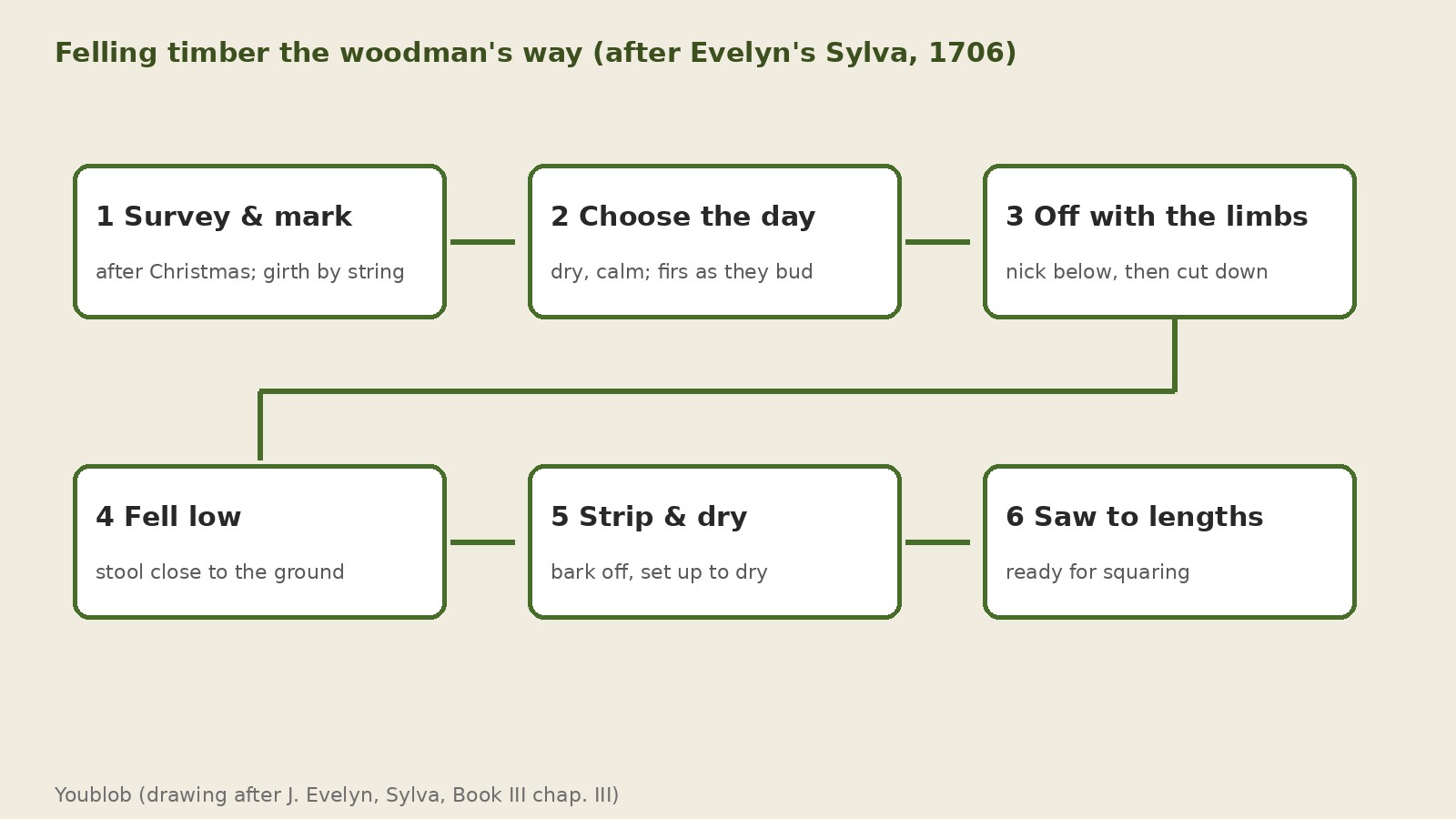


Felling Timber Trees and Cutting Them into Logs (Evelyn's Sylva, 1706)
John Evelyn's woodman's rules for felling: survey and mark the trees after Christmas, fell in dry, calm weather (firs when they begin to bud, so the bark strips), take off the big limbs first so they do not split the trunk, cut the stool low, strip the bark, and saw the clean bole into lengths ready for squaring.
Àárín
A winter season (survey to stacked logs)
Ìlànà
1
1
Measuring by the girth
Measuring by the girth
Ń ṣí ìwé Jupyter…
2
2
Read Sylva
Read Sylva
"Being now entering with your workmen, one of the first, and most principal things, is, the skilful disbranching of the boal of all such arms and limbs as may endanger it in the fall."
3
3
Survey and mark
Survey and mark
Right after Christmas walk the wood, list each kind of tree and what it is good for, mixing good and poor so the best timber is not all taken. Measure the trees by a string round the girth and mark those to fell.
Àwọn irinṣẹ́ tí a nílò:
 Okùn
4
4
Choose the time
Choose the time
Fell from about Candlemas (early February) into spring; some cut in October for ploughs, carts and naves. Fell firs and pines when they first begin to bud: the bark then strips best. Work when it has been dry and calm a good while, with a low wind, never in frost, rain or dew, and not in the morning. (He also reports the old rule of felling in the waning moon.)
5
5
Take off the limbs
Take off the limbs
First cut away any great arms that could split or damage the trunk as it falls: chop a nick under each one close to the trunk, then cut down from above to meet it so it comes off clean. For wet trees some bore across the trunk, or cut a kerf round it almost to the heart, four or five days before felling to let the sap drain.
Àwọn irinṣẹ́ tí a nílò:
 Àáké
 Àdá onítọ̀kọ̀
 Ìlù ọwọ́ pẹ̀lú orí
6
6
Fell low
Fell low
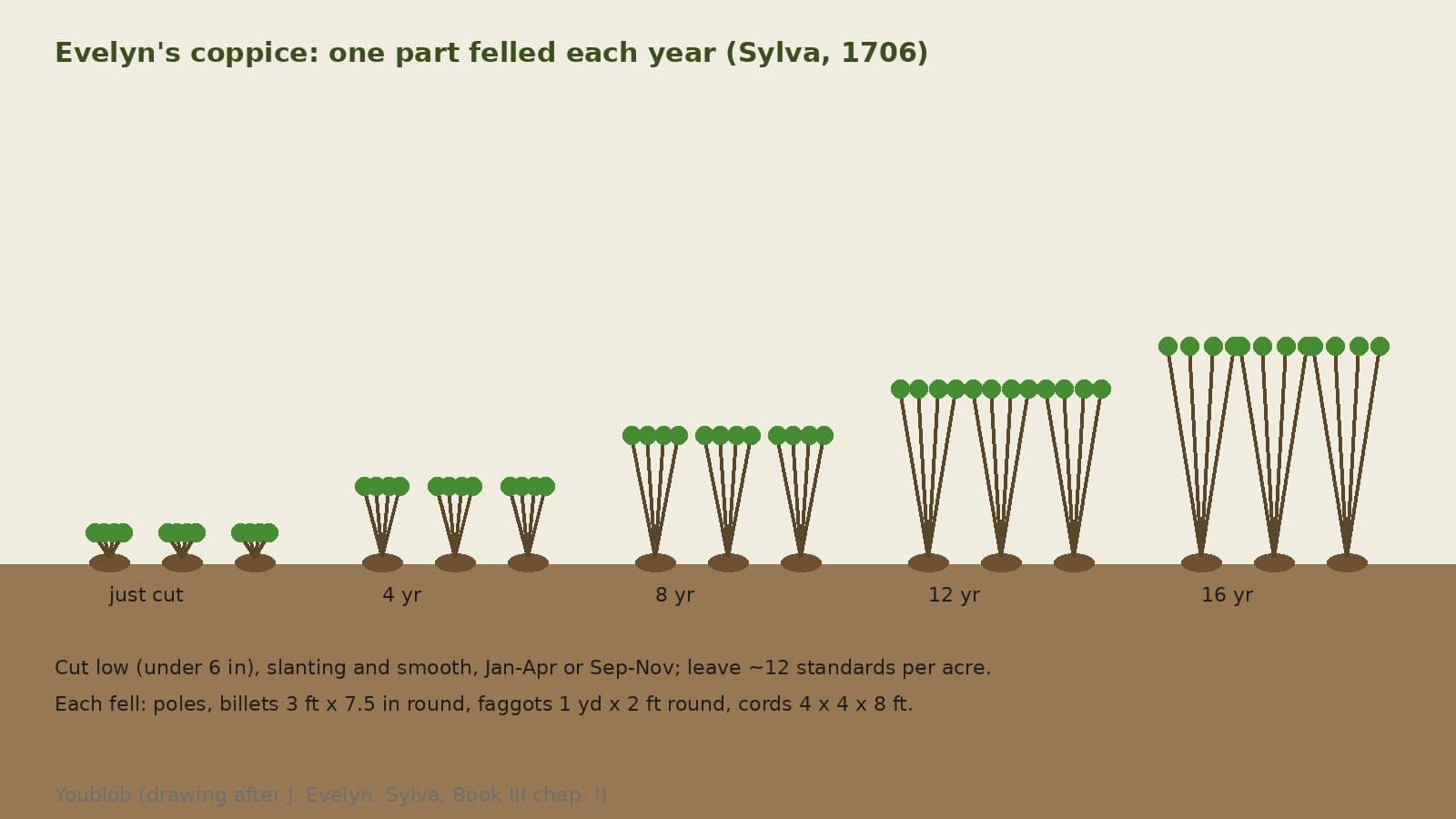
Fell the tree leaving the stump as close to the ground as you can, above all if you want it to sprout again: a foot of timber near the root is worth three further up.
Àwọn irinṣẹ́ tí a nílò:
Àáké Pit Saw
 Wedge igi fún gígé igi lulẹ̀
7
7
Strip and cut to length
Strip and cut to length
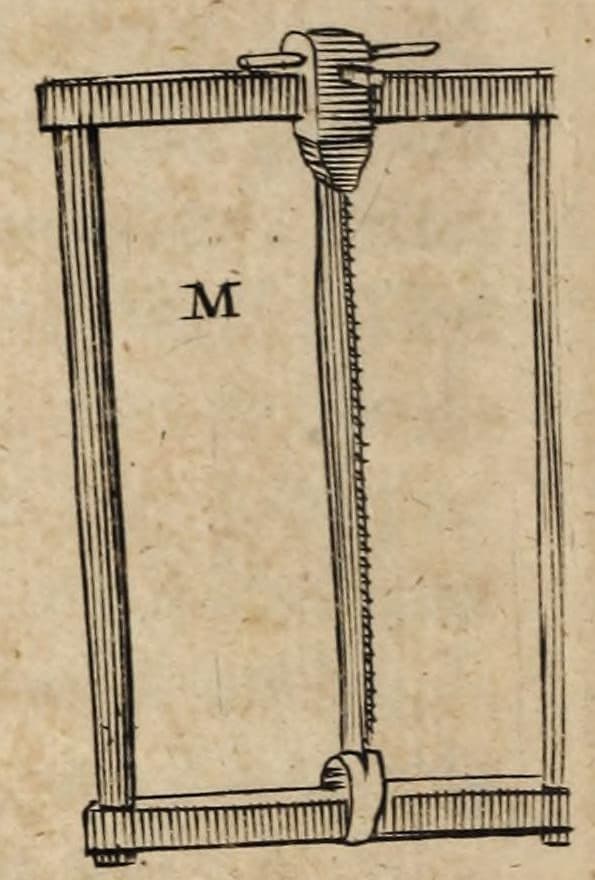
Strip the bark, set the trunk where it dries best, clear the remaining branches, and saw it into lengths for squaring. In a winter fell for fuel, kid (bundle) the brushwood and stand it on end so it does not rot.
Àwọn ohun èlò fún ìgbésẹ̀ yìí:
 Okùn jute1 ẹyọ
Àwọn irinṣẹ́ tí a nílò:
 Ọ̀bẹ Ìfàsẹ́yìnPit SawÀáké
8
8
Troubleshooting
Troubleshooting
Felling troubleshooting.
Flow
Loading...
9
9
History and honest limits
History and honest limits
From John Evelyn, **Sylva** (1706 text, London reprint 1908), Book III, Chap. III, §§26-33 (checked on the archive.org scan sylvaordiscourse02evelrich, pp. 68-74). The moon rules are reported, not proven; metric figures are ours.
Ìtọ́nisọ́nà yìí ń ṣe
Blueprint tó jọra
Àwọn blueprint wọ̀nyí pín ìmọ̀ — ọ̀nà, ohun-èlò tàbí ìlànà

CC0 Àgbègbè Gbogbogbò
Blueprint yìí ti jáde lábẹ́ CC0. O lè ṣe àdàkọ, yí padà, pín, àti lò láìsí ìyọ̀ǹda.
Ṣàtìlẹ́yìn Olùṣẹ́dá nípa rírà àwọn ọjà nipasẹ̀ Blueprint wọn Ẹ̀san Olùṣẹ́dá tí àwọn Olùtajà gbé kalẹ̀, tàbí ṣẹ̀dá àtúnṣe tuntun ti Blueprint yìí kí o sì fi sínú Blueprint rẹ gẹ́gẹ́ bí ìsopọ̀ láti pín owó-wíwọlé.