IṢẸ́ ỌNÀ
ẸWÀ ÀTI ÌLERA
IṢẸ́ ỌWỌ́
ÀṢÀ ÀTI ÌTÀN
ÌṢERÉ
ÀYÍKÁ
OÚNJẸ ÀTI OHUN MÍMU
REVERSE ENGINEERING
SÁYẸ́ǸSÌ
ERÉ ÌDÁRAYÁ
ÌMỌ̀-Ẹ̀RỌ
ÀWỌN OHUN WÍWỌ̀
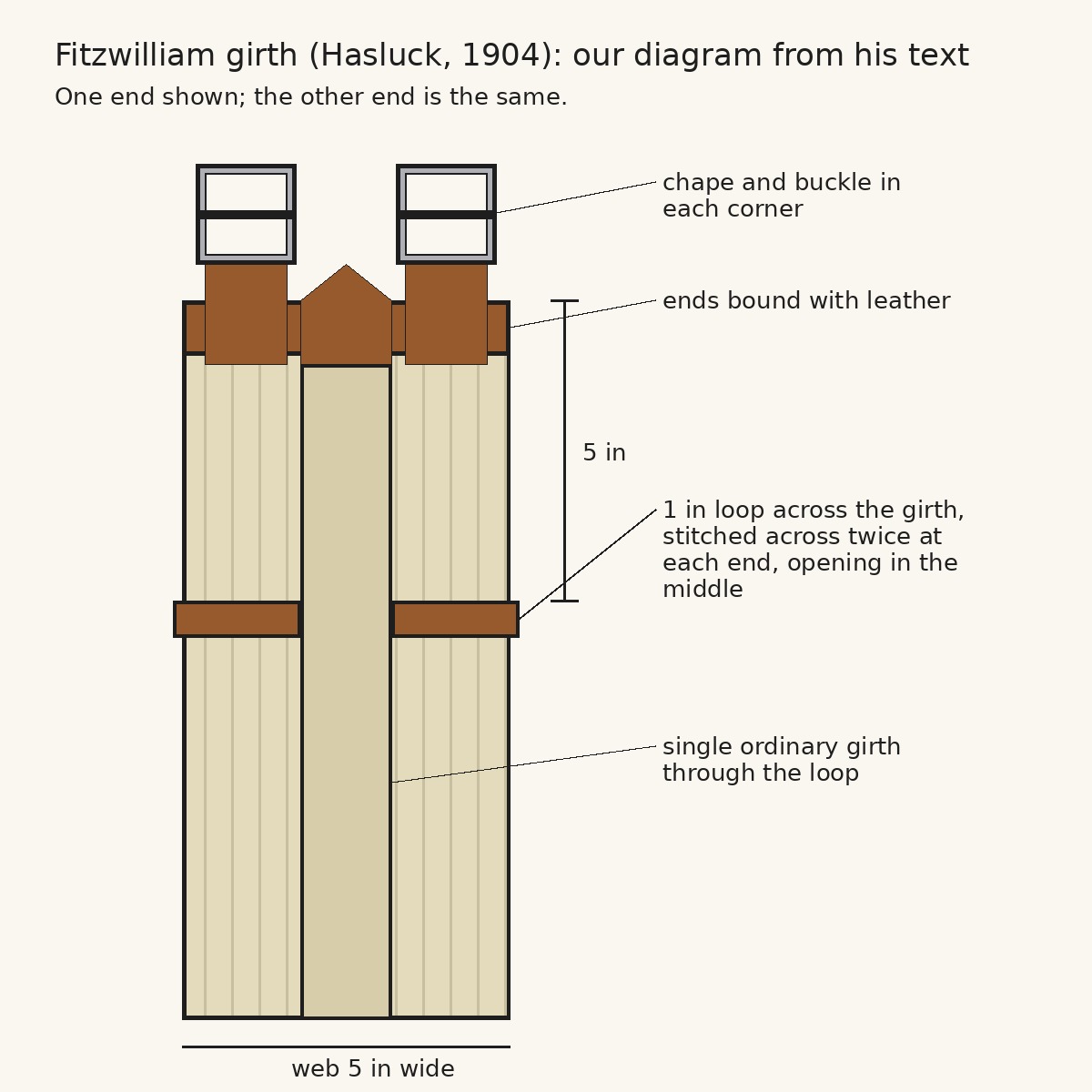


Fitzwilliam Girth: 5 in Web With Four Buckles and an Ordinary Girth Through Two Loops (Hasluck, Saddlery, 1904)
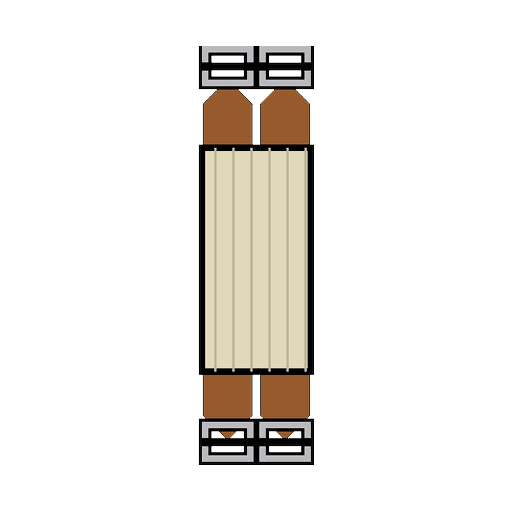
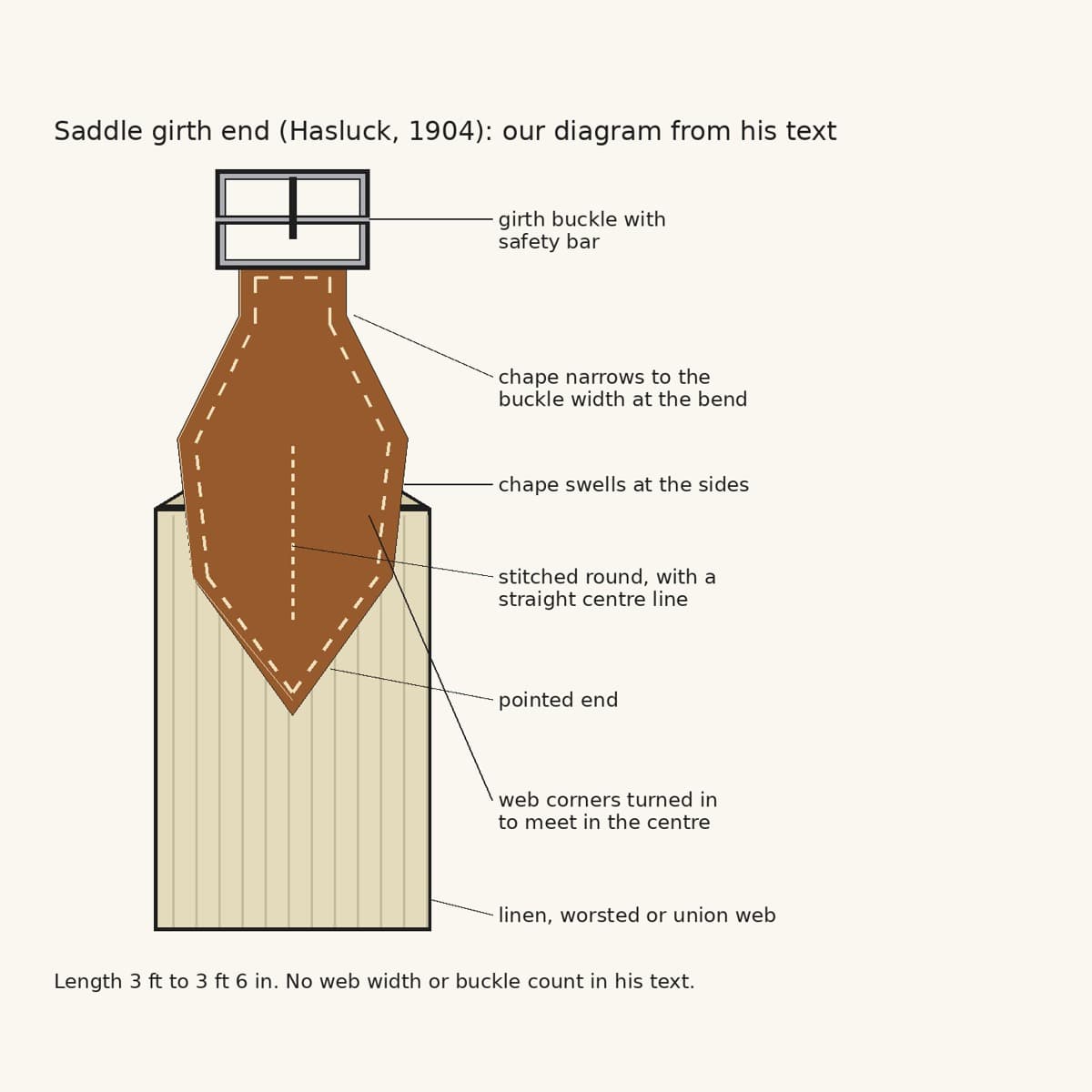
Hasluck calls the Fitzwilliam girth "a very safe girth" that "keeps the saddle steady in place": a broad 5 in web with a buckle in each corner, and an ordinary girth running through a loop near each end. This is his girth from Saddlery (1904). He gives no length for the wide web; the picture is our diagram from his text.
Àárín
About 4 hours
Ìlànà
1
1
His sizes in centimetres
His sizes in centimetres
Ń ṣí ìwé Jupyter…
2
2
Read Saddlery, ch. V
Read Saddlery, ch. V
"A Fitzwilliam girth is made of web 5 in. wide, the ends being bound with leather and a chape and buckle placed on each side—that is, in each corner, two at each end of the girth."
3
3
Bind the ends and fit four buckles
Bind the ends and fit four buckles
Cut the 5 in web to the length of girth needed (he gives no length). Bind both ends with leather, and put a chape and girth buckle in each corner: two at each end, four in all.
Àwọn ohun èlò fún ìgbésẹ̀ yìí:
 Okùn híhun ìdè ikùn1 ẹyọ
 Awọ ohun èlò ẹṣin1 ẹyọ
 Bọ́kùlù okùn ikùn4 ẹyọ
 Òwú ọ̀gbọ̀1 ẹyọ
 Ìdí Oyin1 ẹyọ
Àwọn irinṣẹ́ tí a nílò:
 Ọ̀bẹ awọ
 Ọ̀kọ̀ Ìlùhò
 Abẹ́rẹ́ ìránṣọ awọ méjì
 Ìmú igi fún ríran awọ
 Okùn Ìdíwọ̀n
4
4
Put on the loops and the ordinary girth
Put on the loops and the ordinary girth
Put a 1 in loop across the girth 5 in from the end, at each end. Stitch each loop across twice at each end, leaving an opening in the middle for an ordinary girth to pass. Make a single ordinary girth (see the web saddle girth) and put one end through each of the loops; the Fitzwilliam girth is then complete.
Àwọn ohun èlò fún ìgbésẹ̀ yìí:
Awọ ohun èlò ẹṣin1 ẹyọÒwú ọ̀gbọ̀1 ẹyọÌdí Oyin1 ẹyọ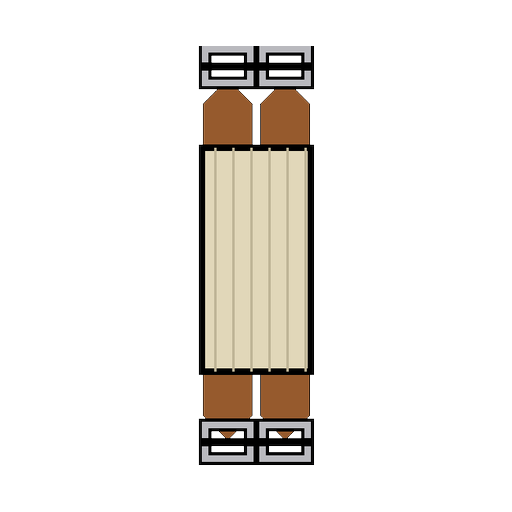 Okùn ikùn gàárì1 ẹyọ
Àwọn irinṣẹ́ tí a nílò:
Ọ̀bẹ awọ Igi ìmọ òrùka awọỌ̀kọ̀ ÌlùhòAbẹ́rẹ́ ìránṣọ awọ méjìÌmú igi fún ríran awọOkùn Ìdíwọ̀n
5
5
Troubleshooting
Troubleshooting
Fitzwilliam girth troubleshooting.
Flow
Loading...
6
6
History and honest limits
History and honest limits
From **Saddlery**, edited by Paul N. Hasluck, David McKay, 1904 (archive.org saddlery00hasl), chapter V, Fitzwilliam girth, p. 48; read on the scan. He gives no length for the 5 in web and has no figure of this girth, so the picture is our own diagram from his text. He adds that chape punches cut chapes at one stroke, or a head knife can cut partly round or cornered patterns. The thread, tools and metric figures are ours.
Àwọn ohun-èlò
6- 1 ẹyọÀyè
- 2 ẹyọÀyè
- 4 ẹyọÀyè
- 2 ẹyọÀyè
- 2 ẹyọÀyè
- 1 ẹyọÀyè
Ìtọ́nisọ́nà yìí ń ṣe
Blueprint tó jọra
Àwọn blueprint wọ̀nyí pín ìmọ̀ — ọ̀nà, ohun-èlò tàbí ìlànà
CC0 Àgbègbè Gbogbogbò
Blueprint yìí ti jáde lábẹ́ CC0. O lè ṣe àdàkọ, yí padà, pín, àti lò láìsí ìyọ̀ǹda.
Ṣàtìlẹ́yìn Olùṣẹ́dá nípa rírà àwọn ọjà nipasẹ̀ Blueprint wọn Ẹ̀san Olùṣẹ́dá tí àwọn Olùtajà gbé kalẹ̀, tàbí ṣẹ̀dá àtúnṣe tuntun ti Blueprint yìí kí o sì fi sínú Blueprint rẹ gẹ́gẹ́ bí ìsopọ̀ láti pín owó-wíwọlé.