IṢẸ́ ỌNÀ
ẸWÀ ÀTI ÌLERA
IṢẸ́ ỌWỌ́
ÀṢÀ ÀTI ÌTÀN
ÌṢERÉ
ÀYÍKÁ
OÚNJẸ ÀTI OHUN MÍMU
REVERSE ENGINEERING
SÁYẸ́ǸSÌ
ERÉ ÌDÁRAYÁ
ÌMỌ̀-Ẹ̀RỌ
ÀWỌN OHUN WÍWỌ̀
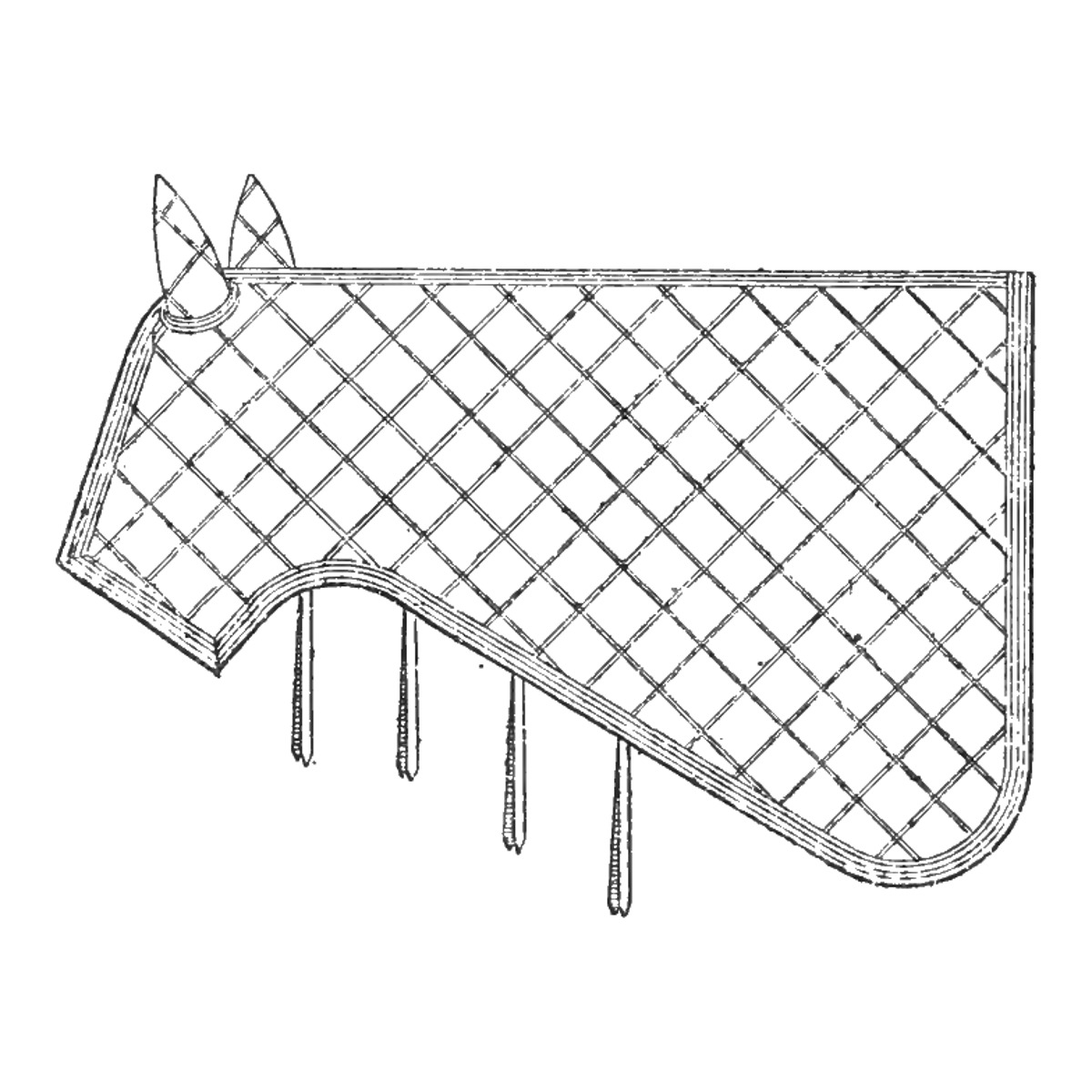


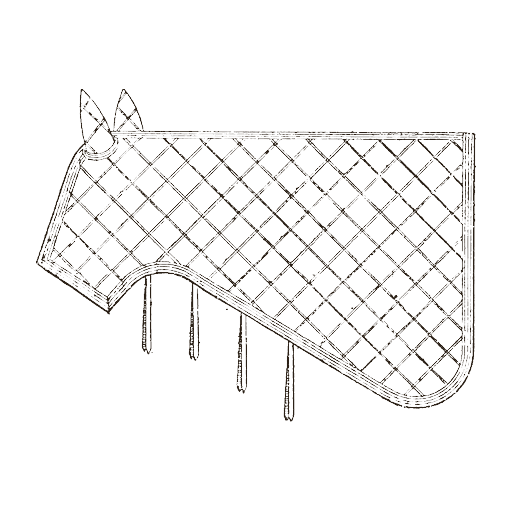
Horse Hood: Two-Piece Cloth Hood With Ear Covers, Bound Edges and Jaw Strap (Hasluck, Saddlery, 1904)
The hood completes a horse's stable suit of sheet, breast cloth and pad cloth, covering the head and neck. This is the hood from Paul N. Hasluck's Saddlery (1904): two pieces of cloth cut to the horse from about 5-1/4 in below the eye back to the shoulder, with ear covers and eye holes, bound all round and fastened under the jaw. It is cut to fit each horse, so he gives few sizes.
Àárín
About 1 day
Ìlànà
1
1
His sizes in centimetres
His sizes in centimetres
Ń ṣí ìwé Jupyter…
2
2
Read Saddlery, ch. IX
Read Saddlery, ch. IX
"A hood is needed to complete the suit. A suitable shape is shown by Fig. 29. The hood must be cut to the shape of the horse's neck and head, from a point about 5-1/4 in. below the eye on the nose, then along the ridge of the head and neck to the shoulder, where it should cover the front of the sheet well."
3
3
Cut the two sides
Cut the two sides
Cut the hood in two pieces, one for each side (he says sometimes four, with pieces added to the side flaps for size), shaped to the horse from about 5-1/4 in below the eye on the nose, along the ridge of the head and neck to the shoulder, covering the front of the sheet well. Under the neck, cut all round the throat and down under the head so the two sides meet exactly in the centre. Making a paper pattern on the horse first is our suggestion.
Àwọn ohun èlò fún ìgbésẹ̀ yìí:
 Aṣọ irun àgùtàn tí a ṣẹ̀ṣẹ̀ hun1 ẹyọ
Àwọn irinṣẹ́ tí a nílò:
 Bébà ìdì àwọ̀ ilẹ̀
 Gègé
 Ìṣẹ́ná
 Okùn Ìdíwọ̀n
4
4
Cut the ear and eye holes
Cut the ear and eye holes
Cut the holes for the ears, and two holes right opposite the eyes. Put the front cut of the cloth opposite the front of the ear.
Àwọn irinṣẹ́ tí a nílò:
Ìṣẹ́náGègé5
5
Make the ear covers
Make the ear covers
Make a cover for each ear: the front part about 1 in larger than the face of the ear all round, the back part large enough to pass round the back of the ear and let it go in easily. Whip the edges together and stitch round the hole at the bottom, all the stitches on the outside.
Àwọn ohun èlò fún ìgbésẹ̀ yìí:
Aṣọ irun àgùtàn tí a ṣẹ̀ṣẹ̀ hun1 ẹyọ Òwú ọ̀gbọ̀1 ẹyọ
 Ìdí Oyin1 ẹyọ
Àwọn irinṣẹ́ tí a nílò:
Ìṣẹ́ná Abẹ́rẹ́ ìránṣọ awọ méjì
6
6
Join the sides
Join the sides
Whip the edges together level along the top of the neck and over the head, down the front of the face. Join any other piece the same way, and always bind the joint, stitching on both sides.
Àwọn ohun èlò fún ìgbésẹ̀ yìí:
Òwú ọ̀gbọ̀1 ẹyọÌdí Oyin1 ẹyọÀwọn irinṣẹ́ tí a nílò:
Abẹ́rẹ́ ìránṣọ awọ méjì7
7
Bind the edges
Bind the edges
Cut the binding cloth 1-1/4 in wide (cloth, patent or Newmarket binding) and turn it round the edges just enough to catch the first row of stitching, about 1/4 in from the edge. Draw it as flat as possible and stitch another row along the inner edge. Where it puckers too much at a sharp turn, as at the throat, cut the puckers out and stitch edge to edge. Put a strip along the joint on the top of the neck, its ends under the binding, then flat strips 1/2 in wide along the side joints and the points of the ear pieces, and round the bottom to cover the ends and the joint. He notes this work can be done by machine.
Àwọn ohun èlò fún ìgbésẹ̀ yìí:
Aṣọ irun àgùtàn tí a ṣẹ̀ṣẹ̀ hun1 ẹyọÒwú ọ̀gbọ̀1 ẹyọÌdí Oyin1 ẹyọÀwọn irinṣẹ́ tí a nílò:
Ìṣẹ́náAbẹ́rẹ́ ìránṣọ awọ méjìOkùn Ìdíwọ̀n8
8
Fit the jaw strap and strings
Fit the jaw strap and strings
Fasten the hood under the jaw with a small strap and buckle. Run cadez strings (ties) from this point to about half-way down the neck on each side, to tie together.
Àwọn ohun èlò fún ìgbésẹ̀ yìí:
 Awọ ohun èlò ẹṣin1 ẹyọ
 Bọ́ọ̀kù irin onílahùn1 ẹyọ
 Okùn Òwú Ilé-ìdáná1 ẹyọÒwú ọ̀gbọ̀1 ẹyọÌdí Oyin1 ẹyọ
Àwọn irinṣẹ́ tí a nílò:
 Ọ̀bẹ awọ
 Ọ̀kọ̀ ÌlùhòAbẹ́rẹ́ ìránṣọ awọ méjì
9
9
Troubleshooting
Troubleshooting
Horse hood troubleshooting.
Flow
Loading...
10
10
History and honest limits
History and honest limits
From **Saddlery**, edited by Paul N. Hasluck, David McKay, 1904 (archive.org saddlery00hasl), chapter IX, "Horse Clothing", hood, pp. 70-74, Fig. 29; every fraction was read on the scan. He gives no overall sizes: the hood is cut to the horse. He does not say what cadez strings are made of; cotton string is our choice. The sheets and breast cloth of the suit are not made here. Kersey, the paper pattern, tools and metric figures are ours.
Àwọn ohun-èlò
6- Àyè
- 4 ẹyọÀyè
- 4 ẹyọÀyè
- 1 ẹyọÀyè
- Àyè
- 1 ẹyọÀyè
Ìtọ́nisọ́nà yìí ń ṣe
Blueprint tó jọra
Àwọn blueprint wọ̀nyí pín ìmọ̀ — ọ̀nà, ohun-èlò tàbí ìlànà
CC0 Àgbègbè Gbogbogbò
Blueprint yìí ti jáde lábẹ́ CC0. O lè ṣe àdàkọ, yí padà, pín, àti lò láìsí ìyọ̀ǹda.
Ṣàtìlẹ́yìn Olùṣẹ́dá nípa rírà àwọn ọjà nipasẹ̀ Blueprint wọn Ẹ̀san Olùṣẹ́dá tí àwọn Olùtajà gbé kalẹ̀, tàbí ṣẹ̀dá àtúnṣe tuntun ti Blueprint yìí kí o sì fi sínú Blueprint rẹ gẹ́gẹ́ bí ìsopọ̀ láti pín owó-wíwọlé.