IṢẸ́ ỌNÀ
ẸWÀ ÀTI ÌLERA
IṢẸ́ ỌWỌ́
ÀṢÀ ÀTI ÌTÀN
ÌṢERÉ
ÀYÍKÁ
OÚNJẸ ÀTI OHUN MÍMU
REVERSE ENGINEERING
SÁYẸ́ǸSÌ
ERÉ ÌDÁRAYÁ
ÌMỌ̀-Ẹ̀RỌ
ÀWỌN OHUN WÍWỌ̀
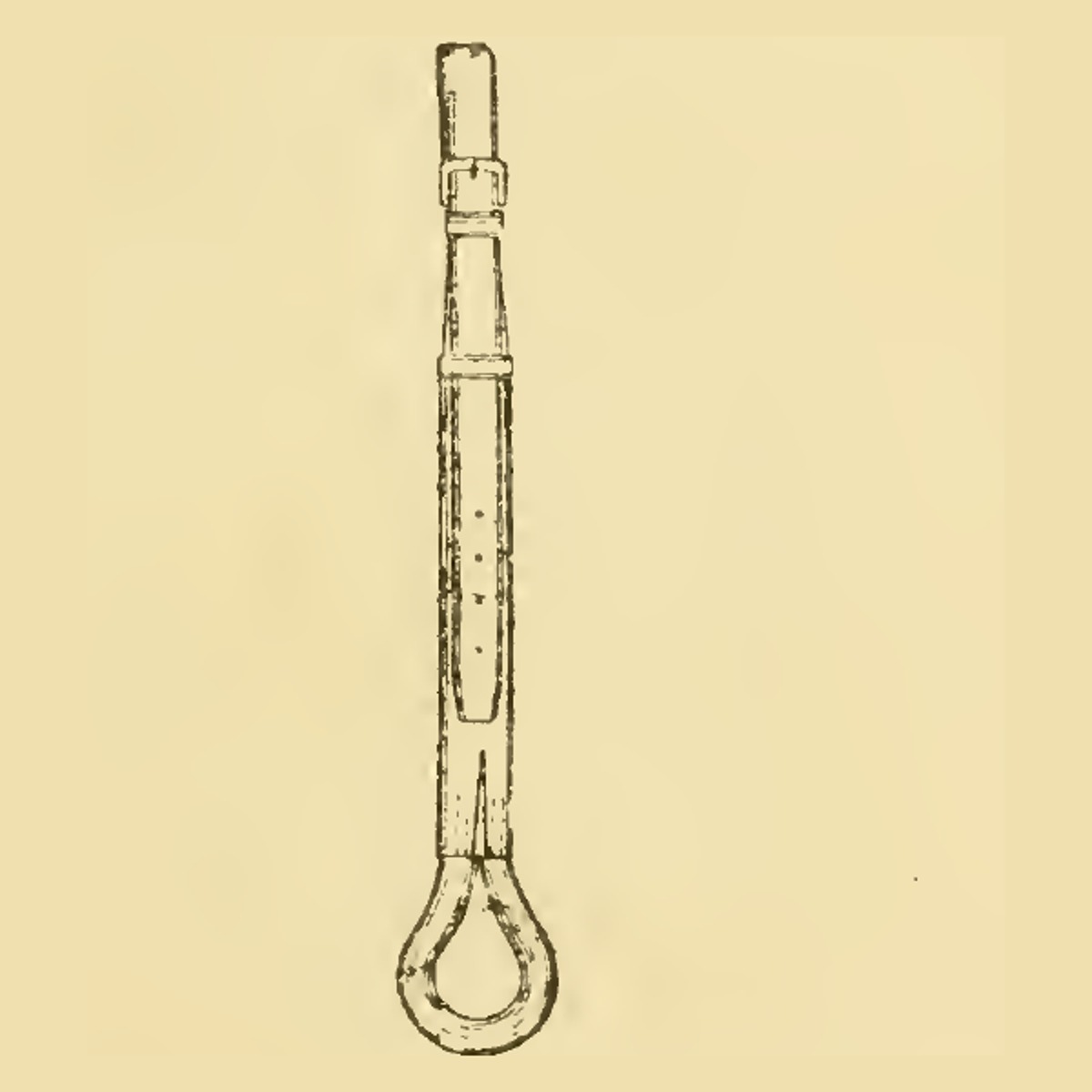


Saddle Crupper: Slit Body, Buckled Billet and Paper-Cored Dock (Hasluck, Saddlery, 1904)
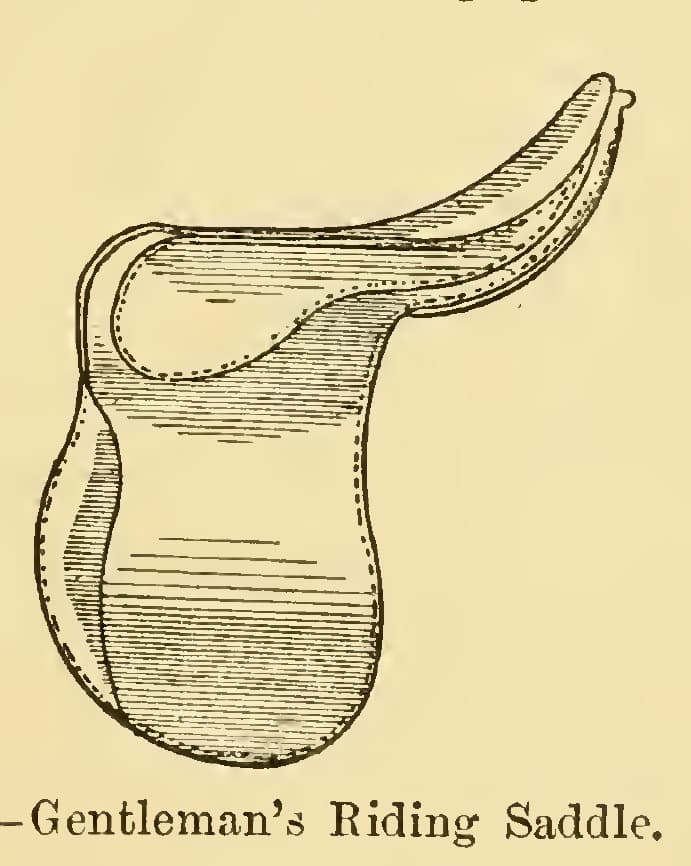
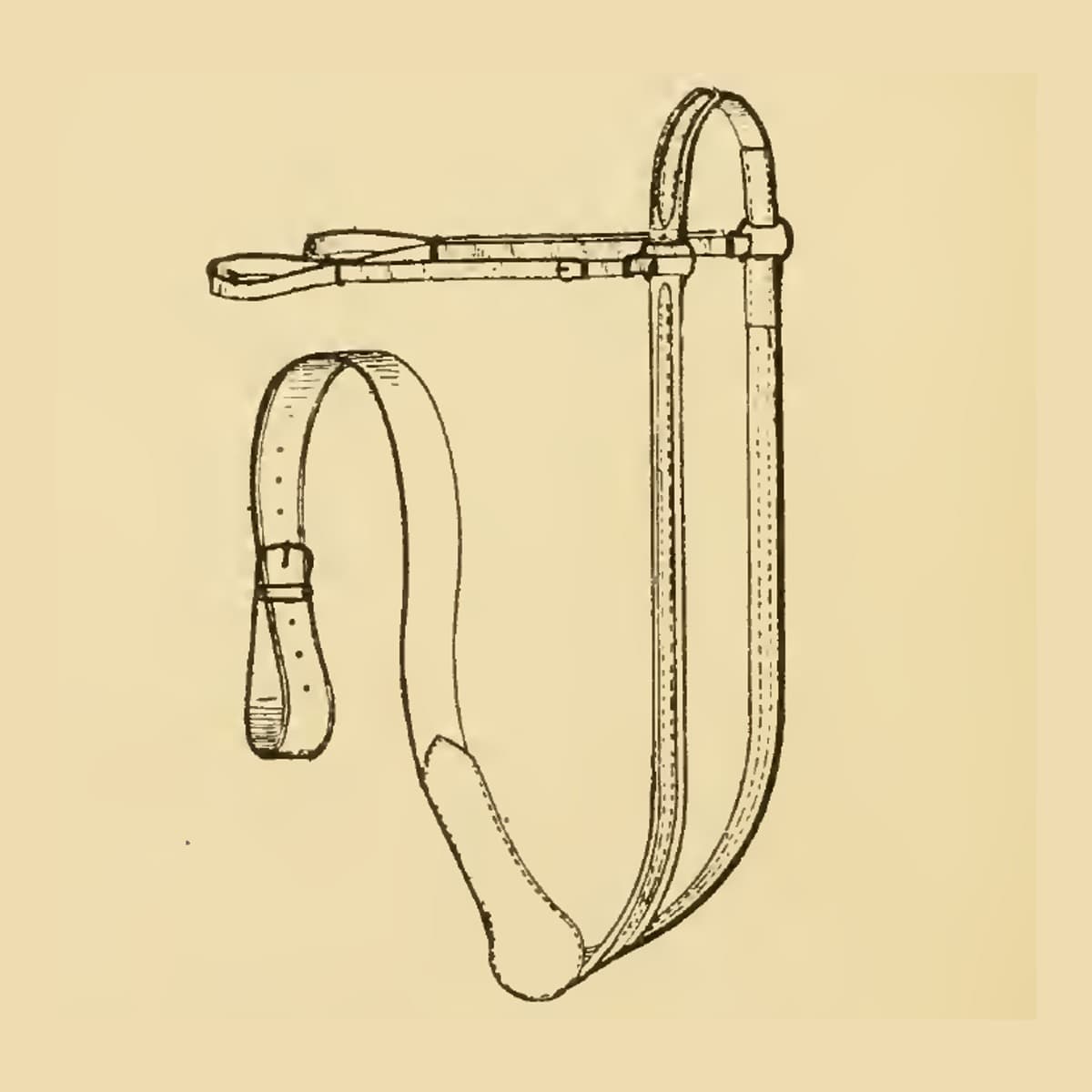
A saddle crupper runs from the back of a riding saddle to a padded loop (the dock) under the horse's tail, so the saddle cannot slide forward. This is the full-sized saddle crupper from Paul N. Hasluck's Saddlery (1904): a slit leather body, a buckled billet, and a dock shaped over string and wet brown paper. Every size is his.
Àárín
About 1 day
Ìlànà
1
1
His sizes in centimetres
His sizes in centimetres
Ń ṣí ìwé Jupyter…
2
2
Read Saddlery, ch. V
Read Saddlery, ch. V
"Full-sized saddle cruppers (Fig. 9), which are used to prevent the saddle from advancing too much, are made about 1 in. wide, and sometimes a little more."
3
3
Cut the body
Cut the body
Cut the body about 1 in wide (or a little more) and about 1 ft 6 in long. Slit one end for about 5 in and turn the other end in for a 7/8 in buckle. Shave the points of the slits and the end of the chape.
Àwọn ohun èlò fún ìgbésẹ̀ yìí:
 Awọ ohun èlò ẹṣin1 ẹyọ
Àwọn irinṣẹ́ tí a nílò:
 Ọ̀bẹ awọ
 Okùn Ìdíwọ̀n
4
4
Make the billet and set the buckle
Make the billet and set the buckle
Cut a billet as wide as the buckle and 2 ft 4 in long; trim one end for the buckle and shave the other. Edge both pieces, polish the edges and crease them with a hot checker. Put on the buckle and stitch the billet: the first stitch by the buckle goes over the edge and through chape and billet together, the next through the loop. Run four or five stitches towards the point on each side, and come back to the buckle on the other side, making the last stitch over the side the same as the opposite side.
Àwọn ohun èlò fún ìgbésẹ̀ yìí:
Awọ ohun èlò ẹṣin1 ẹyọ Bọ́ọ̀kù irin onílahùn1 ẹyọ
 Òwú ọ̀gbọ̀1 ẹyọ
 Ìdí Oyin1 ẹyọ
Àwọn irinṣẹ́ tí a nílò:
Ọ̀bẹ awọ Ohun èlò ìbẹ etí
 Ohun ìdán ẹ̀gbẹ́ awọ
 Ohun èlò ìká
 Ọ̀pá Iná Pùróféènì
 Ọ̀kọ̀ Ìlùhò
 Abẹ́rẹ́ ìránṣọ awọ méjì
 Ìmú igi fún ríran awọ
5
5
Put on the loop
Put on the loop
Put a loop on the flat lower down the body, about 6 in from the buckle, stitching it across at each end.
Àwọn ohun èlò fún ìgbésẹ̀ yìí:
Awọ ohun èlò ẹṣin1 ẹyọÒwú ọ̀gbọ̀1 ẹyọÌdí Oyin1 ẹyọÀwọn irinṣẹ́ tí a nílò:
Ọ̀bẹ awọ Igi ìmọ òrùka awọỌ̀kọ̀ ÌlùhòAbẹ́rẹ́ ìránṣọ awọ méjì
6
6
Shape the dock core
Shape the dock core
The dock is much smaller round than a gig crupper dock. Take a piece of string about 1 ft long and roll wet brown paper round it until it is the thickness you need in the middle; thin the ends by cutting the paper before damping it.
Àwọn ohun èlò fún ìgbésẹ̀ yìí:
 Okùn1 ẹyọ
 Bébà ìdì àwọ̀ ilẹ̀1 ẹyọ
Àwọn irinṣẹ́ tí a nílò:
 Ìṣẹ́ná
 KànìnkànìnOkùn Ìdíwọ̀n
7
7
Cover the dock
Cover the dock
Cut the dock leather about 1 ft 1 in long; it must be soft and pliable, so damp it before stitching. Stitch it over the core as it is, without cutting a groove, drawing it very tightly over the paper. Dry the dock and finish it in shape.
Àwọn ohun èlò fún ìgbésẹ̀ yìí:
Awọ ohun èlò ẹṣin1 ẹyọÒwú ọ̀gbọ̀1 ẹyọÌdí Oyin1 ẹyọÀwọn irinṣẹ́ tí a nílò:
Ọ̀bẹ awọKànìnkànìnỌ̀kọ̀ ÌlùhòAbẹ́rẹ́ ìránṣọ awọ méjìÌmú igi fún ríran awọ8
8
Join the dock and punch the billet
Join the dock and punch the billet
Stitch the dock to the slits with a splice of about 1-1/4 in. Put about a dozen holes in the billet, and vary the lengths to suit the size of horse.
Àwọn ohun èlò fún ìgbésẹ̀ yìí:
Òwú ọ̀gbọ̀1 ẹyọÌdí Oyin1 ẹyọÀwọn irinṣẹ́ tí a nílò:
Ọ̀bẹ awọỌ̀kọ̀ ÌlùhòAbẹ́rẹ́ ìránṣọ awọ méjì Ohun èlò ìlu ihò awọ
9
9
Troubleshooting
Troubleshooting
Saddle crupper troubleshooting.
Flow
Loading...
10
10
History and honest limits
History and honest limits
From **Saddlery**, edited by Paul N. Hasluck, David McKay, 1904 (archive.org saddlery00hasl), chapter V, "Saddle Cruppers, Breastplates, and Other Accessories", saddle cruppers, pp. 40-41, Fig. 9; every fraction was read on the scan. He does not say how the billet fastens to the saddle; check against Fig. 9 and your saddle. The thread, tools and metric figures are ours.
Àwọn ohun-èlò
6- 4 ẹyọÀyè
- Àyè
- 4 ẹyọÀyè
- 4 ẹyọÀyè
- 1 ẹyọÀyè
- 1 ẹyọÀyè
Àwọn irinṣẹ́ tó nílò
13- Àyè
- 1 vendor sell this, none ship to you yetÀyè
- Àyè
- Àyè
- Àyè
- Àyè
Ìtọ́nisọ́nà yìí ń ṣe
Blueprint tó jọra
Àwọn blueprint wọ̀nyí pín ìmọ̀ — ọ̀nà, ohun-èlò tàbí ìlànà
CC0 Àgbègbè Gbogbogbò
Blueprint yìí ti jáde lábẹ́ CC0. O lè ṣe àdàkọ, yí padà, pín, àti lò láìsí ìyọ̀ǹda.
Ṣàtìlẹ́yìn Olùṣẹ́dá nípa rírà àwọn ọjà nipasẹ̀ Blueprint wọn Ẹ̀san Olùṣẹ́dá tí àwọn Olùtajà gbé kalẹ̀, tàbí ṣẹ̀dá àtúnṣe tuntun ti Blueprint yìí kí o sì fi sínú Blueprint rẹ gẹ́gẹ́ bí ìsopọ̀ láti pín owó-wíwọlé.