IṢẸ́ ỌNÀ
ẸWÀ ÀTI ÌLERA
IṢẸ́ ỌWỌ́
ÀṢÀ ÀTI ÌTÀN
ÌṢERÉ
ÀYÍKÁ
OÚNJẸ ÀTI OHUN MÍMU
REVERSE ENGINEERING
SÁYẸ́ǸSÌ
ERÉ ÌDÁRAYÁ
ÌMỌ̀-Ẹ̀RỌ
ÀWỌN OHUN WÍWỌ̀
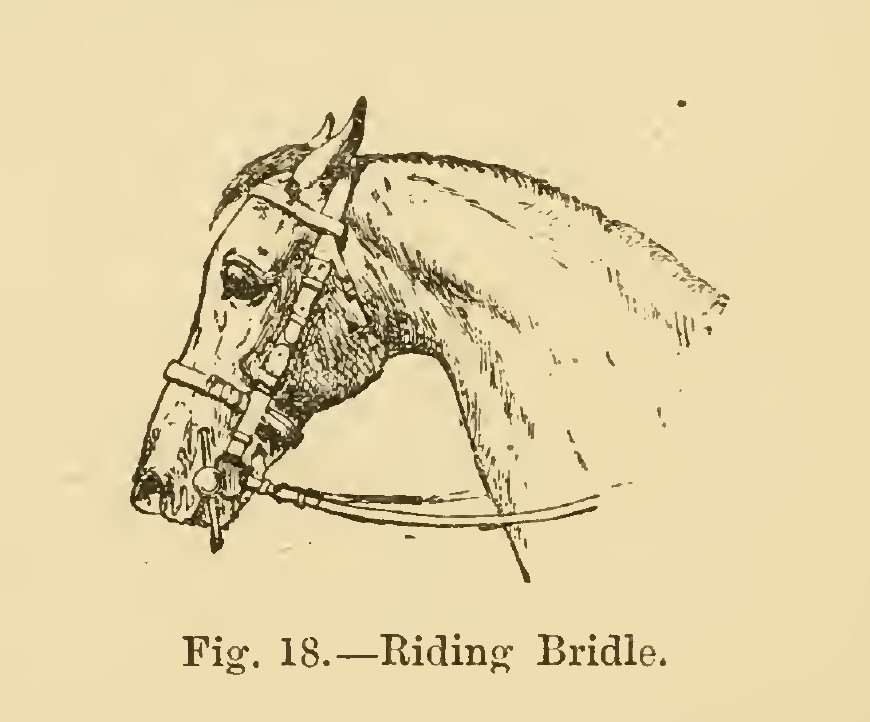


Snaffle Riding Bridle: Cheeks, Slit Head Strap, Front, Throat Lash and Reins (Hasluck, Saddlery, 1904)
The plain riding bridle, "a single head and rein bridle", from Paul N. Hasluck's Saddlery (1904): two cheeks buckled to a snaffle bit, a head strap slit at each end into cheek and throat-lash straps, a front (browband), a throat lash and a pair of buckled reins. Every size is his; the bit is bought.
It is the riding counterpart of the cart bridle.
Àárín
About 1 day
Ìlànà
1
1
Cutting list
Cutting list
Ń ṣí ìwé Jupyter…
2
2
Read Saddlery, ch. VI
Read Saddlery, ch. VI
"All the stitching must be done from behind, so that the best face of the stitches will be next the horse when the bridle is on."
3
3
Make the cheeks
Make the cheeks
Cut two cheeks about 7/8 in wide and 9 in long. Each has a buckle at each end: one on a chape turned down, the other on the flat end of the strap without turning, with the billet underneath. Leave room for a loop before the buckle and the point of the cheek, and set the billet far enough behind the buckle for two loops; put a runner loop on the cheek and stitch another in with the chape. Cut the billets 9 in long. Stitch them in single-handed and back-stitch with linen thread, all from behind. Make one hole in each billet.
Àwọn ohun èlò fún ìgbésẹ̀ yìí:
 Awọ ohun èlò ẹṣin1 ẹyọ
 Buckle idẹ pẹ̀lú ahọ́n4 ẹyọ
 Òwú ọ̀gbọ̀1 ẹyọ
Àwọn irinṣẹ́ tí a nílò:
 Ọ̀bẹ awọ
 Ohun èlò ìbẹ etí
 Ohun èlò ìká
 Ìlà ìrán awọ
 Ọ̀kọ̀ Ìlùhò
 Abẹ́rẹ́ ìránṣọ awọ méjì
 Ìmú igi fún ríran awọ
 Igi ìmọ òrùka awọ
 Ohun èlò ìlu ihò awọ
4
4
Make the head strap
Make the head strap
Cut the head strap 1-1/8 in by 1 ft 10 in and slit it 5 in at each end. For a 3/4 in cheek, slit 3/4 in on one side and 3/8 in for a 3/8 in throat lash, with the wide slits on the same side at both ends. Punch four holes in each wide slit and six, closer together, in each narrow one.
Àwọn ohun èlò fún ìgbésẹ̀ yìí:
Awọ ohun èlò ẹṣin1 ẹyọÀwọn irinṣẹ́ tí a nílò:
Ọ̀bẹ awọOhun èlò ìlu ihò awọ Okùn Ìdíwọ̀n
5
5
Make the front
Make the front
Cut the front 3/4 in by 1 ft 2-1/4 in from the end of one bend to the other, after bending. Turn it over the head strap and mark a line across close to it, so there is 1 ft 1 in between the cross lines. Stitch the ends down, with a row along each side.
Àwọn ohun èlò fún ìgbésẹ̀ yìí:
Awọ ohun èlò ẹṣin1 ẹyọÒwú ọ̀gbọ̀1 ẹyọÀwọn irinṣẹ́ tí a nílò:
Ọ̀bẹ awọÌlà ìrán awọỌ̀kọ̀ ÌlùhòAbẹ́rẹ́ ìránṣọ awọ méjì6
6
Make the throat lash
Make the throat lash
Make the throat lash 3/8 in by 1 ft 7 in after turning down for the buckles. Put two runner loops on it besides the loops at the buckles of each end.
Àwọn ohun èlò fún ìgbésẹ̀ yìí:
Awọ ohun èlò ẹṣin1 ẹyọBuckle idẹ pẹ̀lú ahọ́n2 ẹyọÒwú ọ̀gbọ̀1 ẹyọÀwọn irinṣẹ́ tí a nílò:
Ọ̀bẹ awọỌ̀kọ̀ ÌlùhòAbẹ́rẹ́ ìránṣọ awọ méjìIgi ìmọ òrùka awọ7
7
Make the reins
Make the reins
Cut the reins 1 in or 7/8 in by 4 ft. Prepare them for the bit buckles like the bottom of the cheeks, in the flat. Put a 3/4 in covered buckle on the other end of one rein, narrowing its chape to the buckle's width, and narrow the end of the other rein for buckling. Put in the billets, 10 in long, with one loop before the buckle and two behind, "and always put the strong end of the rein in the billet end".
Àwọn ohun èlò fún ìgbésẹ̀ yìí:
Awọ ohun èlò ẹṣin1 ẹyọBuckle idẹ pẹ̀lú ahọ́n3 ẹyọÒwú ọ̀gbọ̀1 ẹyọÀwọn irinṣẹ́ tí a nílò:
Ọ̀bẹ awọỌ̀kọ̀ ÌlùhòAbẹ́rẹ́ ìránṣọ awọ méjìIgi ìmọ òrùka awọ8
8
Put it together
Put it together
Buckle the cheeks to the head strap's wide slits and the throat lash to the narrow ones, run the front over the head strap, buckle the cheeks' lower ends and the reins to the snaffle bit's rings, and buckle the two reins together. Buckled billets let the bit be taken off, which he prefers to stitching the cheeks and reins fast to it.
Àwọn ohun èlò fún ìgbésẹ̀ yìí:
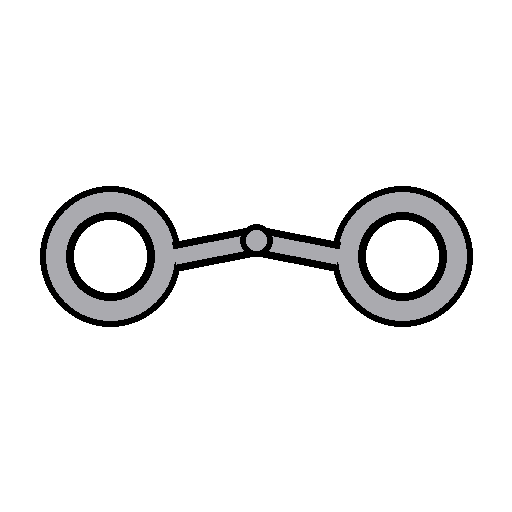 Irin ẹnu ẹṣin snaffle1 ẹyọ
9
9
Troubleshooting
Troubleshooting
Riding bridle troubleshooting.
Flow
Loading...
10
10
History and honest limits
History and honest limits
From **Saddlery**, edited by Paul N. Hasluck, David McKay, 1904 (archive.org saddlery00hasl), chapter VI, "Riding Bridles", the snaffle bridle; every fraction was read on the scan. Not made here: his Pelham, Weymouth, gag, exercising and stallion bridles. The bit is bought. The metric figures are ours.
Àwọn ohun-èlò
4- 5 ẹyọÀyè
- Àyè
- 4 ẹyọÀyè
- Àyè
Ìtọ́nisọ́nà yìí ń ṣe
Blueprint tó jọra
Àwọn blueprint wọ̀nyí pín ìmọ̀ — ọ̀nà, ohun-èlò tàbí ìlànà
CC0 Àgbègbè Gbogbogbò
Blueprint yìí ti jáde lábẹ́ CC0. O lè ṣe àdàkọ, yí padà, pín, àti lò láìsí ìyọ̀ǹda.
Ṣàtìlẹ́yìn Olùṣẹ́dá nípa rírà àwọn ọjà nipasẹ̀ Blueprint wọn Ẹ̀san Olùṣẹ́dá tí àwọn Olùtajà gbé kalẹ̀, tàbí ṣẹ̀dá àtúnṣe tuntun ti Blueprint yìí kí o sì fi sínú Blueprint rẹ gẹ́gẹ́ bí ìsopọ̀ láti pín owó-wíwọlé.