IṢẸ́ ỌNÀ
ẸWÀ ÀTI ÌLERA
IṢẸ́ ỌWỌ́
ÀṢÀ ÀTI ÌTÀN
ÌṢERÉ
ÀYÍKÁ
OÚNJẸ ÀTI OHUN MÍMU
REVERSE ENGINEERING
SÁYẸ́ǸSÌ
ERÉ ÌDÁRAYÁ
ÌMỌ̀-Ẹ̀RỌ
ÀWỌN OHUN WÍWỌ̀
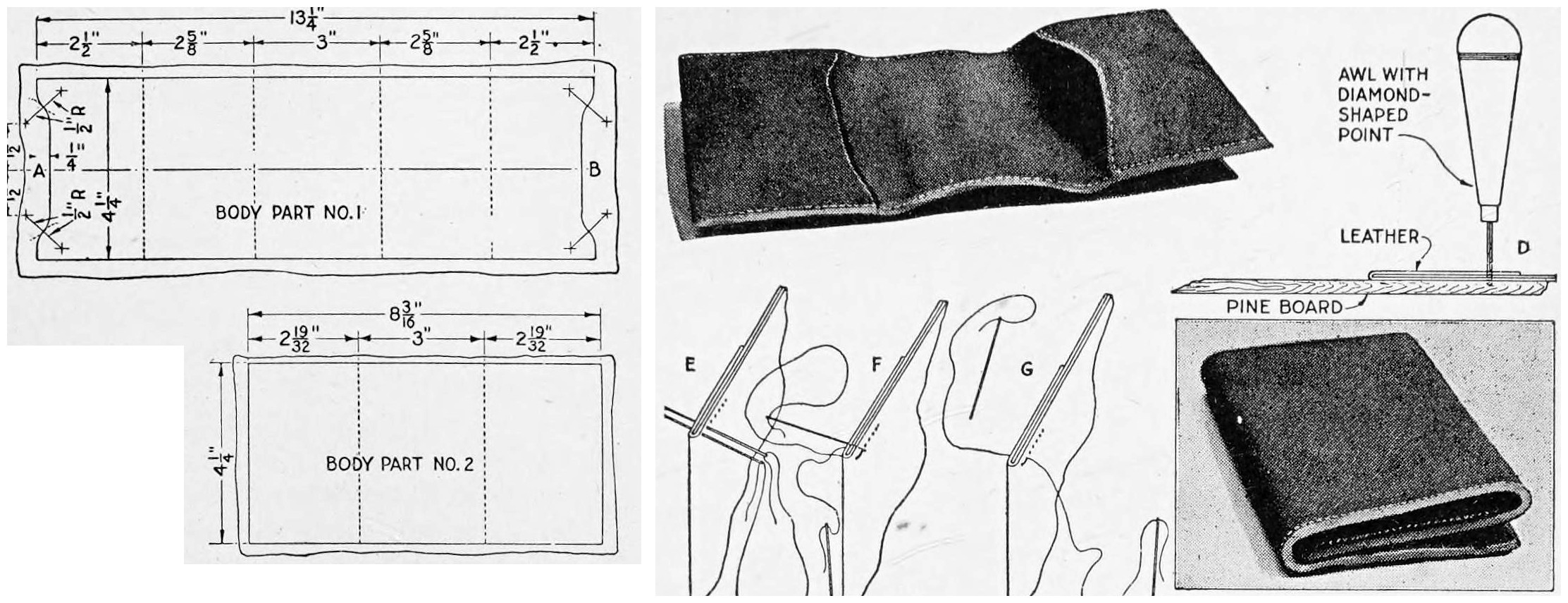


Craftsman Leather Billfold: Two Cardboard Patterns, Silk Lining and Saddle-Stitched Waxed Silk (Boy Mechanic, 1919)
Livingston Haviland's billfold from The Boy Mechanic, Book 3 (1919): two leather body parts cut to stiff-cardboard patterns (13-1/4 and 8-3/16 by 4-1/4 in), lined with skiver or silk moire, folded into two card pockets and a money compartment, glued, and hand-sewn with heavy waxed silk 3/16 in from the edges.
Àárín
About 1 day
Ìlànà
1
1
His patterns in centimetres
His patterns in centimetres
Ń ṣí ìwé Jupyter…
2
2
Read The Boy Mechanic, Book 3
Read The Boy Mechanic, Book 3
"The making of a billfold is easily within the range of an amateur in leather work, who will observe the instructions carefully." Seal, morocco, pigskin and ooze sheep are all satisfactory.
3
3
Cut the patterns and the leather
Cut the patterns and the leather
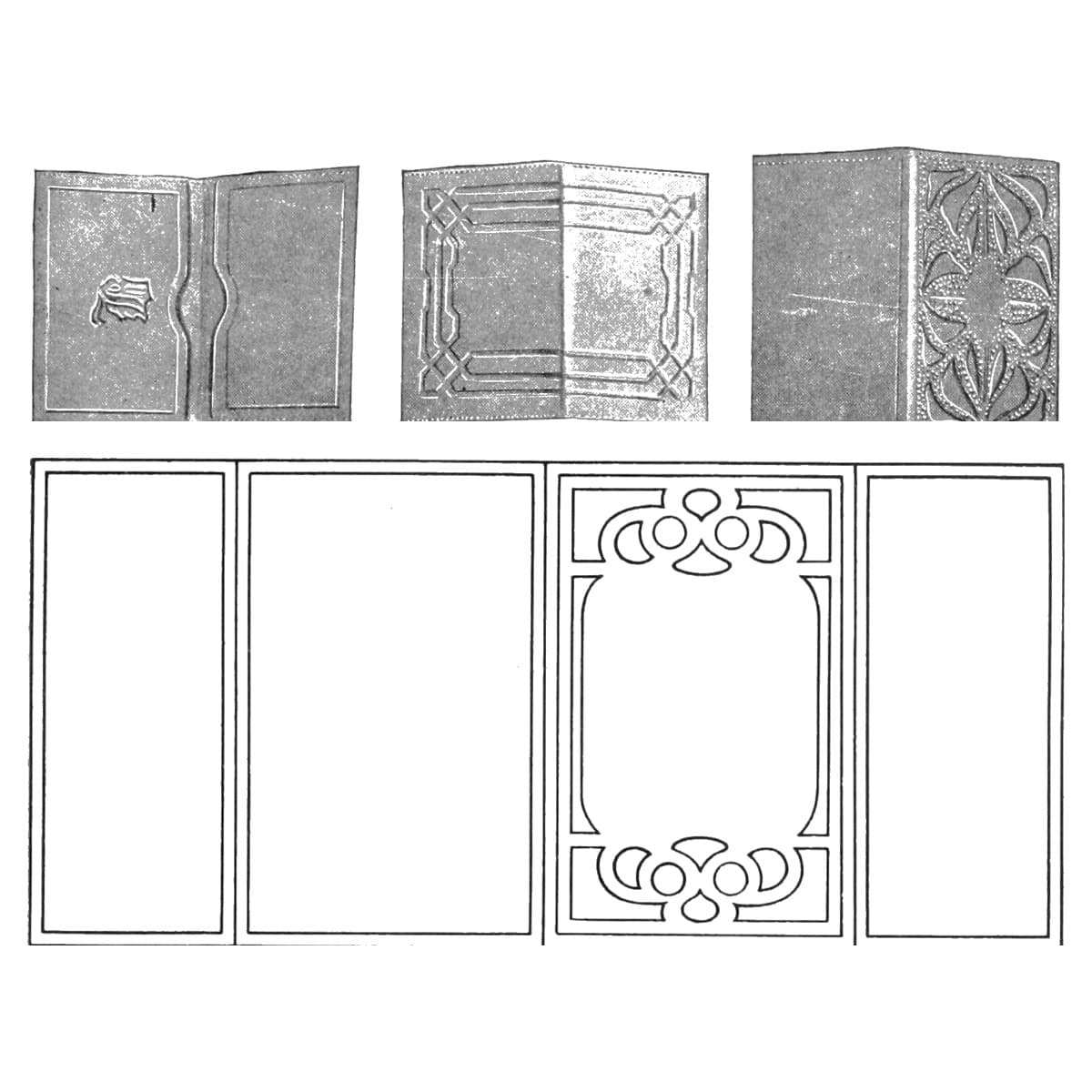
Cut two patterns of stiff cardboard (Fig. 1). Body part No. 1: 13-1/4 by 4-1/4 in, with fold lines at 2-1/2, 2-5/8, 3, 2-5/8 and 2-1/2 in, and each end (A, B) cut in with 1/2 in radius arcs, set in 1/4 in. Body part No. 2: 8-3/16 by 4-1/4 in, with fold lines at 2-19/32, 3 and 2-19/32 in. Lay each pattern on the leather and trim the leather even with it, guiding the knife with a metal straightedge, on a close-grained hardwood board or a piece of sheet zinc.
Àwọn ohun èlò fún ìgbésẹ̀ yìí:
 Awọ ẹlẹ́dẹ̀ tí a sè1 ẹyọ
 Àwọn pẹpẹ àwòrán kádíbọ́ọ̀dù1 ẹyọ
Àwọn irinṣẹ́ tí a nílò:
 Gègé
 Ìdíwọ̀n
 Etí tààrà
 Ọ̀bẹ Iṣẹ́ Ọwọ́
 Pátákó Igi Líle
 Pẹlẹbẹ sínkì
4
4
Line the parts
Line the parts
Cut linings slightly larger than the patterns. Skiver is glued all over with a good, pliable leather glue that will not crack the leather; smooth it on gently without stretching, or the leather may buckle, and dry it under a light weight. Silk moire is glued with a thin stripe round the edges only, left to overhang, and trimmed off neatly when dry.
Àwọn ohun èlò fún ìgbésẹ̀ yìí:
 Aṣọ Sílíìkì1 ẹyọ
 Leather Glue1 ẹyọ
Àwọn irinṣẹ́ tí a nílò:
 Ìṣẹ́náỌ̀bẹ Iṣẹ́ Ọwọ́
5
5
Glue and fold
Glue and fold
Fold part No. 1 to form the back and the two card pockets. Apply stripes of glue as shown in Fig. 3, drop part No. 2 (the money compartment) into place, and fold the ends of No. 1 over on the dotted lines. Weight the billfold and let the glue dry.
Àwọn ohun èlò fún ìgbésẹ̀ yìí:
Leather Glue1 ẹyọÀwọn irinṣẹ́ tí a nílò:
 Leather Modeling Tool
6
6
Mark and punch the stitching
Mark and punch the stitching
Draw a straight line with a blunt-point tool along the edges to be sewn, 3/16 in from them. Mark the stitch spacing for an inch on a strip of paper and transfer it along the line. Punch the holes on a pine board with a diamond-pointed awl held vertical (D); back the open ends with strips of cardboard while punching.
Àwọn irinṣẹ́ tí a nílò:
Leather Modeling ToolÌdíwọ̀n Ìlu ìrán ìsàlẹ̀
 Pákó igi pineÀwọn pẹpẹ àwòrán kádíbọ́ọ̀dù
7
7
Sew and finish the edges
Sew and finish the edges
Sew with heavy waxed silk matching the leather, by hand or with the work clamped between two boards. Thread a needle on each end, start both from the right side (E), pass the needle from the first hole through the second (F) and, with the needles in position (G), continue this stitch. Tie the ends neatly. Trim the edges and tool them smooth with a suitable metal tool or rod, heated moderately, applying water with the fingertip.
Àwọn ohun èlò fún ìgbésẹ̀ yìí:
 Silk Thread1 ẹyọ
 Ìdí Oyin1 ẹyọ
Àwọn irinṣẹ́ tí a nílò:
 Abẹ́rẹ́ ìránṣọ awọ méjìÌṣẹ́náỌ̀bẹ Iṣẹ́ Ọwọ́
 Ọ̀pá rírọ irin rírọ̀
8
8
Troubleshooting
Troubleshooting
Billfold troubleshooting.
Flow
Loading...
9
9
History and honest limits
History and honest limits
From "A Craftsman Leather Billfold" by Livingston Haviland, in **The Boy Mechanic, Book 3**, Popular Mechanics, 1919 (Project Gutenberg 71856; checked on the archive.org scan boymechanic0003unse, pp. 446-447). He does not give the number of stitches to the inch or what waxes the silk (beeswax is ours). Pigskin is one of his four leathers. The tools and metric figures are ours.
Àwọn ohun-èlò
6- 1 ẹyọÀyè
- Àyè
- 1 ẹyọÀyè
- 2 ẹyọÀyè
- 1 ẹyọÀyè
- 1 ẹyọÀyè
Àwọn irinṣẹ́ tó nílò
13- 1 vendor sell this, none ship to you yetÀyè
- Àyè
- Àyè
- Àyè
- Àyè
Ìtọ́nisọ́nà yìí ń ṣe
Blueprint tó jọra
Àwọn blueprint wọ̀nyí pín ìmọ̀ — ọ̀nà, ohun-èlò tàbí ìlànà
CC0 Àgbègbè Gbogbogbò
Blueprint yìí ti jáde lábẹ́ CC0. O lè ṣe àdàkọ, yí padà, pín, àti lò láìsí ìyọ̀ǹda.
Ṣàtìlẹ́yìn Olùṣẹ́dá nípa rírà àwọn ọjà nipasẹ̀ Blueprint wọn Ẹ̀san Olùṣẹ́dá tí àwọn Olùtajà gbé kalẹ̀, tàbí ṣẹ̀dá àtúnṣe tuntun ti Blueprint yìí kí o sì fi sínú Blueprint rẹ gẹ́gẹ́ bí ìsopọ̀ láti pín owó-wíwọlé.