IṢẸ́ ỌNÀ
ẸWÀ ÀTI ÌLERA
IṢẸ́ ỌWỌ́
ÀṢÀ ÀTI ÌTÀN
ÌṢERÉ
ÀYÍKÁ
OÚNJẸ ÀTI OHUN MÍMU
REVERSE ENGINEERING
SÁYẸ́ǸSÌ
ERÉ ÌDÁRAYÁ
ÌMỌ̀-Ẹ̀RỌ
ÀWỌN OHUN WÍWỌ̀
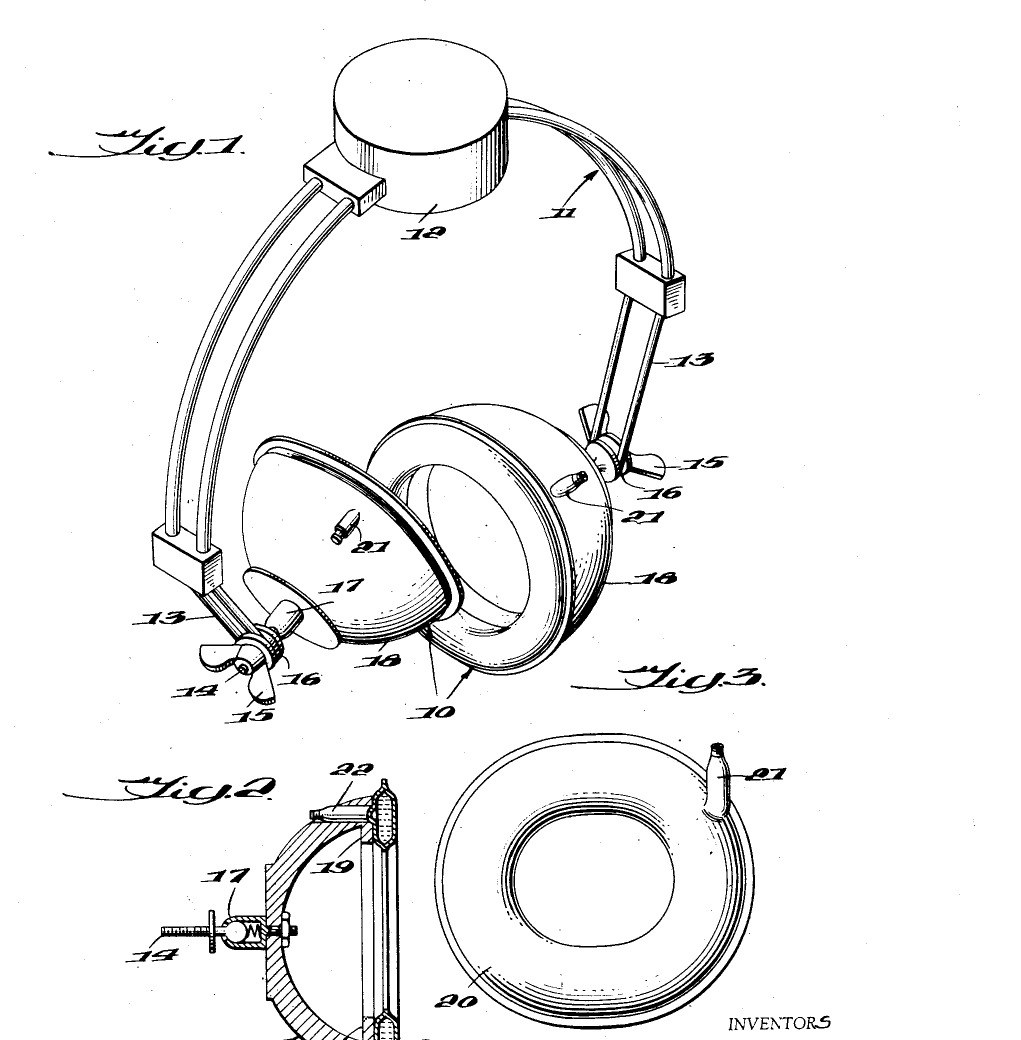


Hearing Protection (Ear Defenders): Rigid Cups on Liquid-Filled Cushions (Shaw & Thiessen, NRC, US 2,801,423, 1957)
Ear muffs that seal well and still stop low-pitched noise. Each ear is covered by a rigid cup on a cushion made of a thin PVC tube, emptied of air and part-filled with liquid. Pressed on, the liquid flows round the whole rim and fits the cushion to the head, yet cannot compress, so the cup does not vibrate as a whole and pass the sound in. A sprung headband with a pad holds the cups on ball joints.
Result: circumaural ear defenders effective against low-frequency noise.
Source: E. A. G. Shaw and G. J. Thiessen (National Research Council of Canada), US 2,801,423 (1957). Unknown: sizes and the attenuation achieved. Picture: the patent drawing.
Àárín
Unknown
Ìlànà
1
1
Make the cups
Make the cups
Make two rigid, non-porous cups to go over the ears, of wood, a hard plastic or a light metal such as aluminium. Widen each rim to about the width of the cushion, and make a small hole in the rim for the cushion's filling nipple. Fix a ball joint on the back of each cup. Not given: sizes.
Àwọn ohun èlò fún ìgbésẹ̀ yìí:
 Ohun èlò tí a kò mọ̀2 ife
 Irin tí a kò mọ̀2 ball joints
Àwọn irinṣẹ́ tí a nílò:
 Ẹ̀rọ Ìyí Irin
 Ìwọ̀n tí a kò mọ̀
2
2
Make the liquid cushions
Make the liquid cushions
For each cup make an endless tube of thin, pliable but non-stretching plasticised PVC, 0.005 to 0.01 in thick, with a filling nipple. Draw out almost all the air, then fill it with liquid to more than a quarter but well under the whole of its cross-section: enough to reach right round the rim when pressed, not so much that it cannot seal. Fix it on the rim with the nipple in the hole. Ours: water as the liquid. Not given: tube size.
Àwọn ohun èlò fún ìgbésẹ̀ yìí:
 Ewé PVC1 thin plasticised PVC tube
 Omi1 filling
Àwọn irinṣẹ́ tí a nílò:
 Ìdìpọ̀ abẹ́rẹ́ àfàyọ̀
3
3
Fit the headband and wear them
Fit the headband and wear them
Make a resilient headband frame with a sponge-rubber pad at its middle and a wire loop at each end. Through each loop pass a threaded stub from the cup's ball joint, with a washer, and tighten with a wing nut. Put the cups over the ears: the cushions take the shape of the head and seal, while the cups stay still against the low-frequency sound. Ours: spring steel for the frame.
Àwọn ohun èlò fún ìgbésẹ̀ yìí:
 Okùn irin kámánì1 frame and loopsOhun èlò tí a kò mọ̀1 sponge rubber padIrin tí a kò mọ̀2 threaded stubs
 Wáṣà Pẹrẹsẹ2 ẹyọ
 Nọ́ọ̀tì apá2 ẹyọ
Àwọn irinṣẹ́ tí a nílò:
 Ẹ̀mú Olórí Yíká
Àwọn ohun-èlò
7- 1 sponge rubber padÀyè
- 2 threaded stubsÀyè
- 1 thin plasticised PVC tubeÀyè
- 1 fillingÀyè
- 1 frame and loopsÀyè
- 2 ẹyọÀyè
- 2 ẹyọÀyè
Àwọn irinṣẹ́ tó nílò
4Àwọn Ohun Èlò Ìtọ́nisọ́nà Tí A So Pọ̀

Ìtọ́nisọ́nà yìí ń ṣe
CC0 Àgbègbè Gbogbogbò
Blueprint yìí ti jáde lábẹ́ CC0. O lè ṣe àdàkọ, yí padà, pín, àti lò láìsí ìyọ̀ǹda.
Ṣàtìlẹ́yìn Olùṣẹ́dá nípa rírà àwọn ọjà nipasẹ̀ Blueprint wọn Ẹ̀san Olùṣẹ́dá tí àwọn Olùtajà gbé kalẹ̀, tàbí ṣẹ̀dá àtúnṣe tuntun ti Blueprint yìí kí o sì fi sínú Blueprint rẹ gẹ́gẹ́ bí ìsopọ̀ láti pín owó-wíwọlé.