IṢẸ́ ỌNÀ
ẸWÀ ÀTI ÌLERA
IṢẸ́ ỌWỌ́
ÀṢÀ ÀTI ÌTÀN
ÌṢERÉ
ÀYÍKÁ
OÚNJẸ ÀTI OHUN MÍMU
REVERSE ENGINEERING
SÁYẸ́ǸSÌ
ERÉ ÌDÁRAYÁ
ÌMỌ̀-Ẹ̀RỌ
ÀWỌN OHUN WÍWỌ̀
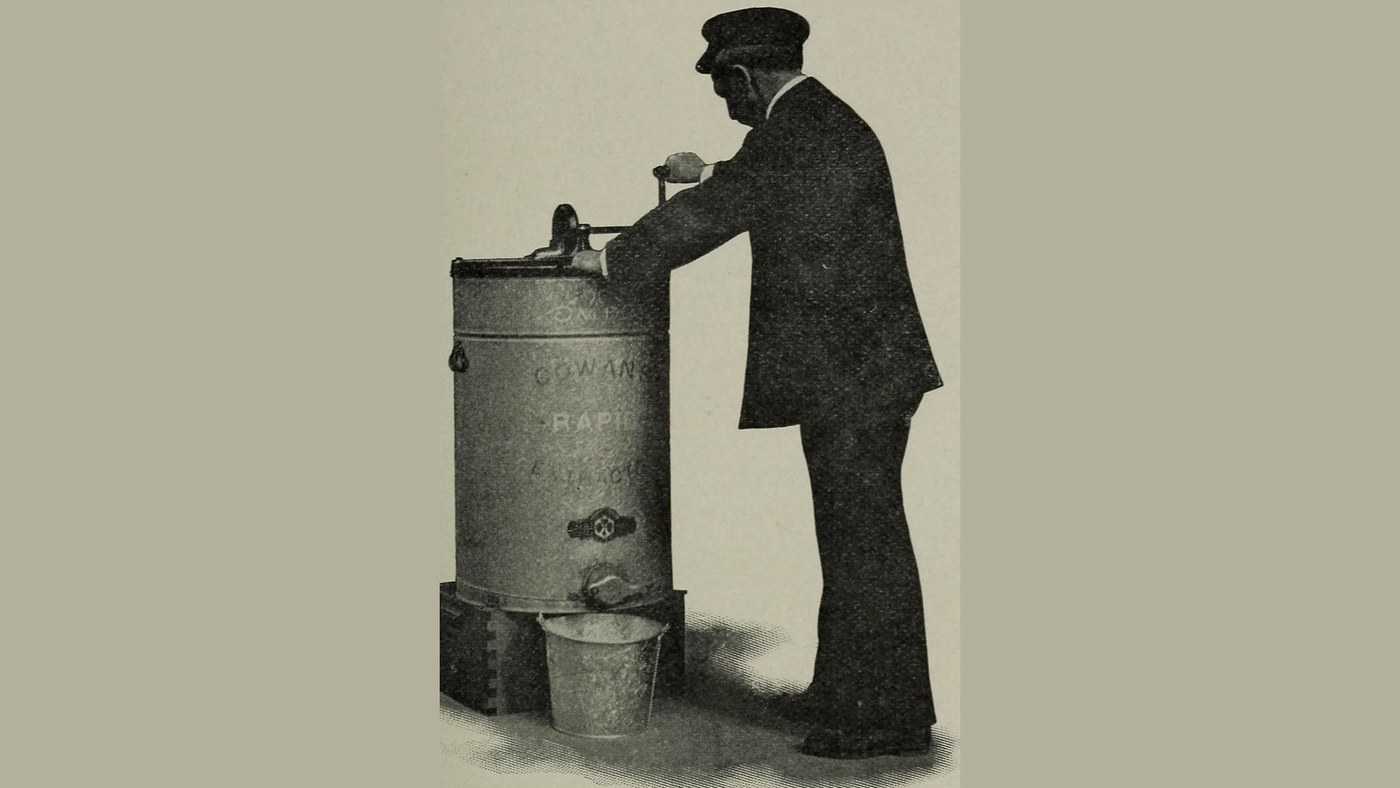


Honey: Extracted from Sealed Combs (A B C of Bee Culture, 1910)
Extracted honey the way Root's 1910 bee encyclopedia teaches a small keeper: take the sealed combs from a movable-frame hive, shake and brush off the bees, slice off the cappings, and spin the honey out in a two-frame reversible extractor; strain it through cheese-cloth into a pail and pour it into kegs or cans.
The combs go back to the bees empty, to be filled again.
Source: A. I. and E. R. Root, The A B C and X Y Z of Bee Culture (1910), pp. 173-188. Picture: the book's photo of an extractor raised on a hive-body over a pail.
Àárín
Unknown
Ìlànà
1
1
Wait for sealed combs
Wait for sealed combs
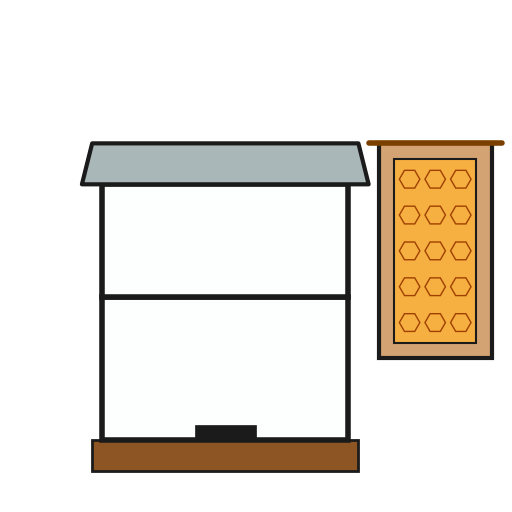
Leave the honey in the hive until the combs are nicely sealed over, as they should be before extracting. Give the bees plenty of empty combs; if a second story is not room enough, add a third.
Àwọn irinṣẹ́ tí a nílò:
 Ilé oyin onífírémù yíyọ
2
2
Take off the combs
Take off the combs
Open the hive, pull out one comb and shake it hard in front of the entrance. Hold it by one corner and brush the remaining bees off one side and then the other with a bee brush. Put the frame in an empty super on a cart or barrow. Shake the next combs inside the hive instead of in front of it, brush them the same way, and wheel the full supers to the extracting room.
Àwọn irinṣẹ́ tí a nílò:
Ilé oyin onífírémù yíyọ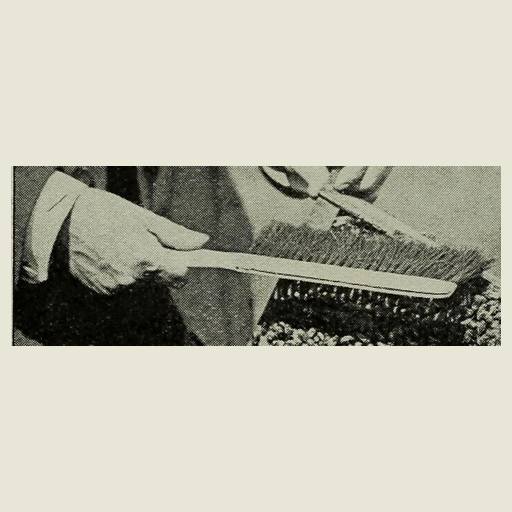 Búrọ́ọ̀ṣì oyin
 Kẹ̀kẹ́ ẹrù oníkẹ̀kẹ́ kan
3
3
Set up the extractor
Set up the extractor
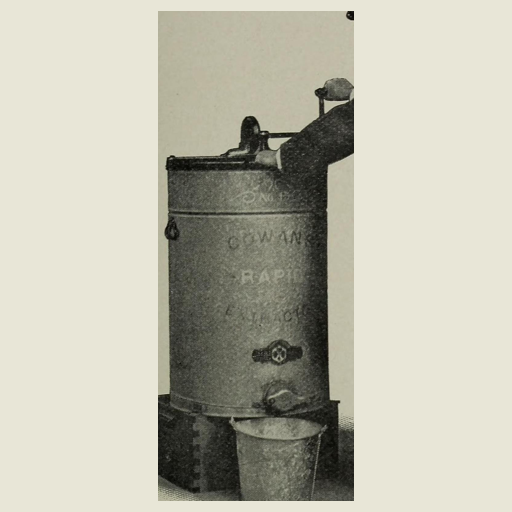
Stand the extractor on a box or hive-body about as large as the bottom of the can and about as high as a water pail, so the honey-gate empties into a common pail. Anchor both box and extractor securely.
Àwọn irinṣẹ́ tí a nílò:
 Ẹ̀rọ ìfa-oyin-jádeIlé oyin onífírémù yíyọ
 Bàkẹ́tì irin
4
4
Uncap the combs
Uncap the combs
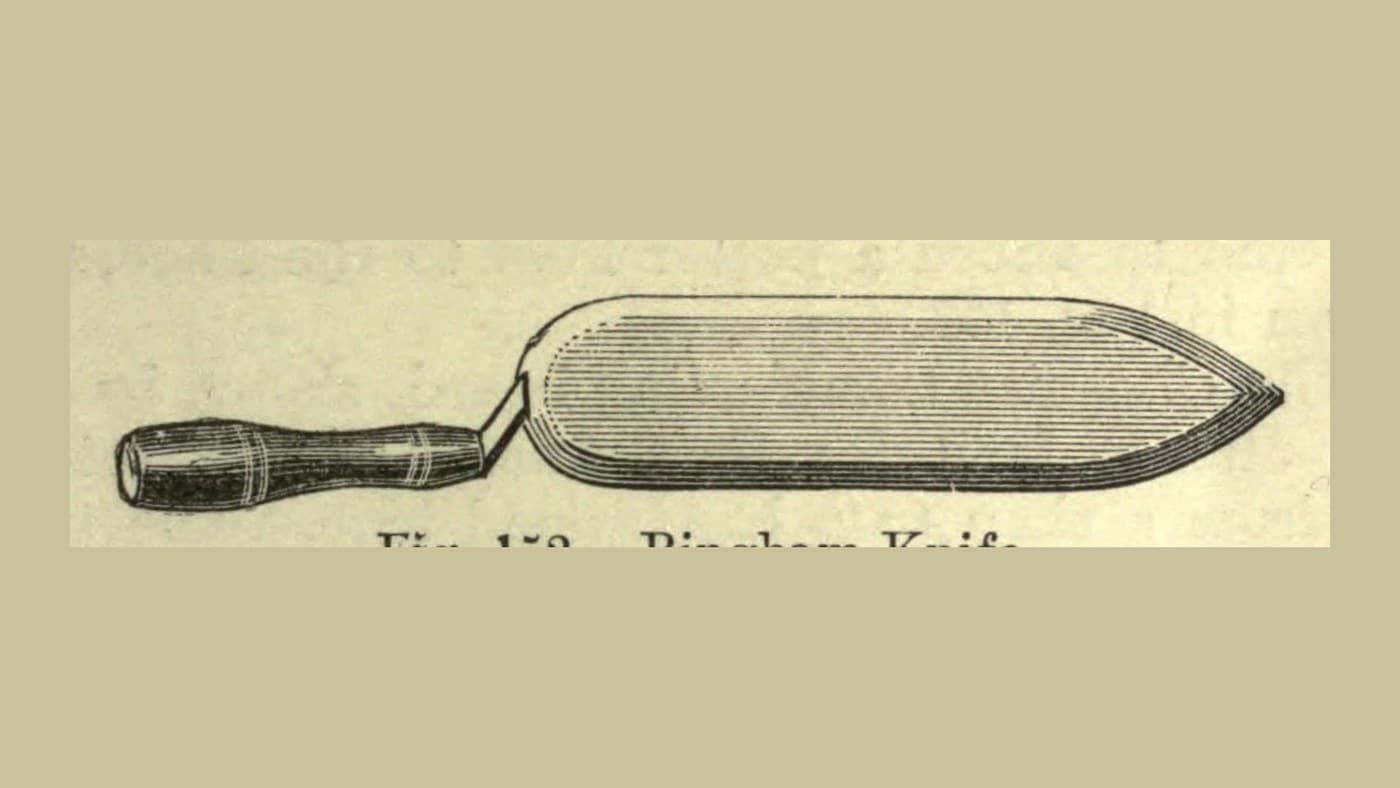
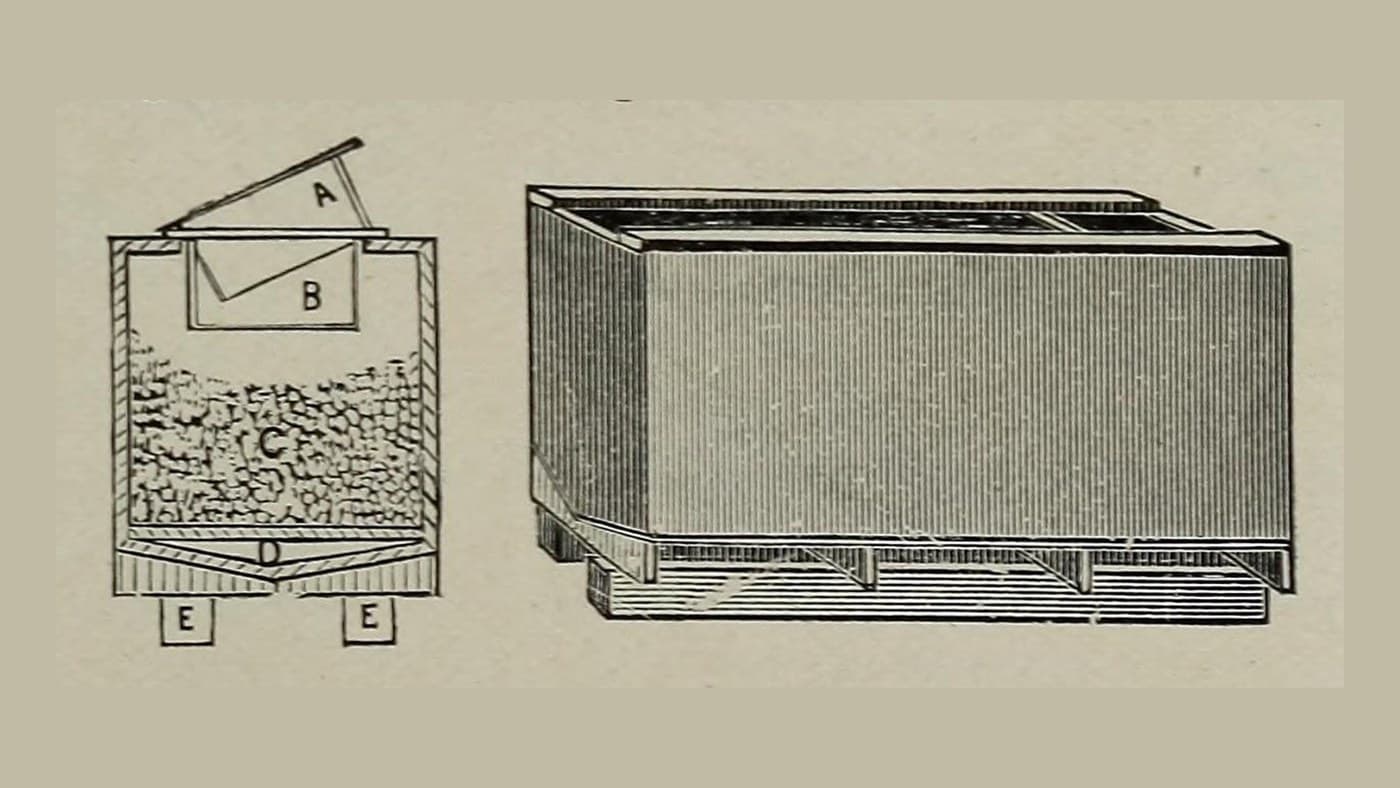
Keep the knife keen and sharpen it often. Rest the end of the comb on a nail point over the uncapping can, lean it forward, and cut off the cappings with a sawing movement starting at the bottom edge. When wax and honey clog the blade, scrape it on a wooden edge. Do both sides.
Àwọn irinṣẹ́ tí a nílò:
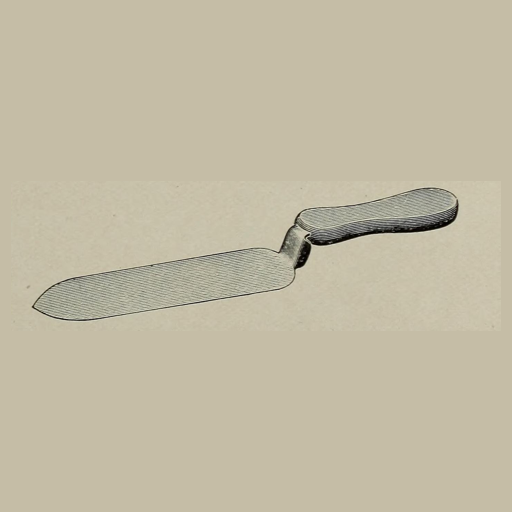 Ọ̀bẹ ìbóríkúrò
 Àtẹ ìṣí ìdí oyin
5
5
Extract
Extract
Put the uncapped combs in the wire-cloth pockets and turn the crank; one turn of the handle gives two or three turns of the baskets. When one side is extracted, slow up, catch the edge of each pocket with the left hand and swing it on its hinges to bring the other side out, then turn again.
Àwọn irinṣẹ́ tí a nílò:
Ẹ̀rọ ìfa-oyin-jáde6
6
Strain and store
Strain and store
Tie a cheese-cloth sack to the honey-gate as a strainer. Draw the honey off pailful after pailful into an open pail, where you can see its quality and any dead bees, and pour it into kegs, square cans or any large vat.
Àwọn irinṣẹ́ tí a nílò:
 Aṣọ wàrà-dídìBàkẹ́tì irin
 Àgbá igi
Àwọn irinṣẹ́ tó nílò
9- Àyè
- Àyè
Àwọn Ohun Èlò Ìtọ́nisọ́nà Tí A So Pọ̀

10% Ìpín
Honey Extractor: a Tinplate Cylinder Extractor (Hasluck, 1905)
láti ọwọ́ Forge
Ìtọ́jú Ẹranko
18
0
0
0
1
0
10% Ìpín
Uncapping Knife: the Bingham Knife (Hasluck, 1905)
láti ọwọ́ Forge
Ìtọ́jú Ẹranko
16
0
0
0
1
0
10% Ìpín
Uncapping Tray: McIntyre's Uncapping Box (A B C of Bee Culture, 1910)
láti ọwọ́ Woody
Ìtọ́jú Ẹranko
11
0
0
0
1
0
Ìtọ́nisọ́nà yìí ń ṣe
CC0 Àgbègbè Gbogbogbò
Blueprint yìí ti jáde lábẹ́ CC0. O lè ṣe àdàkọ, yí padà, pín, àti lò láìsí ìyọ̀ǹda.
Ṣàtìlẹ́yìn Olùṣẹ́dá nípa rírà àwọn ọjà nipasẹ̀ Blueprint wọn Ẹ̀san Olùṣẹ́dá tí àwọn Olùtajà gbé kalẹ̀, tàbí ṣẹ̀dá àtúnṣe tuntun ti Blueprint yìí kí o sì fi sínú Blueprint rẹ gẹ́gẹ́ bí ìsopọ̀ láti pín owó-wíwọlé.