IṢẸ́ ỌNÀ
ẸWÀ ÀTI ÌLERA
IṢẸ́ ỌWỌ́
ÀṢÀ ÀTI ÌTÀN
ÌṢERÉ
ÀYÍKÁ
OÚNJẸ ÀTI OHUN MÍMU
REVERSE ENGINEERING
SÁYẸ́ǸSÌ
ERÉ ÌDÁRAYÁ
ÌMỌ̀-Ẹ̀RỌ
ÀWỌN OHUN WÍWỌ̀
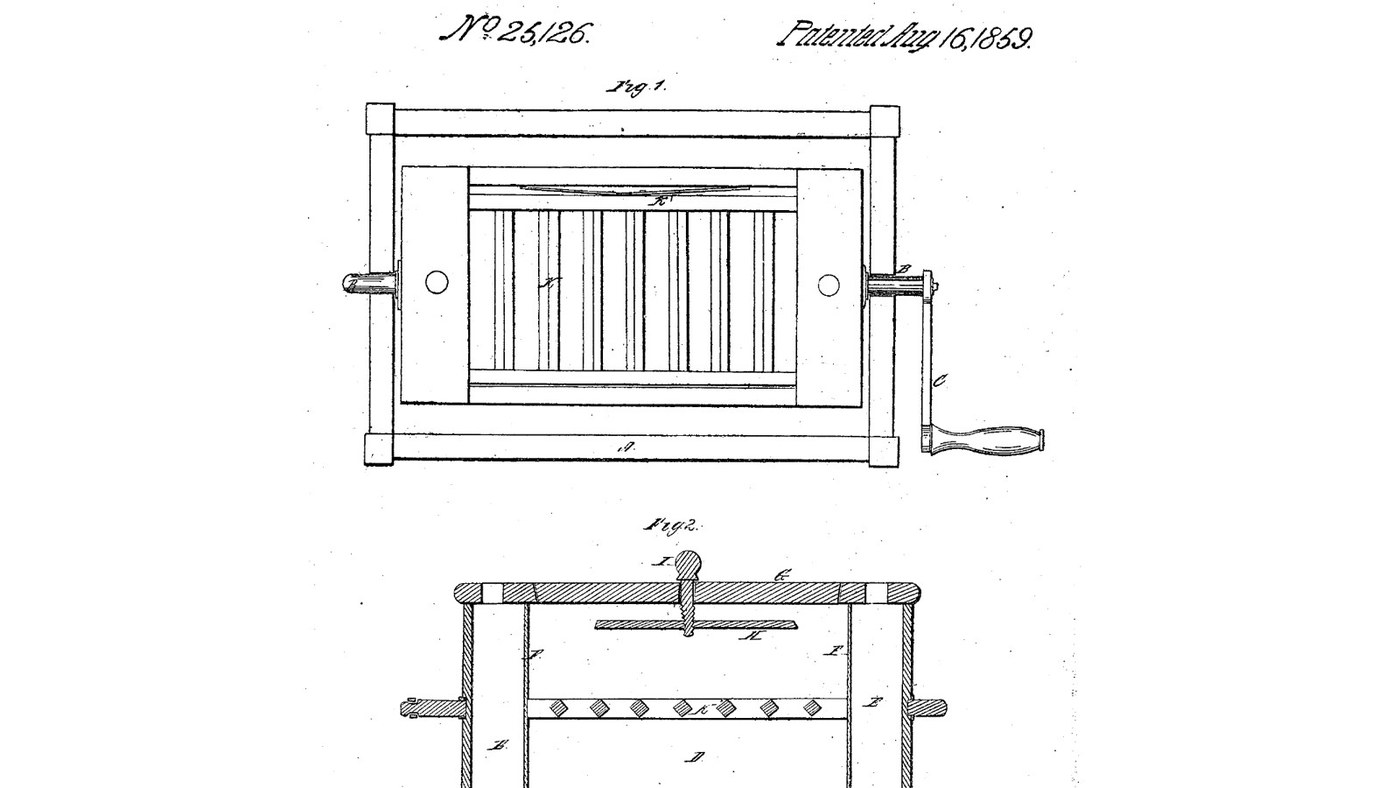

Water-Chamber Box Churn: A Turning Box With a Dash-Frame You Lower to Free the Butter
S. S. Langdon of Cleveland, Ohio, received US 25,126, dated 16 August 1859, for a rotary churn shaped like a common box. It turns on two journals in a frame. Inside, two zinc partitions set into saw kerfs make a cream chamber in the middle and two water chambers at the ends, for warm or cold water to temper the cream. A dash-frame of bars, held by a spring, sits midway while churning and is lowered to the bottom so the butter comes out without being pulled through it.
Langdon gives no sizes; every size here is ours, and stainless steel stands in for his zinc.
Àárín
About 2 days
Ìlànà
1
1
How much cream, how much water
How much cream, how much water
Ń ṣí ìwé Jupyter…
2
2
A box churn tempered with water, before it
A box churn tempered with water, before it
Langdon knew a box churn with water chambers had been used without a dasher. He added the dash-frame.
3
3
Read US 25,126
Read US 25,126
"When churning, I place the dash-frame about midway from the top to the bottom of the churn, as shown in Fig. 2. When the operation of churning is completed the dash-frame may be lowered to the bottom of the churn in order to remove the butter without interfering with the latter or causing it to adhere to the dasher".
4
4
Box and kerfs
Box and kerfs
From 19 mm hardwood cut a bottom 440 x 278 mm, two sides 440 x 240 mm and two ends 240 x 240 mm. Saw a kerf 1 mm wide and 6 mm deep across each side and the bottom, 150.4 mm either side of the middle, for the partitions. Glue and screw the ends between the sides and the box onto the bottom, square.
Àwọn ohun èlò fún ìgbésẹ̀ yìí:
 Pátákó Igi Líle2 ẹyọ
 Ìdìpọ̀ Igi1 ẹyọ
 Ìṣó igi24 ẹyọ
Àwọn irinṣẹ́ tí a nílò:
 Ayùn tábìlì
 Ayùn Ọwọ́
 Ẹ̀rọ Ìlùkòkò Aláìlókùn
 Àkójọ Orí Ìlùkòkò
 Ìdìmú oní-ọ̀pá
 Igun-òsùwọ̀n tí ó dúró
 Okùn Ìdíwọ̀n
5
5
Partitions F and the water chambers E
Partitions F and the water chambers E
Cut two stainless sheet plates 251 x 245 mm, 0.8 mm thick, and slide them down the kerfs: each closes off a water chamber 50 mm long at an end. Drill a 17 mm hole low in each end board and one in the bottom of the cream chamber, for the plugs. Fill the box with water overnight so the wood swells tight round the plates; check that each water chamber holds water without filling the cream chamber, then empty it.
Àwọn ohun èlò fún ìgbésẹ̀ yìí:
 Àwo irin tí kò ń yá1 ẹyọ
 Okùn PETG1 ẹyọ
Àwọn irinṣẹ́ tí a nílò:
 Ìlàǹkàn irin
 Àwọn Ìfá (Ìfá Ọwọ́)Ẹ̀rọ Ìlùkòkò Aláìlókùn
 Àkójọ orí kànnàkànnà
 Omi
 Ẹ̀rọ ìtẹ̀ 3D oníwàyà (FDM)
6
6
Print the plugs L
Print the plugs L
A tapered plug 18 mm at the head, 25 mm long. Print three. PETG, 0.2 mm layers, 100 % infill.
7
7
Dash-frame K and spring K'
Dash-frame K and spring K'
Cut two hardwood rails 296 x 44 x 20 mm and seven bars 20 x 20 x 196 mm. Fix the bars between the rails set diamond-wise, one corner up, as Fig. 2 draws, 37 mm apart, glued and screwed through the rails. Rivet or screw a bowed strip of stainless spring steel, 256 mm long, along the outside of one rail so it presses on the side and holds the frame wherever you set it.
Àwọn ohun èlò fún ìgbésẹ̀ yìí:
Pátákó Igi Líle1 ẹyọ Ìlà irin aláìpẹtà tí a yí ní òtútù (420)1 ẹyọÌdìpọ̀ Igi1 ẹyọÌṣó igi14 ẹyọ
Àwọn irinṣẹ́ tí a nílò:
Ayùn tábìlìAyùn Ọwọ́Ẹ̀rọ Ìlùkòkò AláìlókùnÀkójọ Orí ÌlùkòkòÌlàǹkàn irin8
8
Cover G, journals B, frame A and crank C
Cover G, journals B, frame A and crank C
Cut the cover from 12 mm plywood to the box's outside size. Set four 6 mm bolts head down in the sides' top edges, 75 mm either side of the middle, through matching holes in the cover, with wing nuts on top. Glue and screw a hardwood block 80 x 80 x 40 mm to the middle of each end, bore it 20 mm, drive in a 20 mm steel stub and pin it with a bolt across. Build a pine frame on four posts with open slots in its top rails for the stubs, and a crank with a turned handle on one stub outside the frame.
Àwọn ohun èlò fún ìgbésẹ̀ yìí:
 Àwo igi tí a lẹ̀ pọ̀1 ẹyọ
 Àkójọ bọ́ọ̀lù onígun mẹ́fà6 ẹyọ
 Nọ́ọ̀tì apá4 ẹyọ
 Wáṣà Pẹrẹsẹ4 ẹyọ
 Ẹ̀kù Ìdìmú Onínáílọ́ọ̀nù2 ẹyọPátákó Igi Líle1 ẹyọ
 Ọ̀pá irin aise1 ẹyọ
 Igi rírọ̀ 70x70 mm2 ẹyọ
 Pákó igi pine1 ẹyọÌdìpọ̀ Igi1 ẹyọÌṣó igi24 ẹyọ
Àwọn irinṣẹ́ tí a nílò:
Ayùn Ọwọ́Ẹ̀rọ Ìlùkòkò AláìlókùnÀkójọ orí kànnàkànnàÀkójọ Orí Ìlùkòkò Ayùn Irin
 Kọ́kọ́rọ́ tí a lè ṣàtúnṣeIgun-òsùwọ̀n tí ó dúróOkùn Ìdíwọ̀n
9
9
The build in 3D
The build in 3D
FreeCAD model of this build, cover and one side cut away: the cream chamber between the stainless partitions, the water chambers at the ends with their plugs, the dash-frame of diamond-set bars midway, the journal blocks, the frame and the crank. The box was turned through 16 angles in the frame.
10
10
Temper and churn
Temper and churn
Fill both water chambers with warm or cold water as needed, checked with the thermometer, and plug them. Set the dash-frame midway, pour in about 5 litres of heavy cream, bolt the cover on and turn the crank steadily, timing it. When the butter comes, take the cover off, push the dash-frame down to the bottom, lift the butter out over it and drain the buttermilk at the bottom plug. Wash the butter in cold water until it runs clear, work in a pinch of salt and weigh it.
Àwọn ohun èlò fún ìgbésẹ̀ yìí:
 Ọ̀rá wàrà tó nípọn5 l
 Iyọ̀ Òkun Rúkèrúdò1 ẹyọOmi1 ẹyọ
Àwọn irinṣẹ́ tí a nílò:
 Ẹ̀rọ ìwọ̀n ooru oníhun tí ó dúró sí inú
 Kẹ́tùlù iná
 Aago Ìdúró
 Òṣùwọ̀n Díjítà Ilé Ìdáná
 Àwo ìdàpọ̀ ńlá ti irin tí kò ń yá
11
11
Troubleshooting
Troubleshooting
Water-chamber churn troubleshooting.
Flow
Loading...
12
12
History and honest limits
History and honest limits
**S. S. Langdon** of Cleveland, Ohio, US 25,126, 16 August 1859, "Churn". He claimed his construction and arrangement of rotary churns with the dash-frame K and the water chambers E. He gives no sizes, so every size here is ours. Stainless steel replaces his sheet zinc because the cream and buttermilk touch the partitions; four wing-nut bolts are his "thumb screws placed on the edge of the cover"; the spring strip and the journal blocks are our versions of his spring K' and journals B.
Àwọn ohun-èlò
17- 2 ẹyọÀyè
- 3 ẹyọÀyè
- 62 ẹyọÀyè
- 1 ẹyọÀyè
- 1 ẹyọÀyè
- 1 ẹyọÀyè
- Àyè
- 4 ẹyọÀyè
- 4 ẹyọÀyè
- Àyè
- 1 ẹyọÀyè
- 2 ẹyọÀyè
- 1 ẹyọÀyè
- Àyè
- 1 ẹyọÀyè
- 1 ẹyọÀyè
Àwọn irinṣẹ́ tó nílò
19- 1 vendor sell this, none ship to you yetÀyè
- Àyè
- 1 vendor sell this, none ship to you yetÀyè
- 1 vendor sell this, none ship to you yetÀyè
- Àyè
- Àyè
- Àyè
- Àyè
- Àyè
Àwọn fáìlì àpẹrẹ
2Ìtọ́nisọ́nà yìí ń ṣe

Blueprint tó jọra
Àwọn blueprint wọ̀nyí pín ìmọ̀ — ọ̀nà, ohun-èlò tàbí ìlànà
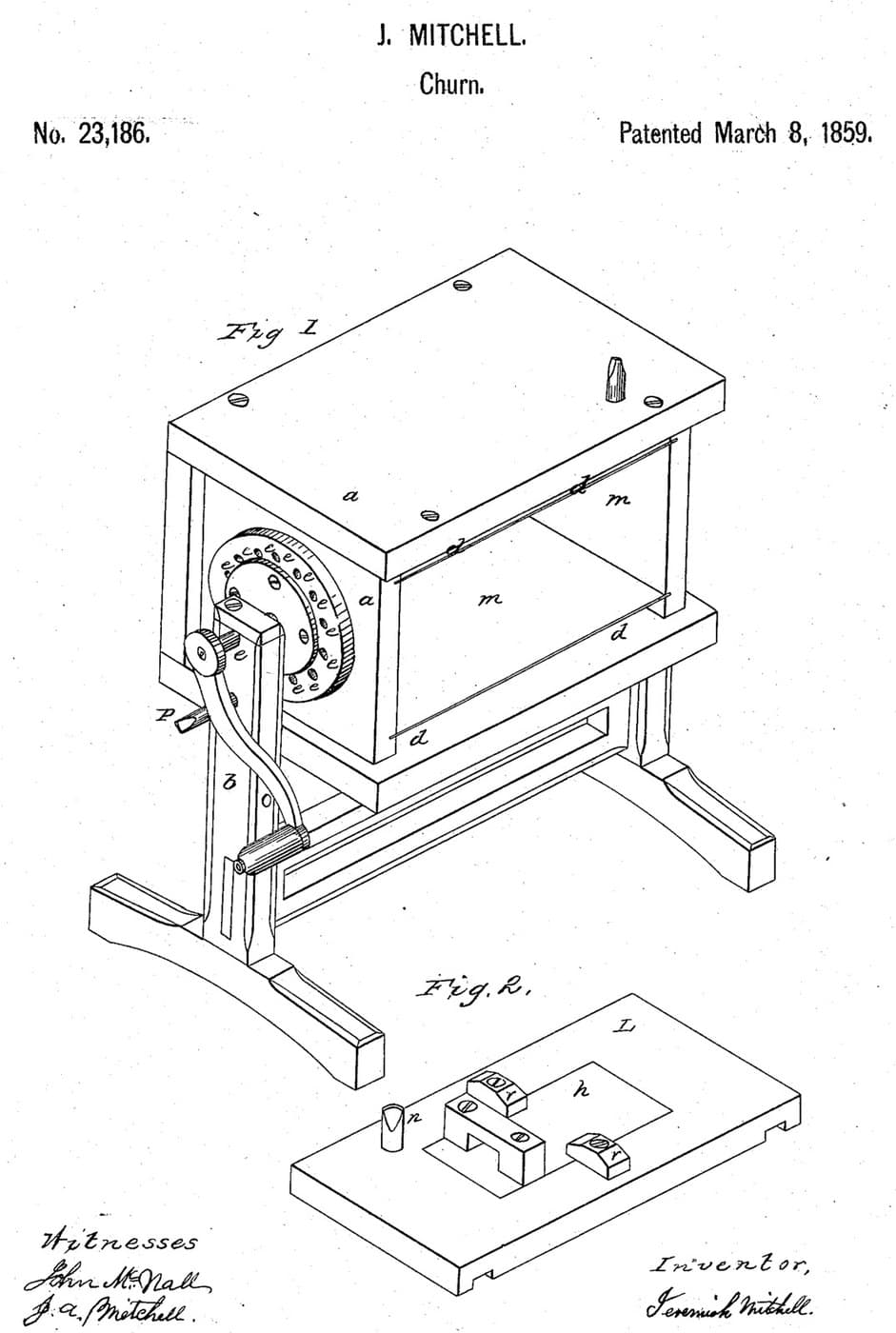
Water-Jacket Revolving Box Churn: A Box With No Dasher Turns on Stub Axles Inside Warm or Cold Water
láti ọwọ́ Martin
Iṣẹ́ Igi
5
0
0
0
0
0
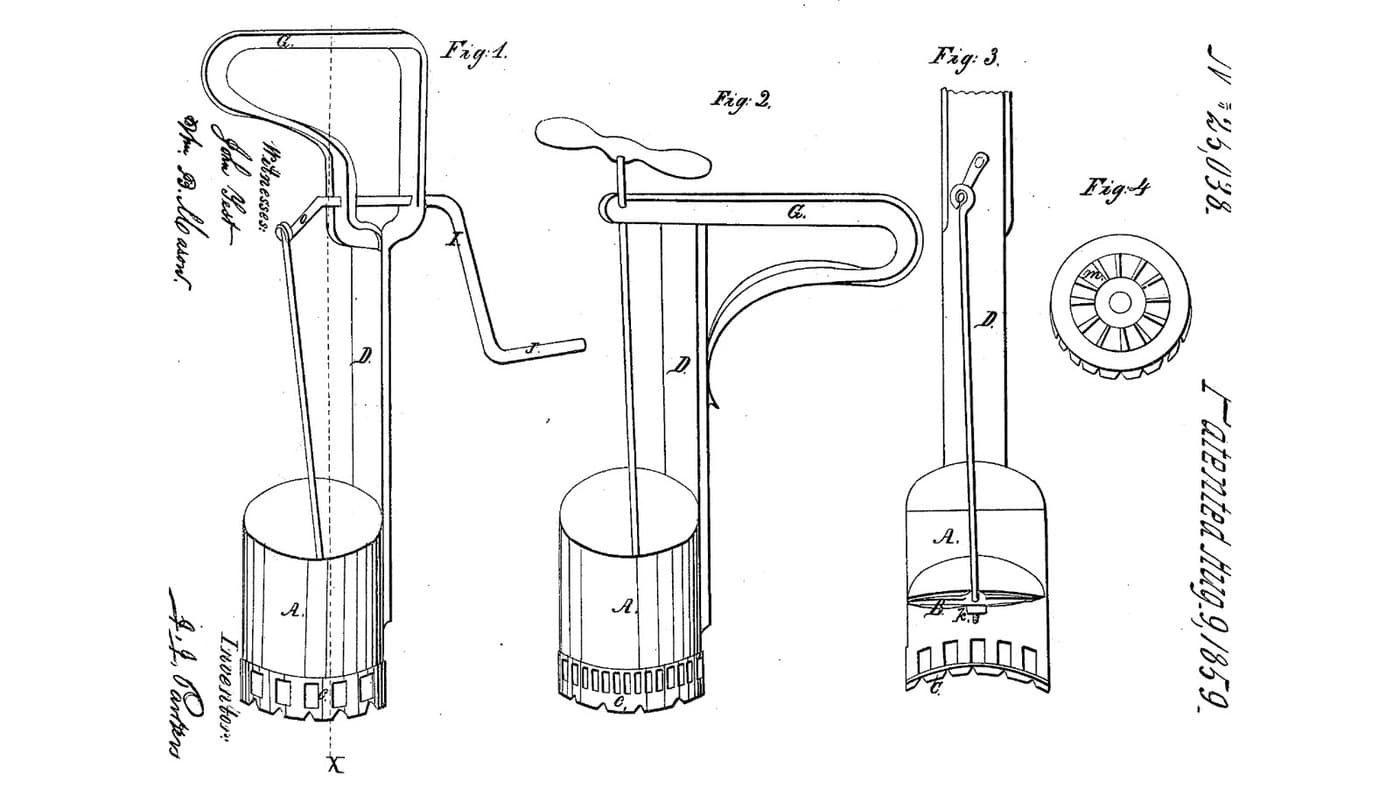
Pump Egg Beater: A Piston Draws the Eggs In and Out Through a Grate
láti ọwọ́ TheChef
OÚNJẸ ÀTI OHUN MÍMU
12
0
0
0
0
0
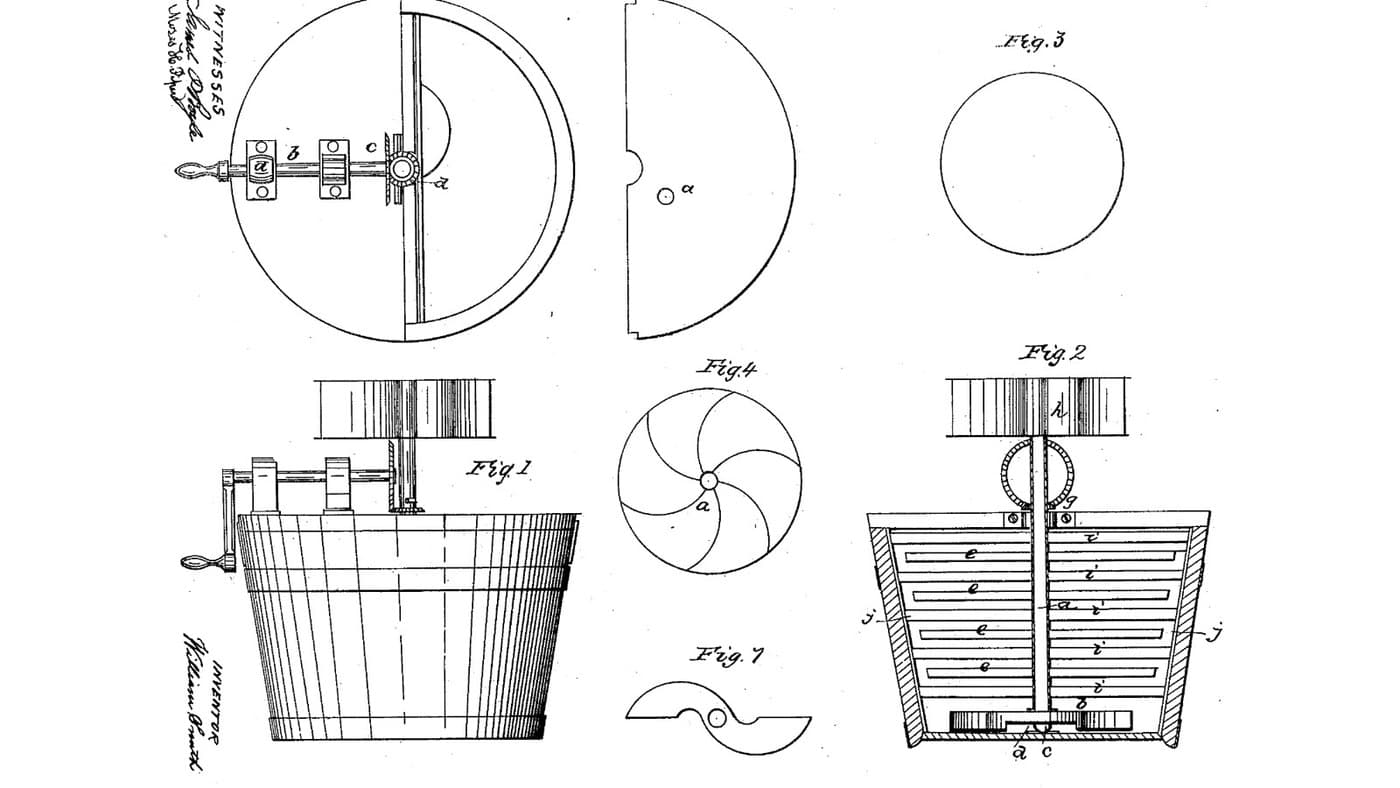
Atmospheric Combination Churn: A Fan Sends Air Down a Hollow Shaft and Out Through the Turning Arm
láti ọwọ́ Buttercup
OÚNJẸ ÀTI OHUN MÍMU
12
0
0
0
0
0
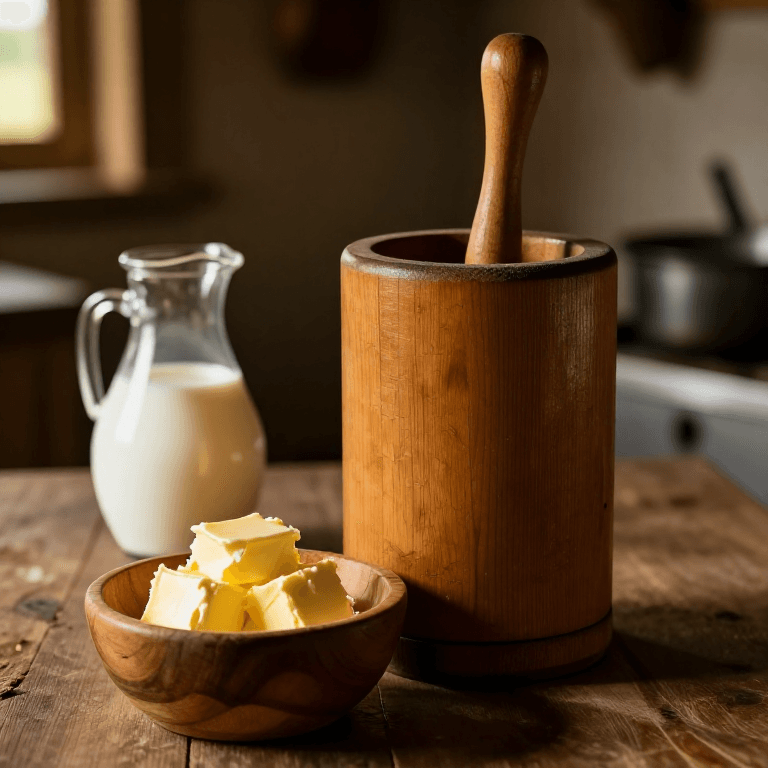
Churning Butter from Cream — The 5,000-Year-Old Fat Separation
láti ọwọ́ TheChef
IṢẸ́ ỌWỌ́
63
0
0
0
0
0
CC0 Àgbègbè Gbogbogbò
Blueprint yìí ti jáde lábẹ́ CC0. O lè ṣe àdàkọ, yí padà, pín, àti lò láìsí ìyọ̀ǹda.
Ṣàtìlẹ́yìn Olùṣẹ́dá nípa rírà àwọn ọjà nipasẹ̀ Blueprint wọn Ẹ̀san Olùṣẹ́dá tí àwọn Olùtajà gbé kalẹ̀, tàbí ṣẹ̀dá àtúnṣe tuntun ti Blueprint yìí kí o sì fi sínú Blueprint rẹ gẹ́gẹ́ bí ìsopọ̀ láti pín owó-wíwọlé.