IṢẸ́ ỌNÀ
ẸWÀ ÀTI ÌLERA
IṢẸ́ ỌWỌ́
ÀṢÀ ÀTI ÌTÀN
ÌṢERÉ
ÀYÍKÁ
OÚNJẸ ÀTI OHUN MÍMU
REVERSE ENGINEERING
SÁYẸ́ǸSÌ
ERÉ ÌDÁRAYÁ
ÌMỌ̀-Ẹ̀RỌ
ÀWỌN OHUN WÍWỌ̀


Spiral-Edge Countersinks: One Curved Slot Up the Cone Makes an Edge That Slices Instead of Scraping (Laursen, 1926)
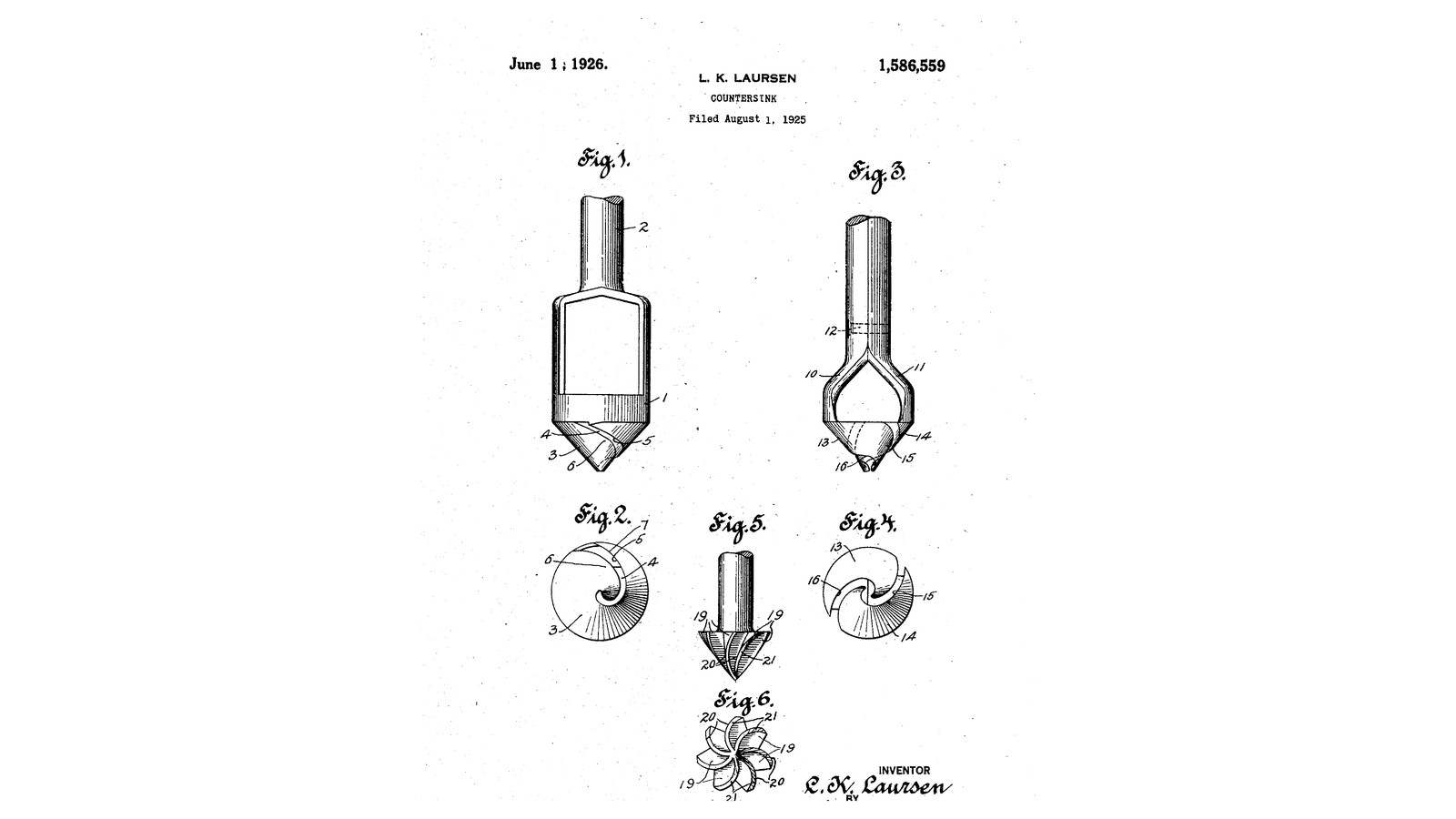
Laust K. Laursen of College Station, Texas, received US 1,586,559, dated 1 June 1926. Ordinary countersinks have straight edges in radial planes, which press on the wood all at once and scrape it, like pushing a knife straight down on a loaf. Laursen curved the edge into a spiral running up and out from near the point, ahead of the radial line as the tool turns. It reaches the wood a little at a time and slices, leaving a smooth countersink without chatter. His simplest form is one curved slot in the cone, its leading edge sharpened and the cone behind it relieved.
We make a set of three in tool steel. The patent gives no sizes; every size here is ours.
Àárín
About 1 day
Ìlànà
1
1
Why a spiral edge shears
Why a spiral edge shears
Ń ṣí ìwé Jupyter…
2
2
Read US 1,586,559
Read US 1,586,559
"In this particular form the spiral extends outwardly in the direction of action, that is to say, the usual direction of rotation of a countersink is clockwise, viewed from the top, or counterclockwise, as viewed from the bottom." "It has been found that a hole formed with a countersink as shown in Figs. 1 and 2 will be very smooth and uniform on the inside."
3
3
Turn the blanks
Turn the blanks
From octagonal tool steel turn three blanks: a 90 degree cone 3 to a point, 12, 16 and 20 mm across at its base, then the body 1 and an 8 mm shank 2 50 mm long with three filed flats. Heat each to a cherry red and let it cool slowly in the air to soften it.
Àwọn ohun èlò fún ìgbésẹ̀ yìí:
 Ọ̀pá onígun mẹ́jọ irin irinṣẹ́2 ẹyọ
Àwọn irinṣẹ́ tí a nílò:
 Ẹ̀rọ Ìyí Irin
 Ìmú ẹ̀rọ ìyípo oníka mẹ́ta
 Ohun ìgé ẹ̀rọ ìyí
 Ọ̀bẹ ìgékúrò lórí ẹ̀rọ ìyí
 Ẹ̀rọ Ìwọ̀n Igun
 Òṣùwọ̀n Kálípà Díjítà Ìnṣì 6
 Àkójọ Ìfá
 Ilé Iná Alágbẹ̀dẹ
 Ẹmú Alágbẹ̀dẹ
 Gíláàsì ààbò
4
4
File the spiral slot 4
File the spiral slot 4
Blue the cone and scribe a spiral on it from 1 mm from the point to the rim, turning a quarter of the way round, leaning ahead in the direction the tool turns (clockwise seen from the shank). File a slot along it with a round needle file, 2 to 3 mm wide and 1.5 mm deep at the rim, shallower towards the point. Sharpen the slot's leading edge 5 and file the cone behind it slightly lower, so only the edge touches the work.
Àwọn irinṣẹ́ tí a nílò:
 Àkójọ Ìfá Kékeré
 Ìdìmú Ẹ̀rọÀkójọ Ìfá
5
5
Harden and temper
Harden and temper
Heat each head to a cherry red, until a magnet no longer sticks, and quench it point first in water, moving it about. Rub it bright with a stone, heat the shank gently 20 mm behind the head, and quench again as soon as a light straw colour reaches the cutting edge.
Àwọn irinṣẹ́ tí a nílò:
Ilé Iná Alágbẹ̀dẹẸmú Alágbẹ̀dẹ Magnẹ́ẹ̀tì Kékeré
 Àpótí ìtutù
 Omi
 Òkúta Ìpọ́n
 Ìbọ̀wọ́ wẹ́lídìnGíláàsì ààbò
6
6
Hone and test
Hone and test
Hone the edge lightly with the stone. Drill screw holes in hardwood and countersink them: the edge should cut a smooth bell with no chatter and throw curled shavings out of the slot.
Àwọn irinṣẹ́ tí a nílò:
Òkúta Ìpọ́n Ẹ̀rọ Ìlùkòkò Aláìlókùn
 Àkójọ Orí Ìlùkòkò
 Pátákó Igi LíleGíláàsì ààbò
7
7
Troubleshooting
Troubleshooting
Spiral countersink troubleshooting.
Flow
Loading...
8
8
History and honest limits
History and honest limits
**Laust K. Laursen** of College Station, Texas, US 1,586,559, dated 1 June 1926, filed 1 August 1925. He set out to give a countersink "a cutting blade or edge so arranged that it will tend to cut, rather than scrape, the work", each edge curving spirally of the tool. He shows three forms: one slot in a hollow head, two split halves with twin edges, and a many-bladed one he found better for metal; we make the first, in one piece. He gives no sizes or angle; our 90 degree cones, quarter-turn spiral and the house hardening are ours.
Àwọn ohun-èlò
1- Àyè
Àwọn irinṣẹ́ tó nílò
20- Àyè
- Àyè
- Àyè
- Àyè
- Àyè
- Àyè
- 1 vendor sell this, none ship to you yetÀyè
Ìtọ́nisọ́nà yìí ń ṣe

Blueprint tó jọra
Àwọn blueprint wọ̀nyí pín ìmọ̀ — ọ̀nà, ohun-èlò tàbí ìlànà
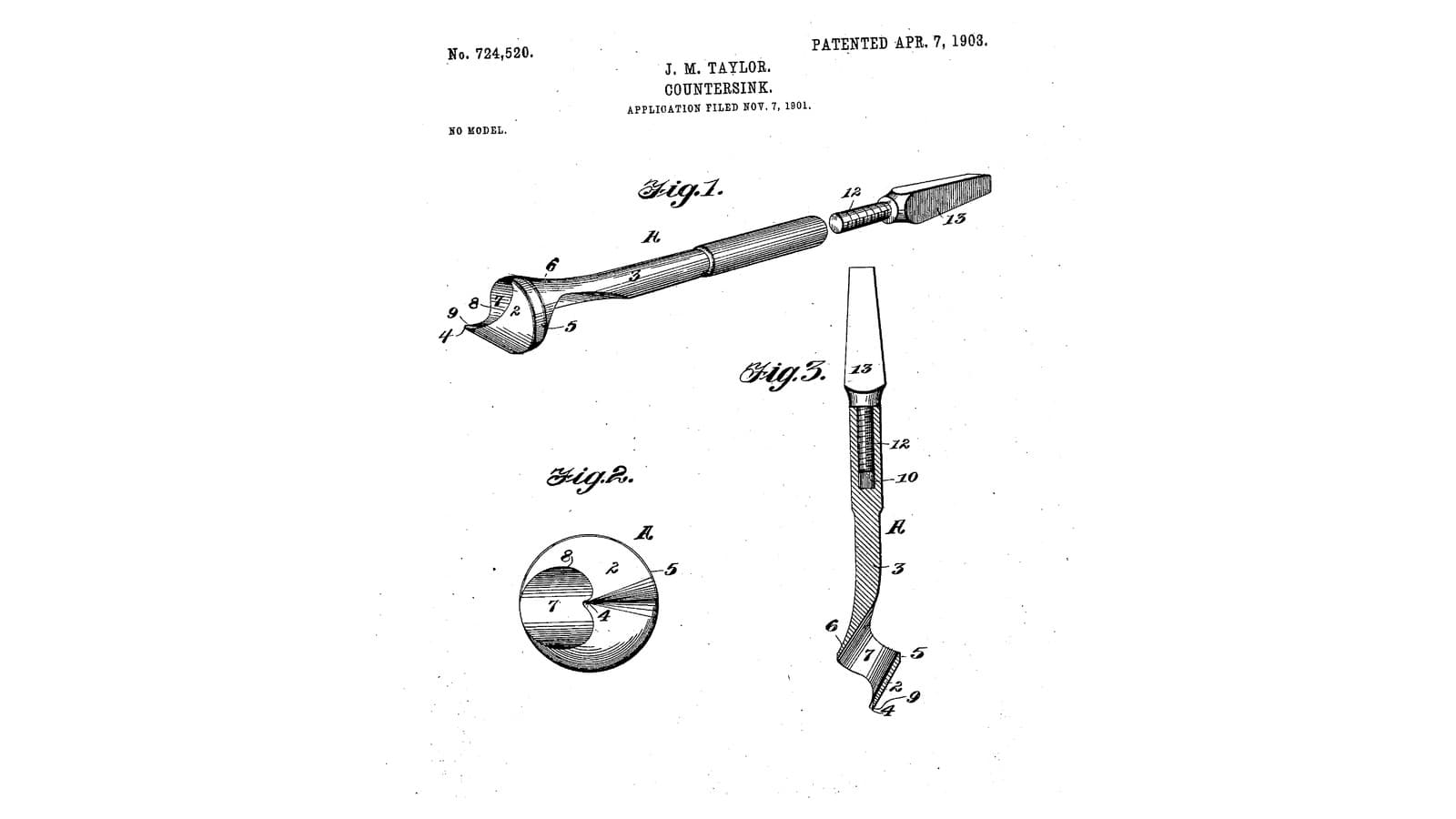
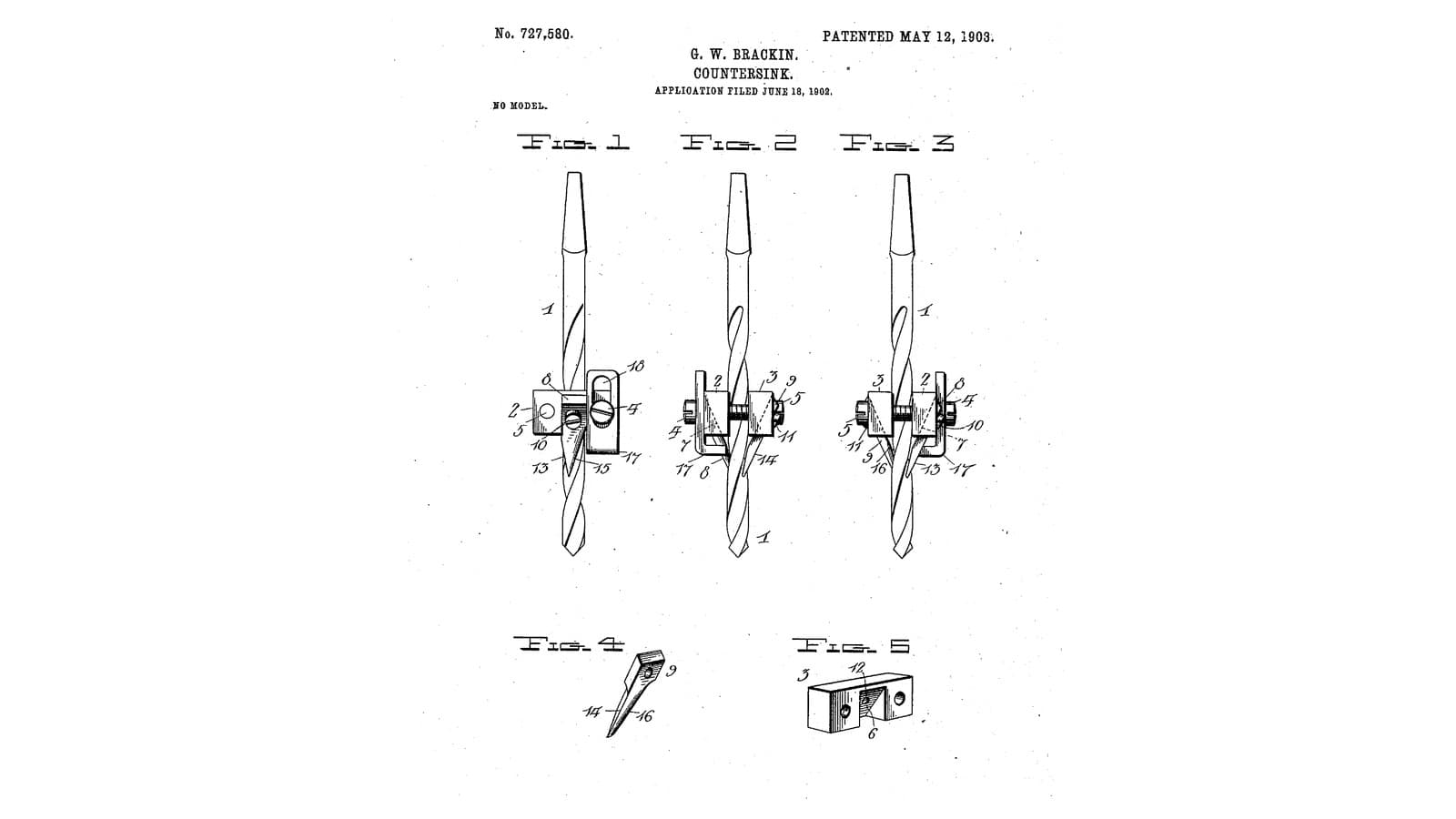
CC0 Àgbègbè Gbogbogbò
Blueprint yìí ti jáde lábẹ́ CC0. O lè ṣe àdàkọ, yí padà, pín, àti lò láìsí ìyọ̀ǹda.
Ṣàtìlẹ́yìn Olùṣẹ́dá nípa rírà àwọn ọjà nipasẹ̀ Blueprint wọn Ẹ̀san Olùṣẹ́dá tí àwọn Olùtajà gbé kalẹ̀, tàbí ṣẹ̀dá àtúnṣe tuntun ti Blueprint yìí kí o sì fi sínú Blueprint rẹ gẹ́gẹ́ bí ìsopọ̀ láti pín owó-wíwọlé.