IṢẸ́ ỌNÀ
ẸWÀ ÀTI ÌLERA
IṢẸ́ ỌWỌ́
ÀṢÀ ÀTI ÌTÀN
ÌṢERÉ
ÀYÍKÁ
OÚNJẸ ÀTI OHUN MÍMU
REVERSE ENGINEERING
SÁYẸ́ǸSÌ
ERÉ ÌDÁRAYÁ
ÌMỌ̀-Ẹ̀RỌ
ÀWỌN OHUN WÍWỌ̀
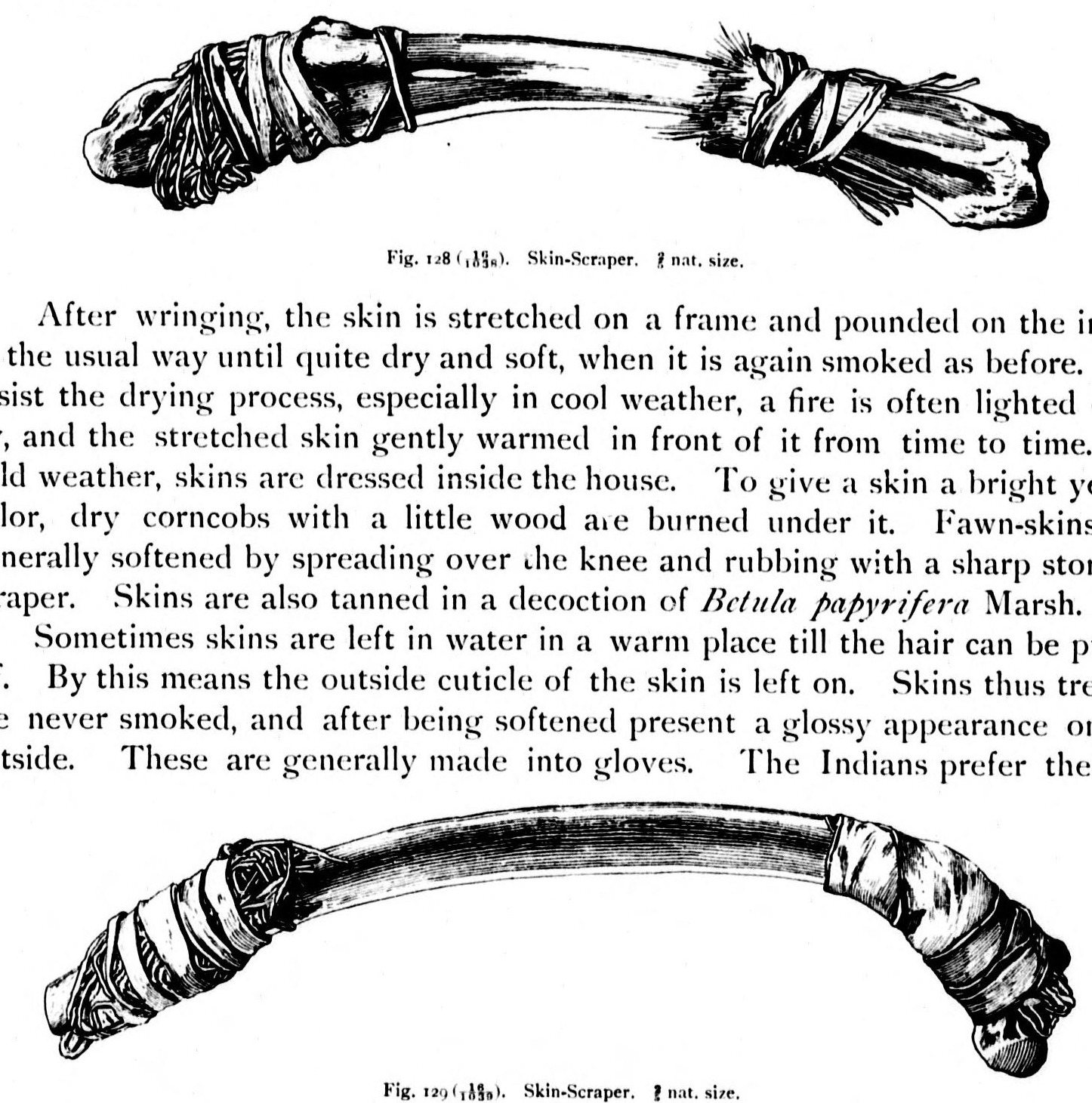

Navajo Hide Scraper from a Deer's Foreleg: Ulna Edge Sharpened with a Knife, Joints Left as Handles (Shufeldt, 1888)
The Navajo (Diné) hair-shaving tool Dr. R. W. Shufeldt described: the joined ulna and radius of a deer's foreleg, the thin back edge of the ulna scraped sharper with a knife, the elbow at one end and the wrist joint at the other kept on as handles, used two-handed like a spokeshave; it rarely cuts the hide.
Olùbẹ̀rẹ̀
An hour
Ìlànà
1
1
Read Shufeldt
Read Shufeldt
"The ulna and radius of this limb are wonderfully well fitted to perform the work of this natural spoke-shave."
2
2
Clean the bone
Clean the bone
Take the fused ulna and radius of a deer's foreleg, leaving the elbow end (olecranon) and the wrist end with its small bones attached. Ours: simmer and scrape it clean of meat and let it dry.
Àwọn ohun èlò fún ìgbésẹ̀ yìí:
 Egungun gígùn ẹranko1 ẹyọ
 Omi1 ẹyọ
Àwọn irinṣẹ́ tí a nílò:
 Kẹ́tù Irin
 Ihò iná
 Ọ̀bẹ
3
3
Sharpen the edge
Sharpen the edge
Scrape the thin back edge of the ulna with a knife to make it sharper.
Àwọn irinṣẹ́ tí a nílò:
Ọ̀bẹ4
4
Grip and use
Grip and use
Hold it by both ends (ours: wrap the ends with rawhide for grip) and draw it over the hide on the beam like a spokeshave to shave off hair and outer skin.
Àwọn ohun èlò fún ìgbésẹ̀ yìí:
 Ege awọ àìṣe1 ẹyọ
Àwọn irinṣẹ́ tí a nílò:
Ọ̀bẹ5
5
Troubleshooting
Troubleshooting
Scraper troubleshooting.
Flow
Loading...
6
6
History and honest limits
History and honest limits
From R. W. Shufeldt's account in Otis T. Mason, "Aboriginal Skin-Dressing", **Report of the U.S. National Museum for 1889** (1891), pp. 575-576 (checked on the archive.org scan aboriginalskindr00maso). Some tanners used a deer or beef rib, or a dull hunting knife, instead. The hero shows the same tool type drawn by James Teit for the Thompson people (1900, Figs. 128-129). Cleaning the bone and the grip wrapping are ours.
Àwọn ohun-èlò
3- 1 ẹyọÀyè
- 1 ẹyọÀyè
- 1 ẹyọÀyè
Ìtọ́nisọ́nà yìí ń ṣe
Blueprint tó jọra
Àwọn blueprint wọ̀nyí pín ìmọ̀ — ọ̀nà, ohun-èlò tàbí ìlànà
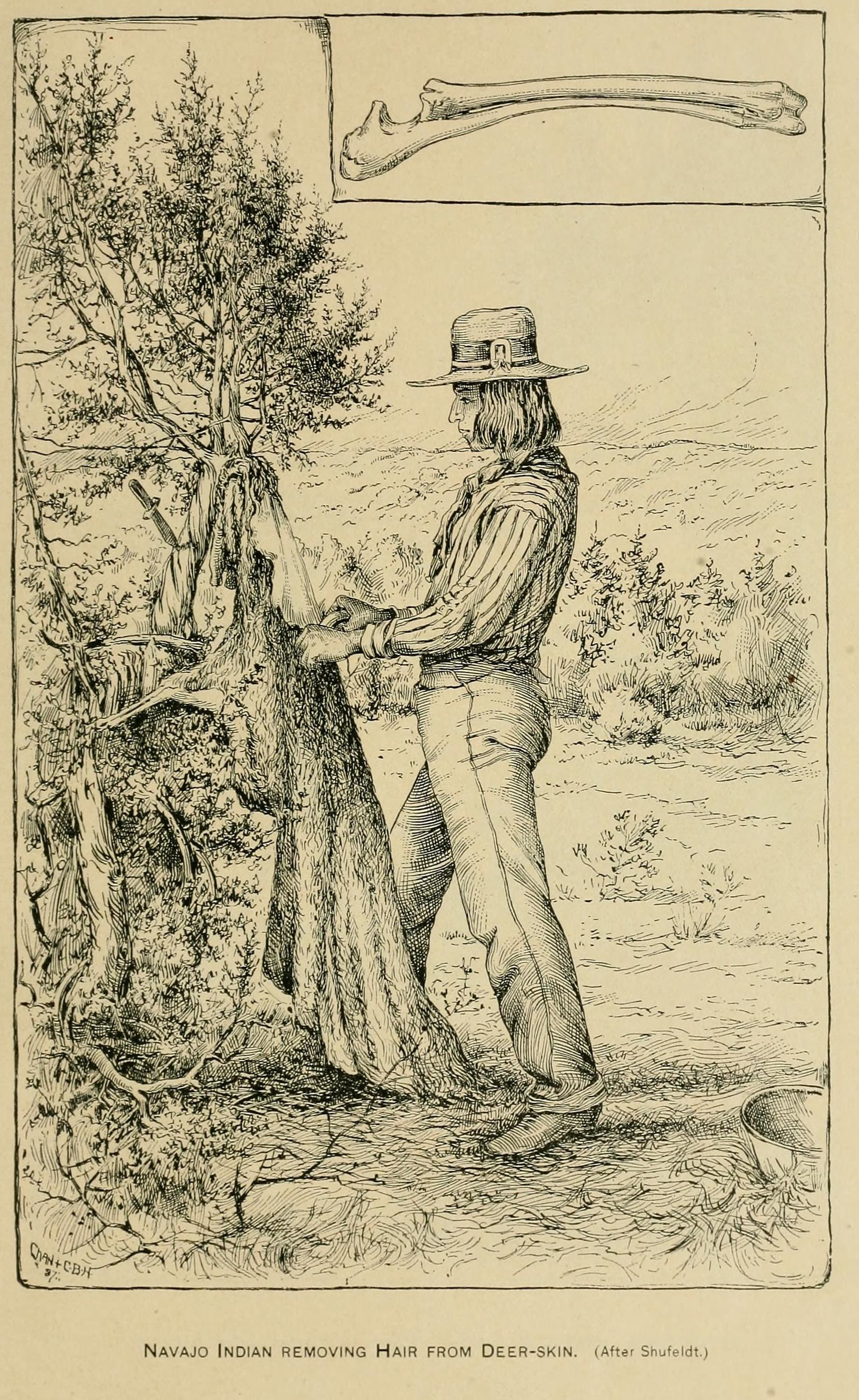
Navajo Buckskin: Hair Shaved with the Deer's Own Foreleg Bone, Brains Rubbed In, Wrung on a Tree, Worked Dry over the Feet (Shufeldt, 1888)
láti ọwọ́ Tex
Aṣọ àti Awọ
6
0
0
0
0
0
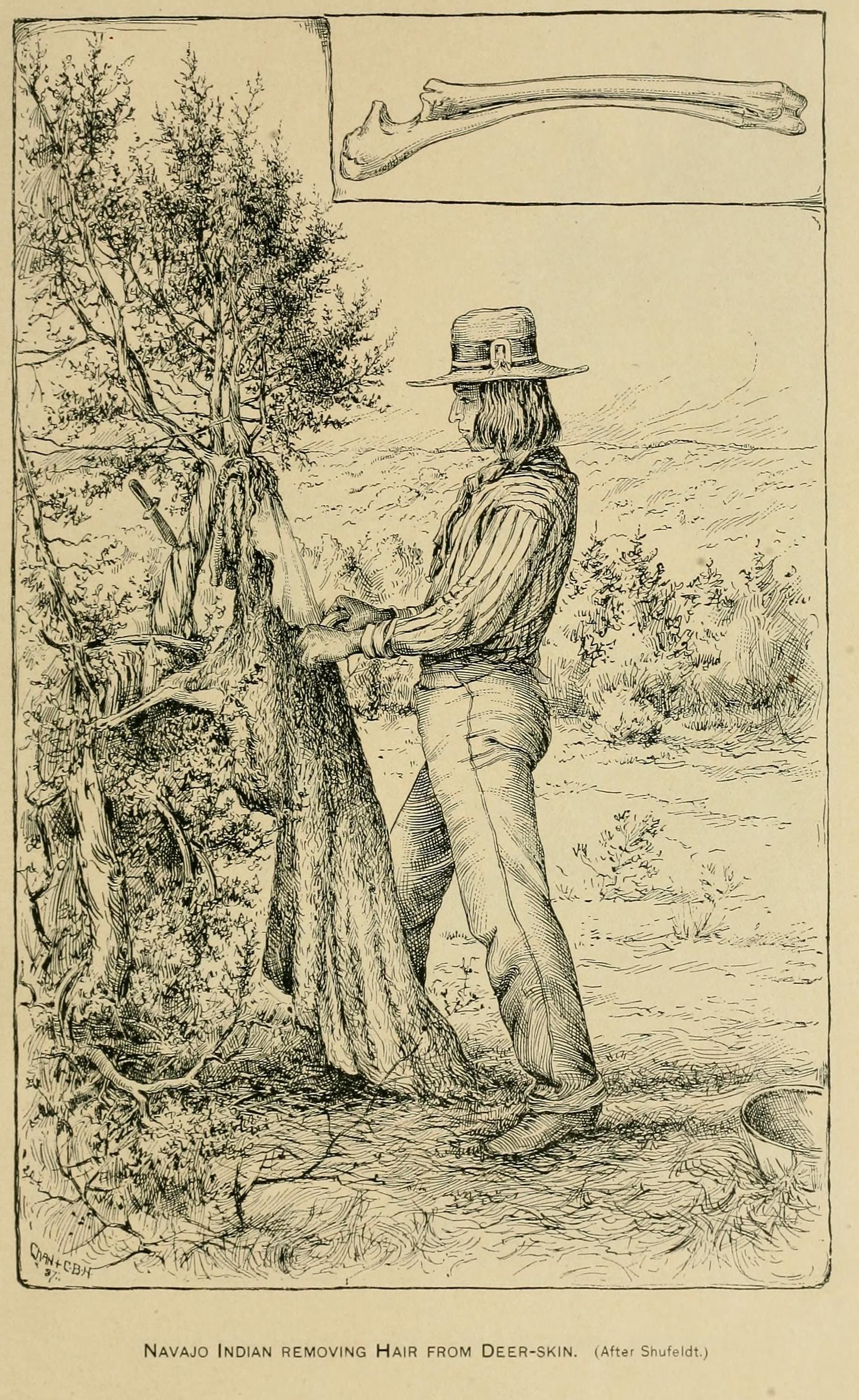
Navajo Hide-Scraping Beam: Small Pine Trunk Barked on One Side, Notched and Braced Under a Tree Limb (Shufeldt, 1888)
láti ọwọ́ Woody
Iṣẹ́ Igi
9
0
0
0
0
0
CC0 Àgbègbè Gbogbogbò
Blueprint yìí ti jáde lábẹ́ CC0. O lè ṣe àdàkọ, yí padà, pín, àti lò láìsí ìyọ̀ǹda.
Ṣàtìlẹ́yìn Olùṣẹ́dá nípa rírà àwọn ọjà nipasẹ̀ Blueprint wọn Ẹ̀san Olùṣẹ́dá tí àwọn Olùtajà gbé kalẹ̀, tàbí ṣẹ̀dá àtúnṣe tuntun ti Blueprint yìí kí o sì fi sínú Blueprint rẹ gẹ́gẹ́ bí ìsopọ̀ láti pín owó-wíwọlé.