IṢẸ́ ỌNÀ
ẸWÀ ÀTI ÌLERA
IṢẸ́ ỌWỌ́
ÀṢÀ ÀTI ÌTÀN
ÌṢERÉ
ÀYÍKÁ
OÚNJẸ ÀTI OHUN MÍMU
REVERSE ENGINEERING
SÁYẸ́ǸSÌ
ERÉ ÌDÁRAYÁ
ÌMỌ̀-Ẹ̀RỌ
ÀWỌN OHUN WÍWỌ̀
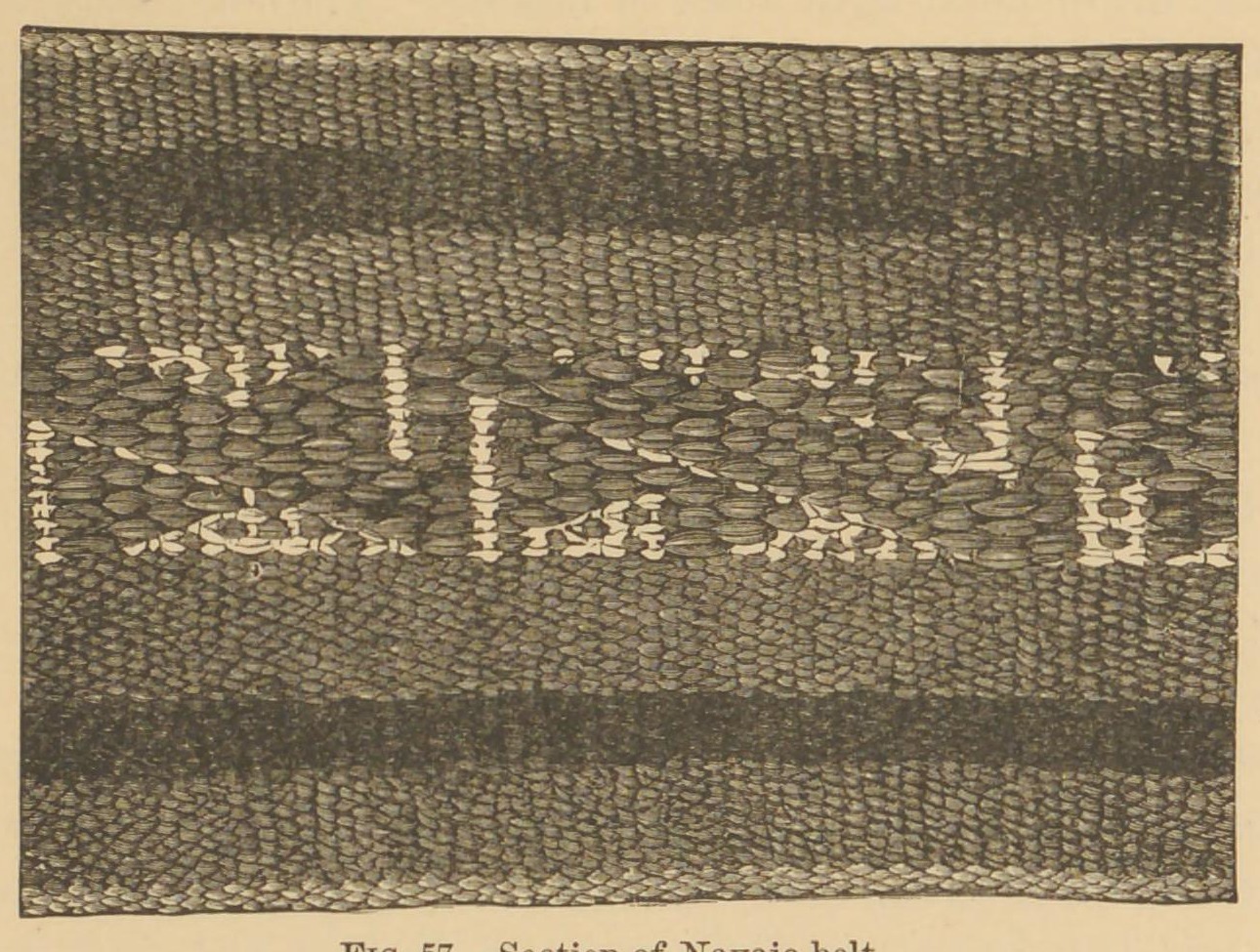


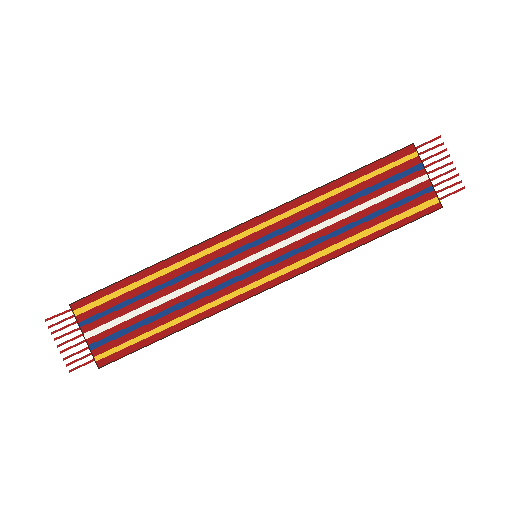
Navajo Sash or Belt: Warp Wound on Four Stakes, Endless on Two Beams, Tensioned by the Weaver's Weight, Raised Figures Picked Up (Matthews, 1884)
How Navajo (Diné) women wove sashes, belts, garters and hair-bands, as Washington Matthews recorded: warp wound in a figure-8 round four stakes to make both sheds, slid onto two beams so it stays endless, one beam tied high and the other looped under the weaver's thighs for tension, raised figures picked up with a slender stick, and the last foot of warp cut for fringes.
Àárín
A few hours
Ìlànà
1
1
His figures
His figures
Ń ṣí ìwé Jupyter…
2
2
Read Matthews
Read Matthews
"While still on the loom the belt is endless."
3
3
Wind the warp
Wind the warp
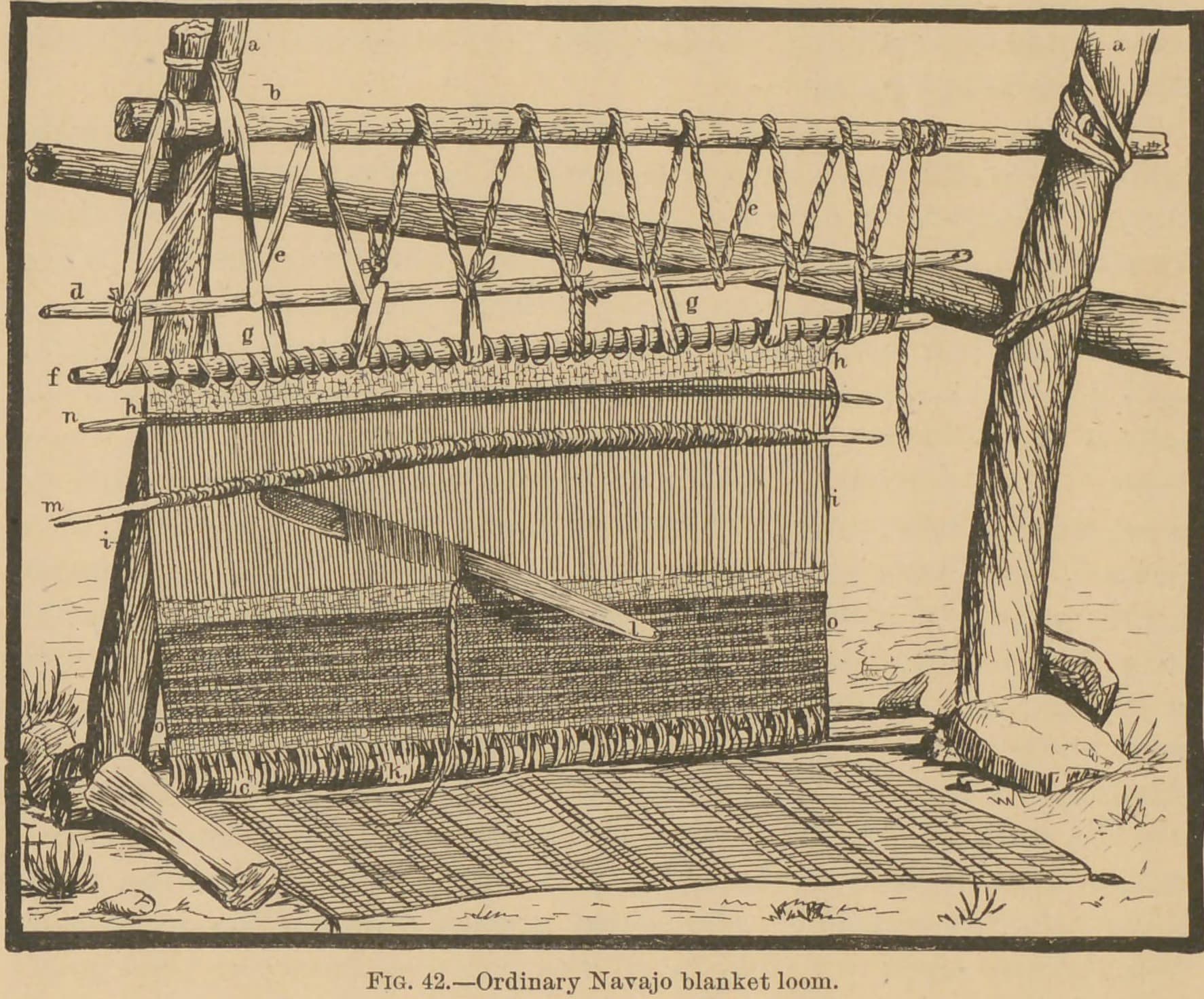
Drive four sticks into the ground: a and b at the ends, c and d between them (Fig. 56). Wind the warp from below upward so every turn passes over a and b but alternate turns over c and d; that makes the two sheds. Usually three colours of thread are used. Tie a string round the crossing of the sheds to keep them apart. (Ours: space a and b about the finished length of the sash.)
Àwọn ohun èlò fún ìgbésẹ̀ yìí:
 Òwú Irun Àgùtàn Aláró1 ẹyọ
Àwọn irinṣẹ́ tí a nílò:
 Tent Stake
 Òòlù Igi
4
4
Mount it
Mount it
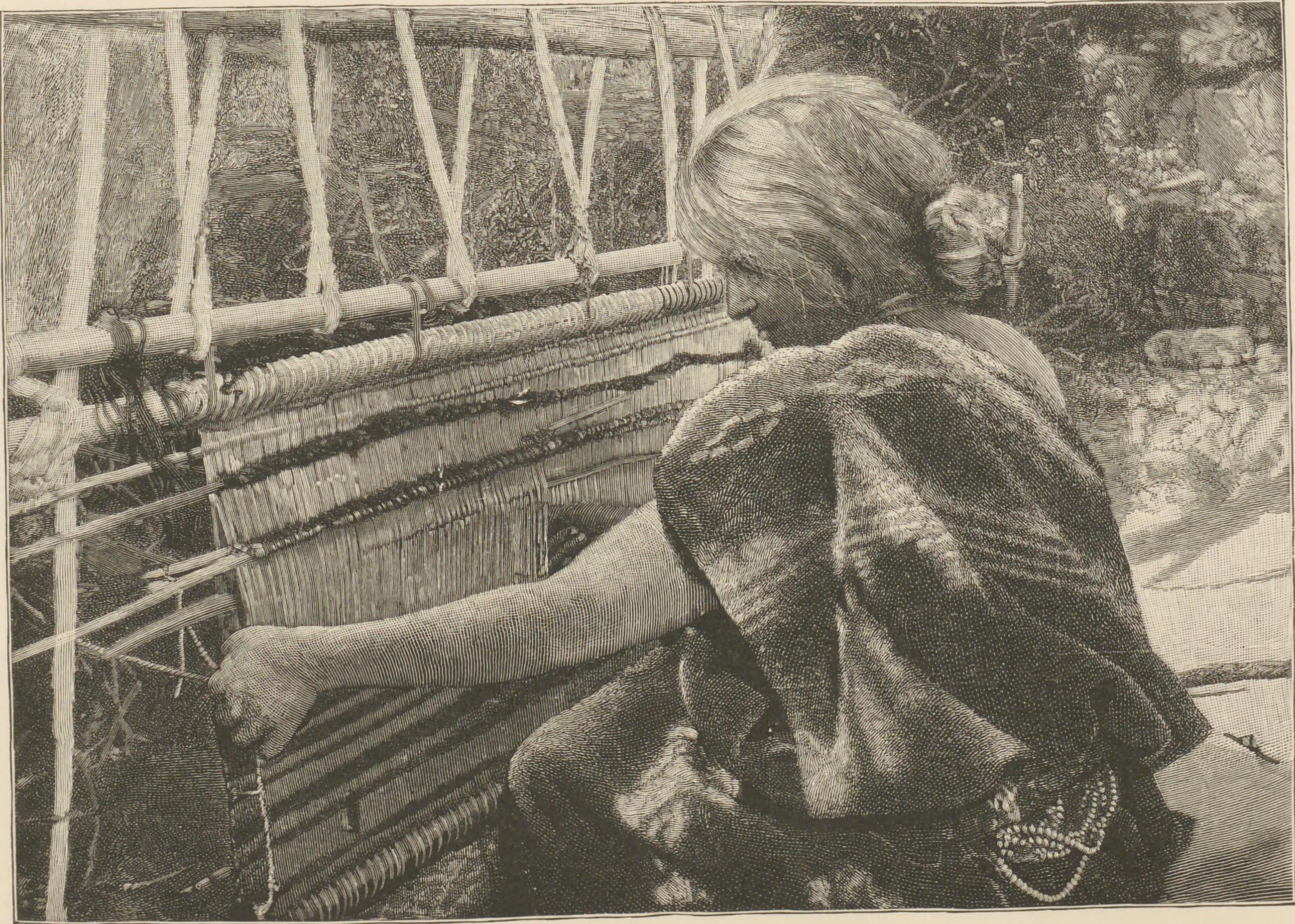
Put the upper beam in place of stick b and the lower beam in place of a. Tie the upper beam to a rafter, post or tree; tie a loop of rope to the lower beam and pass it under your thighs, so your weight pulls the warp tight. Put a shed-rod in the upper shed, string healds on the lower shed, and add a round stick with one loop of each thread round it to keep them in order.
Àwọn ohun èlò fún ìgbésẹ̀ yìí:
 Èèkàn igi1 ẹyọ
 Okùn1 ẹyọ
 Okùn1 ẹyọ
Àwọn irinṣẹ́ tí a nílò:
 Ọ̀bẹ
5
5
Weave
Weave
Weave with a short batten (much shorter than a blanket batten), the reed-fork rarely needed. For raised figures, slip a slender stick under chosen warp threads and pass the weft twice or more beneath them: the back shows a different figure. A skilled weaver made 25-30 cm an hour.
Àwọn ohun èlò fún ìgbésẹ̀ yìí:
Òwú Irun Àgùtàn Aláró1 ẹyọ Pátákò oak funfun1 ẹyọ
Àwọn irinṣẹ́ tí a nílò:
 Ọ̀bẹ Ìfàsẹ́yìnỌ̀bẹ
6
6
Move the warp and finish
Move the warp and finish
When you can't reach, pull the front layer of warp down toward you: it slides round the beams. When all but about a foot (30 cm) of warp is filled, cut the unwoven warp in the middle: it becomes the fringes.
Àwọn irinṣẹ́ tí a nílò:
Ọ̀bẹ7
7
Troubleshooting
Troubleshooting
Sash troubleshooting.
Flow
Loading...
8
8
History and honest limits
History and honest limits
From Washington Matthews, "Navajo Weavers", **3rd Annual Report of the Bureau of Ethnology** (1884), pp. 388-390, Figs. 56-57 and Plate XXXVI (checked on the archive.org scan 101714660.nlm.nih.gov). He saw about a dozen raised-figure patterns, woven from memory. Zuni women set up their belt warps differently, tied to a rafter and to their own belt, with wooden healds. Sash length, width and stake spacing are ours.
Àwọn ohun-èlò
5- Àyè
- 1 ẹyọÀyè
- 1 ẹyọÀyè
- 1 ẹyọÀyè
- 1 ẹyọÀyè
Ìtọ́nisọ́nà yìí ń ṣe
Blueprint tó jọra
Àwọn blueprint wọ̀nyí pín ìmọ̀ — ọ̀nà, ohun-èlò tàbí ìlànà

CC0 Àgbègbè Gbogbogbò
Blueprint yìí ti jáde lábẹ́ CC0. O lè ṣe àdàkọ, yí padà, pín, àti lò láìsí ìyọ̀ǹda.
Ṣàtìlẹ́yìn Olùṣẹ́dá nípa rírà àwọn ọjà nipasẹ̀ Blueprint wọn Ẹ̀san Olùṣẹ́dá tí àwọn Olùtajà gbé kalẹ̀, tàbí ṣẹ̀dá àtúnṣe tuntun ti Blueprint yìí kí o sì fi sínú Blueprint rẹ gẹ́gẹ́ bí ìsopọ̀ láti pín owó-wíwọlé.