IṢẸ́ ỌNÀ
ẸWÀ ÀTI ÌLERA
IṢẸ́ ỌWỌ́
ÀṢÀ ÀTI ÌTÀN
ÌṢERÉ
ÀYÍKÁ
OÚNJẸ ÀTI OHUN MÍMU
REVERSE ENGINEERING
SÁYẸ́ǸSÌ
ERÉ ÌDÁRAYÁ
ÌMỌ̀-Ẹ̀RỌ
ÀWỌN OHUN WÍWỌ̀
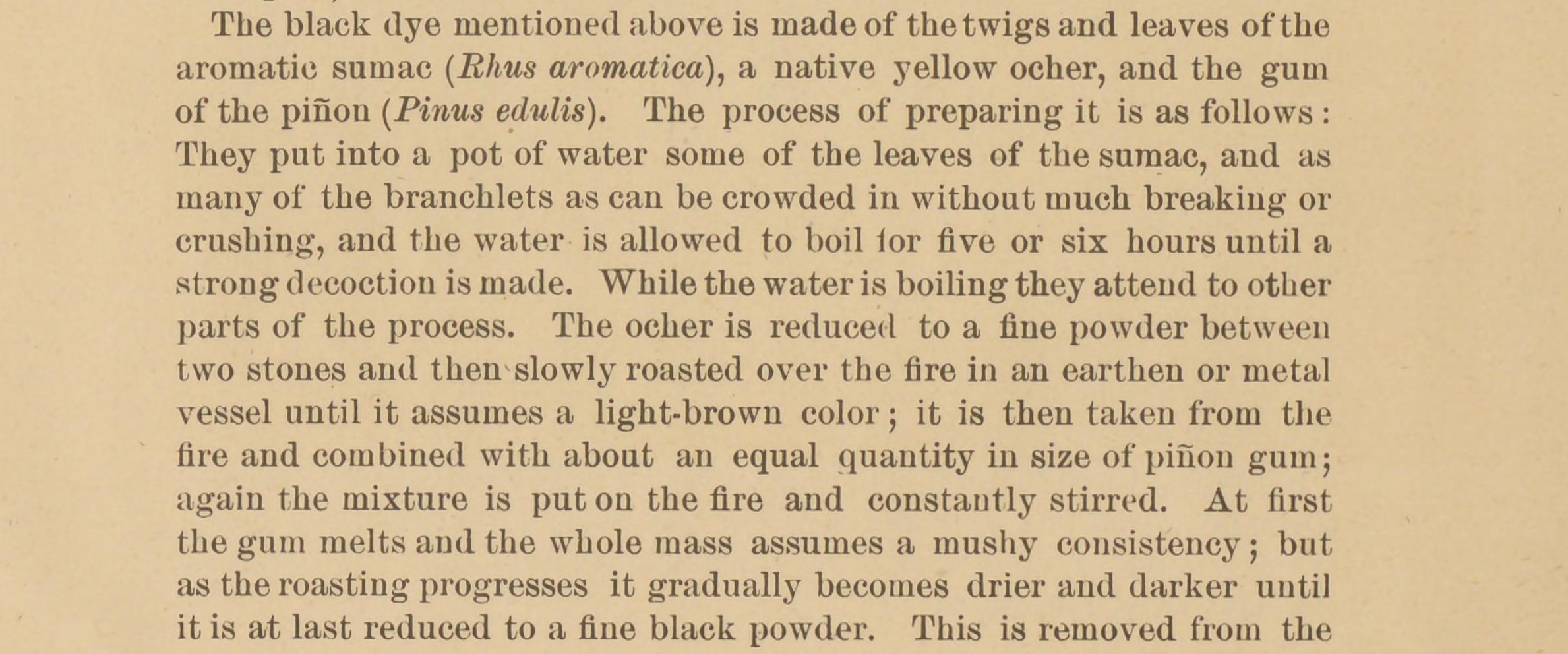

Navajo Black Wool Dye: Sumac Boiled Six Hours, Ocher Roasted with Piñon Gum to a Black Powder (Matthews, 1884)
The Navajo (Diné) weavers' black, from Washington Matthews' Navajo Weavers: aromatic sumac boiled five or six hours, yellow ocher ground and roasted, then roasted again with as much piñon gum until it turns to a fine black powder that makes the sumac water a blue-black ink.
Àárín
A day
Ìlànà
1
1
Read Matthews
Read Matthews
"This dye is essentially an ink, the tannic acid of the sumac combining with the sesquioxide of iron in the roasted ocher."
2
2
Boil the sumac
Boil the sumac
Pack a pot of water with sumac leaves and as many twigs as will go in without much breaking or crushing. Boil five or six hours to a strong brew.
Àwọn ohun èlò fún ìgbésẹ̀ yìí:
 Aromatic Sumac Twigs1 ẹyọ
 Omi1 ẹyọ
Àwọn irinṣẹ́ tí a nílò:
 Ìkòkò aró ńlá
 Ihò iná
3
3
Roast the ocher
Roast the ocher
Meanwhile grind yellow ocher fine between two stones and roast it slowly over the fire in a clay or metal pan until it turns light brown.
Àwọn ohun èlò fún ìgbésẹ̀ yìí:
 Okuta ochre tútù1 ẹyọ
Àwọn irinṣẹ́ tí a nílò:
 Òkúta Ọlọ
 Kẹ́tù IrinIhò iná
4
4
Roast it with piñon gum
Roast it with piñon gum
Off the fire, add about the same bulk of piñon gum. Put it back and stir all the time: the gum melts and the mass goes mushy, then drier and darker until it is a fine black powder.
Àwọn ohun èlò fún ìgbésẹ̀ yìí:
 Ọ̀dà igi paini tàbí sipurusi1 ẹyọ
Àwọn irinṣẹ́ tí a nílò:
Kẹ́tù IrinIhò iná Ọ̀pá ìrú igi
5
5
Make the dye and dye
Make the dye and dye
Let the powder cool a little and throw it into the sumac brew: it turns at once to a rich blue-black. Ours: put the wool in, simmer until it is as dark as you want, then rinse and dry.
Àwọn ohun èlò fún ìgbésẹ̀ yìí:
 Okùn irun àgùntàn tí a kò dá aró sí1 ẹyọ
Àwọn irinṣẹ́ tí a nílò:
Ìkòkò aró ńláIhò ináỌ̀pá ìrú igi6
6
Troubleshooting
Troubleshooting
Black dye troubleshooting.
Flow
Loading...
7
7
History and honest limits
History and honest limits
From Washington Matthews, "Navajo Weavers", **3rd Annual Report of the Bureau of Ethnology** (1884), pp. 376-377 (checked on the archive.org scan 101714660.nlm.nih.gov). The Navajo then dyed yellow, reddish and black themselves and also wove white, rusty black and gray wool in its natural colours. The wool, timing in the dye and rinsing are ours.
Àwọn ohun-èlò
5- 1 ẹyọÀyè
- 1 ẹyọÀyè
- 1 ẹyọÀyè
- Àyè
Ìtọ́nisọ́nà yìí ń ṣe

Blueprint tó jọra
Àwọn blueprint wọ̀nyí pín ìmọ̀ — ọ̀nà, ohun-èlò tàbí ìlànà
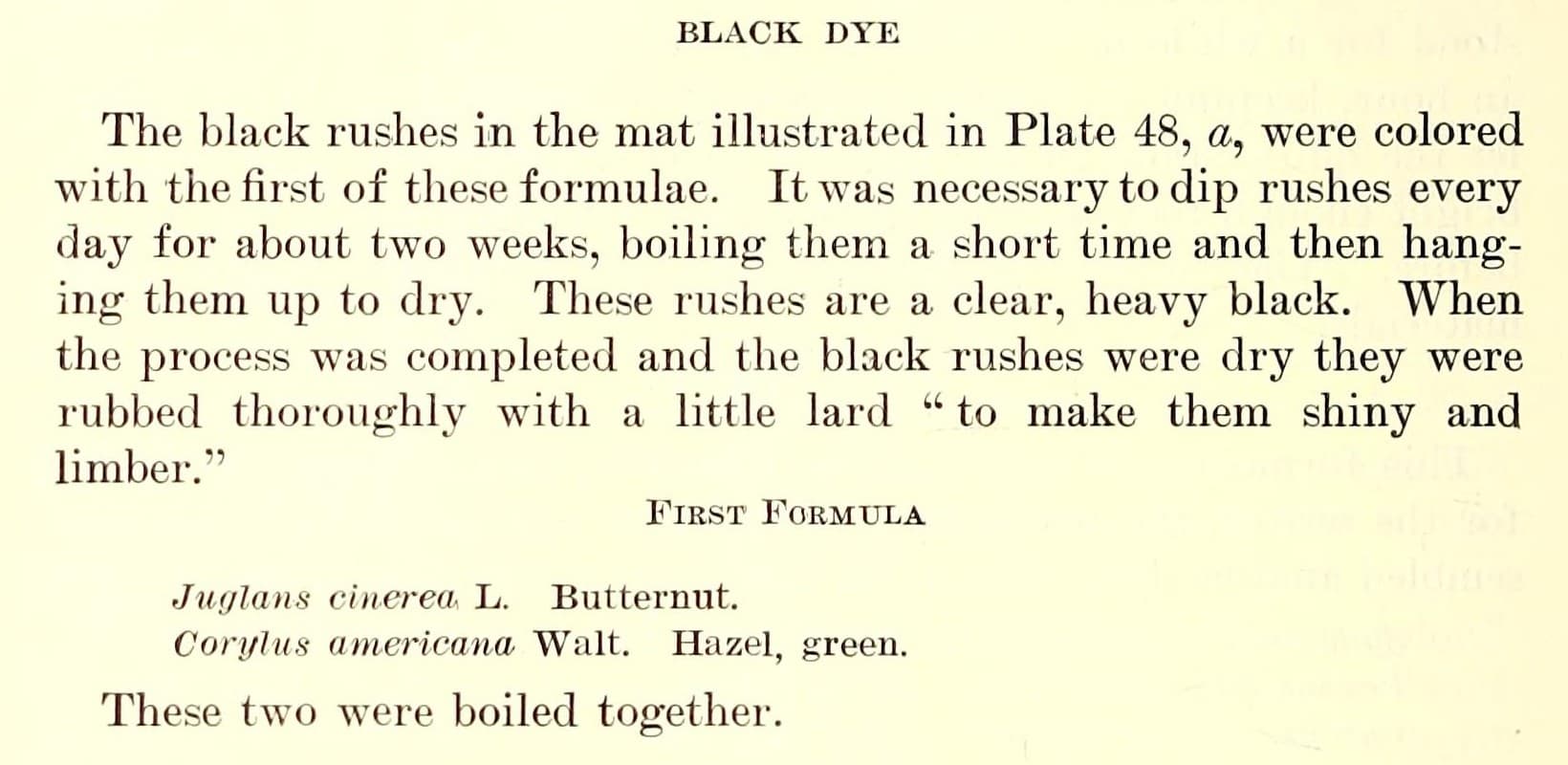
Chippewa Black Dyes: Butternut, Green Hazel Burs and Oak Bark with Black Spring Earth or Grindstone Dust (Densmore, 1928)
láti ọwọ́ Charlie
Kíkun
6
0
0
0
0
0

Omaha and Winnebago Black Dye for Tanned Hides: Soft Maple Twigs Boiled, Iron Clay Roasted with Grease (Gilmore, 1919)
láti ọwọ́ Charlie
Aṣọ àti Awọ
6
0
0
0
0
0
CC0 Àgbègbè Gbogbogbò
Blueprint yìí ti jáde lábẹ́ CC0. O lè ṣe àdàkọ, yí padà, pín, àti lò láìsí ìyọ̀ǹda.
Ṣàtìlẹ́yìn Olùṣẹ́dá nípa rírà àwọn ọjà nipasẹ̀ Blueprint wọn Ẹ̀san Olùṣẹ́dá tí àwọn Olùtajà gbé kalẹ̀, tàbí ṣẹ̀dá àtúnṣe tuntun ti Blueprint yìí kí o sì fi sínú Blueprint rẹ gẹ́gẹ́ bí ìsopọ̀ láti pín owó-wíwọlé.