IṢẸ́ ỌNÀ
ẸWÀ ÀTI ÌLERA
IṢẸ́ ỌWỌ́
ÀṢÀ ÀTI ÌTÀN
ÌṢERÉ
ÀYÍKÁ
OÚNJẸ ÀTI OHUN MÍMU
REVERSE ENGINEERING
SÁYẸ́ǸSÌ
ERÉ ÌDÁRAYÁ
ÌMỌ̀-Ẹ̀RỌ
ÀWỌN OHUN WÍWỌ̀
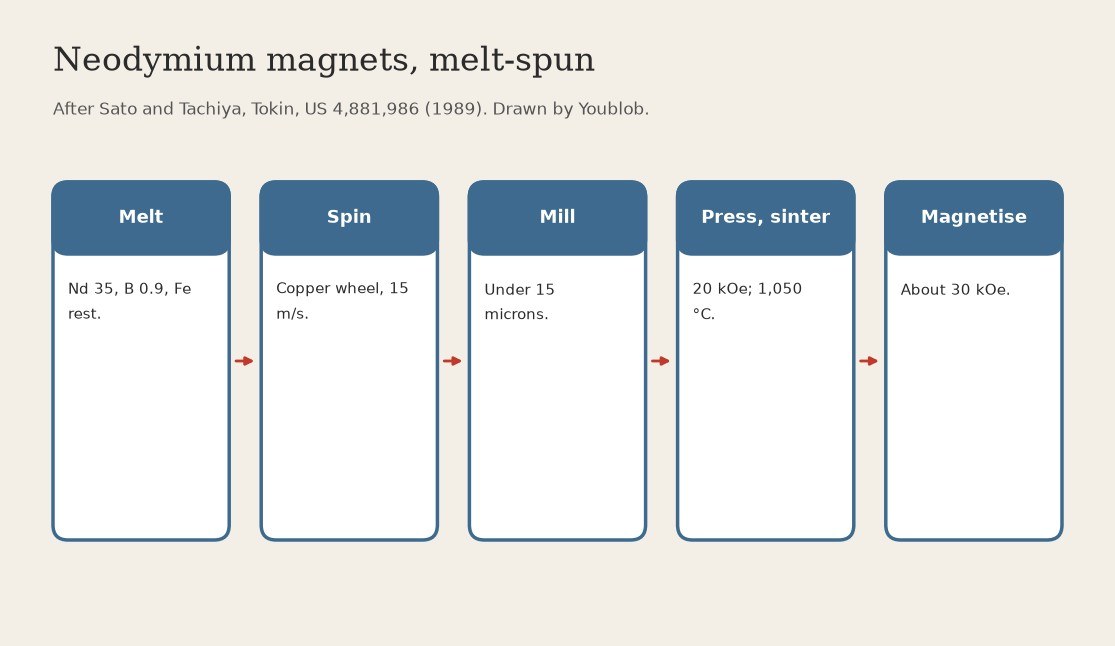


Neodymium Magnets: Melt-Spun Ribbon Milled, Pressed in a Field, Sintered and Magnetised at 30 kOe (Sato, Tokin, US 4,881,986)
Squirting the molten Nd-Fe-B alloy onto a spinning copper wheel freezes it into ribbon with crystals only a tenth of a micron across. Milled fine, lined up in a magnetic field, pressed and sintered, it makes a strong anisotropic magnet, which a 30 kOe pulse then magnetises.
Result: sintered neodymium magnets, above 16 MGOe when the powder is finer than 15 microns.
Source: Sato and Tachiya, US 4,881,986 (Tokin, 1989), Example 1. Not given: magnet shape and size. Picture drawn by Youblob.
Ilọsíwájú
3 days
Ìlànà
1
1
Melt the alloy in argon
Melt the alloy in argon
Weigh 35.0 % neodymium, 0.9 % boron (as ferroboron with 20 % B) and the rest electrolytic iron, by weight, and induction-melt them in argon into an ingot. Ours, worked out: 35 parts neodymium, 4.5 ferroboron, 60.5 iron. Sato's neodymium was 97 % (with Ce and Pr); ours is the 99 % metal.
Àwọn ohun èlò fún ìgbésẹ̀ yìí:
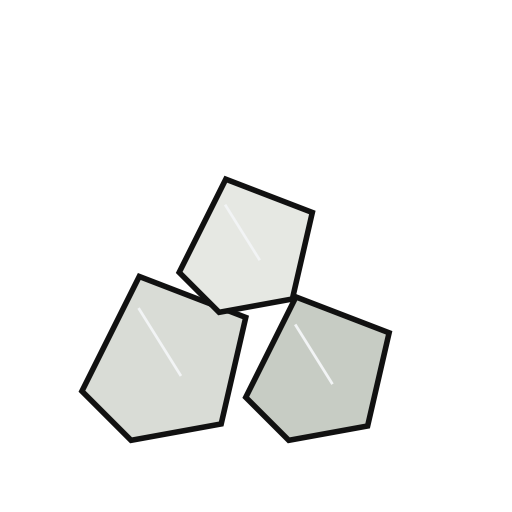 Irin neodymium35 parts
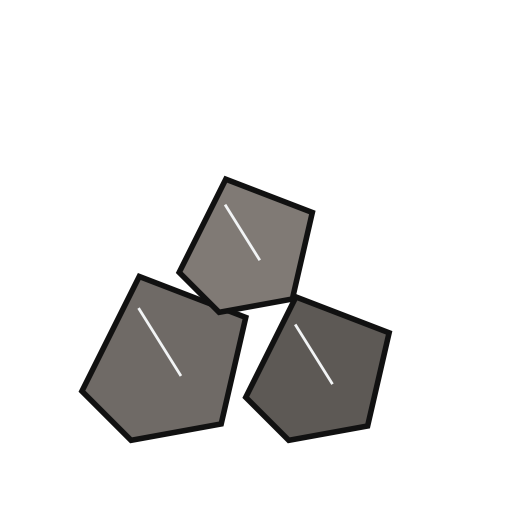 Ferroboron4.5 parts
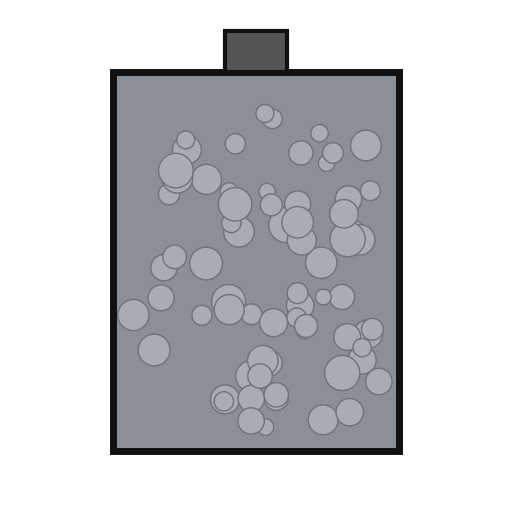 Irin elekitirolitiki60.5 parts
Àwọn irinṣẹ́ tí a nílò:
 Òǹwọ̀n ìdọ́gba
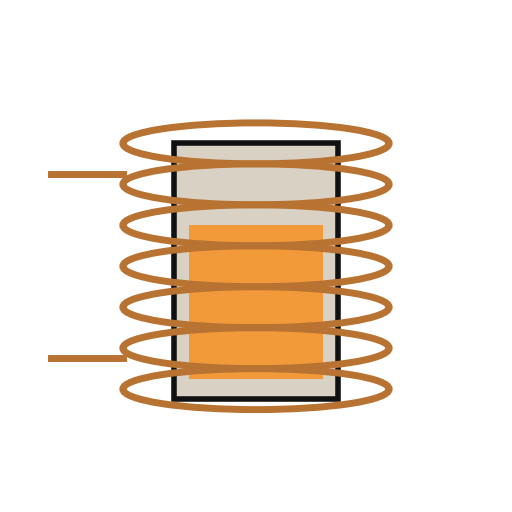 Ìléru induction
 Àgbá gáàsì tí a fi ìfúnpá kún
2
2
Melt-spin a ribbon
Melt-spin a ribbon
Remelt in argon and squirt the alloy through a small orifice onto a copper wheel whose rim moves at 15 m/s. It freezes into ribbon about 5 mm wide and 100 microns thick, with R2Fe14B grains about 0.1 micron.
Àwọn irinṣẹ́ tí a nílò:
Ìléru induction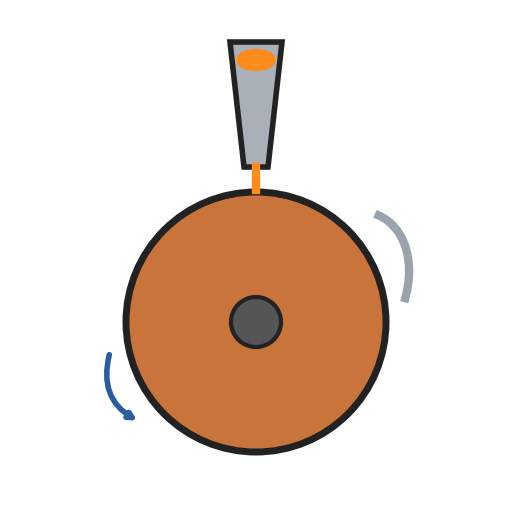 Ẹ̀rọ yíyí irin yíyọ́Àgbá gáàsì tí a fi ìfúnpá kún
3
3
Ball-mill to powder
Ball-mill to powder
Crush and ball-mill the ribbon. Particle size: Sato made 0.5 to 30 microns; below 15 microns the magnet tops 16 MGOe, better below 10, best at 5 microns or less.
Àwọn irinṣẹ́ tí a nílò:
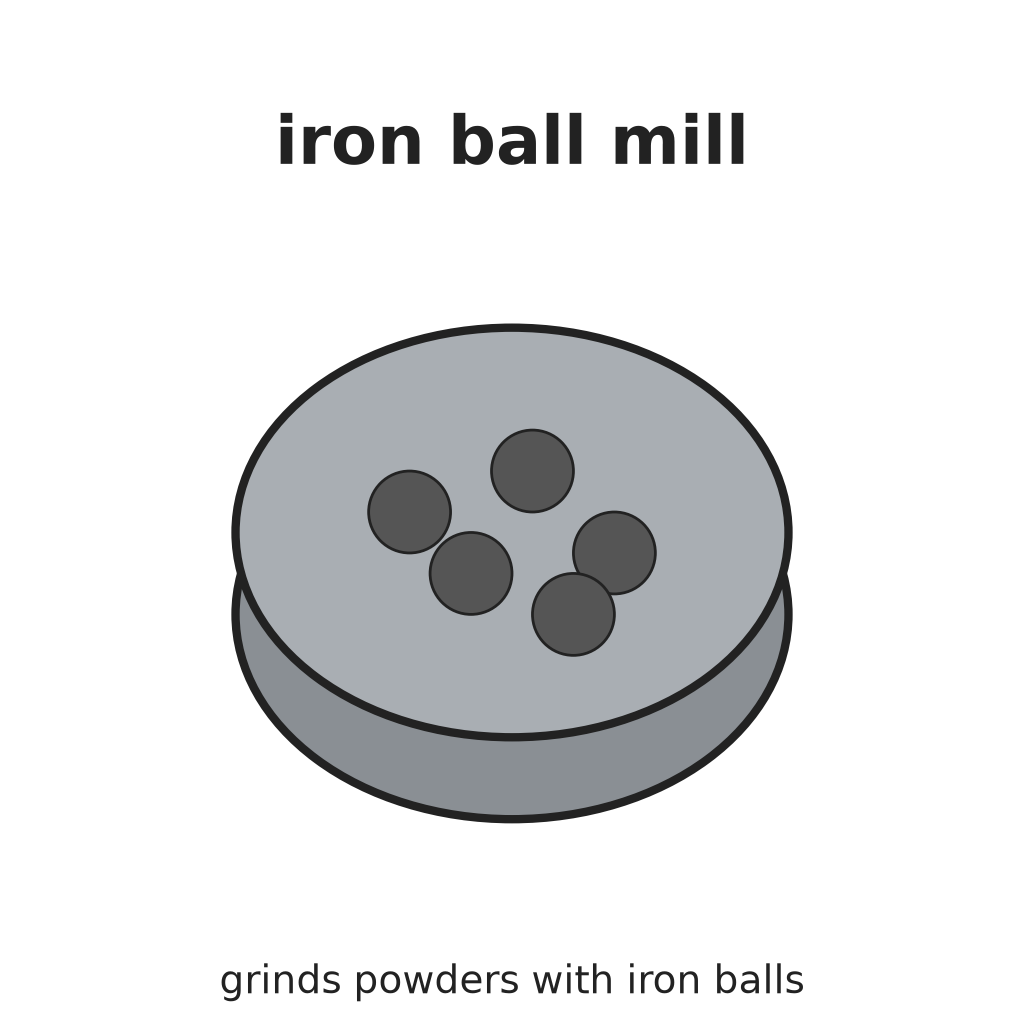 Ẹ̀rọ Lílọ Bọ́ọ̀lù Irin
4
4
Press in a 20 kOe field and sinter
Press in a 20 kOe field and sinter
Press the powder at 1 ton/cm² in a 20 kOe field. Sinter at 1,050 °C for 1 hour in vacuum and 1 more hour in argon, then quench; age at 630 °C for 1 hour in argon.
Àwọn irinṣẹ́ tí a nílò:
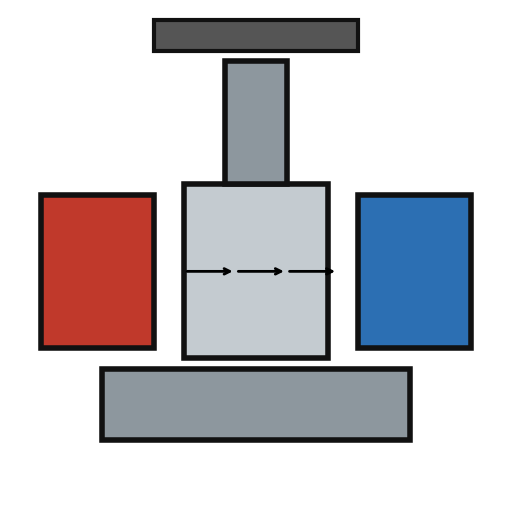 Ẹ̀rọ ìtẹ̀ pẹ̀lú pápá òòfà
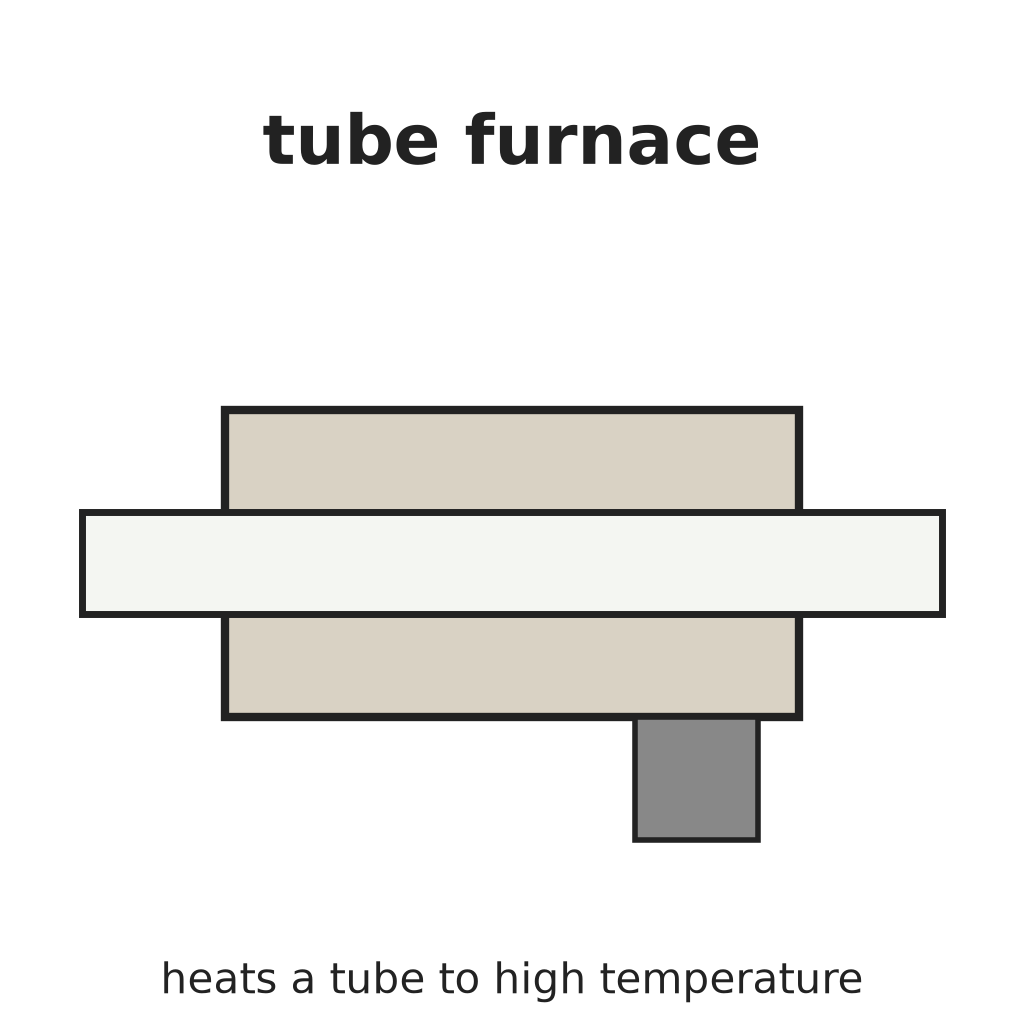 Ààrò Ọ̀pọ́n
 Ẹ̀rọ ìfàfẹ́fẹ́jádeÀgbá gáàsì tí a fi ìfúnpá kún
5
5
Magnetise at 30 kOe
Magnetise at 30 kOe
Magnetise the sintered body in a field of about 30 kOe.
Àwọn irinṣẹ́ tí a nílò:
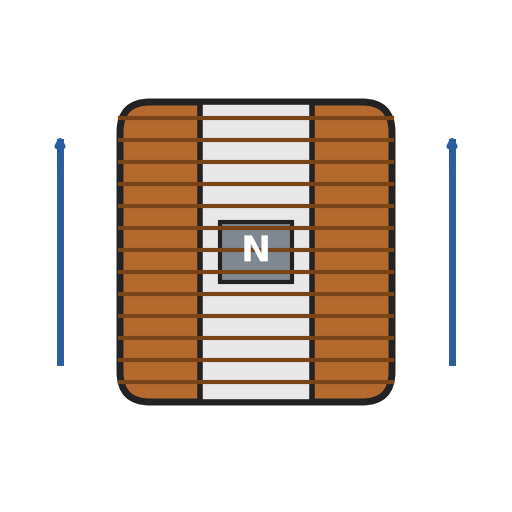 Ẹ̀rọ ìfi oofa sí
Àwọn ohun-èlò
3- 35 partsÀyè
- 4.5 partsÀyè
- 60.5 partsÀyè
Àwọn irinṣẹ́ tó nílò
9- Àyè
- 1 vendor sell this, none ship to you yetÀyè
Ìtọ́nisọ́nà yìí ń ṣe

Blueprint tó jọra
Àwọn blueprint wọ̀nyí pín ìmọ̀ — ọ̀nà, ohun-èlò tàbí ìlànà


CC0 Àgbègbè Gbogbogbò
Blueprint yìí ti jáde lábẹ́ CC0. O lè ṣe àdàkọ, yí padà, pín, àti lò láìsí ìyọ̀ǹda.
Ṣàtìlẹ́yìn Olùṣẹ́dá nípa rírà àwọn ọjà nipasẹ̀ Blueprint wọn Ẹ̀san Olùṣẹ́dá tí àwọn Olùtajà gbé kalẹ̀, tàbí ṣẹ̀dá àtúnṣe tuntun ti Blueprint yìí kí o sì fi sínú Blueprint rẹ gẹ́gẹ́ bí ìsopọ̀ láti pín owó-wíwọlé.