IṢẸ́ ỌNÀ
ẸWÀ ÀTI ÌLERA
IṢẸ́ ỌWỌ́
ÀṢÀ ÀTI ÌTÀN
ÌṢERÉ
ÀYÍKÁ
OÚNJẸ ÀTI OHUN MÍMU
REVERSE ENGINEERING
SÁYẸ́ǸSÌ
ERÉ ÌDÁRAYÁ
ÌMỌ̀-Ẹ̀RỌ
ÀWỌN OHUN WÍWỌ̀
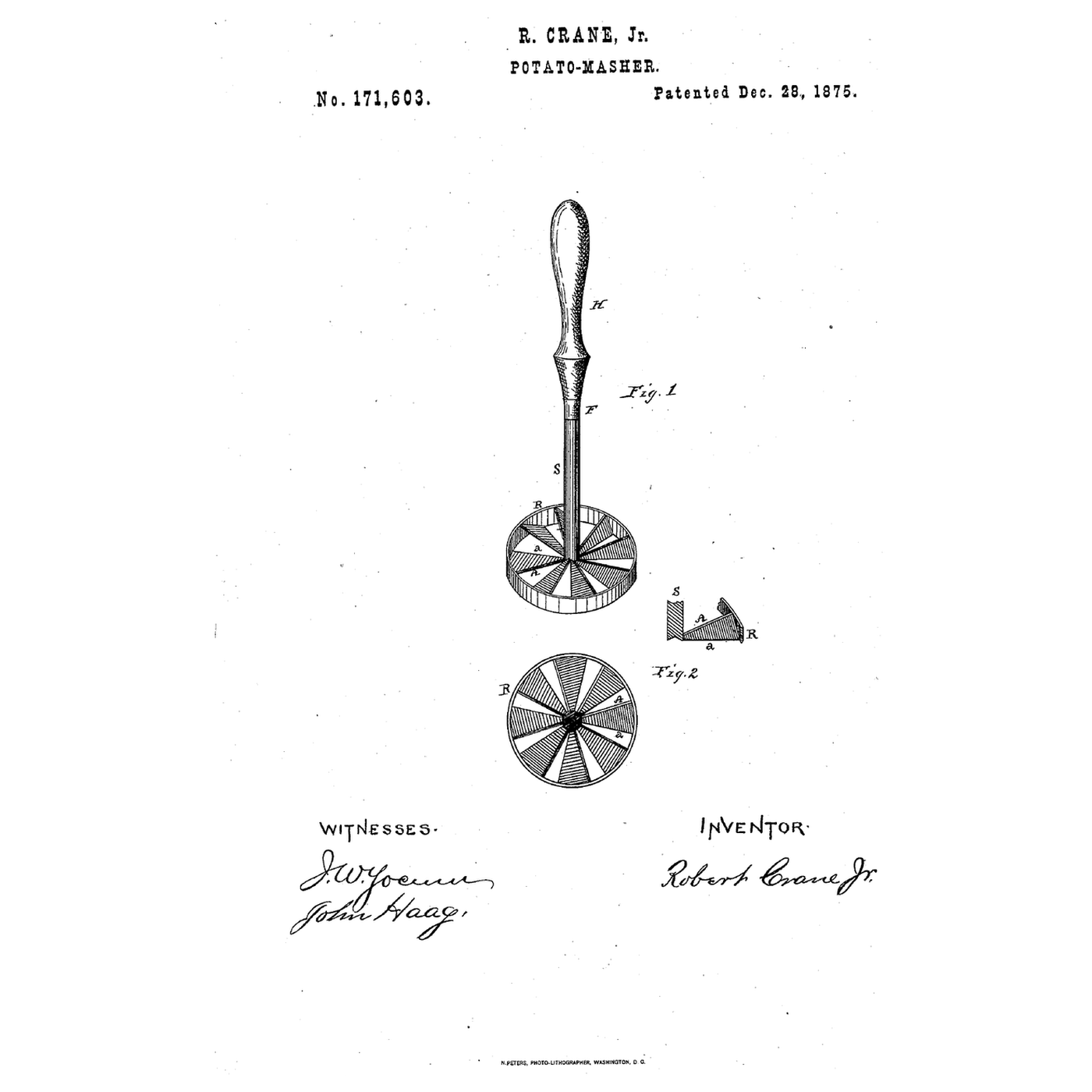


Oblique-Blade Potato Masher: Press and Turn the Ring
A masher that only presses leaves lumps where it did not land.
Robert Crane Jr. of Columbia, Pennsylvania, received US 171,603, dated 28 December 1875, for a potato masher: a ring joined to a central stem by six, eight or more wedge-shaped blades "inclined at angle of about twenty-five or thirty degrees," rigid with the handle so it can be "pressed vertically downward, and simultaneously revolved by the hand."
This rung works out how a turn drives the blades in, then prints the bladed ring, fits a stem and handle, and mashes a pan of potatoes.
Olùbẹ̀rẹ̀
About 1 hour, plus printing
Ìlànà
1
1
Pressing and turning
Pressing and turning
Ń ṣí ìwé Jupyter…
2
2
A cutting masher before it
A cutting masher before it
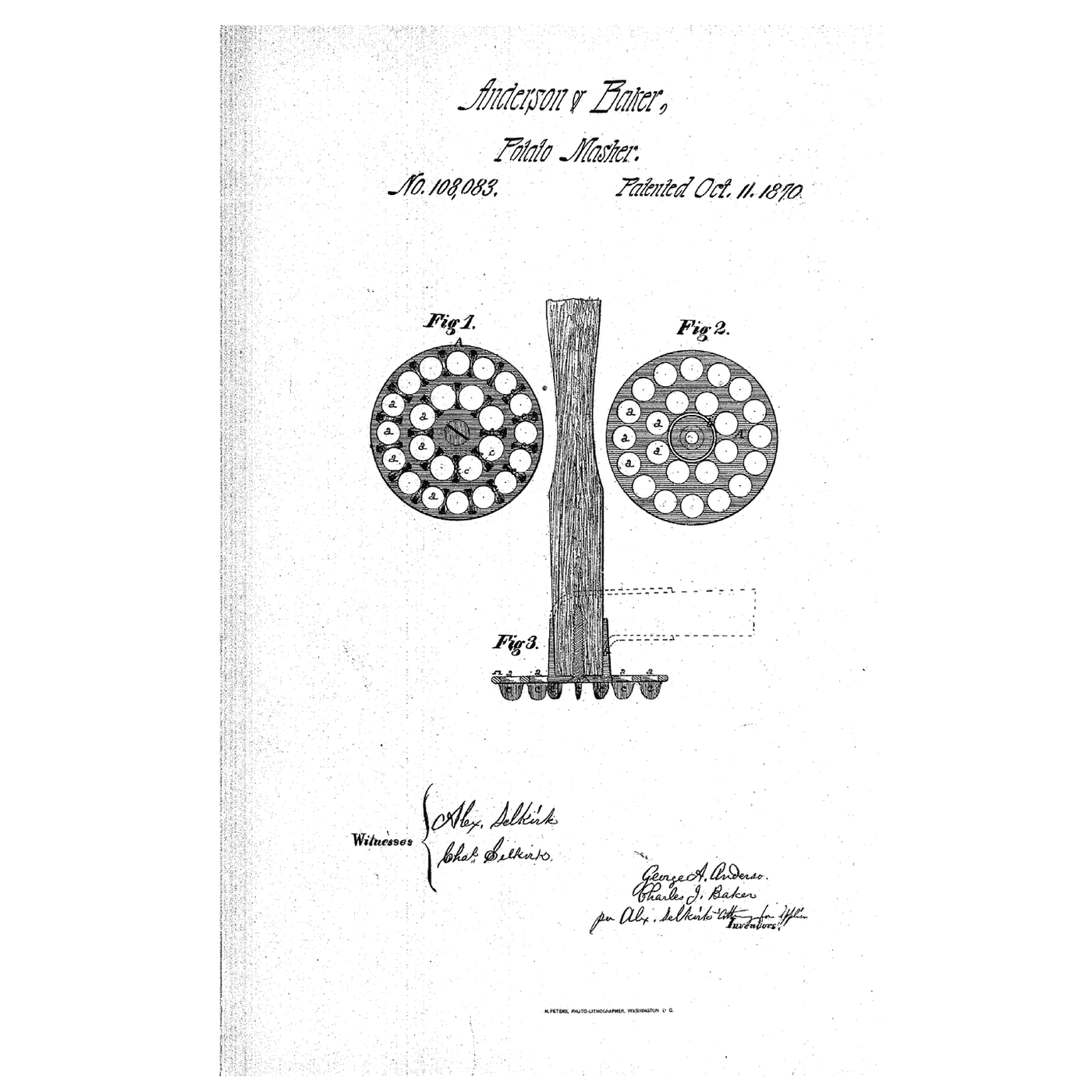
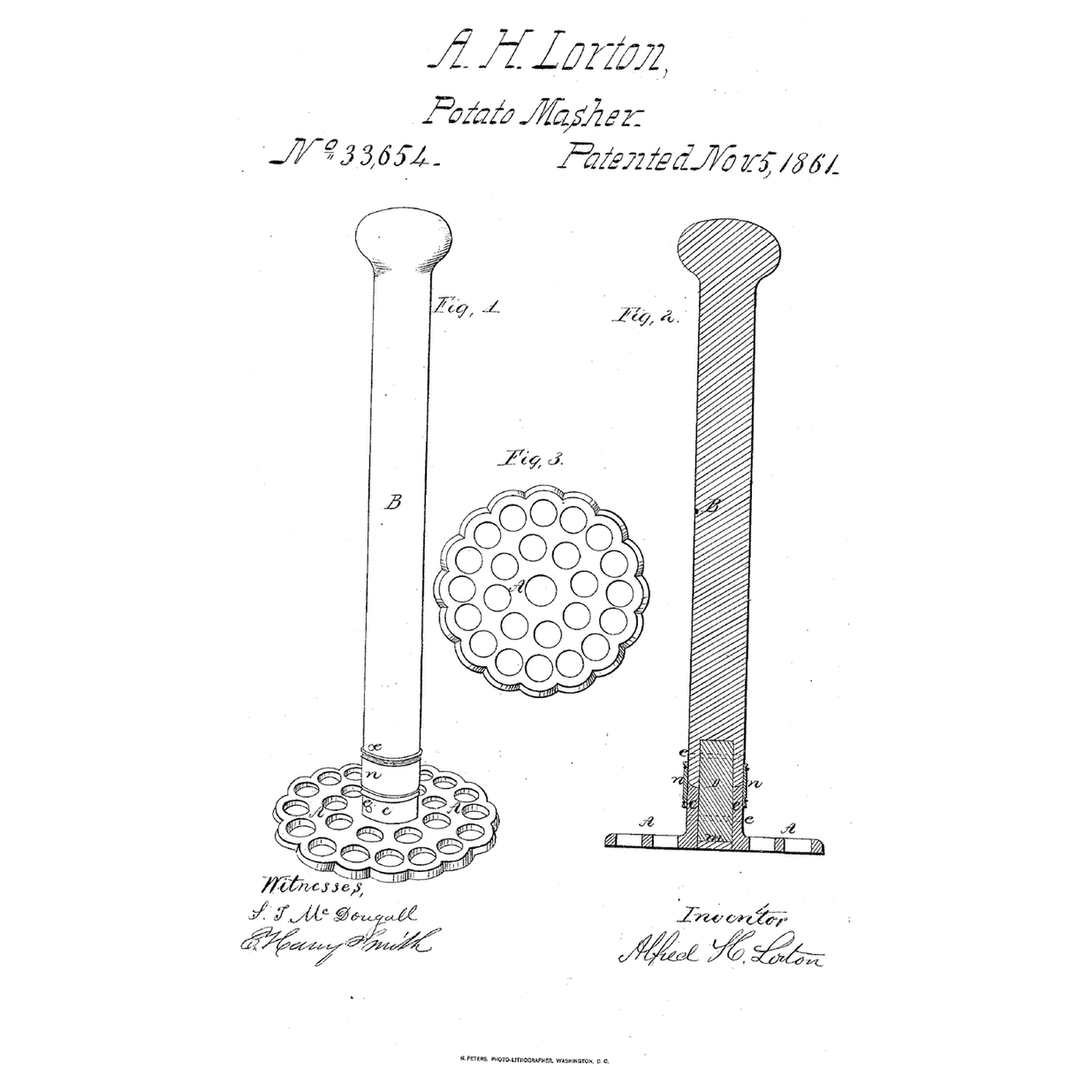
The embedded blueprint splits the potato with teeth on a disk. Crane makes the blades the whole face and inclines them so a turn drives them through.
3
3
Read US 171,603
Read US 171,603
"Just above its cutting-edge these blades widen radially outward, and unite with the vertical inner face of the ring in an oblique direction, inclined at angle of about twenty-five or thirty degrees. This oblique position gives the upper and lower edges of the blades a sharp angle or cutting-edge, and the narrower triangular and oblique spaces between the blades renders this implement of superior utility and efficiency."
4
4
Print the head
Print the head
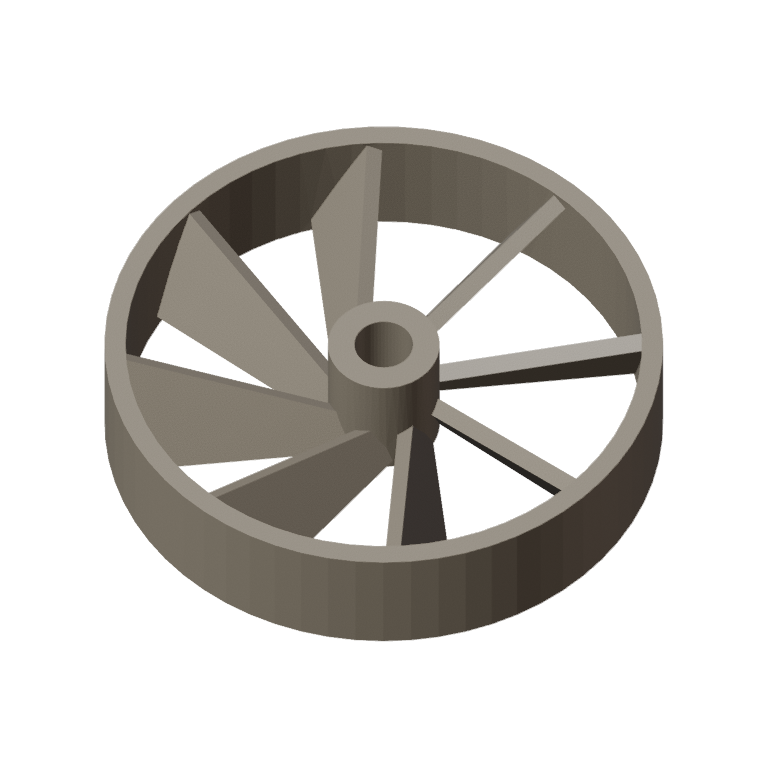
Print the ring with its eight inclined blades and hub (/uploads/blueprints/oblique-blade-potato-masher-head.stl). Print in PETG at 0.2 mm layers, 30 % infill, 4 walls; wash before first use.
Àwọn ohun èlò fún ìgbésẹ̀ yìí:
 Okùn PETG1 ẹyọ
Àwọn irinṣẹ́ tí a nílò:
 Ẹ̀rọ ìtẹ̀ 3D oníwàyà (FDM)
5
5
Stem and handle
Stem and handle
Epoxy a 60 mm length of 8 mm steel rod into the hub as the stem, and a drilled hardwood handle on its top, so the whole is rigid.
Àwọn ohun èlò fún ìgbésẹ̀ yìí:
 Ọ̀pá Róbótó Irin Rírọ̀1 ẹyọ
 Àwọn dowel igi líle1 ẹyọ
 Ẹpọ́ksì Ẹ̀yà Méjì1 ẹyọ
Àwọn irinṣẹ́ tí a nílò:
 Ayùn Irin
 Ẹ̀rọ Ìlùkòkò Aláìlókùn
 Àkójọ Orí Ìlùkòkò
6
6
The build in 3D
The build in 3D
FreeCAD model of this build, not of the patent: the 80 mm ring, eight blades inclined about 28° joining it to the hub, the steel stem, ferrule and handle.
7
7
Press and turn
Press and turn
Boil 500 g of potatoes, peeled and quartered, for about 20 minutes until a knife slides in; drain. Mash half by pressing and turning at once; mash the other half by pressing only. Time both to no lumps.
Àwọn ohun èlò fún ìgbésẹ̀ yìí:
 Ọ̀dùnkún1 ẹyọ
 Omi1 ẹyọ
Àwọn irinṣẹ́ tí a nílò:
 Ìkòkò olódi gíga
 Àwo ìdàpọ̀ ńlá ti irin tí kò ń yá
 Aago Ìdúró
8
8
Blades that bend, a head that turns on the stem
Blades that bend, a head that turns on the stem
Oblique-blade potato masher troubleshooting.
Flow
Loading...
9
9
History and honest limits
History and honest limits
**Robert Crane Jr.** of Columbia, Pennsylvania, filed US 171,603 on 26 February 1875; it is dated 28 December 1875. The blades' upper edges rise outward to meet the ring's top, their lower edges are horizontal. He knew that a handle with oblique blades in a ring made a revolving churn dasher, and claimed only the potato masher of ring, blades and handle rigidly connected.
**Honest limits.** A printed head stands in for his metal one. FDM prints hold food in their layer lines, so wash well and replace when worn. Your times are the result.
Àwọn ohun-èlò
6- 1 ẹyọÀyè
- Àyè
- 1 ẹyọÀyè
- 1 ẹyọÀyè
- 1 ẹyọÀyè
- 1 ẹyọÀyè
Àwọn irinṣẹ́ tó nílò
7- Àyè
- 1 vendor sell this, none ship to you yetÀyè
- Àyè
Àwọn fáìlì àpẹrẹ
1Ìtọ́nisọ́nà yìí ń ṣe
Blueprint tó jọra
Àwọn blueprint wọ̀nyí pín ìmọ̀ — ọ̀nà, ohun-èlò tàbí ìlànà

CC0 Àgbègbè Gbogbogbò
Blueprint yìí ti jáde lábẹ́ CC0. O lè ṣe àdàkọ, yí padà, pín, àti lò láìsí ìyọ̀ǹda.
Ṣàtìlẹ́yìn Olùṣẹ́dá nípa rírà àwọn ọjà nipasẹ̀ Blueprint wọn Ẹ̀san Olùṣẹ́dá tí àwọn Olùtajà gbé kalẹ̀, tàbí ṣẹ̀dá àtúnṣe tuntun ti Blueprint yìí kí o sì fi sínú Blueprint rẹ gẹ́gẹ́ bí ìsopọ̀ láti pín owó-wíwọlé.