IṢẸ́ ỌNÀ
ẸWÀ ÀTI ÌLERA
IṢẸ́ ỌWỌ́
ÀṢÀ ÀTI ÌTÀN
ÌṢERÉ
ÀYÍKÁ
OÚNJẸ ÀTI OHUN MÍMU
REVERSE ENGINEERING
SÁYẸ́ǸSÌ
ERÉ ÌDÁRAYÁ
ÌMỌ̀-Ẹ̀RỌ
ÀWỌN OHUN WÍWỌ̀

Pass-Through Barrel Churn: A Twisted-Wing Dasher That Comes Out Whole Through a Hatch
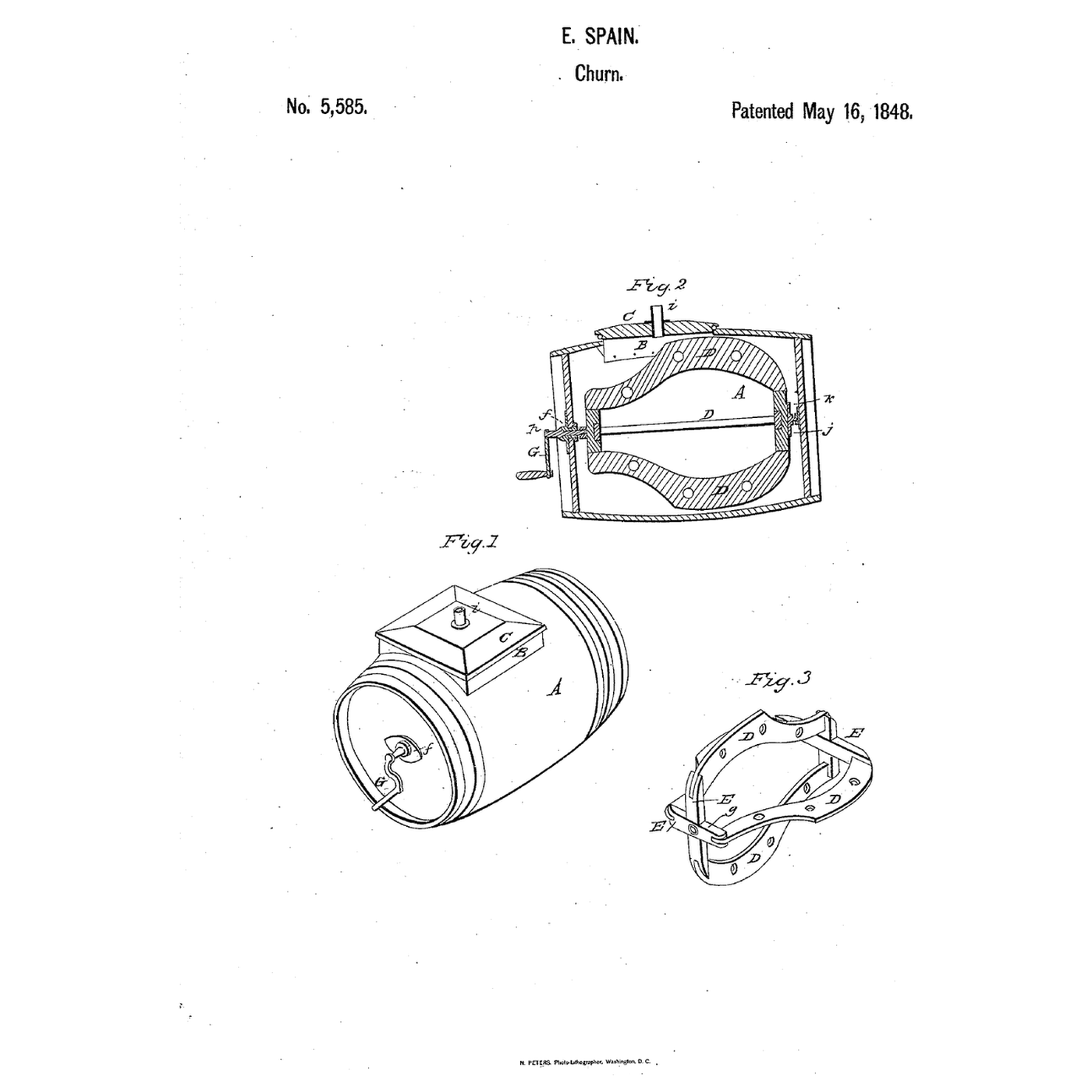
Spain set out to keep "the cream when it becomes thick, from revolving with the dasher," and to get the whole dasher out through a small hatch for cleaning.
Edward Spain of Philadelphia, Pennsylvania, received US 5,585, dated 16 May 1848, for a barrel churn whose dasher has four beating wings, each broader at one end than the other, joined to a long and a short bar crossed at each end, the long arms at one end opposite the short arms at the other. It runs on a pivot in a bearing box at one end; the crank's axle screws into a nut at the other; unscrewed, the dasher is lifted onto its pivot end and passed out "diagonally into the square aperture in the barrel."
This rung looks at the wings' geometry, then prints the dasher, bearing box and hatch, fits them to a container laid on its side, and makes butter.
Àárín
About 4 hours, plus printing
Ìlànà
1
1
The wings' geometry
The wings' geometry
Ń ṣí ìwé Jupyter…
2
2
Oblique wings on a crank before it
Oblique wings on a crank before it
The embedded blueprint sets four wings at 30° to the axle on a cross. Spain twists his wings from a long arm at one end to a short arm at the other.
3
3
Read US 5,585
Read US 5,585
"The dasher is removed from the churn by unscrewing the operating axle from the same, and elevating the dasher on to its pivot end by passing the broad ends of the beating wings at its opposite end, diagonally into the square aperture in the barrel; when it can readily be lifted out."
4
4
Print the parts
Print the parts
Print the dasher standing on one end (/uploads/blueprints/pass-through-barrel-churn-dasher.stl), with supports, and press an M10 nut into the socket at its crank end. Print the bearing box (/uploads/blueprints/pass-through-barrel-churn-bearing-box.stl), the hatch frame (/uploads/blueprints/pass-through-barrel-churn-hatch-frame.stl) and the cover with its vent tube (/uploads/blueprints/pass-through-barrel-churn-hatch-cover.stl). Print in PETG at 0.2 mm layers, 30 % infill, 4 walls; wash before first use.
Àwọn ohun èlò fún ìgbésẹ̀ yìí:
 Okùn PETG1 ẹyọ
 Nọ́ọ̀tì Onígun Mẹ́fà1 ẹyọ
Àwọn irinṣẹ́ tí a nílò:
 Ẹ̀rọ ìtẹ̀ 3D oníwàyà (FDM)
 Kọ́kọ́rọ́ tí a lè ṣàtúnṣe
5
5
The barrel
The barrel
Lay a round food-grade container about 170 mm across on its side. Cut a 66 mm square hatch in its side near one end and set the hatch frame in it with silicone. Screw the bearing box inside the far end on the axis, and drill the near end on the axis for the axle. Stand it on two pine cradles.
Àwọn ohun èlò fún ìgbésẹ̀ yìí:
 Àgọ́ ìtọ́jú ti ìpele oúnjẹ1 ẹyọ
 Ìdílẹ̀ Silikoni1 ẹyọ
 Pákó igi pine1 ẹyọ
 Ìsúrù igi #8 x 1"1 ẹyọ
Àwọn irinṣẹ́ tí a nílò:
 Ayùn Kópìngì
 Ẹ̀rọ Ìlùkòkò Aláìlókùn
 Àkójọ Orí Ìlùkòkò
 Ayùn Ọwọ́
 Ìṣù àwọn ohun ìyí skurú
6
6
Dasher and crank
Dasher and crank
Pass the dasher in through the hatch, pivot end first, and seat its pivot in the bearing box. Cut a length of M10 threaded rod, pass it through the near end and screw it into the dasher's nut. Bend or fix a crank handle on its outer end.
Àwọn ohun èlò fún ìgbésẹ̀ yìí:
 Ọ̀pá oníṣọ̀kan1 ẹyọNọ́ọ̀tì Onígun Mẹ́fà1 ẹyọ
 Àwọn dowel igi líle1 ẹyọ
Àwọn irinṣẹ́ tí a nílò:
 Ayùn IrinKọ́kọ́rọ́ tí a lè ṣàtúnṣe
 Bébà Ìfá
7
7
The build in 3D
The build in 3D
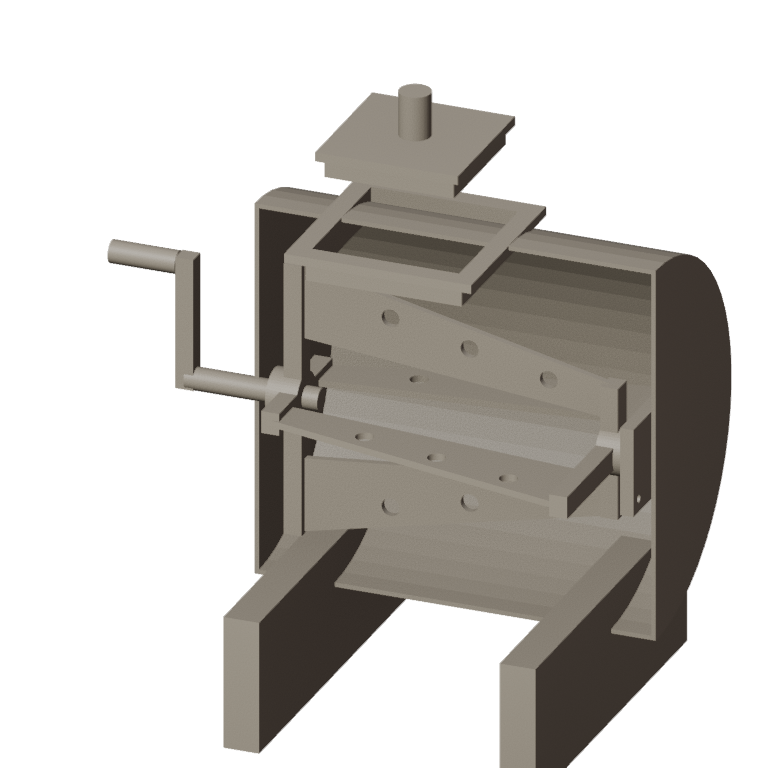
FreeCAD model of this build, not of the patent: the barrel cut away to show the dasher of four tapering wings between a long-and-short cross at each end, the bearing box, the axle and crank, the hatch frame and its cover with the vent tube, and the cradles.
8
8
Crank and make butter
Crank and make butter
Let the heavy cream stand until it reaches about 15 °C, checked with the thermometer. Pour in 1 litre through the hatch and fit the cover. Turn the crank steadily and time until the butter comes. Unscrew the axle and lift the dasher out through the hatch. Pour off the buttermilk, add cold water, churn a little and pour off again until it runs clear; work in a pinch of salt and weigh the butter.
Àwọn ohun èlò fún ìgbésẹ̀ yìí:
 Ọ̀rá wàrà tó nípọn1000 ml
 Iyọ̀ Òkun Rúkèrúdò1 ẹyọ
 Omi1 ẹyọ
Àwọn irinṣẹ́ tí a nílò:
 Ẹ̀rọ ìwọ̀n ooru oníhun tí ó dúró sí inú
 Aago Ìdúró
 Òṣùwọ̀n Díjítà Ilé Ìdáná
 Àwo ìdàpọ̀ ńlá ti irin tí kò ń yá
9
9
A dasher that will not come out, an axle that slips
A dasher that will not come out, an axle that slips
Pass-through barrel churn troubleshooting.
Flow
Loading...
10
10
History and honest limits
History and honest limits
**Edward Spain** of Philadelphia received US 5,585, dated 16 May 1848. A sheet-metal lining, its upper edge stiffened by a strong wire, supported the aperture so "the perfect contour of the churn about the aperture, is preserved"; a tube through the cover let "the gas" escape and fresh air enter. He claimed the form of the dasher, which gives the cream a compound reciprocating and rotary motion and lets a large dasher pass whole through a small square aperture.
**Honest limits.** A food-grade container and printed parts stand in for his staved barrel and wooden dasher. FDM prints hold food in their layer lines, so wash well and replace when worn. Your times and weights are the result.
Àwọn ohun-èlò
11- 1 ẹyọÀyè
- 2 ẹyọÀyè
- Àyè
- 1 ẹyọÀyè
- 1 ẹyọÀyè
- 1 ẹyọÀyè
- 1 ẹyọÀyè
- 1 ẹyọÀyè
- 1000 mlÀyè
- 1 ẹyọÀyè
- 1 ẹyọÀyè
Àwọn irinṣẹ́ tó nílò
13- Àyè
- 1 vendor sell this, none ship to you yetÀyè
- Àyè
- Àyè
- Àyè
- Àyè
Àwọn fáìlì àpẹrẹ
1Ìtọ́nisọ́nà yìí ń ṣe

Blueprint tó jọra
Àwọn blueprint wọ̀nyí pín ìmọ̀ — ọ̀nà, ohun-èlò tàbí ìlànà
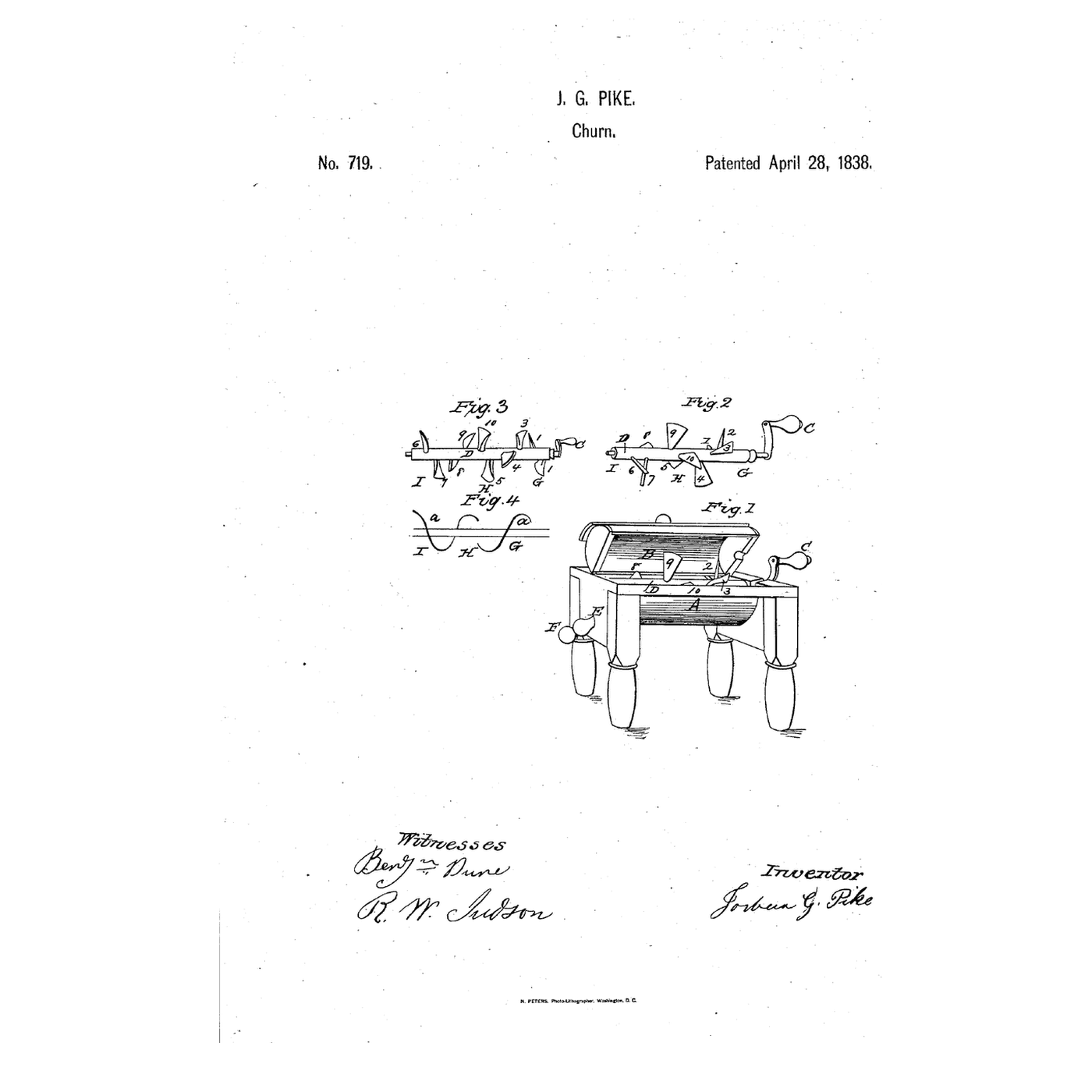
Oblique-Paddle Churn: Turn One Way to Gather the Butter, Back to Spread It
láti ọwọ́ TheChef
OÚNJẸ ÀTI OHUN MÍMU
16
0
0
0
0
0
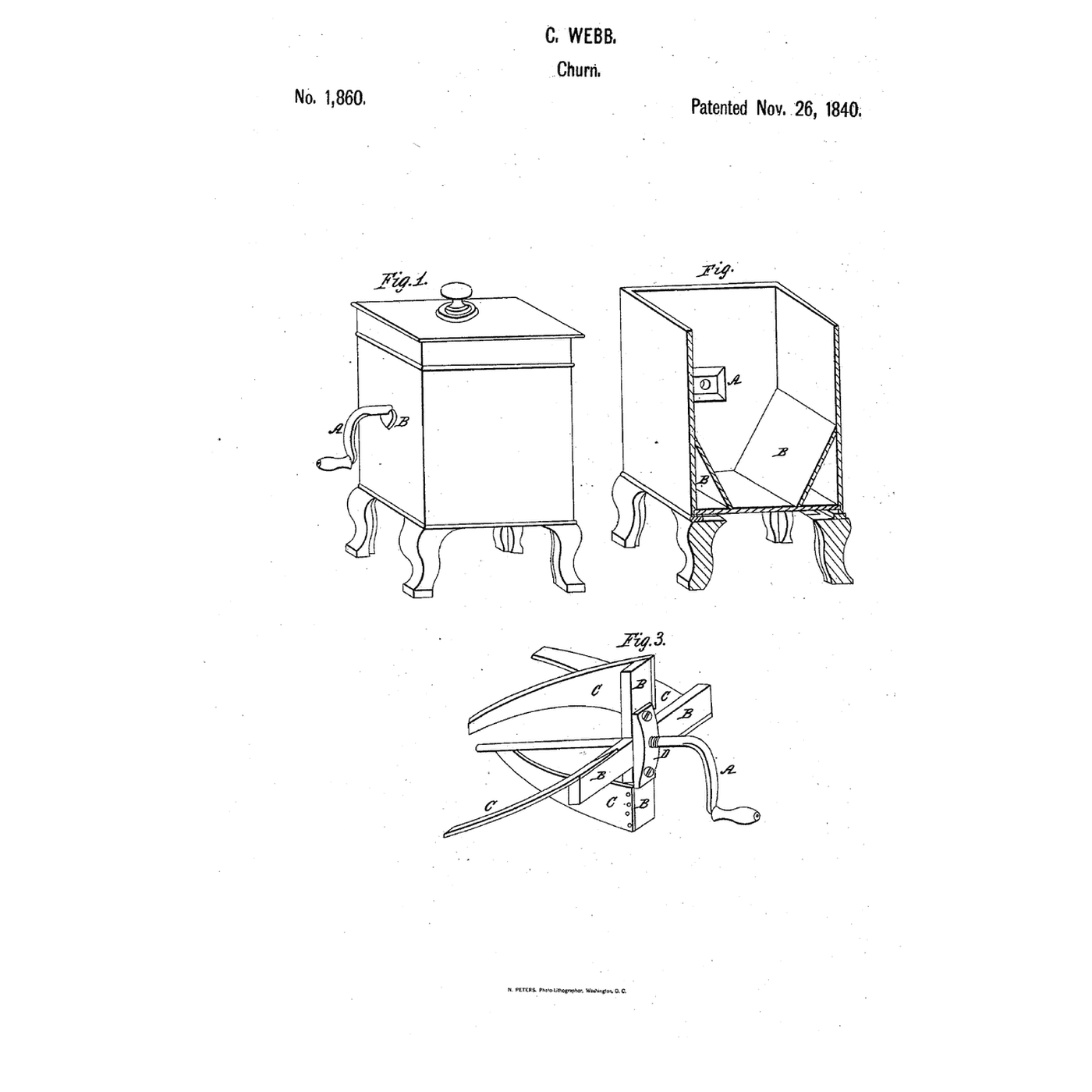
Oblique-Wing Reel Churn: Four Wings Across the Line of the Axle
láti ọwọ́ YourGrandma
OÚNJẸ ÀTI OHUN MÍMU
9
0
0
0
0
0
Ventilating Paddle Rocking Churn: Hinged Paddles That Strike One Way and Slip the Other
láti ọwọ́ Woody
Iṣẹ́ Igi
33
0
0
0
0
0
CC0 Àgbègbè Gbogbogbò
Blueprint yìí ti jáde lábẹ́ CC0. O lè ṣe àdàkọ, yí padà, pín, àti lò láìsí ìyọ̀ǹda.
Ṣàtìlẹ́yìn Olùṣẹ́dá nípa rírà àwọn ọjà nipasẹ̀ Blueprint wọn Ẹ̀san Olùṣẹ́dá tí àwọn Olùtajà gbé kalẹ̀, tàbí ṣẹ̀dá àtúnṣe tuntun ti Blueprint yìí kí o sì fi sínú Blueprint rẹ gẹ́gẹ́ bí ìsopọ̀ láti pín owó-wíwọlé.