IṢẸ́ ỌNÀ
ẸWÀ ÀTI ÌLERA
IṢẸ́ ỌWỌ́
ÀṢÀ ÀTI ÌTÀN
ÌṢERÉ
ÀYÍKÁ
OÚNJẸ ÀTI OHUN MÍMU
REVERSE ENGINEERING
SÁYẸ́ǸSÌ
ERÉ ÌDÁRAYÁ
ÌMỌ̀-Ẹ̀RỌ
ÀWỌN OHUN WÍWỌ̀


Piston-Pump Egg Beater: Pump the Eggs Through a Grate
A whisk stirs the eggs; it does not force them through anything.
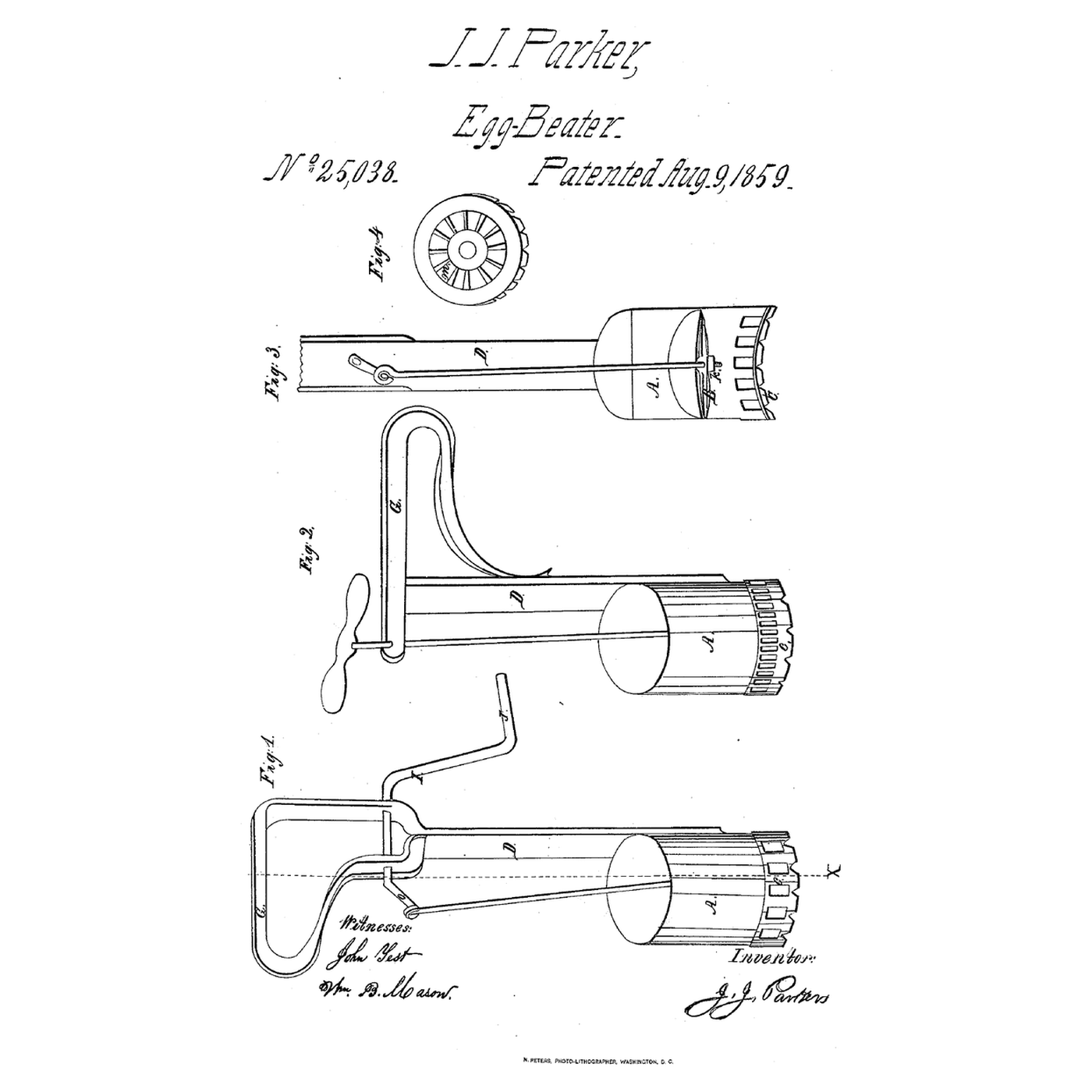
J. J. Parker of Marietta, Ohio, received US 25,038, dated 9 August 1859, for an egg beater and churn combined: a tin tube with square openings at its lower end and a piston inside, worked up and down "in the manner of a pump" by a crank, which "draws the eggs in and out through the grate bars until they are completely torn in pieces or made perfectly fine and frothy"; a band turned round the tube's foot closes the openings to vary the agitation.
This rung works out the jet speed at each band setting, then prints the tube, band and piston, fits the crank, and times a beating at two settings.
Àárín
About 3 hours, plus printing
Ìlànà
1
1
Jet speed at each setting
Jet speed at each setting
Ń ṣí ìwé Jupyter…
2
2
The churning it also does
The churning it also does
The embedded blueprint churns cream to butter. Parker's pump-tube does the same when worked longer in cream.
3
3
Read US 25,038
Read US 25,038
"At the lower end of the tube is a band of about one half an inch in width loosely fitted with openings one fourth of an inch square and corresponding exactly with the openings in the tube and of the same size, so that by turning the band around either way the openings are closed or made smaller at pleasure, so as to produce more or less agitation in the eggs or cream. This band has a bottom with grate like bars cut or made in it."
4
4
Print the tube, band and piston
Print the tube, band and piston
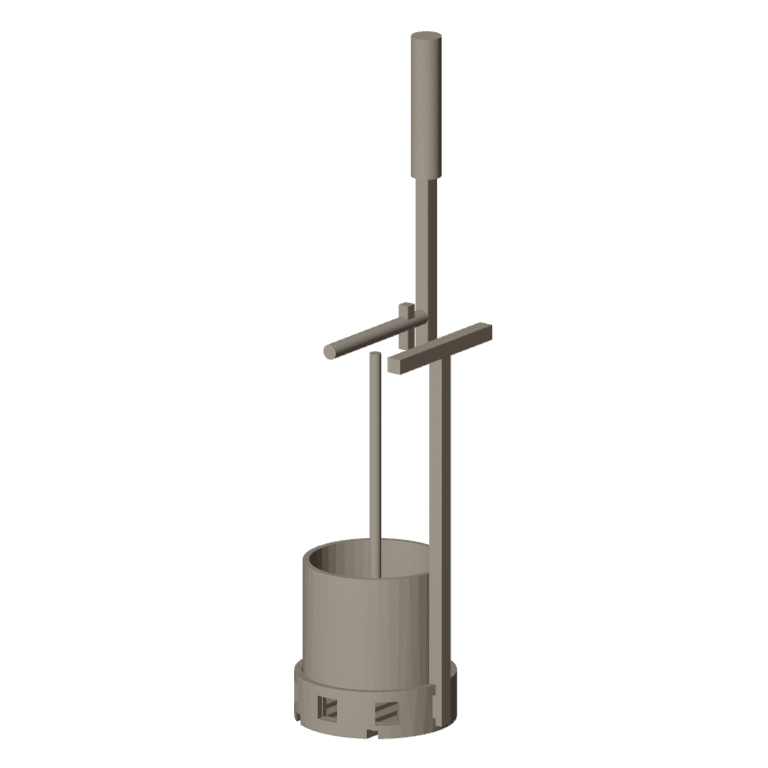
Print the tube (/uploads/blueprints/piston-pump-egg-beater-tube.stl), the band with its grate (/uploads/blueprints/piston-pump-egg-beater-band.stl) and the piston disk (/uploads/blueprints/piston-pump-egg-beater-piston.stl). Print in PETG at 0.2 mm layers, 30 % infill, 4 walls.
Àwọn ohun èlò fún ìgbésẹ̀ yìí:
 Okùn PETG1 ẹyọ
Àwọn irinṣẹ́ tí a nílò:
 Ẹ̀rọ ìtẹ̀ 3D oníwàyà (FDM)
5
5
Pack the piston
Pack the piston
Cut a leather disk 2 mm larger than the piston. Clamp it between the printed disk and a washer on an M3 rod end with a nut, so its edge seals the tube.
Àwọn ohun èlò fún ìgbésẹ̀ yìí:
 Awọ1 ẹyọ
 Wáṣà Pẹrẹsẹ1 ẹyọ
 Nọ́ọ̀tì Onígun Mẹ́fà1 ẹyọ
 Skurú ẹ̀rọ1 ẹyọ
Àwọn irinṣẹ́ tí a nílò:
 Ọ̀bẹ Iṣẹ́ Ọwọ́
 Kọ́kọ́rọ́ tí a lè ṣàtúnṣe
 Òṣùwọ̀n Kálípà Díjítà Ìnṣì 6
6
6
Post and crank
Post and crank
Epoxy a 4 mm wire post up the tube's side, bent at its top into bearings 100 mm above the tube. Bend a crank shaft of 3 mm wire with a 22 mm crank one end and a handle the other, and link the crank to the rod with a wire pitman.
Àwọn ohun èlò fún ìgbésẹ̀ yìí:
 Ọ̀pá Róbótó Irin Rírọ̀1 ẹyọ
 Okùn irin aláìjẹrùn1 ẹyọ
 Ẹpọ́ksì Ẹ̀yà Méjì1 ẹyọ
Àwọn irinṣẹ́ tí a nílò:
 Ìdìmú Tábìlì
 Ẹ̀mú Olórí Yíká
 Ẹmú Ẹnu Pẹrẹsẹ
 Ayùn Irin
 Gílásì Ààbò Tí Ó Mọ́
7
7
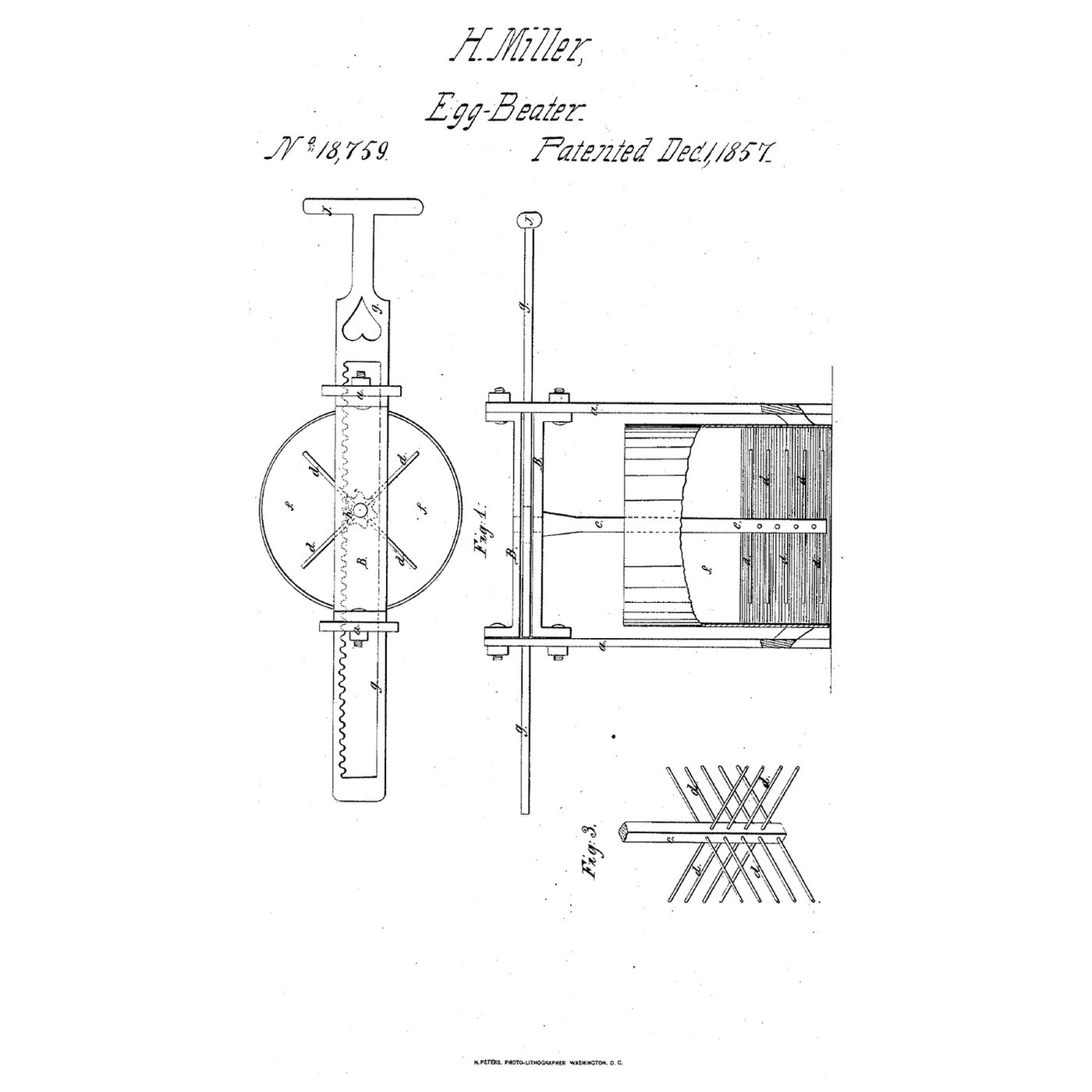
The patent drawing
The patent drawing
US 25,038 drawing sheet, public domain (expired patent).
8
8
Beat at two settings
Beat at two settings
Stand the beater in a bowl with two eggs and a spoon of sugar. Crank twice a second with the band fully open and time to a fine froth; repeat with the band half closed.
Àwọn ohun èlò fún ìgbésẹ̀ yìí:
 Ẹyin4 ẹyọ
 Ṣúgà oníwẹ́wẹ́1 ẹyọ
Àwọn irinṣẹ́ tí a nílò:
 Àwo ìdàpọ̀ ńlá ti irin tí kò ń yá
 Aago Ìdúró
9
9
A pump that leaks past, sticks or splashes
A pump that leaks past, sticks or splashes
Piston-pump egg beater troubleshooting.
Flow
Loading...
10
10
History and honest limits
History and honest limits
**J. J. Parker** of Marietta, Ohio, received US 25,038, dated 9 August 1859. His smaller machine's tube is one and a half inches across and one and five eighths deep; the crank shaft is No. 7 wire with a seven-eighths-inch crank; the piston is two oval pieces of thin metal with leather between, its edges forced out by pressing them together. It may also be worked by a handle on the rod instead of a crank.
**Honest limits.** FDM prints hold food in their layer lines, so wash well and replace when worn. Printed PETG stands in for tin. The notebook treats the flow as steady. Your times are the result.
Àwọn ohun-èlò
10- 1 ẹyọÀyè
- 1 ẹyọÀyè
- 1 ẹyọÀyè
- 1 ẹyọÀyè
- 1 ẹyọÀyè
- Àyè
- 1 ẹyọÀyè
- 1 ẹyọÀyè
- 4 ẹyọÀyè
- 1 ẹyọÀyè
Ìtọ́nisọ́nà yìí ń ṣe
Blueprint tó jọra
Àwọn blueprint wọ̀nyí pín ìmọ̀ — ọ̀nà, ohun-èlò tàbí ìlànà



CC0 Àgbègbè Gbogbogbò
Blueprint yìí ti jáde lábẹ́ CC0. O lè ṣe àdàkọ, yí padà, pín, àti lò láìsí ìyọ̀ǹda.
Ṣàtìlẹ́yìn Olùṣẹ́dá nípa rírà àwọn ọjà nipasẹ̀ Blueprint wọn Ẹ̀san Olùṣẹ́dá tí àwọn Olùtajà gbé kalẹ̀, tàbí ṣẹ̀dá àtúnṣe tuntun ti Blueprint yìí kí o sì fi sínú Blueprint rẹ gẹ́gẹ́ bí ìsopọ̀ láti pín owó-wíwọlé.