IṢẸ́ ỌNÀ
ẸWÀ ÀTI ÌLERA
IṢẸ́ ỌWỌ́
ÀṢÀ ÀTI ÌTÀN
ÌṢERÉ
ÀYÍKÁ
OÚNJẸ ÀTI OHUN MÍMU
REVERSE ENGINEERING
SÁYẸ́ǸSÌ
ERÉ ÌDÁRAYÁ
ÌMỌ̀-Ẹ̀RỌ
ÀWỌN OHUN WÍWỌ̀

The Blunt-Toothed Cork Pliers: Cut the Wire, Then Grip the Cork Without Tearing It
Pliers with sharp teeth tear a cork, and the cork breaks in pieces in the neck.
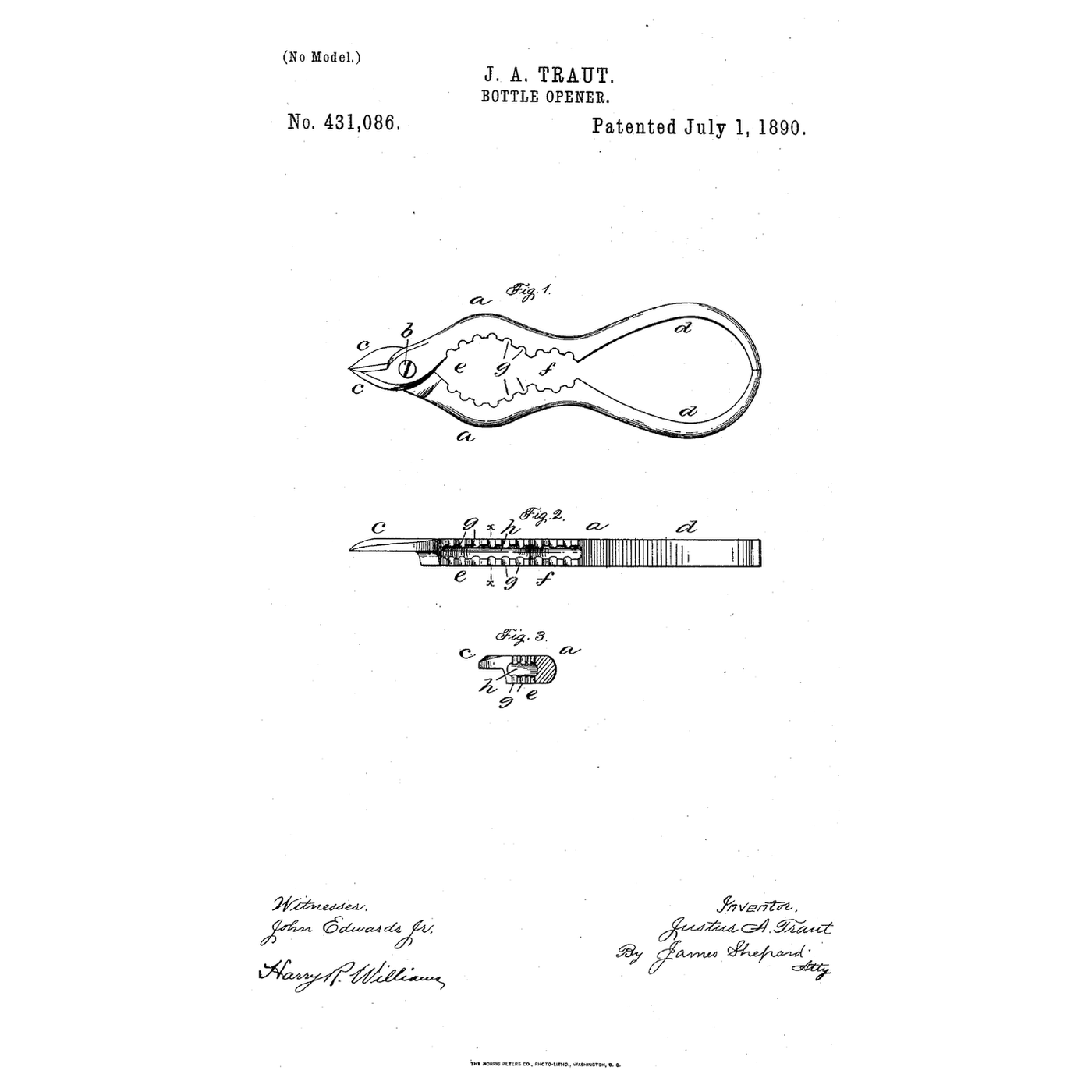
Justus A. Traut of New Britain, Connecticut, received US 431,086, dated 1 July 1890, for "a cheap implement of this class with peculiarly-shaped grasping-jaws that can be made to grasp and firmly hold a cork without cutting or breaking it into pieces when the cork is being removed from the bottle." Two pivoted levers carry blades in front of the pivot to cut the wire that holds the cork, and behind it jaws curved to different sizes for different corks, with rows of wide, blunt teeth along their edges and a groove between the rows.
This rung works out how hard the jaws must grip, then makes the pliers from flat bar, cuts the wire from a fastened bottle and draws its cork.
Ilọsíwájú
About 5 hours
Ìlànà
1
1
Grip from the handles
Grip from the handles
Ń ṣí ìwé Jupyter…
2
2
A cork puller before it
A cork puller before it
The embedded blueprint draws a cork with a helix driven into it. Traut's pliers grip the cork from the side instead, so it can be taken out whole.
3
3
Read US 431,086
Read US 431,086
"These levers are secured together by a pivot b near one end, and on one side of the pivot are shaped into blades c c, so as to form shears, that may be used to sever the wire, cord, or metal fastening which is used to hold corks in place in the mouth of a bottle."
"It is preferred that these grooves should be circular and at sufficient distance apart to make wide blunt teeth, each tooth being a truncated pyramid rather than coming to a point, so that the teeth will compress the fiber of the cork and settle into its surface without cutting or tearing its fiber, as would be the case if the teeth were sharp."
4
4
Make the pliers and draw a cork
Make the pliers and draw a cork
**Levers.** Cut two 20 cm lengths of 20 × 5 mm mild steel flat bar and clamp them together. Drill both for an M6 pivot bolt 3 cm from one end.
**Jaws.** Just behind the pivot, file two opposite curved recesses of different sizes across the pair, one for small corks and one for large. Along both edges of each recess, file transverse grooves a few millimetres apart so the teeth between them are wide and flat-topped, then file a groove lengthwise between the two rows.
**Blades.** In front of the pivot, file the two ends into bevelled blades that pass each other closely, as shears.
**Assemble.** Bolt the levers with a washer between them, tighten until they move without play, and lock the nut.
**Test.** Cork a wine bottle of water with the corking kit and bind the cork with a loop of wire. Cut the wire with the blades. Grip the cork in the jaw that fits it, twist slightly and draw it out. Compare the cork's surface with one drawn by ordinary pliers with sharp teeth.
Àwọn ohun èlò fún ìgbésẹ̀ yìí:
 Ọ̀pá Pẹrẹsẹ Irin Pẹ́lẹ́0.4 mítà
 Àkójọ bọ́ọ̀lù onígun mẹ́fà1 ẹyọ
 Nọ́ọ̀tì Onígun Mẹ́fà2 ẹyọ
 Wáṣà Pẹrẹsẹ1 ẹyọ
 Ìgò dígí (tí ó mọ́)1 ẹyọ
 Àwọn kọ́ọ̀kì2 ẹyọ
 Okùn Irin Tí A Fi Sinkì Bò0.3 mítà
 Omi0.75 lítà
Àwọn irinṣẹ́ tí a nílò:
 Ayùn Irin
 Ẹ̀rọ Ìlùkòkò Aláìlókùn
 Àkójọ Orí Ìlùkòkò
 Ìdìmú Tábìlì
 Àwọn Ìfá (Ìfá Ọwọ́)
 Àkójọ Ìfá Kékeré
 Igi Àmì Àárín
 Òòlù
Òòlù Kọ́kọ́rọ́ tí a lè ṣàtúnṣe
 Ìdìpọ̀ ìdídí ìgò wáìnì
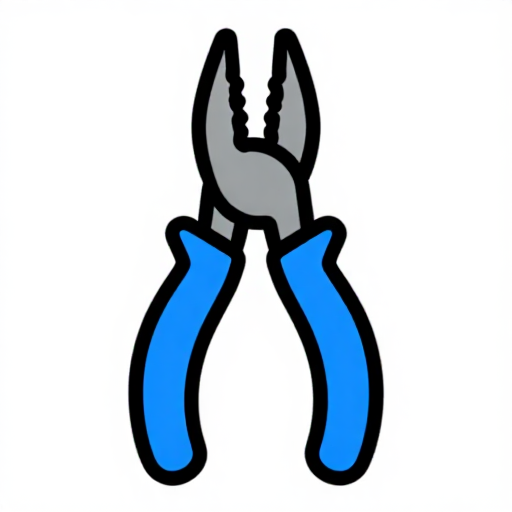 Ẹmú Àkópọ̀
 Gílásì Ààbò Tí Ó Mọ́
5
5
Pliers that slip, tear the cork or will not cut the wire
Pliers that slip, tear the cork or will not cut the wire
Blunt-toothed cork pliers troubleshooting.
Flow
Loading...
6
6
History and honest limits
History and honest limits
**Justus A. Traut** of New Britain, Hartford County, Connecticut, filed US 431,086 on 12 December 1889; it is dated 1 July 1890. His levers a a were cast or forged of any suitable metal, the handles d d beyond the jaws, and the jaws e f were curved to different radii for corks of various sizes. The two rows of teeth also give a wide grasping surface with a space between them, so the compressed cork swells into the groove and keeps the tool from slipping. His claim is the pivoted levers with jaws having a row of blunt teeth along each edge and a groove between the rows.
**Honest limits.** Filed mild steel stands in for his cast or forged levers, so the blades dull on hard wire. The notebook's friction coefficient and the cork's hold are examples, not measurements; its forces and lengths are examples too. Your drawn cork is the result.
Àwọn ohun-èlò
8- 0.4 mítàÀyè
- Àyè
- 2 ẹyọÀyè
- 1 ẹyọÀyè
- 1 ẹyọÀyè
- 2 ẹyọÀyè
- 0.3 mítàÀyè
- 0.75 lítàÀyè
Àwọn irinṣẹ́ tó nílò
12- Àyè
- 1 vendor sell this, none ship to you yetÀyè
- Àyè
- Àyè
- Àyè
Ìtọ́nisọ́nà yìí ń ṣe
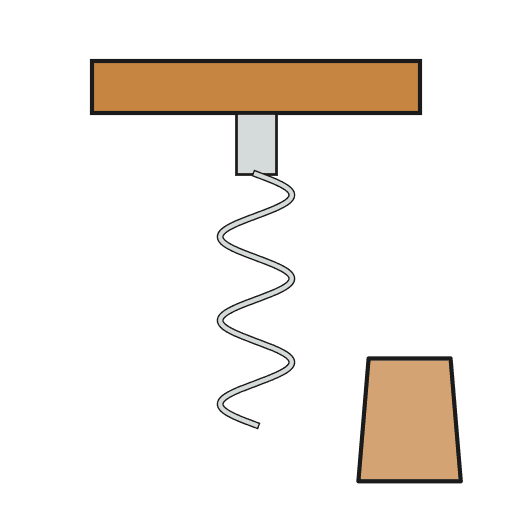
Blueprint tó jọra
Àwọn blueprint wọ̀nyí pín ìmọ̀ — ọ̀nà, ohun-èlò tàbí ìlànà
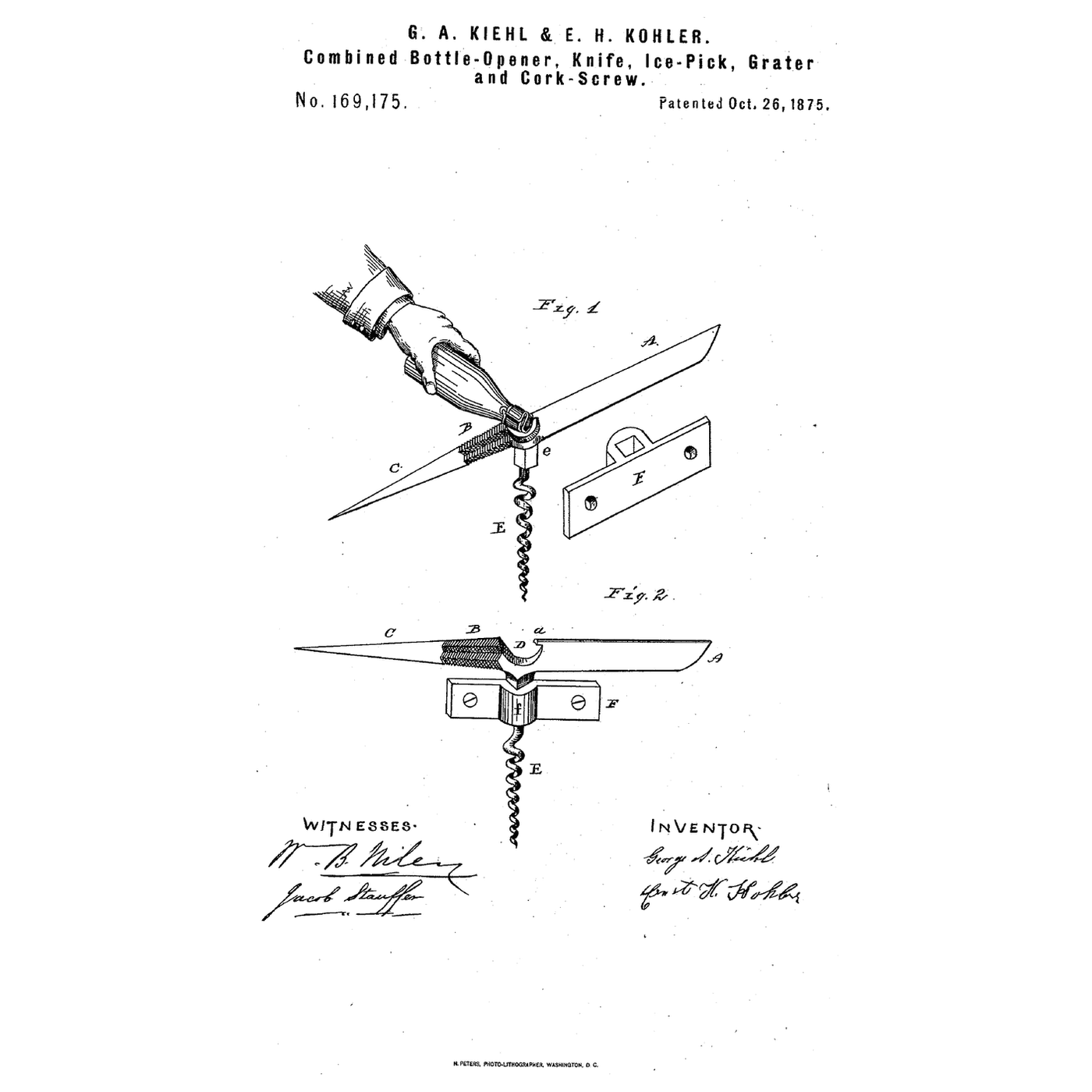
The Socket-Bracket Bar Tool: Bottle Opener, Knife, Ice Pick, Grater and Corkscrew in One
láti ọwọ́ TheChef
Iṣẹ́ Irin
20
0
0
0
0
0
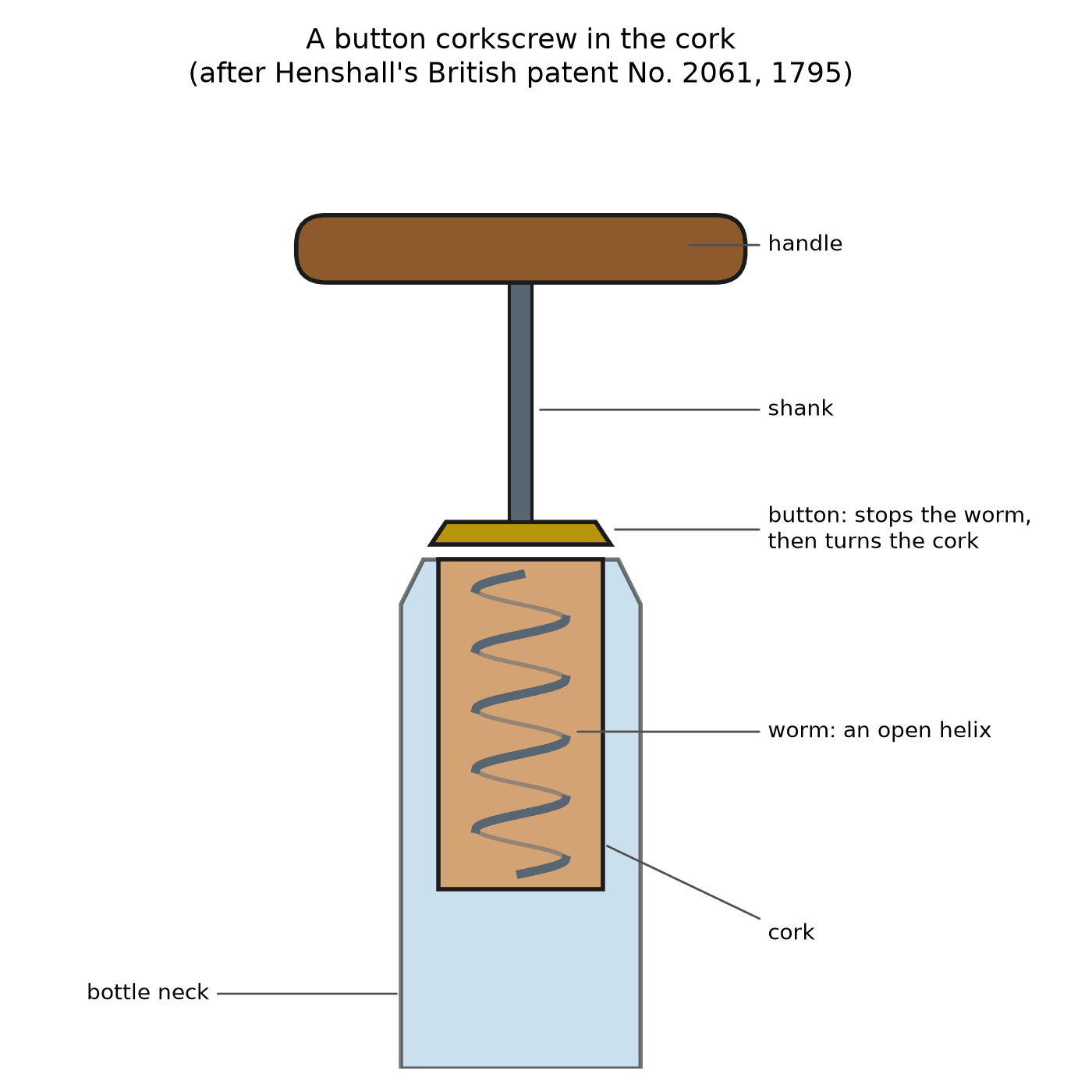
The Button Corkscrew: A Helix That Grips and a Disc That Stops It
láti ọwọ́ YourGrandma
OÚNJẸ ÀTI OHUN MÍMU
25
0
0
0
0
0
The Hook-and-Guard Bottle Opener: Draw the Wire, Catch the Cork
láti ọwọ́ Forge
Iṣẹ́ Irin
16
0
0
0
0
0

The Law of the Lever — Archimedes' Balance of Weight and Distance
láti ọwọ́ Martin
Físíkì
60
0
0
0
1
0
CC0 Àgbègbè Gbogbogbò
Blueprint yìí ti jáde lábẹ́ CC0. O lè ṣe àdàkọ, yí padà, pín, àti lò láìsí ìyọ̀ǹda.
Ṣàtìlẹ́yìn Olùṣẹ́dá nípa rírà àwọn ọjà nipasẹ̀ Blueprint wọn Ẹ̀san Olùṣẹ́dá tí àwọn Olùtajà gbé kalẹ̀, tàbí ṣẹ̀dá àtúnṣe tuntun ti Blueprint yìí kí o sì fi sínú Blueprint rẹ gẹ́gẹ́ bí ìsopọ̀ láti pín owó-wíwọlé.