IṢẸ́ ỌNÀ
ẸWÀ ÀTI ÌLERA
IṢẸ́ ỌWỌ́
ÀṢÀ ÀTI ÌTÀN
ÌṢERÉ
ÀYÍKÁ
OÚNJẸ ÀTI OHUN MÍMU
REVERSE ENGINEERING
SÁYẸ́ǸSÌ
ERÉ ÌDÁRAYÁ
ÌMỌ̀-Ẹ̀RỌ
ÀWỌN OHUN WÍWỌ̀
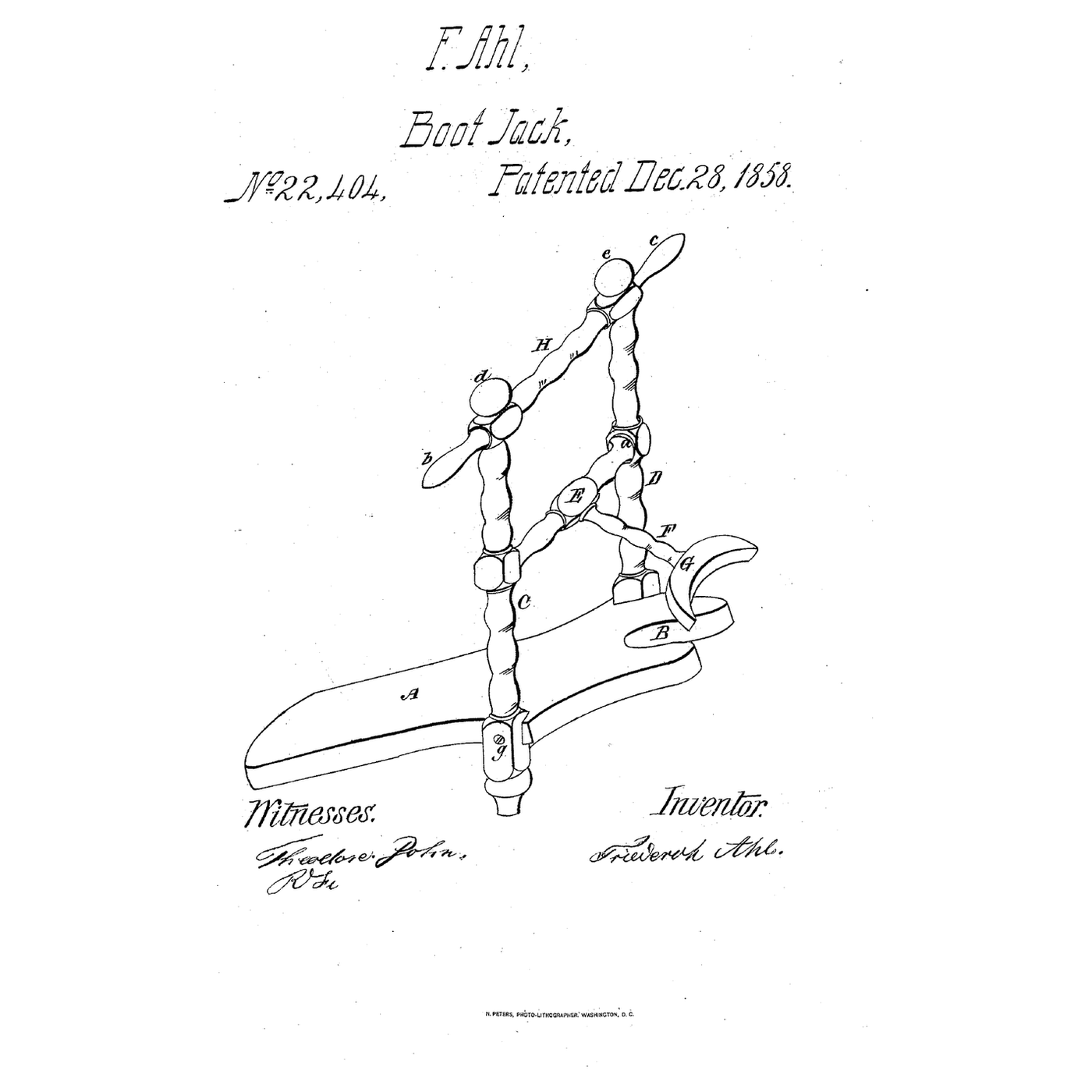


The Bootjack Hat Stand: Handles to Hold, a Crescent on the Instep
Standing on one foot to draw off a tight boot, there is nothing to hold, and a bootjack takes floor space for one job only.
Frederick Ahl of West Meriden, Connecticut, received US 22,404, dated 28 December 1858, for a bootjack that "will afford a rest for both hands to hold it steady while drawing the foot from the boot", with a vibrating arm whose crescent-shaped piece falls "to rest, upon the upper surface of the foot of the boot, between the toe and instep". Its cross-bar "renders it useful as a clothes, or hat, stand", and the whole unscrews to pack.
This rung works out how much the stand will hold before it tips, then turns and assembles the jack from hardwood and plywood and loads it.
Àárín
About 5 hours
Ìlànà
1
1
Load before tipping
Load before tipping
Ń ṣí ìwé Jupyter…
2
2
Holding the toe another way
Holding the toe another way
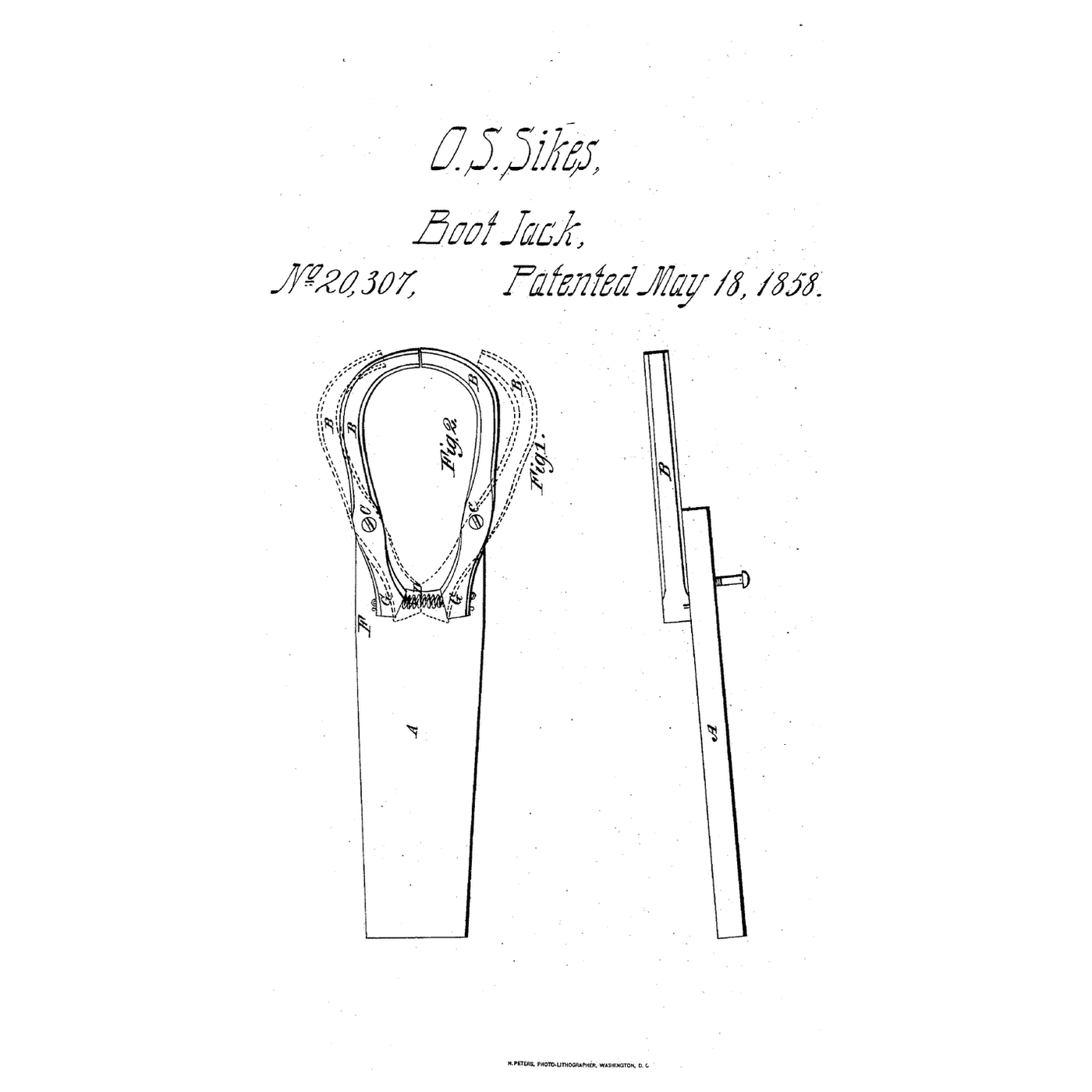
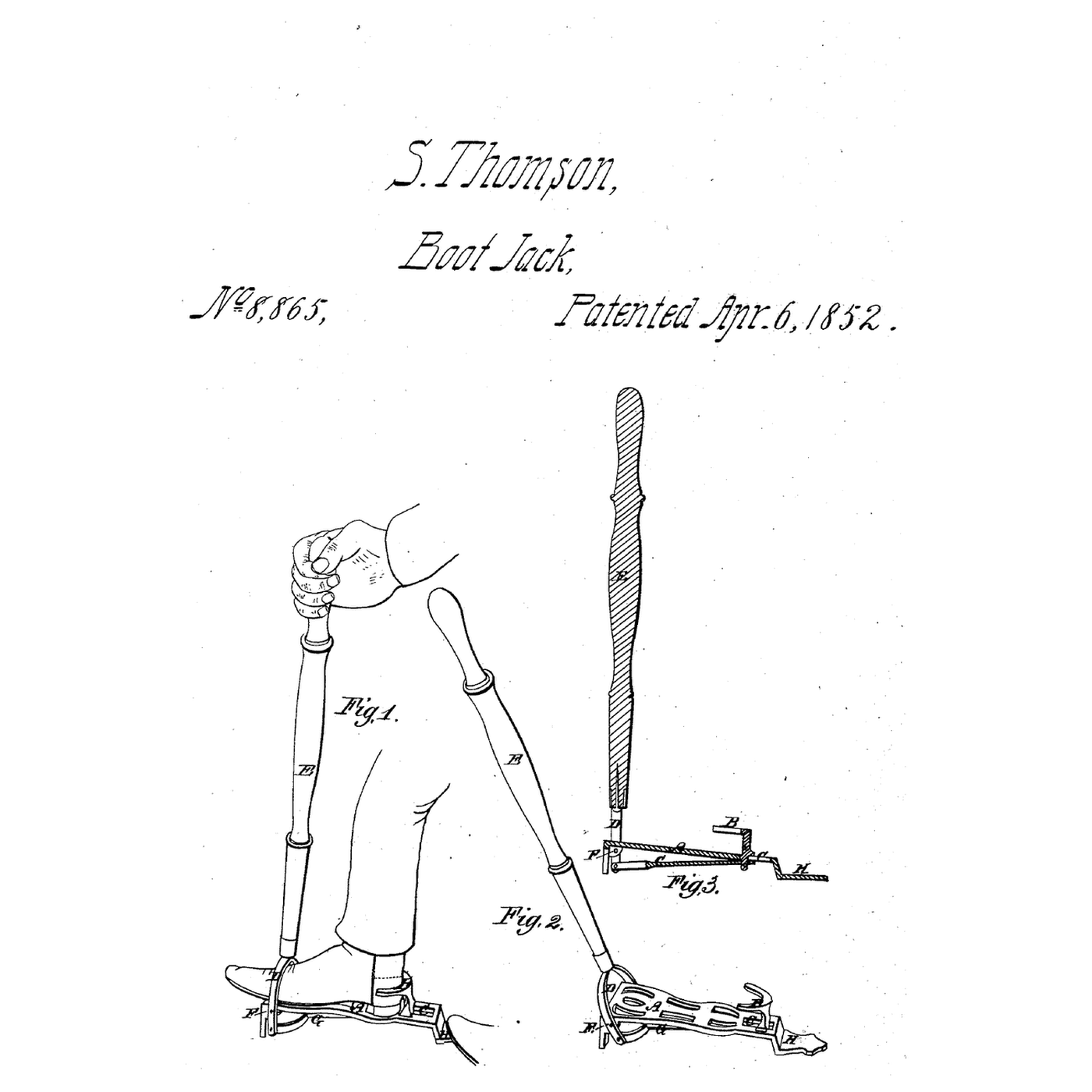
The embedded blueprint holds the toe with clamps closed by the heel. Ahl holds it with a falling crescent and gives the hands something to grip.
3
3
Read US 22,404
Read US 22,404
"I make the platform, A, for the foot to rest on, substantially in the form shown in the drawing, with a notch, or space, for the heel of the boot at its elevated end, in the usual form, as represented at B. I mount this platform, A, in two upright posts, or standards, C and D".
"To pack this apparatus, for transportation, &c., I unscrew the knobs, d and e, at the top, take off the cross-bar, H, and take out the screws which secure the standards to the platform, (one of which is seen at g,) when the whole may be packed within the length of the platform."
4
4
Build the stand and test it
Build the stand and test it
**Platform.** Cut a platform 40 × 20 cm from plywood with a heel notch at one end, and screw a block under that end to raise it.
**Standards.** Cut two 45 cm lengths of hardwood dowel and screw them upright through the platform's sides from below, so they can be unscrewed.
**Cross-bar.** Drill a 36 cm hardwood strip at the standards' spacing, set it on their tops with glued dowel knobs so it lifts off, and round its ends as handles.
**Arm.** Push a dowel rock-shaft through holes halfway up the standards so it turns freely. Glue a hardwood arm to it with a crescent cut from plywood on its end, long enough to rest on a boot's instep.
**Test.** Take a rubber boot off, holding the handles, with the crescent on the instep. Then hang loads weighed on the kitchen scale on one handle end and find the one that tips it. Compare with the notebook. Unscrew and pack it.
Àwọn ohun èlò fún ìgbésẹ̀ yìí:
 Àwo igi tí a lẹ̀ pọ̀1 ẹyọ
 Àwọn dowel igi líle1.2 mítà
 Pátákó Igi Líle1 ẹyọ
 Ìṣó igi6 ẹyọ
 Ìdìpọ̀ Igi10 ml
Àwọn irinṣẹ́ tí a nílò:
 Ayùn Ọwọ́
 Ayùn Kópìngì
 Ẹ̀rọ Ìlùkòkò Aláìlókùn
 Àkójọ Orí Ìlùkòkò
 Ayùn
Ayùn Bébà Ìfá
 Ìṣù àwọn ohun ìyí skurú
 Òṣùwọ̀n Díjítà Ilé Ìdáná
 Ìdíwọ̀n
 Bàtà rọ́bà
 Pákó ìbọ́ bàtà gígùn
5
5
A stand that tips, wobbles or will not hold the boot
A stand that tips, wobbles or will not hold the boot
Bootjack hat stand troubleshooting.
Flow
Loading...
6
6
History and honest limits
History and honest limits
**Frederick Ahl** of West Meriden, New Haven County, Connecticut, received US 22,404, dated 28 December 1858. He noted that jacks with a rigid piece pressing on the boot already existed; his claim is the platform, vibrating arm and cross-bar arranged together.
**Honest limits.** Plywood and dowel stand in for his turned standards and cross-bar. The notebook treats the stand as a rigid block tipping about one edge; its weights and sizes are examples. Your tipping load is the result.
Àwọn ohun-èlò
5- 1 ẹyọÀyè
- 1.2 mítàÀyè
- 1 ẹyọÀyè
- 6 ẹyọÀyè
- 10 mlÀyè
Àwọn irinṣẹ́ tó nílò
11- Àyè
- Àyè
- 1 vendor sell this, none ship to you yetÀyè
- Àyè
- Àyè
- Àyè
- Àyè
Ìtọ́nisọ́nà yìí ń ṣe
Blueprint tó jọra
Àwọn blueprint wọ̀nyí pín ìmọ̀ — ọ̀nà, ohun-èlò tàbí ìlànà

CC0 Àgbègbè Gbogbogbò
Blueprint yìí ti jáde lábẹ́ CC0. O lè ṣe àdàkọ, yí padà, pín, àti lò láìsí ìyọ̀ǹda.
Ṣàtìlẹ́yìn Olùṣẹ́dá nípa rírà àwọn ọjà nipasẹ̀ Blueprint wọn Ẹ̀san Olùṣẹ́dá tí àwọn Olùtajà gbé kalẹ̀, tàbí ṣẹ̀dá àtúnṣe tuntun ti Blueprint yìí kí o sì fi sínú Blueprint rẹ gẹ́gẹ́ bí ìsopọ̀ láti pín owó-wíwọlé.