IṢẸ́ ỌNÀ
ẸWÀ ÀTI ÌLERA
IṢẸ́ ỌWỌ́
ÀṢÀ ÀTI ÌTÀN
ÌṢERÉ
ÀYÍKÁ
OÚNJẸ ÀTI OHUN MÍMU
REVERSE ENGINEERING
SÁYẸ́ǸSÌ
ERÉ ÌDÁRAYÁ
ÌMỌ̀-Ẹ̀RỌ
ÀWỌN OHUN WÍWỌ̀
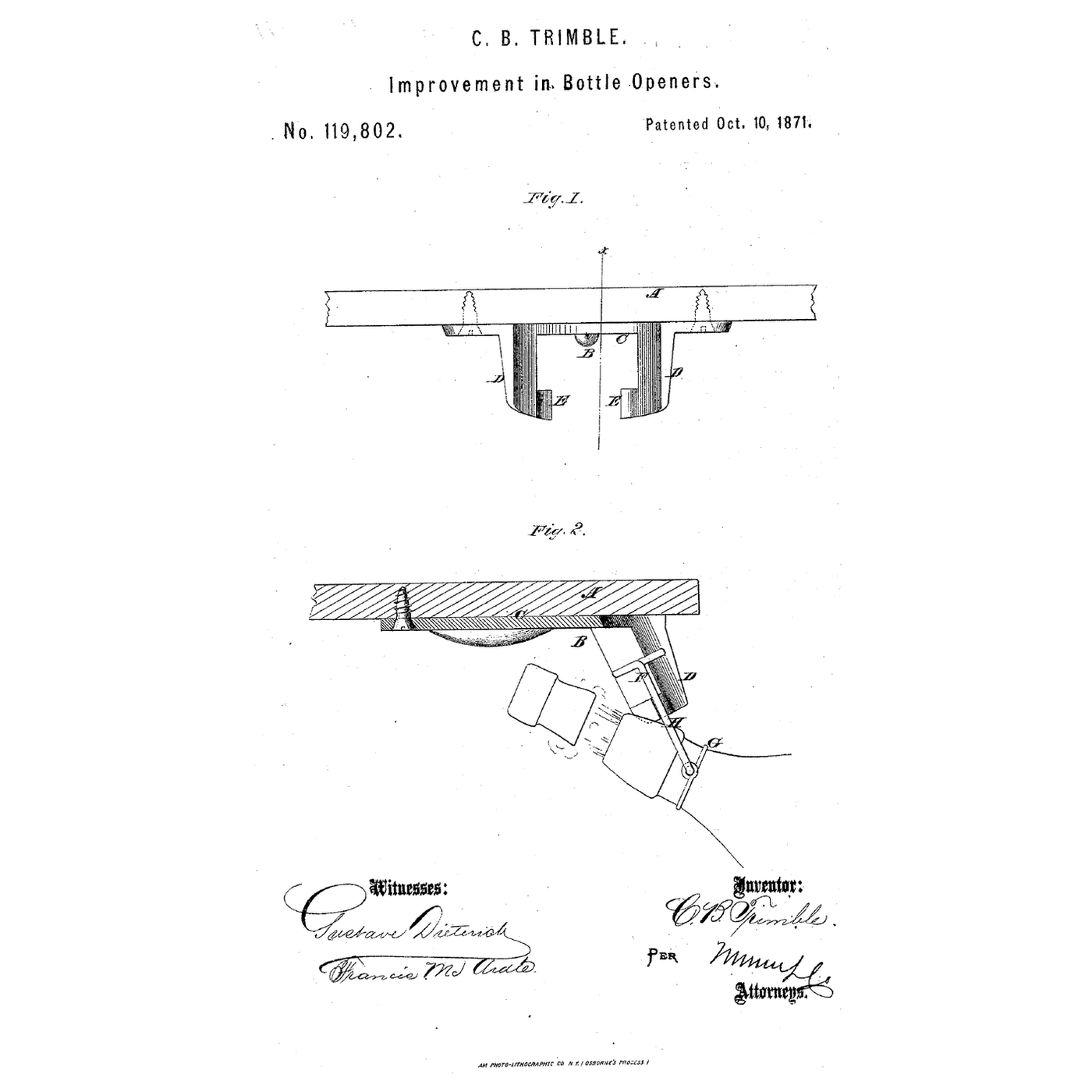

The Counter-Stirrup Bottle Opener: Press the Bottle Up and the Yoke Comes Off
The cork of a bottle of soda water was held down by a wire yoke, and the gas pressed it so hard that the yoke's end sank into the cork; pushing it off with a thumb was hard, and the cork then flew across the room.
Charles B. Trimble of New York received US 119,802, dated 10 October 1871, for "ready and convenient means for removing the wire yokes from the corks of bottles confining effervescing liquids": a metal stirrup fixed under the counter, with two ears angled downward and lugs on their inner sides. The bottle is pushed up between the ears, the yoke's bars bear on the lugs and it is forced off, and "the cork will fly under the counter."
This rung works out the force of the gas on the cork, then bends the stirrup from flat bar, screws it under a shelf and opens a yoked bottle of soda water with it.
Àárín
About 3 hours
Ìlànà
1
1
The gas on the cork
The gas on the cork
Ń ṣí ìwé Jupyter…
2
2
An opener before it
An opener before it
The embedded blueprint opens a bottle closed from the inside. Trimble's bottles were corked and held by a wire yoke on the outside, and his opener is fixed to the counter.
3
3
Read US 119,802
Read US 119,802
"The object of this invention is to provide ready and convenient means for removing the wire yokes from the corks of bottles confining effervescing liquids; and it consists in a metallic stirrup or casting attached to the counter or placed in any convenient position, so constructed that by a slight pressure the yoke is forced from the cork of the bottle, when the gas immediately forces the cork from the neck, as I will proceed to describe."
"The pressure of the gas is frequently so great that the end of the yoke is embedded in the end of the cork, rendering it extremely difficult to remove it by simply pressing it with the end of the thumb and fingers. By grasping the bottle and pressing the bars H H of the yoke against the lugs E E of the stirrup the yoke is readily forced off the cork."
4
4
Make the stirrup and open a yoked bottle
Make the stirrup and open a yoked bottle
**Stirrup.** Cut 30 cm of 20 × 3 mm mild steel flat bar. Mark a 10 cm middle as the plate and drill it for two wood screws. In the vice, bend each end down and outward so the ears make about 30° with the plate, checked with the protractor, and leave a gap between them a little wider than the bottle's neck. Bend the last 1 cm of each ear inward as a lug. File all edges smooth.
**Mount.** Screw the plate under the front edge of a hardwood shelf or bench, ears hanging down.
**Yoked bottle.** Chill a bottle of soda water, pour it into a clean beer bottle, and press a tapered cork in firmly. Twist a wire ring tight round the neck below the lip. Bend a staple-shaped yoke from galvanised wire that crosses the cork's top, with its legs bent into eyes that turn on the ring, as Trimble describes.
**Test.** Wearing safety glasses, hold the bottle by its body, push its neck up between the ears so the yoke's bars bear on the lugs, and press. The yoke is forced off and the cork leaves downward, under the shelf. Try pushing a second yoke off with your thumb and compare.
Àwọn ohun èlò fún ìgbésẹ̀ yìí:
 Ọ̀pá Pẹrẹsẹ Irin Pẹ́lẹ́0.3 mítà
 Ìṣó igi2 ẹyọ
 Pátákó Igi Líle1 ẹyọ
 Ìgò ọtí dígí aláwọ̀ ambà1 ẹyọ
 Omi olóbùú (ìgò tí a sé)1 ẹyọ
 Àwọn kọ́ọ̀kì1 ẹyọ
 Okùn Irin Tí A Fi Sinkì Bò0.5 mítà
Àwọn irinṣẹ́ tí a nílò:
 Ayùn Irin
 Ẹ̀rọ Ìlùkòkò Aláìlókùn
 Àkójọ Orí Ìlùkòkò
 Ìdìmú Tábìlì
 Òòlù
Òòlù Ẹ̀rọ Ìwọ̀n Igun
 Àwọn Ìfá (Ìfá Ọwọ́)
 Ìṣù àwọn ohun ìyí skurú
 Ẹ̀mú Olórí Yíká
 Ẹmú Ẹnu Pẹrẹsẹ
 Ẹ̀mú ìgé okùn
 Gílásì Ààbò Tí Ó Mọ́
5
5
A stirrup that slips, bends or leaves the yoke on
A stirrup that slips, bends or leaves the yoke on
Counter-stirrup bottle opener troubleshooting.
Flow
Loading...
6
6
History and honest limits
History and honest limits
**Charles B. Trimble** of New York, New York, received US 119,802, dated 10 October 1871. His stirrup was a plate C with screw holes, fixed under the counter's shelf, ears D D angled downward and outward at about thirty degrees, and lugs E E on their inner sides. The yoke F was shaped like a staple, turning on a wire G round the neck. His claim is the plate, ears and lugs together.
**Honest limits.** Bent flat bar stands in for his stirrup or casting, and a hand-wired beer bottle of re-corked soda water for a bottle filled under pressure, so the gas is weaker and the cork may not fly. The notebook's speed is a ceiling, not a prediction; its pressures, sizes and mass are examples. Your opening is the result.
Àwọn ohun-èlò
7- 0.3 mítàÀyè
- 2 ẹyọÀyè
- 1 ẹyọÀyè
- Àyè
- Àyè
- 1 ẹyọÀyè
- 0.5 mítàÀyè
Àwọn irinṣẹ́ tó nílò
12- Àyè
- 1 vendor sell this, none ship to you yetÀyè
- Àyè
- Àyè
Ìtọ́nisọ́nà yìí ń ṣe

Blueprint tó jọra
Àwọn blueprint wọ̀nyí pín ìmọ̀ — ọ̀nà, ohun-èlò tàbí ìlànà
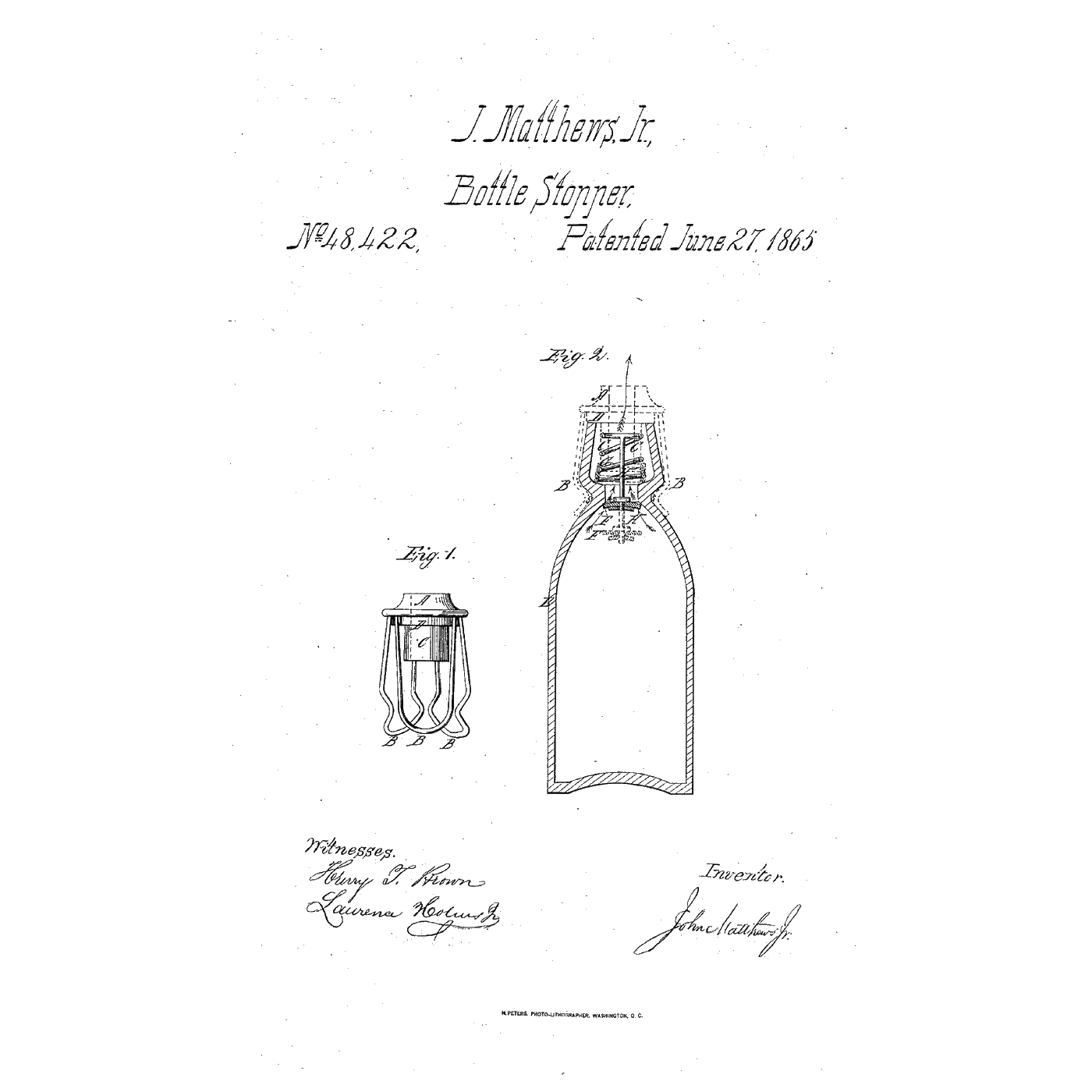
The Inner-Valve Bottle Opener: A Tube That Holds the Valve Open and Clasps That Hold the Tube
láti ọwọ́ Charlie
Àwọn Ohun Mímu
26
0
0
0
0
0
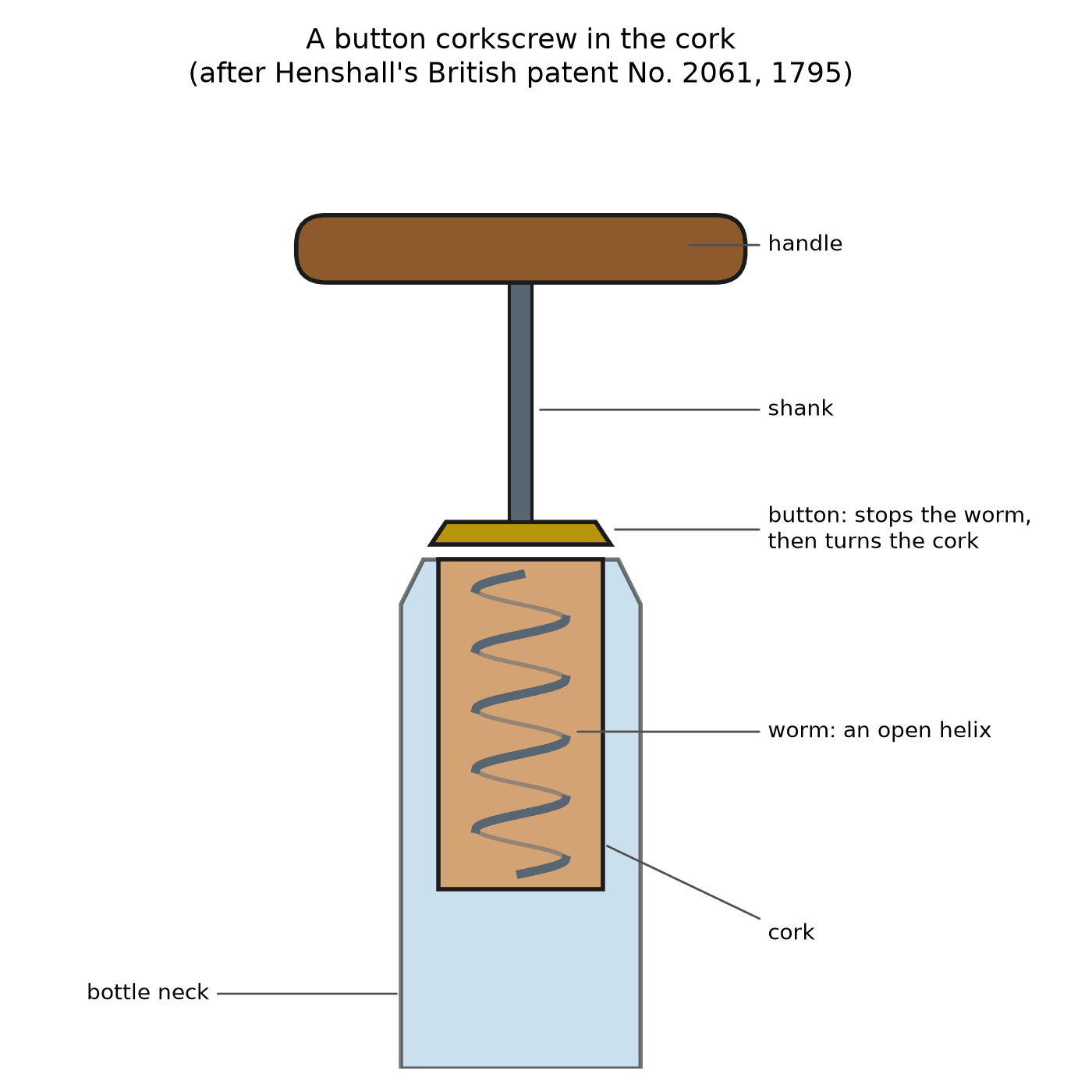
The Button Corkscrew: A Helix That Grips and a Disc That Stops It
láti ọwọ́ YourGrandma
OÚNJẸ ÀTI OHUN MÍMU
25
0
0
0
0
0
Packaging: Priming Sugar, Headspace, and the Bottle Bomb
láti ọwọ́ Alchometer
Ṣíṣe Ọtí
33
0
0
0
0
0
CC0 Àgbègbè Gbogbogbò
Blueprint yìí ti jáde lábẹ́ CC0. O lè ṣe àdàkọ, yí padà, pín, àti lò láìsí ìyọ̀ǹda.
Ṣàtìlẹ́yìn Olùṣẹ́dá nípa rírà àwọn ọjà nipasẹ̀ Blueprint wọn Ẹ̀san Olùṣẹ́dá tí àwọn Olùtajà gbé kalẹ̀, tàbí ṣẹ̀dá àtúnṣe tuntun ti Blueprint yìí kí o sì fi sínú Blueprint rẹ gẹ́gẹ́ bí ìsopọ̀ láti pín owó-wíwọlé.