IṢẸ́ ỌNÀ
ẸWÀ ÀTI ÌLERA
IṢẸ́ ỌWỌ́
ÀṢÀ ÀTI ÌTÀN
ÌṢERÉ
ÀYÍKÁ
OÚNJẸ ÀTI OHUN MÍMU
REVERSE ENGINEERING
SÁYẸ́ǸSÌ
ERÉ ÌDÁRAYÁ
ÌMỌ̀-Ẹ̀RỌ
ÀWỌN OHUN WÍWỌ̀
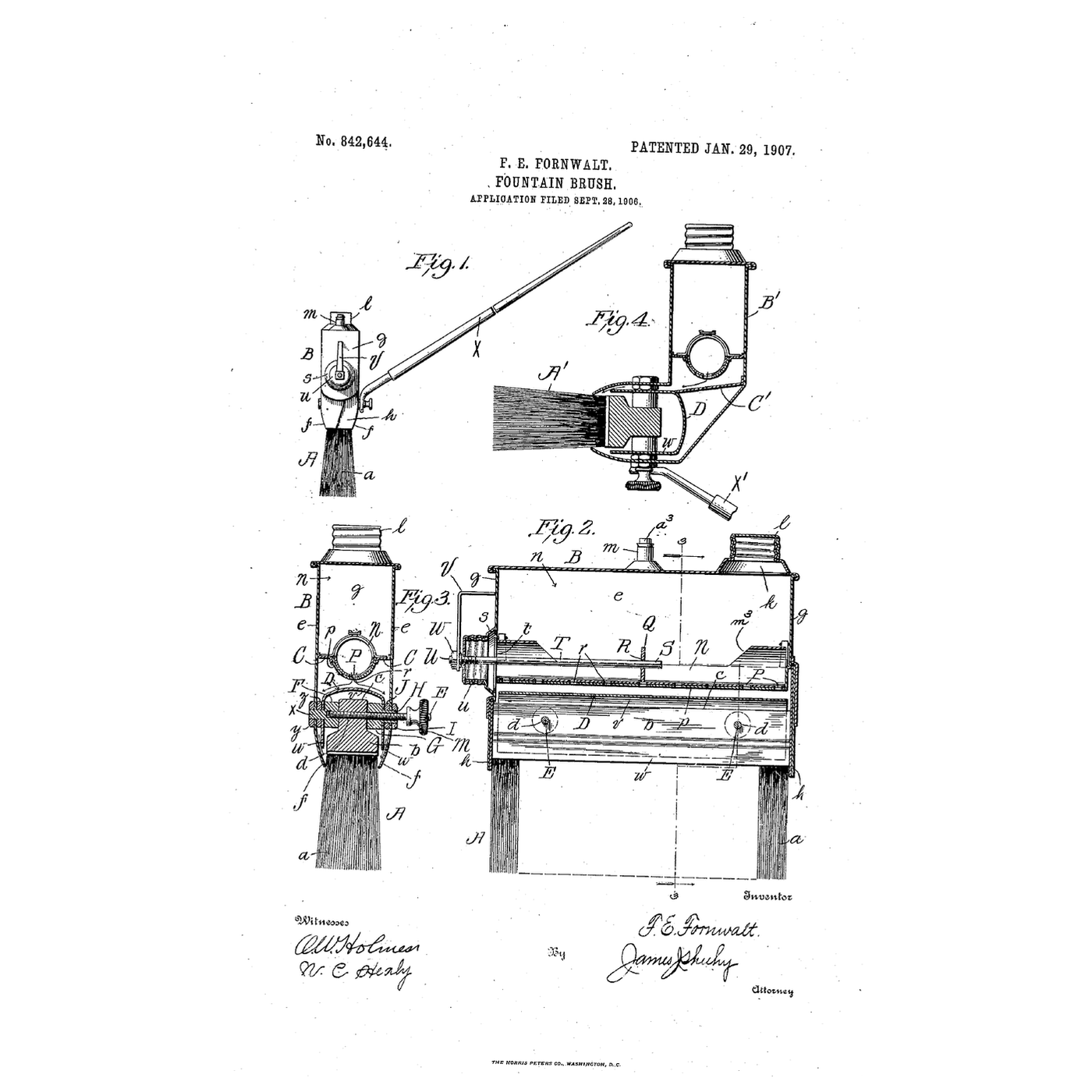

The Hooded Fountain Paint Brush: A Dome Shares the Paint Between Both Sides
Paint fed into the middle of a brush clogs its head, and one side of the bristles runs dry.
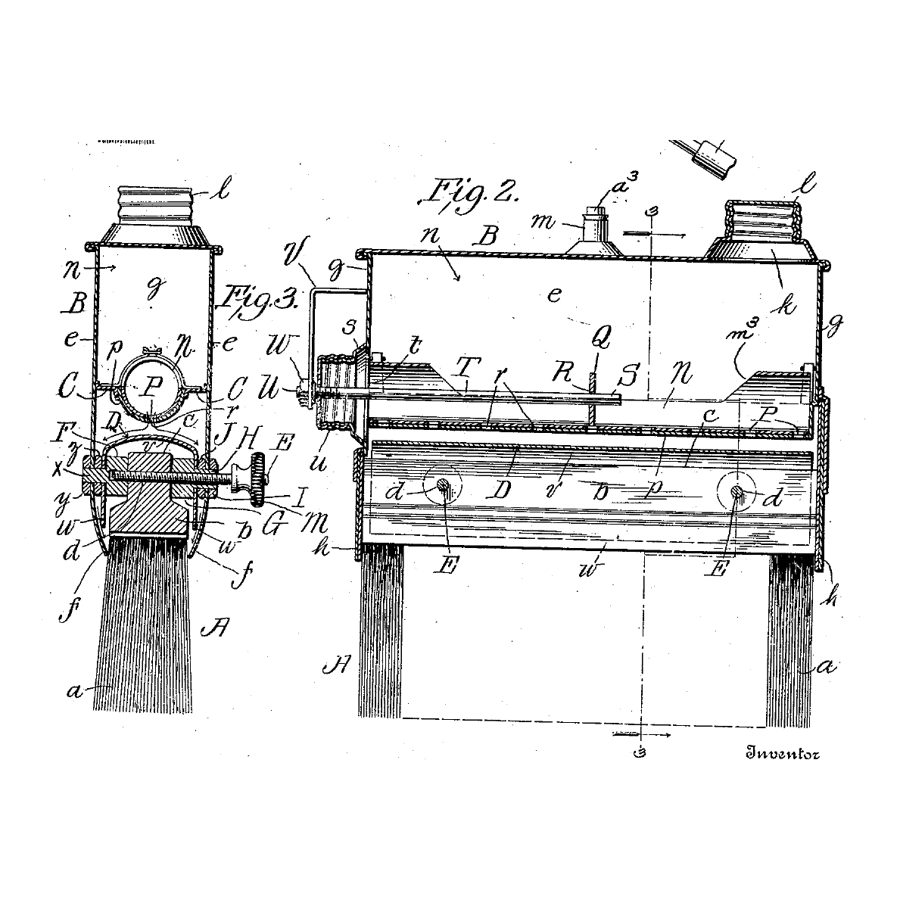
Franklin E. Fornwalt of Harrisburg, Pennsylvania, received US 842,644, patented 29 January 1907, for a fountain brush "for applying paint": a tin holder clamped over the brush carries a reservoir whose floor has a row of apertures under a hollow turning valve, and below it a hood whose dome sends equal paint to both sides of the bristles.
This rung works out the flow a brush needs, then folds the holder from aluminium sheet over a 120 mm brush and measures the paint it lays on each side of a stroke.
Àárín
About 5 hours
Ìlànà
1
1
Paint the brush needs
Paint the brush needs
Ń ṣí ìwé Jupyter…
2
2
A turned perforated tube before it
A turned perforated tube before it
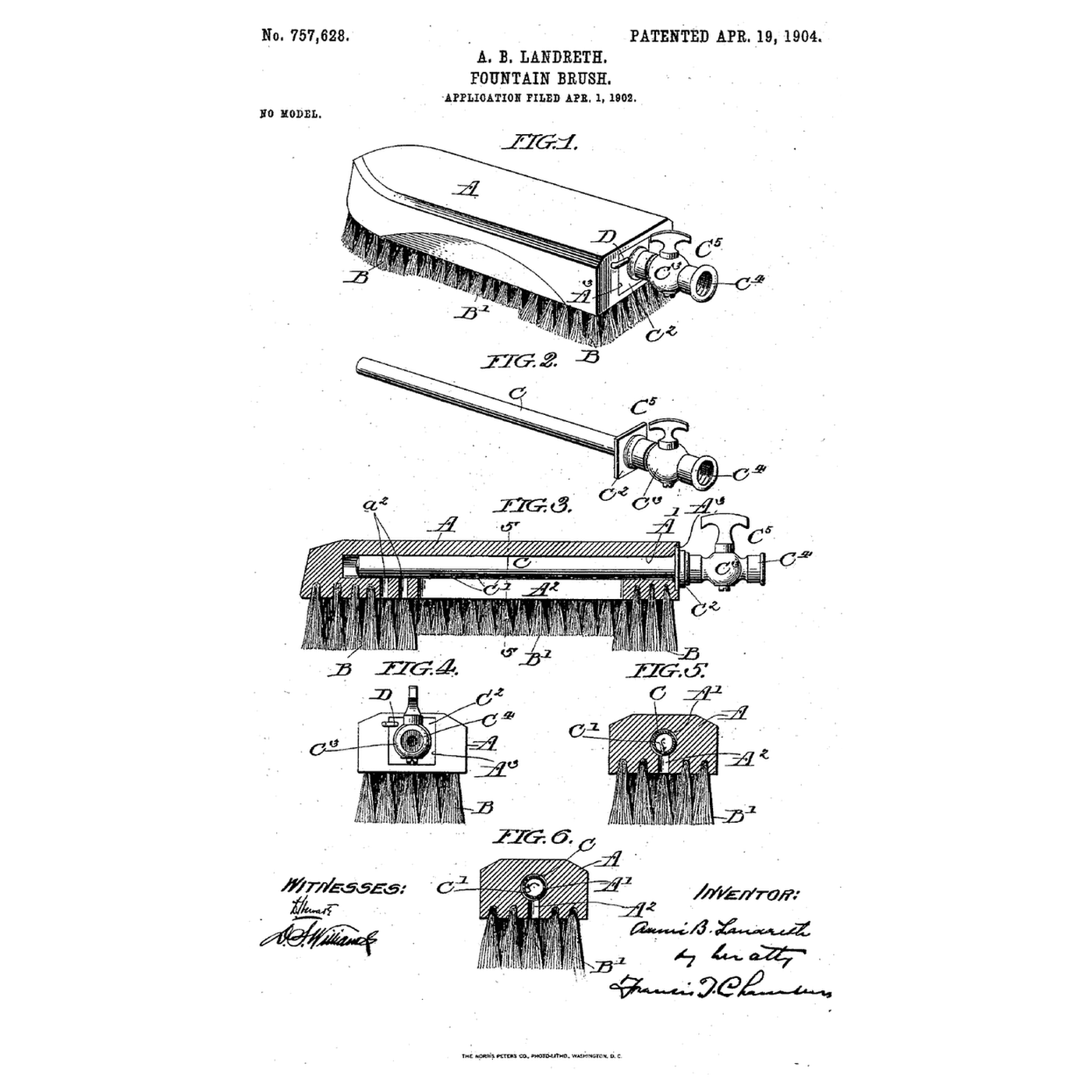
The embedded blueprint turns a perforated tube to change how water leaves a brush. Fornwalt turns a perforated valve to open or close a row of holes over a hood.
3
3
Read US 842,644
Read US 842,644
"In virtue of the provision of the said hood D paint is effectually prevented from getting on the brush-head b, and at the same time liability of the brush becoming choked and impaired is reduced to a minimum. It will also be apparent that the hood D conveys an equal quantity of paint to each side of the body of bristles a and assures the paint reaching the sides of the body of bristles in the form of thin layers, which obviously contributes materially to the efficiency of the fountain-brush as a whole."
4
4
Fold the tank
Fold the tank
Fold aluminium sheet into a box 160 × 60 × 70 mm with a lid. Rivet the seams and seal them inside with silicone. Cut a 25 mm filling hole in the lid.
Àwọn ohun èlò fún ìgbésẹ̀ yìí:
 Àwo aluminiọ̀mù1 ẹyọ
 Àwọn pop rivet1 ẹyọ
 Ìdílẹ̀ Silikoni1 ẹyọ
Àwọn irinṣẹ́ tí a nílò:
 Ìlàǹkàn irin
 Ẹmú Ẹnu Pẹrẹsẹ
 Ìdìmú Tábìlì
 Ìdìpọ̀ ẹ̀rọ ìso pop rivet
 Ẹ̀rọ Ìlùkòkò Aláìlókùn
 Àkójọ Orí Ìlùkòkò
 Ìṣètò ayùn ihò
 Ìbọ̀wọ́ Iṣẹ́ Awọ
5
5
Drill the floor
Drill the floor
Drill six 3 mm holes along the floor's centre line, 20 mm apart.
Àwọn irinṣẹ́ tí a nílò:
Ẹ̀rọ Ìlùkòkò AláìlókùnÀkójọ Orí Ìlùkòkò Ààmì Tí Kò Ní Parẹ́
 Ìdíwọ̀n
6
6
Make the turning valve
Make the turning valve
Cut 200 mm of 10 mm copper tube. Drill six 3 mm holes in a line to match the floor's, and file a 6 mm slot along the opposite side. Pass it through both end walls just above the floor and bend one end into a crank.
Àwọn ohun èlò fún ìgbésẹ̀ yìí:
 Ọ̀pá bàbà1 ẹyọ
Àwọn irinṣẹ́ tí a nílò:
 Ayùn IrinẸ̀rọ Ìlùkòkò AláìlókùnÀkójọ Orí Ìlùkòkò
 Àwọn Ìfá (Ìfá Ọwọ́)Ìdìmú Tábìlì
7
7
Fold the hood
Fold the hood
Bend an aluminium strip into a ridge with 40° sides and rivet it under the floor, its peak under the holes.
Àwọn ohun èlò fún ìgbésẹ̀ yìí:
Àwo aluminiọ̀mù1 ẹyọÀwọn pop rivet1 ẹyọÀwọn irinṣẹ́ tí a nílò:
Ìdìmú TábìlìÌdìpọ̀ ẹ̀rọ ìso pop rivet8
8
Clamp on the brush
Clamp on the brush
Rivet two side skirts below the tank. Drill them and a 120 mm brush's stock for two M6 bolts, and clamp the brush between the skirts with nuts so their lower edges rest on the bristles.
Àwọn ohun èlò fún ìgbésẹ̀ yìí:
 Ìdìpọ̀ búrọ́ọ̀ṣì1 ẹyọ
 Àkójọ bọ́ọ̀lù onígun mẹ́fà1 ẹyọ
 Nọ́ọ̀tì Onígun Mẹ́fà1 ẹyọ
 Wáṣà Pẹrẹsẹ1 ẹyọÀwọn pop rivet1 ẹyọ
Àwọn irinṣẹ́ tí a nílò:
Ẹ̀rọ Ìlùkòkò AláìlókùnÀkójọ Orí Ìlùkòkò Kọ́kọ́rọ́ tí a lè ṣàtúnṣe
9
9
The patent drawing
The patent drawing
US 842,644 drawing sheet, public domain (expired patent).
10
10
Paint and weigh
Paint and weigh
Fill the tank with thinned acrylic paint. Weigh a plywood board, open the valve half, and paint one 1 m stroke each way. Weigh it again; compare how wet each side of the bristles is.
Àwọn ohun èlò fún ìgbésẹ̀ yìí:
 Ìṣètò àwọ̀ acrylic1 ẹyọ
 Omi1 ẹyọ
 Àwo igi tí a lẹ̀ pọ̀1 ẹyọ
Àwọn irinṣẹ́ tí a nílò:
 Òṣùwọ̀n Díjítà Ilé Ìdáná
 Okùn Ìdíwọ̀n
 Aago Ìdúró
11
11
A brush that clogs, floods or paints one side
A brush that clogs, floods or paints one side
Hooded fountain paint brush troubleshooting.
Flow
Loading...
12
12
History and honest limits
History and honest limits
**Franklin E. Fornwalt** of Harrisburg, Pennsylvania, filed US 842,644 on 28 September 1906; it was patented 29 January 1907. His holder is preferably tin; bolts through the brush head with thumb nuts press the side walls in against the bristles, and removing them lets the brush be replaced. A connection may take a hose from a paint supply or compressed air. A right-angled form paints vertical surfaces, feeding the upper side of the bristles only.
**Honest limits.** Riveted aluminium stands in for his tin, and plain nuts for his thumb nuts. Your weights are the result.
Àwọn ohun-èlò
11- 1 ẹyọÀyè
- 3 ẹyọÀyè
- 1 ẹyọÀyè
- 1 ẹyọÀyè
- 1 ẹyọÀyè
- Àyè
- 1 ẹyọÀyè
- 1 ẹyọÀyè
- 1 ẹyọÀyè
- 1 ẹyọÀyè
- 1 ẹyọÀyè
Àwọn irinṣẹ́ tó nílò
16- Àyè
- Àyè
- 1 vendor sell this, none ship to you yetÀyè
- Àyè
- Àyè
- 1 vendor sell this, none ship to you yetÀyè
- Àyè
Blueprint tó jọra
Àwọn blueprint wọ̀nyí pín ìmọ̀ — ọ̀nà, ohun-èlò tàbí ìlànà
The Tube-in-the-Back Fountain Brush: Turn the Tube and the Jets Become a Soak
láti ọwọ́ YourGrandma
Ìmọ̀ Ẹ̀rọ
31
0
0
0
0
0
Making Hide Glue Distemper — The Traditional Ceiling and Wall Paint of Europe
láti ọwọ́ Charlie
IṢẸ́ ỌNÀ
67
0
0
0
4
0
The Long-Handled Fountain Brush: A Ring of Holes Wets the Bristles From the Ground
láti ọwọ́ Martin
Ìmọ̀ Ẹ̀rọ
17
0
0
0
0
0
CC0 Àgbègbè Gbogbogbò
Blueprint yìí ti jáde lábẹ́ CC0. O lè ṣe àdàkọ, yí padà, pín, àti lò láìsí ìyọ̀ǹda.
Ṣàtìlẹ́yìn Olùṣẹ́dá nípa rírà àwọn ọjà nipasẹ̀ Blueprint wọn Ẹ̀san Olùṣẹ́dá tí àwọn Olùtajà gbé kalẹ̀, tàbí ṣẹ̀dá àtúnṣe tuntun ti Blueprint yìí kí o sì fi sínú Blueprint rẹ gẹ́gẹ́ bí ìsopọ̀ láti pín owó-wíwọlé.